
EPDM Colors, Color Chart and Colored Rubber Granules
A complete guide to EPDM colors for playgrounds, wet pour flooring, running tracks and sports surfaces—including color families, custom blends, project matching and batch-consistency planning.
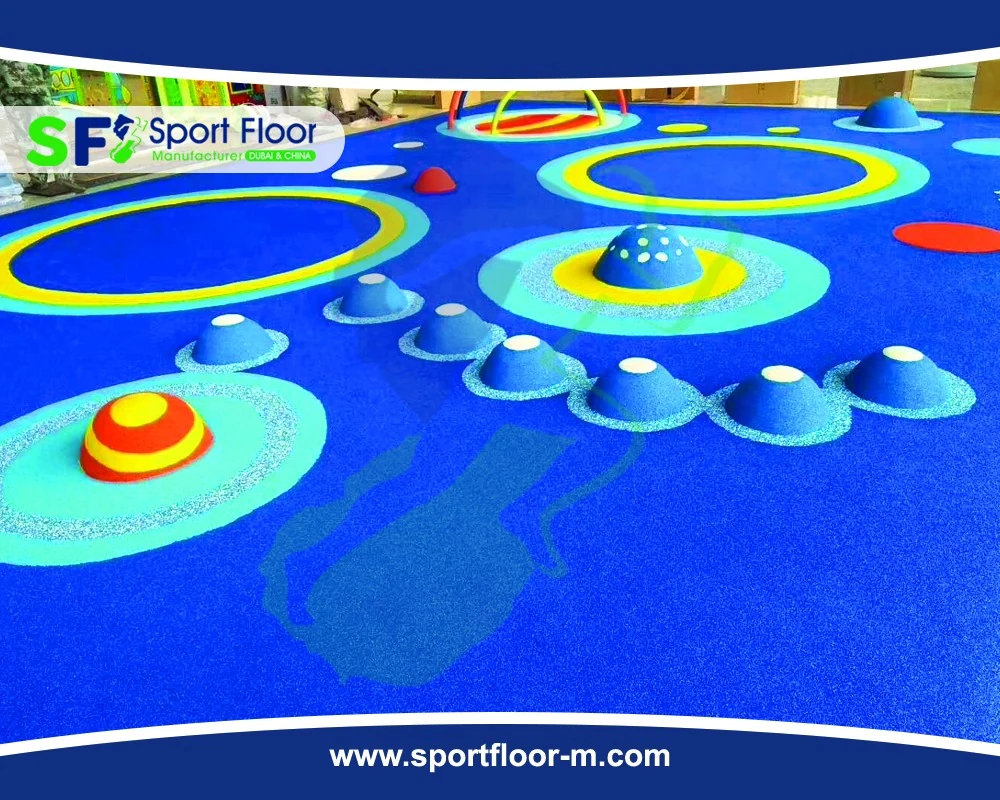
EPDM colors are the colored finishes available for EPDM rubber granules used in playgrounds, wet pour surfaces, running tracks and recreational flooring. The best color choice depends on the application, design contrast, heat exposure, maintenance expectations, surrounding architecture and whether the project needs one shade, a blend or custom graphics.
View Color GuideWhat Are EPDM Colors?
EPDM colors are the visual shades produced in colored EPDM rubber granules. These granules are used mainly as the exposed top layer in sports and playground surfacing systems, where color is expected to remain part of the project identity rather than a temporary decorative coating.
Searchers use several variations for the same idea: EPDM colors, EPDM color, EPDM colours, EPDM colour, colored EPDM granules and coloured EPDM granules. This page covers all of those terms naturally, but the practical question is the same: which shade or combination will work best in the finished surface?
Color selection affects more than appearance. It can help define circulation routes, age zones, sports areas, play activities, safety boundaries and branded spaces. A thoughtful palette can make a surface easier to understand, more attractive and better connected to the architecture around it.
For a broader overview of the material itself, visit the main EPDM granules page. This page remains focused on color planning, visual combinations and approval procedures.
EPDM Color Chart for Sports and Playground Flooring
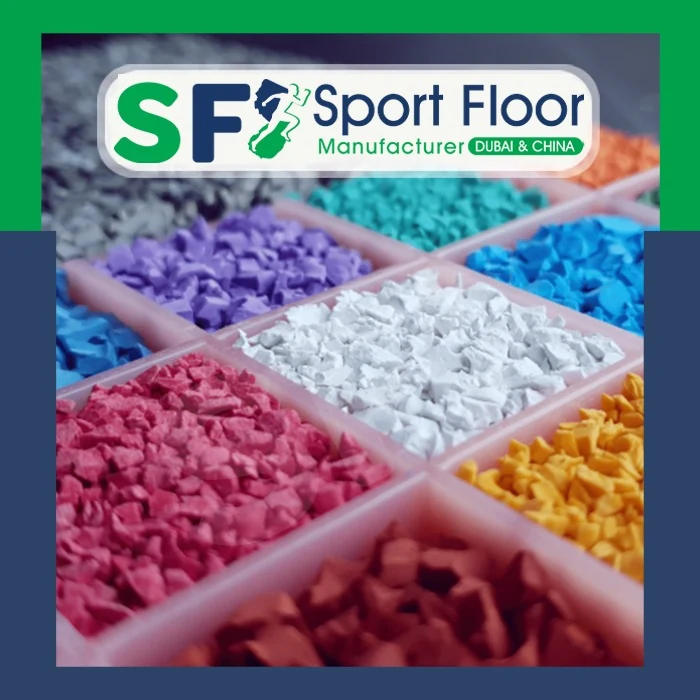
An EPDM color chart helps the project team compare color families, but it should be used as a design starting point rather than the final physical approval. The chart below explains how common color groups are usually applied in sports and recreational surfaces.
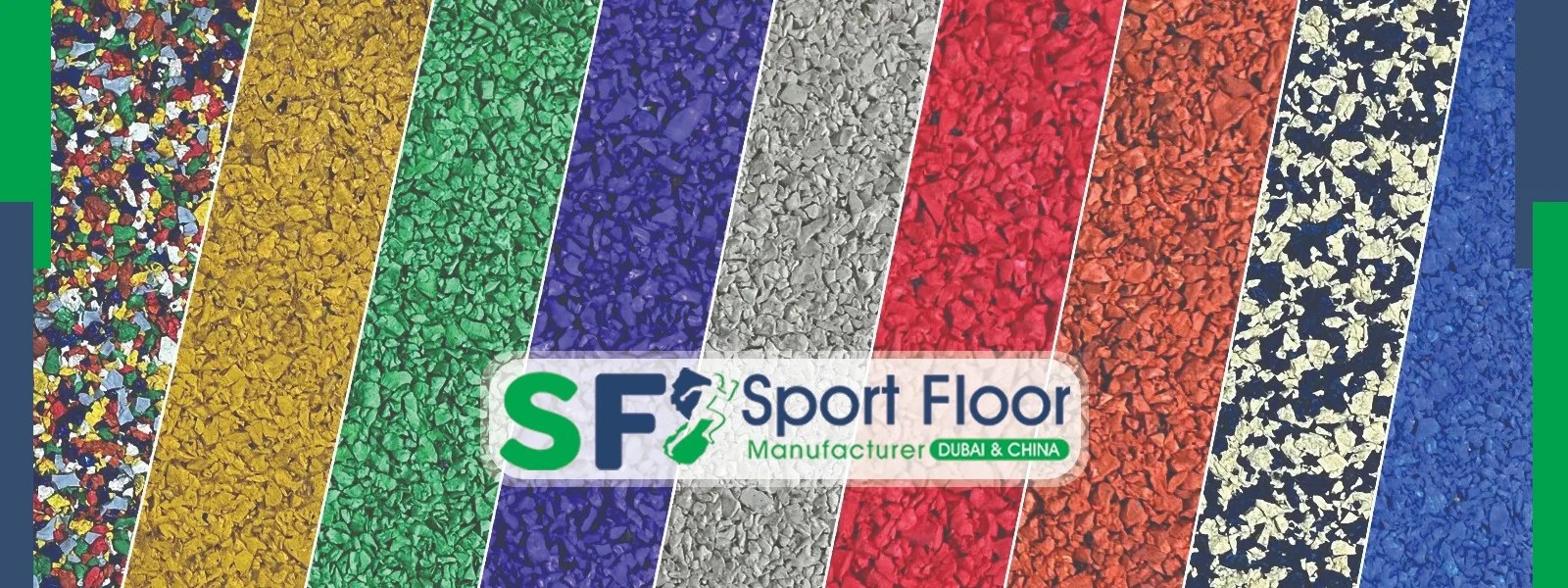
| Color family | Typical visual effect | Common applications | Design consideration |
|---|---|---|---|
| Red and terracotta | Active, athletic and highly visible. | Running tracks, activity zones, sports borders and warm playground themes. | Works well with grey, black, cream and selected blue accents. |
| Blue | Clean, calm and strongly associated with sports and water themes. | Playgrounds, courts, recreational spaces, routes and branded areas. | Use contrast carefully around white lines and adjacent dark zones. |
| Green | Natural, balanced and connected to landscaping. | Parks, schools, garden paths, playgrounds and nature-inspired designs. | Compare the shade with nearby artificial grass or planting. |
| Yellow and orange | Bright, energetic and easy to notice. | Play features, warning zones, graphics, highlights and child-focused areas. | Best used with controlled proportions to avoid visual overload. |
| Grey and black | Neutral, architectural and practical. | Borders, backgrounds, circulation areas and contemporary schemes. | Dark colors may show heat and dust differently from lighter shades. |
| Beige and earth tones | Soft, natural and less visually aggressive. | Landscape projects, resorts, residential clubs and architectural spaces. | Useful when the surface must blend with stone, wood or sand colors. |
| Purple and pink | Playful, distinctive and highly decorative. | Themed playgrounds, nursery zones, custom graphics and creative projects. | Use as an accent or planned zone unless the project concept calls for a dominant bright palette. |
| Mixed blends | Textured, forgiving and visually complex. | Large playgrounds, pathways, decorative zones and bespoke projects. | Define blend percentages and approve a mixed sample before production. |
Standard EPDM Colors vs Custom Color Requests
Standard shades are usually easier to quote and repeat, while custom colors or blends require clearer references, larger planning margins and more careful approval. The correct approach depends on the project scale and how critical the color match is.
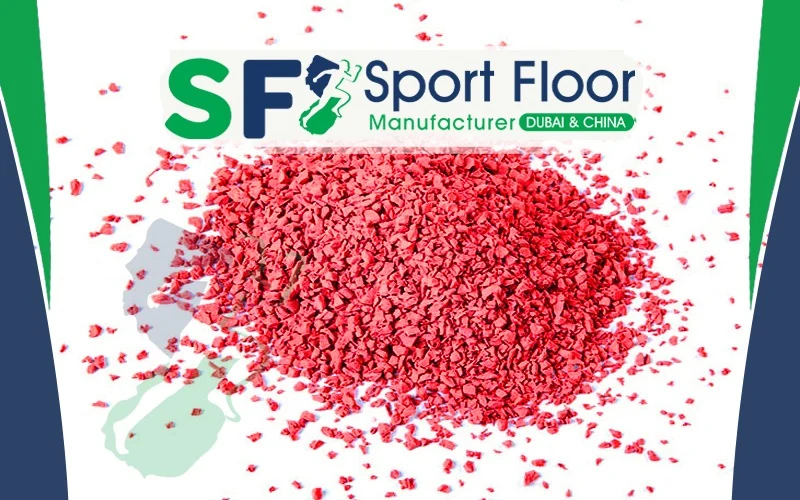
Standard colors
Suitable for straightforward projects that prioritize availability, easier matching and efficient procurement.
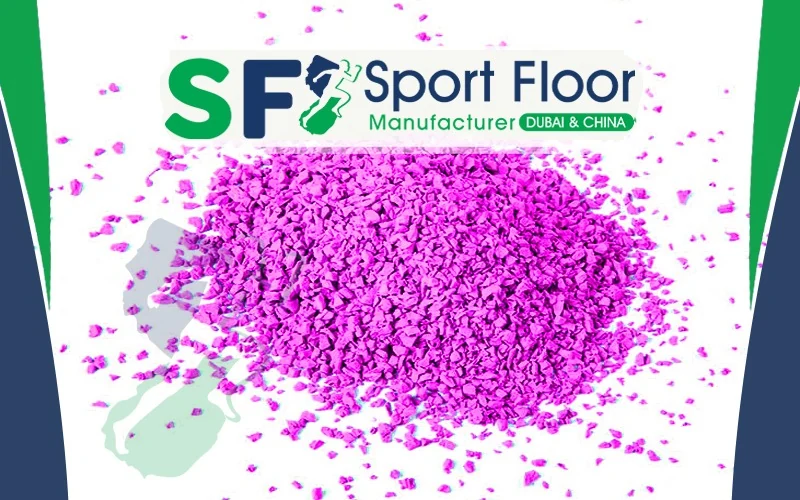
Special or bright shades
Useful for themed environments, branded spaces and projects that need a stronger visual identity.
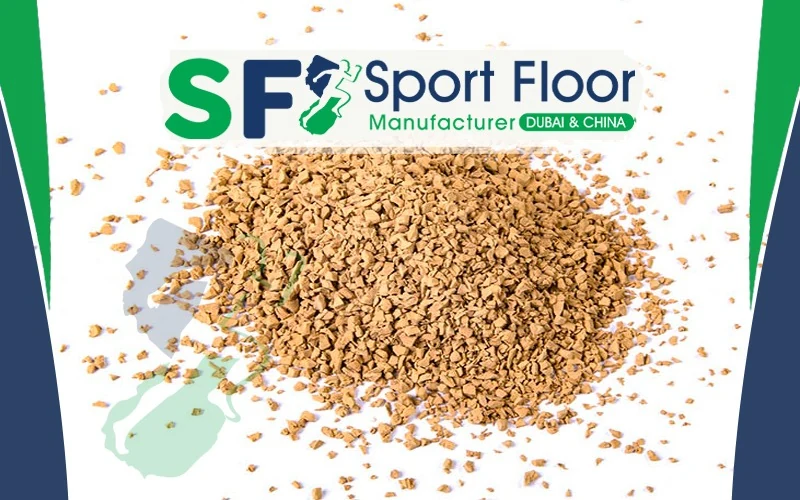
Architectural tones
Neutral colors can support resorts, residential projects and landscape designs where the flooring should blend with surrounding materials.
Single EPDM Colors vs Custom Color Blends
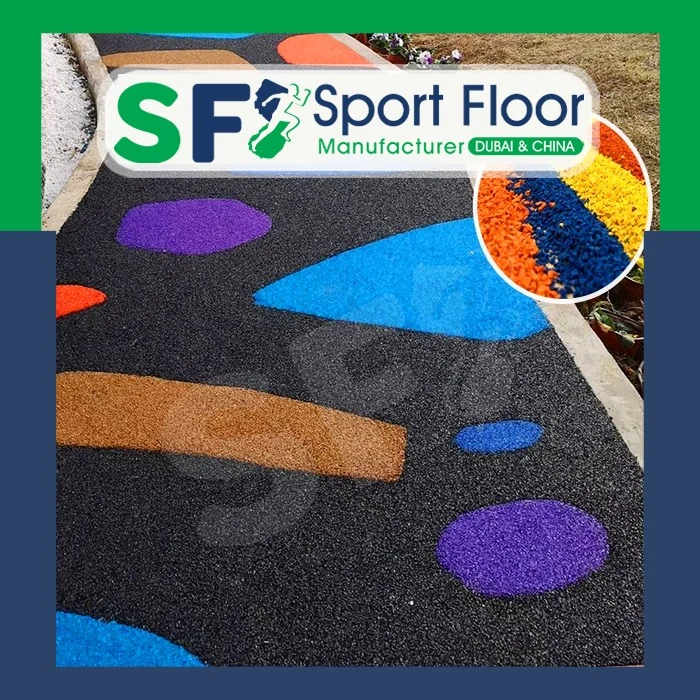
A single-color surface creates a clean, uniform visual result. A blend combines two or more colored EPDM granules to create texture, soften dirt visibility and produce a more distinctive finish. Neither approach is always better; the choice should follow the project brief.
Single-color finish
Best when the project needs strong zoning, exact graphics, clean lane colors or simple visual control.
Two-color blend
Useful for adding visual texture and reducing the flat appearance of a large single-color area.
Multi-color blend
Appropriate for custom recreational designs when percentages and batch mixing are carefully controlled.
How to Choose EPDM Colors for Playgrounds
Playground color design should support movement, age grouping and play value—not simply use the maximum number of colors. A clear visual hierarchy usually performs better than an uncontrolled palette.
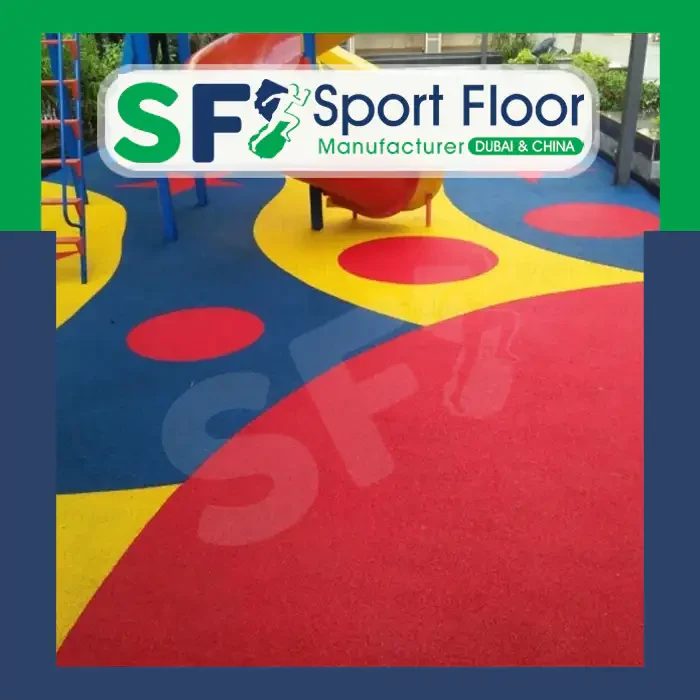
Define activity zones
Use color to separate active play, quiet play, circulation and equipment areas.
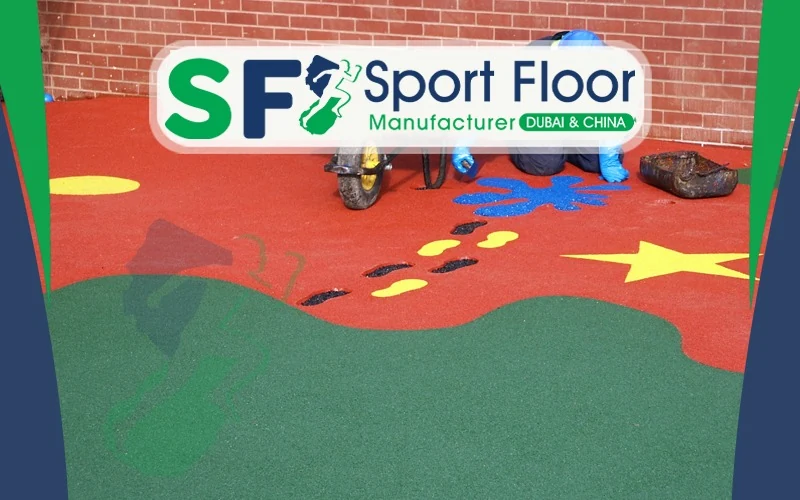
Create simple graphics
Circles, paths and geometric shapes can guide play without making the surface visually confusing.
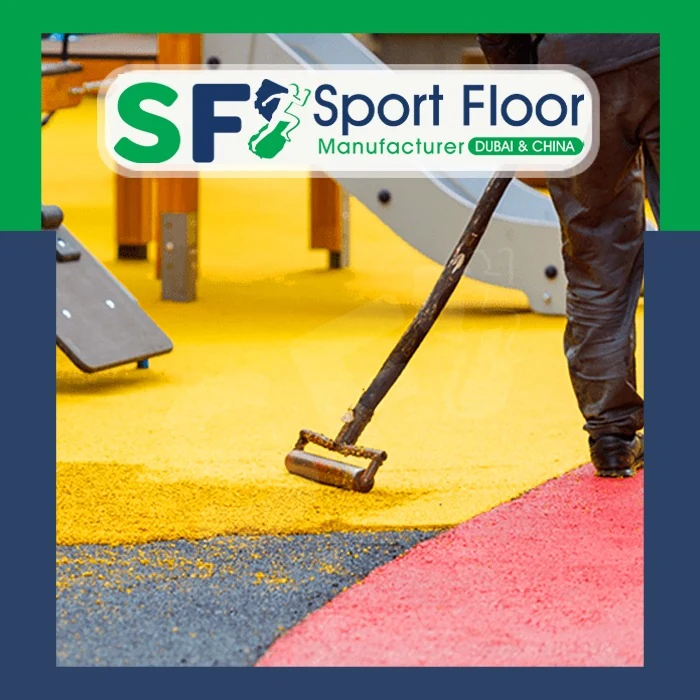
Control dominant colors
Choose one or two dominant colors, then add smaller accent areas for emphasis.
Support the theme
Use a planned palette for space, nature, ocean, city or educational concepts.
For the full flooring system used below these colors, read the wet pour rubber flooring guide.
EPDM Colors for Running Tracks and Sports Areas
Running-track colors must balance visibility, lane marking, branding and maintenance. Red remains familiar, but blue, green, grey and custom combinations can also support modern sports-facility design.
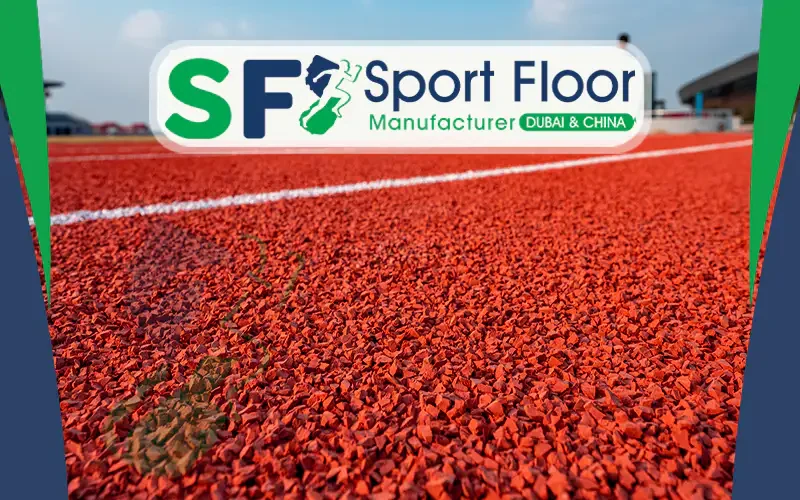
Traditional red
A strong athletic visual associated with running tracks and sports training areas.
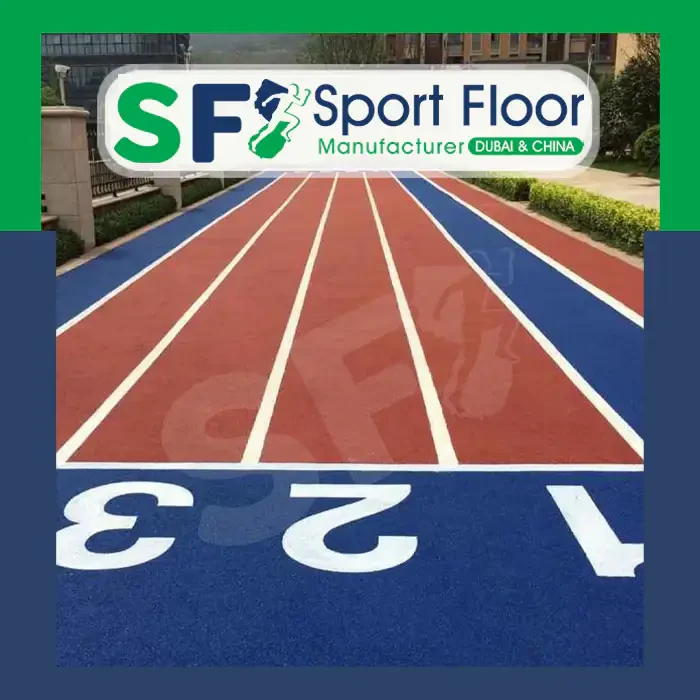
Two-color lane schemes
Contrasting colors can separate track areas, run-offs, borders and training zones.
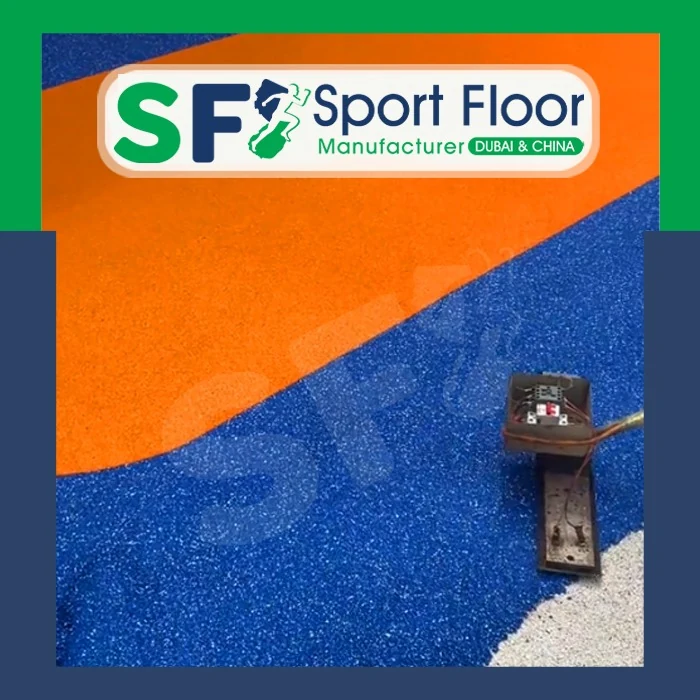
Modern sports palettes
Blue, orange and other combinations can support club branding and high-impact facility design.
For complete project systems, explore running track systems and PU athletic track solutions.
How EPDM Color Works in a Wet Pour Surface
In a common two-layer wet pour system, EPDM creates the visible colored top layer while SBR granules form the resilient base. The color decision therefore affects the final appearance, but it must still be coordinated with the selected granule size, binder and installation method.
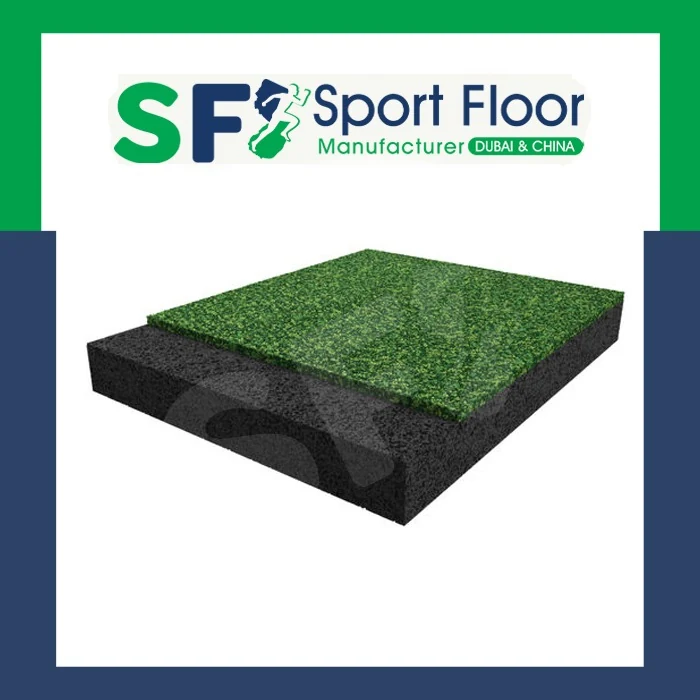
Green top layer
A natural-looking finish for parks, schools and landscaped recreational areas.
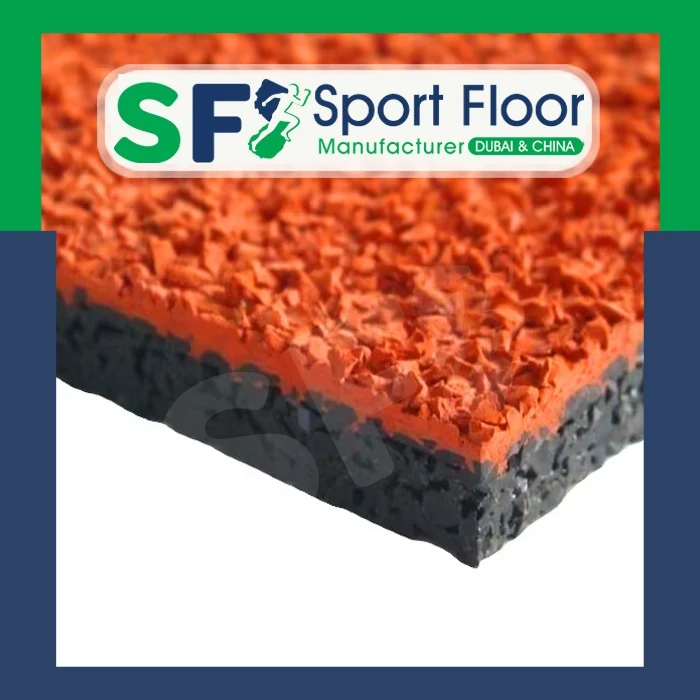
Red top layer
A high-visibility finish suitable for athletic and active recreational settings.
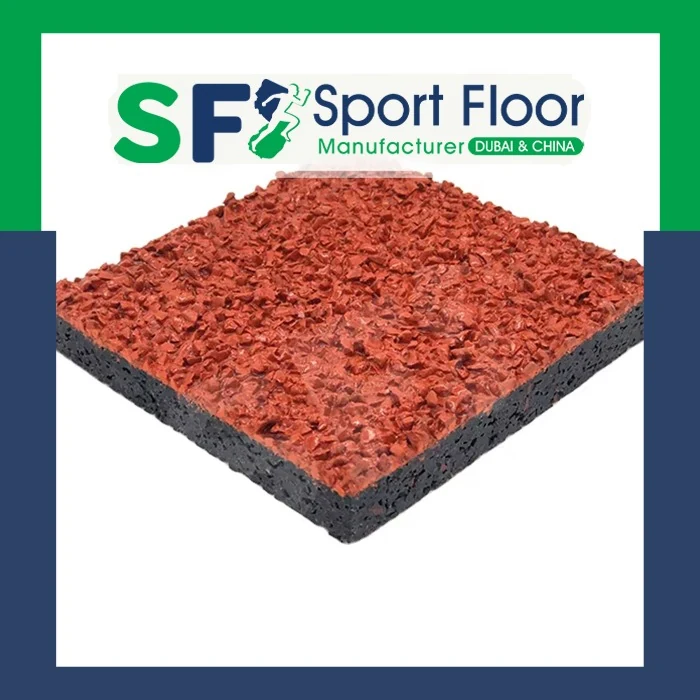
Complete color system
The visible EPDM color must be specified together with SBR rubber granules and compatible PU binder.
Why a Physical EPDM Color Sample Matters
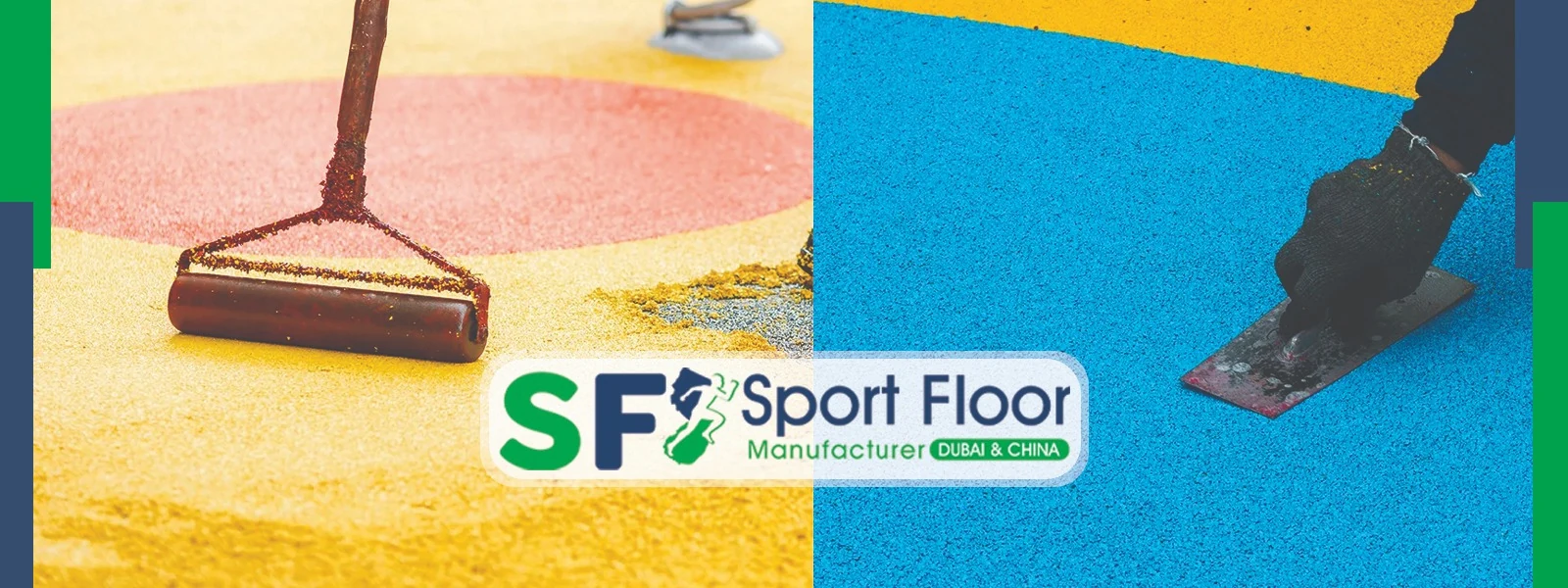
Color seen on a monitor can change with screen calibration, brightness, camera exposure and image compression. A physical sample gives the project team a more reliable basis for approval, especially when the surface must coordinate with architecture, branding or tender documents.
Select the color family
Choose the broad direction: sports red, blue, green, yellow, neutral, earth tone or custom blend.
Request the current sample
Ask for a physical sample representing the intended production shade or blend.
Review in project conditions
Compare the sample in daylight and beside nearby materials such as curbs, paving, equipment or artificial grass.
Record the approval
Keep the approved sample, reference and written color split connected to the final purchase order.
How to Keep EPDM Colours Consistent Across the Project
Large or phased projects need a clear batch strategy. Even when the named color is the same, practical differences can appear if the order is split without planning, stored incorrectly or installed from mixed batches.
Order one zone together
Where possible, secure the material for each continuous visual zone from the same planned batch.
Keep labels visible
Do not remove batch, color and size labels before the site team records and organizes the material.
Separate stored colors
Keep colors and batches physically separated to reduce installation mistakes and unplanned mixing.
Blend only by specification
For mixed surfaces, use a defined percentage and repeatable mixing method rather than visual judgment on site.
Plan phased deliveries
Tell the EPDM granules supplier whether the project will receive one shipment or several releases.
Keep an approved reference
Retain a labeled sample so later deliveries can be reviewed against the original approval.
Color Selection by Project Type
The table below gives practical design guidance without pretending there is one universally correct color. Final selection should always follow the project brief, local environment and client approval.
| Project type | Recommended color approach | Useful contrast | What to avoid |
|---|---|---|---|
| Children’s playground | One or two dominant colors with selected accents and clear activity zones. | Blue/yellow, green/orange, red/grey or theme-based combinations. | Too many equal-intensity colors without visual hierarchy. |
| Running track | Strong base color with clear lane markings and controlled border colors. | Red/white, blue/white, green/white or branded schemes. | Low contrast between running surface and lines. |
| Public park | Green, earth tones, grey or restrained mixed blends. | Natural shades with small bright wayfinding accents. | Palette that conflicts with surrounding landscape materials. |
| School or nursery | Friendly colors used to separate learning, circulation and active play zones. | Bright accents over calmer background colors. | Large areas of visually aggressive color without purpose. |
| Residential or resort | Neutral, beige, grey, green or architectural custom blends. | Colors coordinated with paving, facades and landscape design. | Selecting from a digital image without material comparison. |
| Branded sports facility | Brand colors with practical neutral backgrounds and high-contrast markings. | Primary brand shade plus white, grey or black. | Using an exact brand reference without confirming manufacturing feasibility. |
How to Request Colored EPDM Granules
A complete color request helps the supplier prepare the right sample, production plan and quotation. Avoid sending only a screenshot with no application, quantity or size.
- Project type and surface application
- Required EPDM color or colour family
- Physical reference, code or approved sample if available
- Single color, blend or custom graphic requirement
- Percentage or tonnage for every color
- Granule size
- Total order quantity
- Packaging preference
- Destination and Incoterms
- Required delivery date
Use the right page for the next step
For general product understanding, use EPDM rubber granules.
For commercial sourcing, visit EPDM granules supplier.
For larger quantities, visit bulk colored EPDM granules.
For pricing variables, use EPDM granules price per ton.
Send Color RFQ on WhatsAppEPDM Color, Installation and Finished Surface Gallery
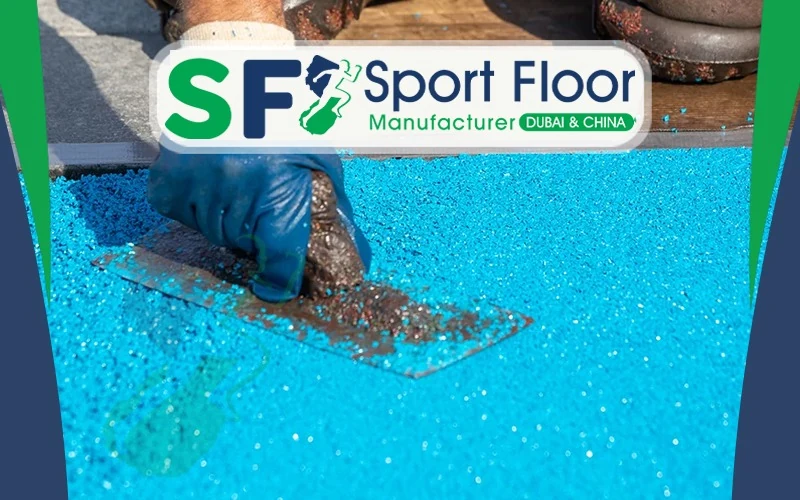
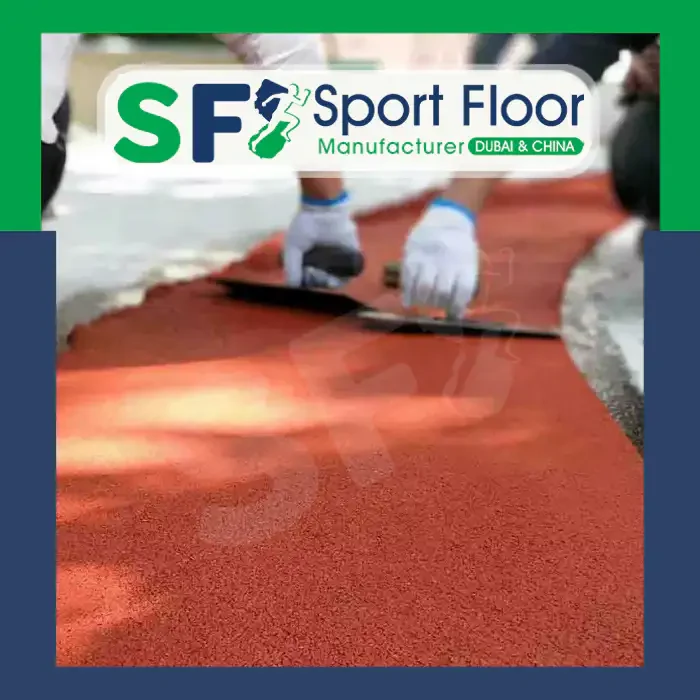
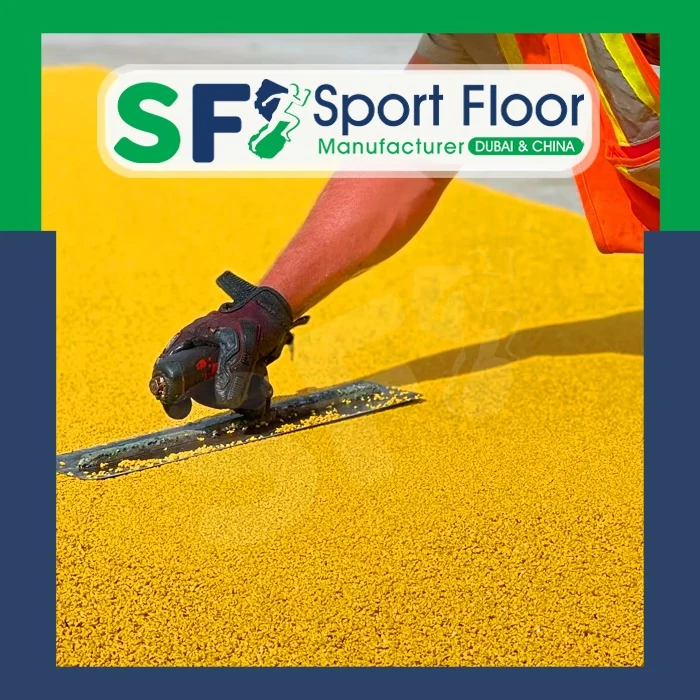
Every supplied image is used in the page. The gallery keeps a consistent 1:1 display ratio while showing color samples, installations, system sections and completed surfaces.
EPDM Colors FAQ
Clear answers for designers, contractors, buyers and project owners comparing EPDM color options.
What are the most common EPDM colors?
Is “EPDM colours” the same as “EPDM colors”?
Can two or more EPDM colors be blended?
Can EPDM colors be used for playground graphics?
What is an EPDM color chart?
Why can the physical color differ from the website image?
How do I keep the same color across several shipments?
Which EPDM color is best for a playground?
Which EPDM color is best for a running track?
Does EPDM color affect price?
Where can I order colored EPDM granules?
Should I approve the color before placing a bulk order?
Choose the Right EPDM Colors for Your Project
Send the project application, preferred colors, design reference, size, quantity and destination. Sport Floor can guide you toward the relevant color, supplier, wholesale or system page and prepare the correct quotation route.