










Tartan Systems: Full PU, Sandwich, Spray Coat and Court Build-Ups
Compare polyurethane sports flooring systems according to application, layer construction, permeability, supporting base, surface response, testing requirements and commercial scope. Use the system comparison to prepare technically comparable quotations for running tracks and sports courts.
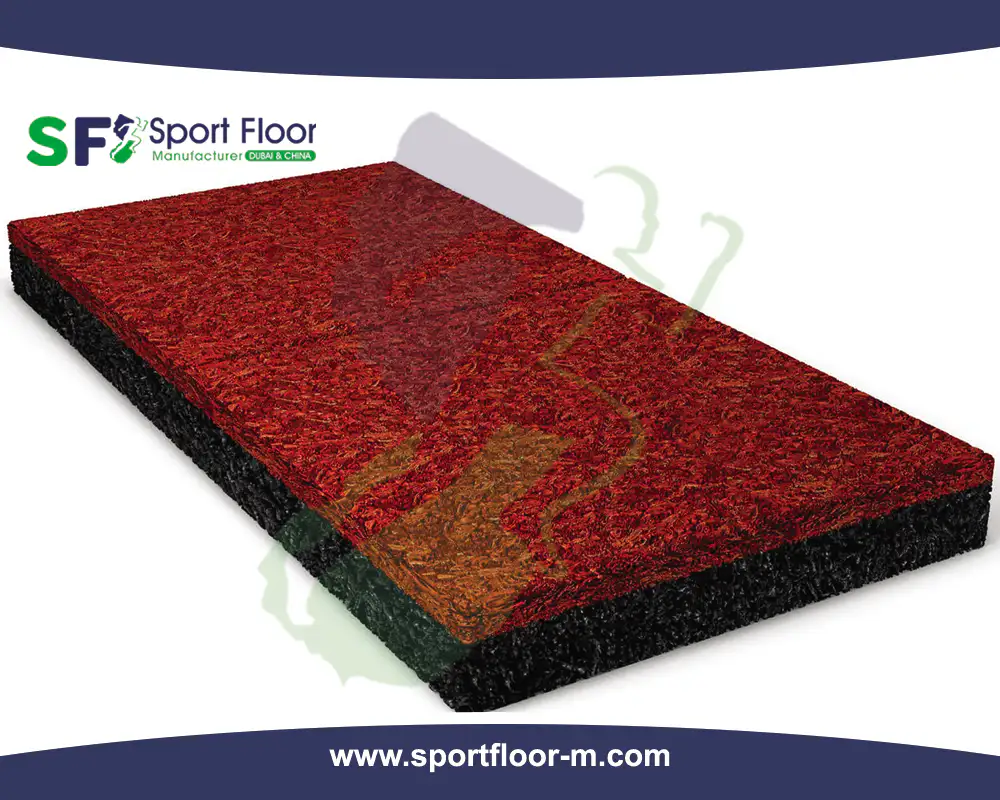
A Tartan System Is the Complete Build-Up, Not Just the Topcoat
A tartan or polyurethane sports surface system consists of a defined sequence of compatible materials installed over a prepared supporting base. The upper color layer is only one component of the complete construction.
Systems differ according to whether they are intended for running tracks, ball-sports courts, school activity areas or project-specific recreational applications.
They also differ according to permeability, resilient-layer construction, wearing surface, total thickness, installation method and required testing.
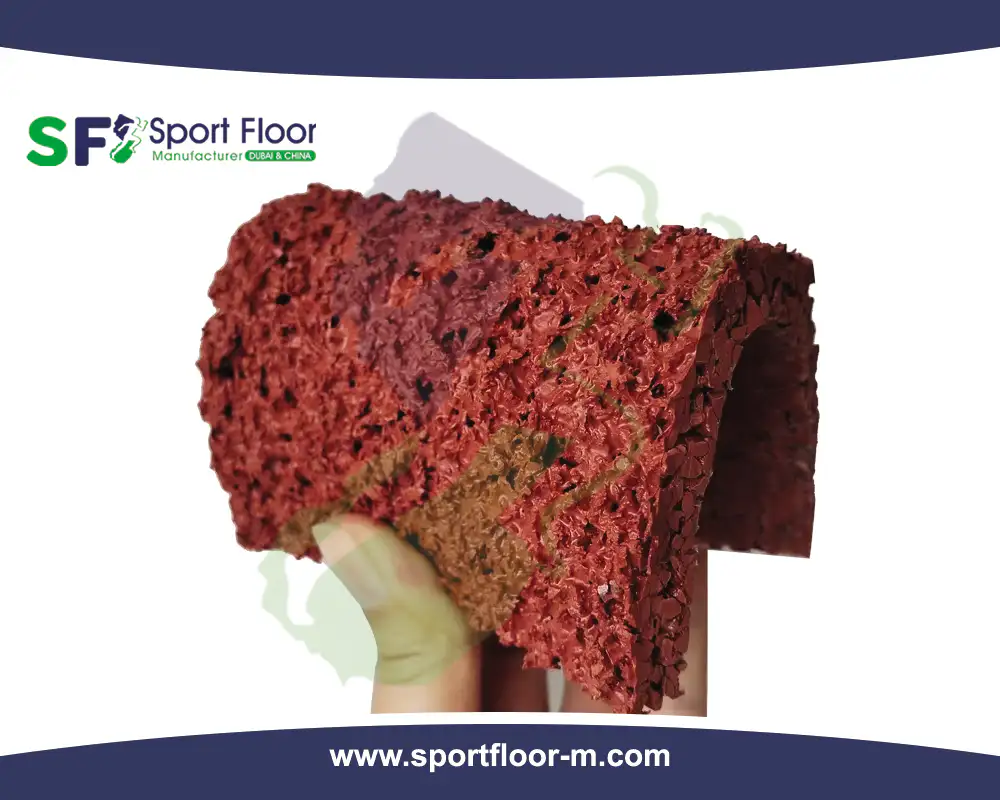
Application Defined
Running tracks and sports courts may require different surfaces, textures and resilient performance.
Base Defined
Concrete, asphalt and existing PU surfaces require different preparation and primer decisions.
Drainage Defined
Permeable and impermeable systems require different base and water management arrangements.
Performance Defined
Any required friction, shock absorption or deformation values should be stated and documented.
Permeable and Impermeable PU Surface Systems
Permeability is a complete-system decision. It cannot be determined from the visible top color alone.
Permeable or Open System
A permeable construction is designed to allow water to move through the installed surface and into a compatible draining base.
- Requires an appropriately designed porous structure.
- Requires a compatible draining asphalt or base arrangement.
- Should not be installed over a base that traps water.
- Often associated with selected spray-coat constructions.
- Maintenance should preserve open pores and drainage routes.
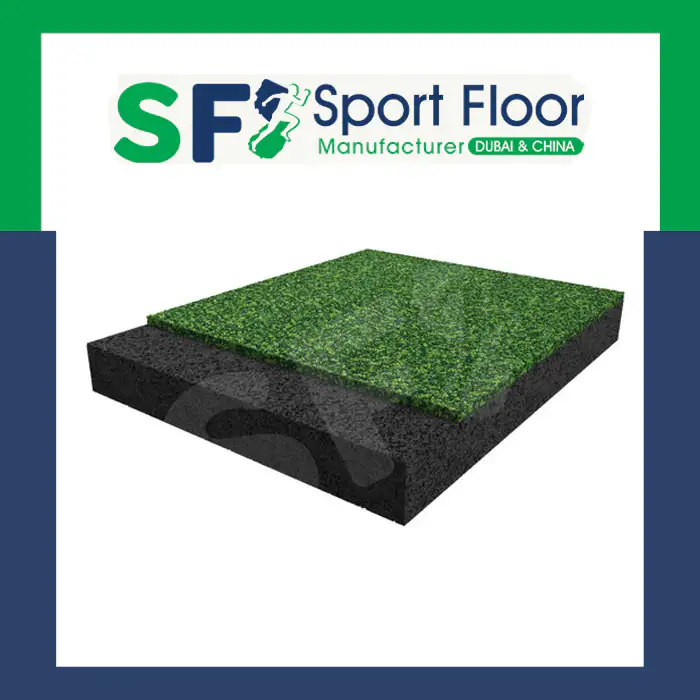
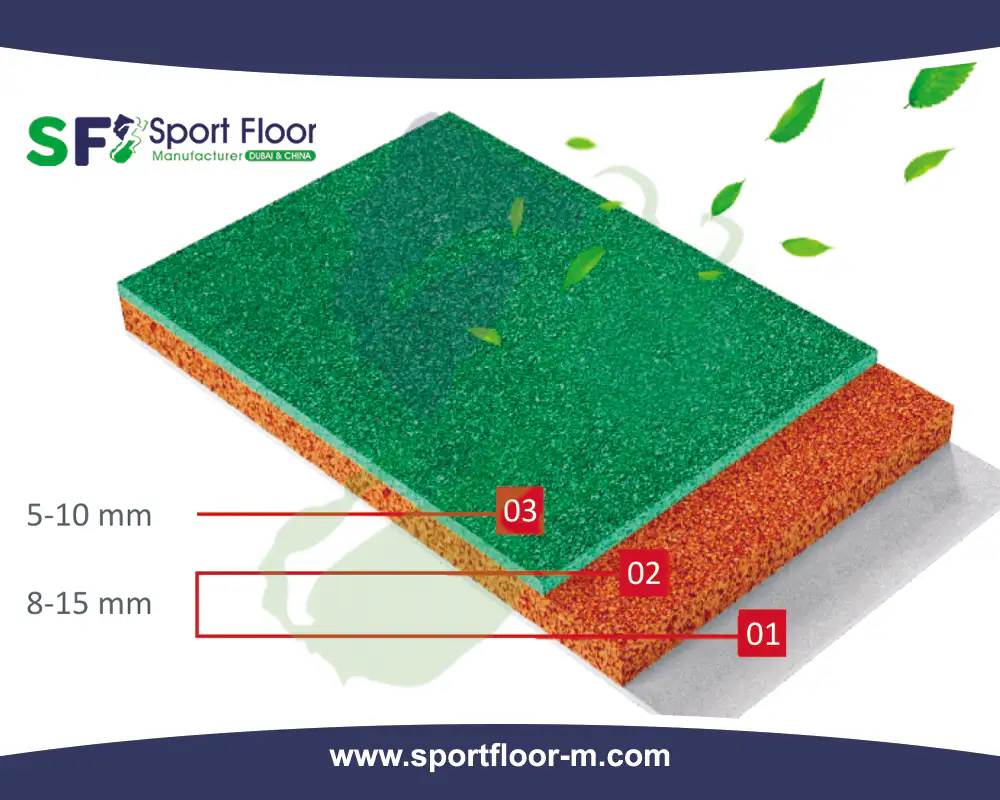
Impermeable or Closed System
An impermeable system is designed to shed water from the upper surface using the finished levels and perimeter drainage.
- Uses dense or sealed upper layers.
- Requires controlled surface falls.
- Requires clear perimeter outlets and channels.
- May include pore sealer and self-levelling PU layers.
- Base moisture and vapour conditions remain important.
Main Polyurethane Running Track Systems
The names below describe broad construction families. Exact products, thicknesses and test performance remain supplier- and project-dependent.
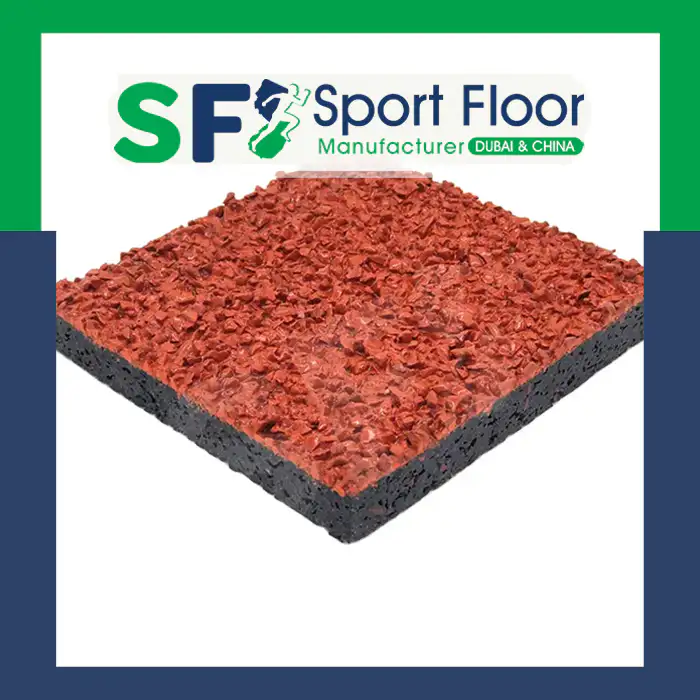
Spray Coat System
A system commonly built over a PU-bound rubber base and finished with a spray-applied mixture of polyurethane and fine granules.
- Rubber resilient base layer.
- Spray-applied textured wearing surface.
- Project-dependent permeability.
- Commonly considered for schools and training facilities.
- Requires controlled spray application.
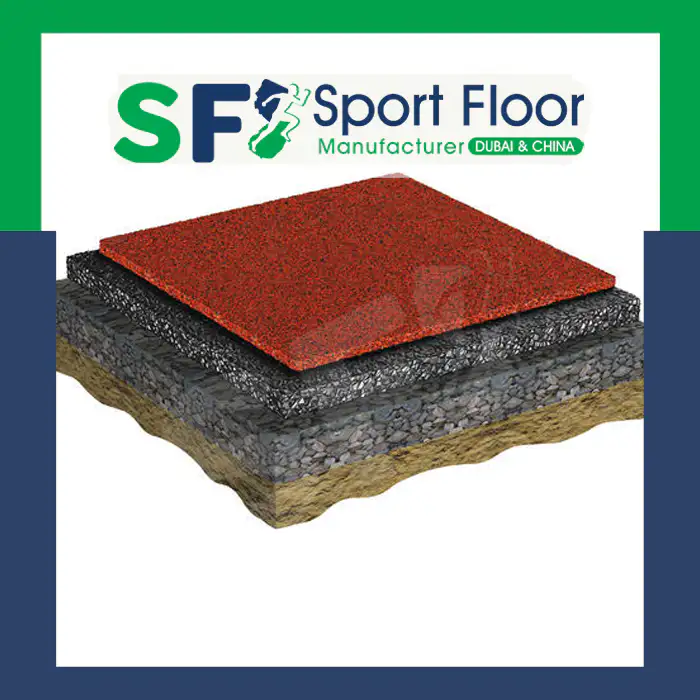
Sandwich System
A multi-layer track construction typically combining a PU-bound rubber base, pore sealing and a dense upper PU wearing construction.
- Resilient rubber base.
- Pore-sealing layer.
- PU elastic or levelling construction.
- Granule-finished upper surface.
- Impermeable drainage strategy commonly required.
Full PU System
A polyurethane-intensive system containing multiple dense elastic PU layers and a specified upper wearing surface.
- Dense polyurethane build-up.
- Typically requires an engineered asphalt base.
- Impermeable water-management approach.
- Specialist application and quality control.
- Performance values require exact test documentation.
PU Court Systems Are Different from Athletics Tracks
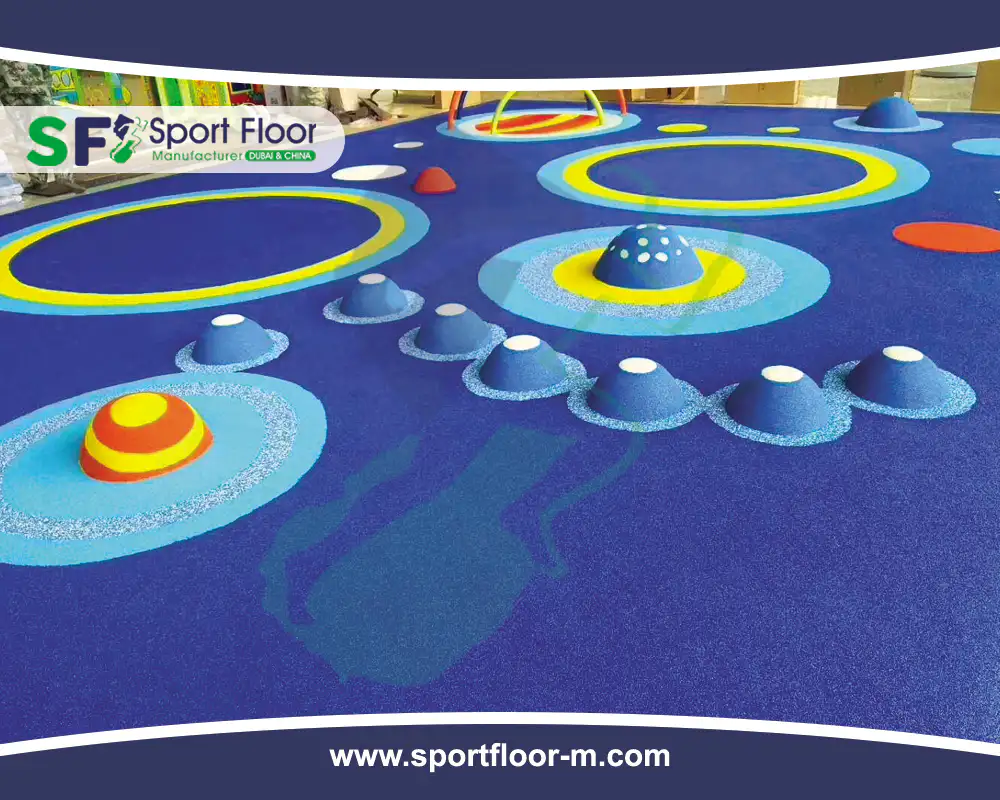
A PU sports court may use polyurethane, rubber and colored upper layers, but its texture, ball response, line plan and operational use differ from a running track.
- Confirm the primary sport before selecting the build-up.
- Identify indoor or outdoor exposure.
- Define required resilient performance.
- Review ball response and surface texture.
- Coordinate goals, posts, nets and equipment foundations.
- Use a sport-specific line-marking drawing.
- Confirm cleaning and maintenance requirements.
- Verify applicable testing separately.
Full PU vs Sandwich vs Spray Coat vs PU Court System
| Comparison Point | Spray Coat | Sandwich | Full PU | PU Court System |
|---|---|---|---|---|
| Primary Positioning | School, training and project-dependent athletics tracks. | Multi-layer athletics tracks requiring a sealed upper system. | PU-intensive athletics facilities with specified performance. | Ball sports, multi-sport courts and recreational areas. |
| General Construction | PU-bound rubber base with spray-applied upper texture. | Rubber base, sealer, PU layers and granule wearing surface. | Multiple dense PU layers with specified upper finish. | Application-specific resilient and PU finish layers. |
| Permeability | May be designed as porous or semi-porous. | Commonly treated as a sealed or impermeable system. | Commonly dense and impermeable. | Depends on the exact court build-up. |
| Base Requirement | Compatible draining and stable base. | Stable engineered base with surface drainage. | High-quality engineered base with strict levels. | Concrete or asphalt according to the exact system. |
| Upper Surface | Spray-applied PU and fine granule mixture. | PU wearing layer with granule finish. | Dense PU upper construction with granules where specified. | Smooth, textured or granule-based sport finish. |
| Installation Control | Rubber-layer and spray-application control. | Layer thickness, pore sealing and broadcast control. | Specialist PU mixing and multi-layer application. | Sport-specific levelling, finish and line control. |
| Performance Claims | Must be supported by reports or testing for the exact offered construction. The system name alone does not prove a value. | |||
| Certification | Product and completed-facility certification must be checked separately where required. | |||
Typical Layers Used Across Tartan Systems
Structural Base
Concrete or asphalt providing support, geometry, levels and drainage strategy.
Base Preparation
Cleaning, grinding, repairs and removal of contamination or weak material.
PU Primer
Compatible adhesion layer selected for the substrate and system.
SBR Rubber Layer
PU-bound resilient layer used in selected track and court constructions.
Pore Sealer
Closes or controls the pores in the rubber layer where required.
Self-Levelling PU
Dense elastic polyurethane layer used in specified systems.
Wearing Surface
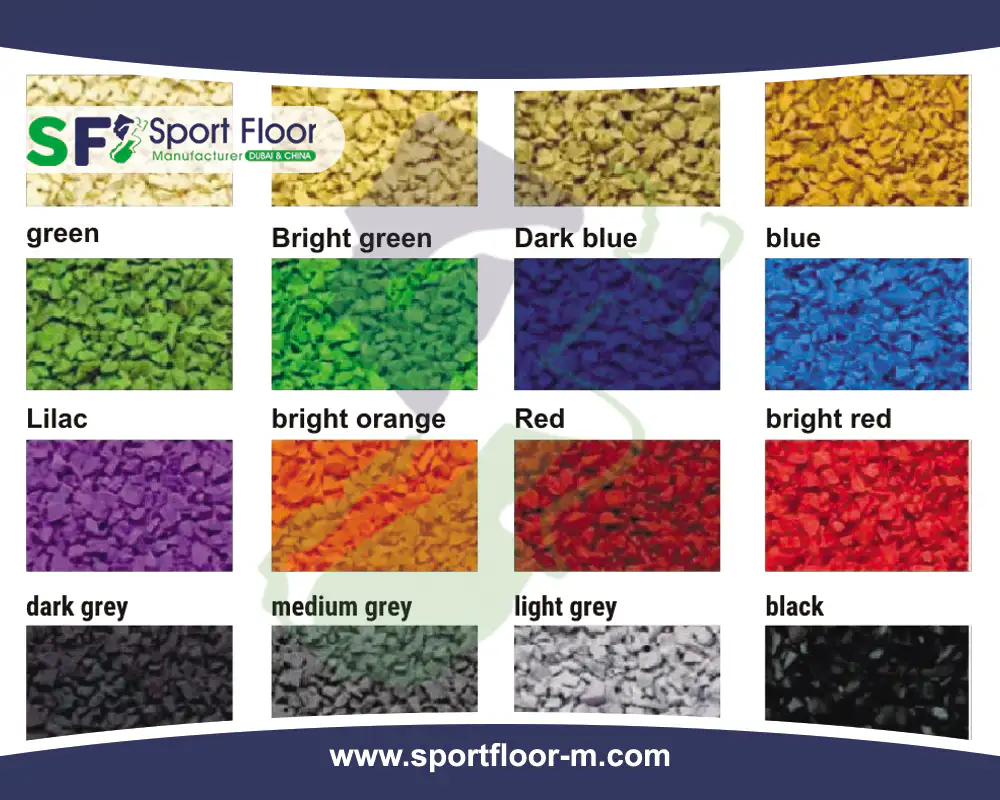
EPDM broadcast, spray coat, textured PU or another approved finish.
Line Marking
Compatible paint installed according to the approved sport or track drawing.
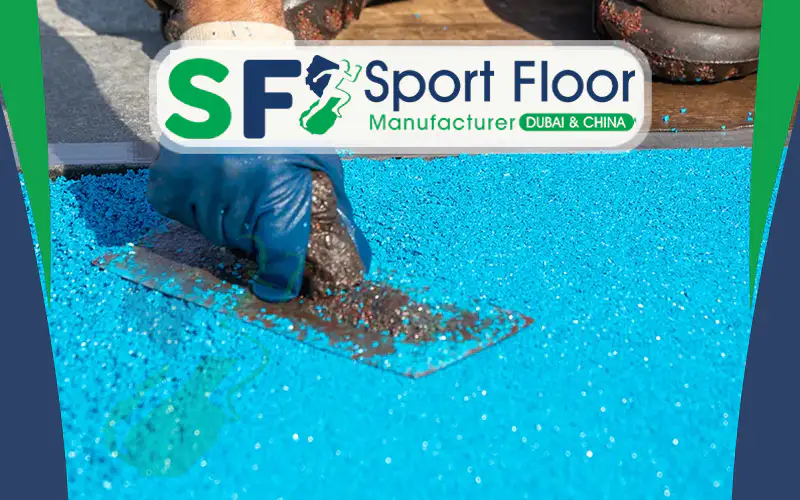
EPDM Granules, PU Binder and Applied Surface Materials
The exact granule size, binder ratio, color and material grade should be confirmed for each system and application.
Material Selection Must Match the System
- Confirm the exact PU primer reference.
- Confirm one-component or two-component binder where relevant.
- State SBR and EPDM granule sizes.
- Define binder-to-granule mixing ratios.
- Confirm batch and color requirements.
- Check storage and shelf-life requirements.
- Request TDS and SDS for each component.
- Verify compatibility between all layers.
The Supporting Base Controls the Success of the PU System
Concrete Moisture
Confirm curing and moisture conditions before sealing the surface with dense PU layers.
Concrete Joints
Movement and construction joints should be reviewed before selecting the treatment detail.
Asphalt Stability
Confirm compaction, ageing, levels and freedom from movement or contamination.
Surface Flatness
Correct unacceptable high points and depressions before applying resilient layers.
Water Ponding
Resolve drainage defects before covering the base with the sports surface.
Existing Coatings
Test adhesion and compatibility rather than assuming the existing finish can remain.
Perimeter Levels
Coordinate kerbs, channels, thresholds and surrounding paving.
Equipment Foundations
Complete sleeves, anchors and structural fixings before final PU applications.
Weather Conditions
Temperature, humidity, rain and wind affect mixing, curing and overcoating.
Typical Tartan System Installation Sequence
Confirm System
Approve application, layers, products, thickness and performance requirements.
Inspect Base
Review moisture, cracks, drainage, levels and contamination.
Prepare Surface
Clean, grind and remove weak or incompatible material.
Complete Repairs
Treat approved defects with compatible repair materials.
Apply Primer
Follow application rate and overcoating instructions.
Mix Rubber Layer
Control granule weight, binder ratio and mixing uniformity.
Install Resilient Layer
Apply at the approved thickness and compaction.
Seal or Level
Complete pore sealing or PU levelling where specified.
Install Wearing Surface
Apply the specified spray, PU or granule upper construction.
Apply Lines
Complete accurate setting-out and compatible line marking.
Inspect and Test
Perform agreed visual, thickness and performance controls.
Handover
Submit records, maintenance guidance and applicable documents.


Resurfacing Requires Identification of the Existing System
Before applying new polyurethane materials, identify whether the existing surface is spray coat, sandwich, full PU, wet-pour rubber, acrylic or another system.
- Inspect delamination and loose areas.
- Check surface and base cracking.
- Review previous repairs and recoating.
- Test adhesion of the existing surface.
- Check moisture and water ponding.
- Confirm chemical and material compatibility.
- Measure remaining system thickness where needed.
- Define local replacement versus full resurfacing.
Information Needed Before Choosing a Tartan System
Primary Application
Running track, tennis, basketball, volleyball, handball or multi-sport use.
Playing Level
Recreational, school, training, club or formal competition.
Indoor or Outdoor
State climate, exposure and building conditions.
Supporting Base
Concrete, asphalt or existing sports surface.
Base Condition
Cracks, moisture, contamination, movement, unevenness or ponding.
Permeability
Open draining system or closed surface-draining system.
Required Thickness
State consultant requirements or request a defined comparison.
Performance Values
List friction, resilience, deformation or other test criteria.
Certification
Product certificate, facility certificate or no certification.
Color and Markings
Surface zones, track lines, sport lines, logos and numbers.
Supply Scope
Materials only, supervision, installation or turnkey work.
Destination
Country, city, port, Incoterms® rule and required delivery date.
What a Tartan System Quotation Should Include
| Quotation Item | Required Information | Reason |
|---|---|---|
| System Name | Full PU, Sandwich, Spray Coat, PU Court or another defined system. | Establishes the broad system family. |
| Layer Schedule | Every primer, rubber, sealer, PU and wearing layer. | Prevents incomplete or misleading comparison. |
| Material References | Exact names or codes for every component. | Links the offer to technical documentation. |
| Thickness | Nominal or specified thickness of every applicable layer. | Influences material quantity and expected performance. |
| Consumption | Planned kilograms per square metre or total material quantity. | Allows checking of the commercial calculation. |
| Base Scope | Preparation, repairs, levelling and excluded structural work. | Clarifies contractor responsibilities. |
| Testing | Included tests, methods, laboratory and acceptance criteria. | Testing should not be assumed. |
| Certification | Exact product or facility certificate requested. | Avoids general or unsupported certification statements. |
| Documentation | TDS, SDS, system declaration, method statement and reports. | Supports technical review and approval. |
| Commercial Scope | Materials, labour, equipment, supervision, travel and testing. | Makes competing offers comparable. |
| Delivery | Packaging, destination, Incoterms® rule and schedule. | Defines logistics and commercial responsibility. |
Athletics Surface Certification and International Delivery
Continue to the Exact System or Application
Tartan Systems FAQ
What is a tartan system?
It is a complete polyurethane and rubber sports-surface construction consisting of specified compatible layers over a prepared base.
What is the difference between tartan material and a tartan system?
A material is one component, such as PU binder or EPDM granules. A system is the full sequence of materials forming the completed surface.
What is a spray coat running track system?
It generally uses a PU-bound rubber base with a spray-applied polyurethane and fine-granule upper surface. Exact construction varies by supplier.
What is a sandwich running track system?
It is typically a multi-layer track containing a resilient rubber base, pore sealing, dense PU layers and a granule-finished upper surface.
What is a full PU running track system?
It is a dense polyurethane-intensive track system using multiple elastic PU layers and a specified wearing construction.
Which tartan system is the best?
There is no universal best system. Selection depends on the application, base, budget, permeability, playing level, performance specification and certification requirements.
Are spray coat systems always permeable?
Not every commercial build-up is identical. Confirm the complete system and base drainage rather than relying only on the name.
Are sandwich and full PU systems impermeable?
They are commonly designed as dense or sealed systems, but the exact construction and drainage strategy must be confirmed.
Can the same tartan system be used for a court and running track?
Not automatically. Court and athletics surfaces can require different texture, ball response, resilience, markings and testing.
Can tartan systems be installed over concrete?
Project-dependent systems may be installed over prepared concrete after checking moisture, curing, joints, surface strength and primer compatibility.
Can tartan systems be installed over asphalt?
Yes. Many athletics-track systems use engineered asphalt, but it must meet the system’s stability, level and drainage requirements.
Does greater system thickness always mean better performance?
No. Performance depends on the complete design, material properties, application quality and compatibility, not thickness alone.
Does every tartan system provide the same shock absorption?
No. Values vary by system and should be supported by applicable test documentation.
Can an old tartan surface be resurfaced?
It may be resurfaced after identifying the existing construction and assessing adhesion, cracks, moisture, drainage and material compatibility.
Are all tartan track systems World Athletics certified?
No. Certification must be verified for the exact product, and completed-facility certification is a separate scope.
What information is required to compare tartan quotations?
Compare layer schedules, product references, thicknesses, consumption, base scope, tests, documents, installation, exclusions and delivery terms.
How is tartan system pricing calculated?
Pricing depends on area, system type, thickness, materials, base condition, labor, equipment, testing, documentation and destination.