











Tartan Materials for Polyurethane Sports Surfaces
Review the main materials used in polyurethane courts, running tracks and rubber-based sports surfaces. Specify PU primers, binders, SBR and EPDM granules, pore sealers, self-levelling compounds, topcoats and line paints as one compatible system with defined quantities, documentation, packaging and application requirements.
Tartan Materials Should Be Purchased as a Compatible System
Polyurethane sports surfacing is created from several materials that must bond and cure together correctly. Buying each component only by its generic name can produce incompatible layers, incorrect quantities or an incomplete system.
The required materials depend on whether the project is a running track, ball-sports court, multi-purpose area, recreational surface or resurfacing project.
The material schedule should also identify the base type, permeability, layer sequence, target thickness, environmental conditions and required test documentation.
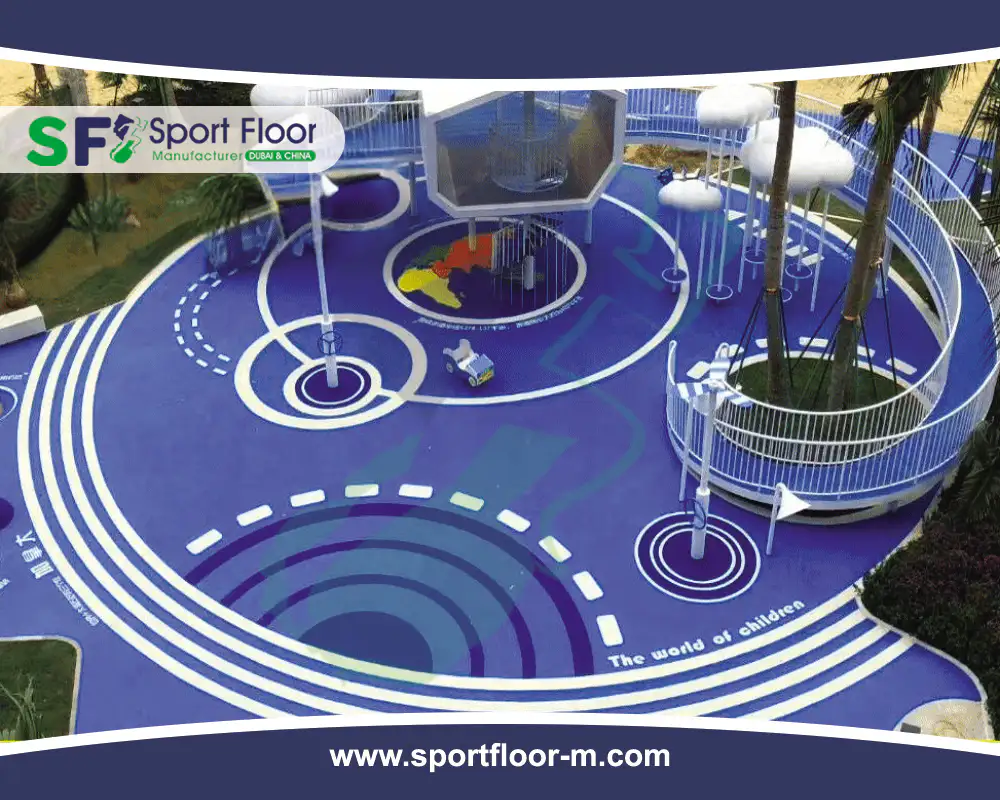
System Compatibility
Each primer, binder, granule, sealer and topcoat should be approved for use with the other layers.
Quantity Planning
Material quantities depend on area, thickness, base texture, application loss and the approved consumption rate.
Application Control
Mixing, curing and overcoating conditions must follow the exact product information.
Document Control
TDS, SDS and test reports must identify the actual material being supplied.
Main Materials Used in PU Courts and Running Tracks
A project may use some or all of the following components. The exact selection depends on the approved system.
PU Primer
Promotes adhesion between the prepared concrete or asphalt base and the subsequent polyurethane construction.
PU Rubber Binder
Binds SBR or EPDM granules to create resilient rubber layers or wet-pour surfaces.
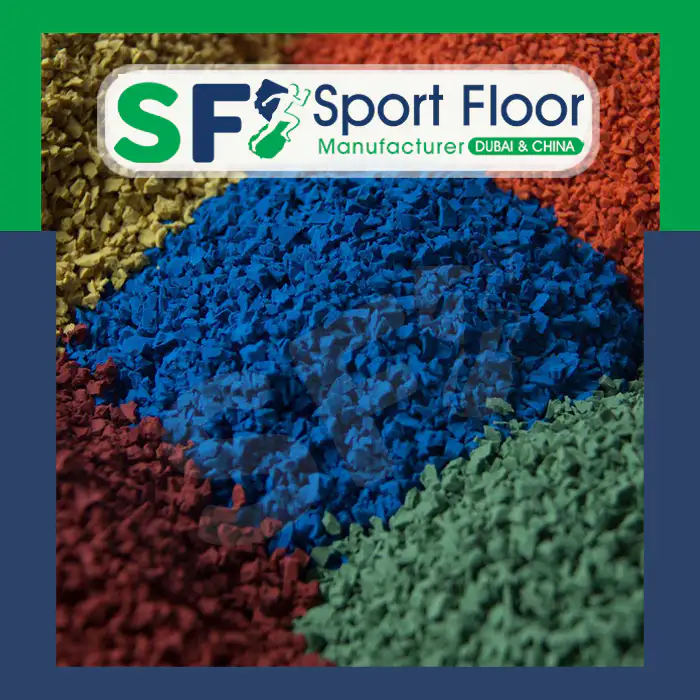
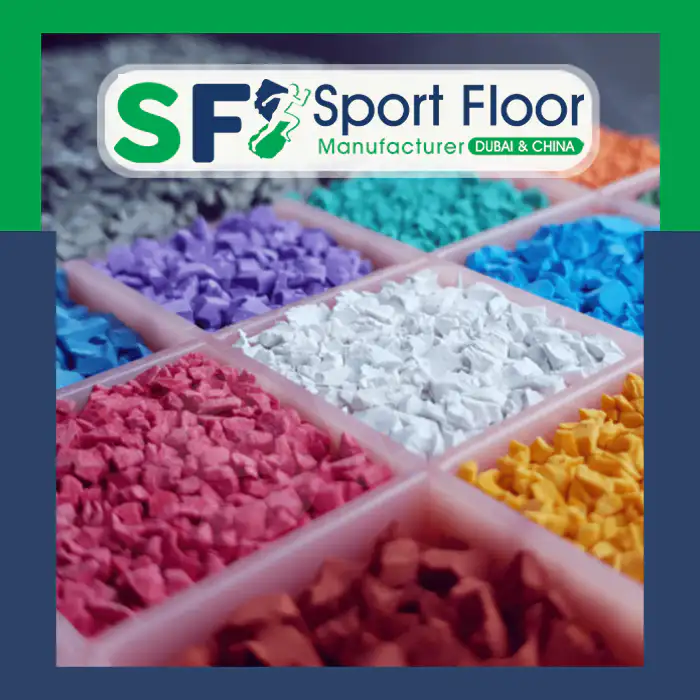
SBR Rubber Granules
Black rubber granules commonly used in project-dependent resilient base or cushion layers.
EPDM Granules
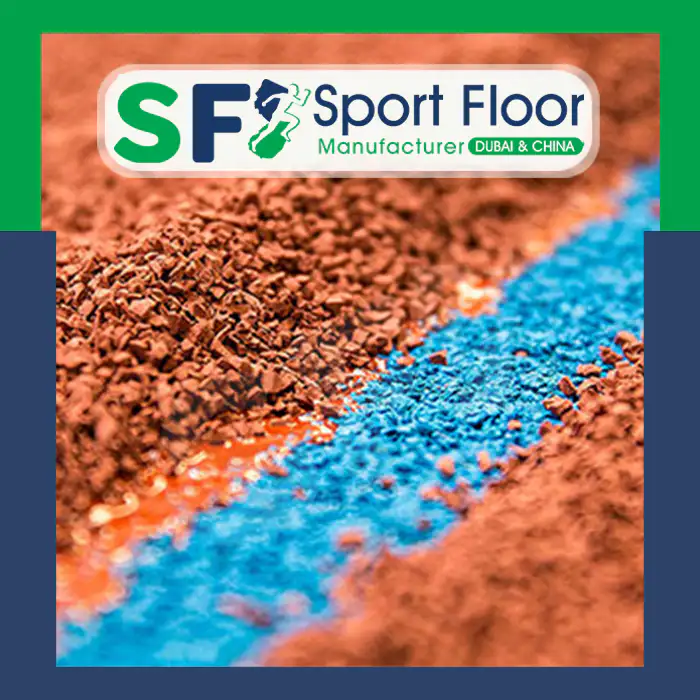
Colored synthetic rubber granules used in selected upper layers and recreational surface constructions.
Pore Sealer
Closes or controls the pores of a rubber base before dense PU layers in applicable systems.
Self-Levelling PU
Dense polyurethane compound used as an elastic or levelling layer in specified systems.
PU Spray Coating
Spray-applied polyurethane and fine-granule mixture used in selected running-track systems.
PU Topcoat
Project-specific finishing coat selected according to exposure, texture, color and system requirements.
Line Paint
Compatible marking material used for court lines, running-track markings, numbers and approved logos.
PU Repair Compound
Used for compatible local repairs, edge details or transitions where included in the method statement.
Approved Additives
Used only where stated by the material manufacturer and exact formulation instructions.
System Sets
Coordinated quantities packaged according to the planned area, consumption and project sequence.
PU Primer, Binder and Resin Materials
Polyurethane materials perform different functions. A primer is not interchangeable with a rubber binder, pore sealer, self-levelling resin or topcoat.
- Confirm one-component or multi-component packaging.
- Identify the intended substrate or layer.
- Confirm the prescribed mixing sequence.
- Review application and overcoating windows.
- Check temperature and moisture limitations.
- Confirm packaging weights for both components.
- Review storage requirements and shelf life.
- Request the matching TDS and SDS.
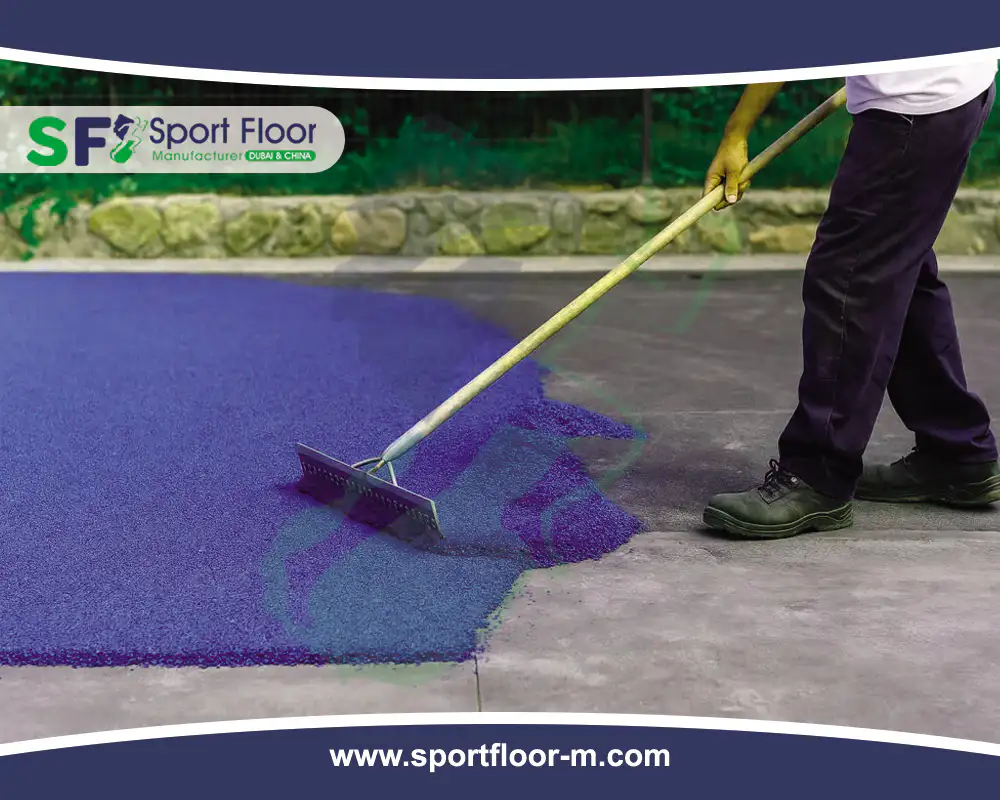
PU Primer
Select according to concrete, asphalt or existing-system compatibility rather than color or price alone.
PU Binder
Specify the intended granule type, application, mixing instructions and required cured-layer properties.
Pore Sealer
Use only in systems requiring closure or regulation of the rubber layer’s open structure.
Self-Levelling PU
Confirm component ratio, target consumption, application tools and required following layer.
Spray PU
Confirm compatible granules, equipment, spray passes, texture and application rate.
Topcoat and Line Paint
Confirm intended exposure, color reference, compatibility and required surface preparation.
SBR and EPDM Granules Are Not Interchangeable by Default
Granule type, size, color, shape, density and binder compatibility affect mixing, application and the completed surface. Obtain the exact product information before ordering.
| Comparison Point | SBR Rubber Granules | EPDM Granules | Procurement Requirement |
|---|---|---|---|
| Common Position | Frequently used in resilient base or cushion layers. | Frequently used in colored upper or recreational layers. | Confirm the precise function within the approved system. |
| Color | Commonly supplied in black. | Available in multiple project-dependent colors. | Approve physical samples and color references where required. |
| Granule Size | Selected according to layer thickness and application method. | Selected according to wearing layer, wet-pour or broadcast use. | State the exact required grading rather than “standard size.” |
| Binder Ratio | Depends on granule characteristics and system requirements. | Depends on application, grading and selected PU binder. | Use the ratio stated for the supplied combination. |
| Documentation | Product description, grading and applicable declarations. | Color, grading and applicable technical or test information. | Match documents to the exact supplied batch or product. |
| Storage | Keep dry and protected from contamination. | Keep dry, clean and protected according to supplier guidance. | Store bags on suitable pallets in a protected area. |
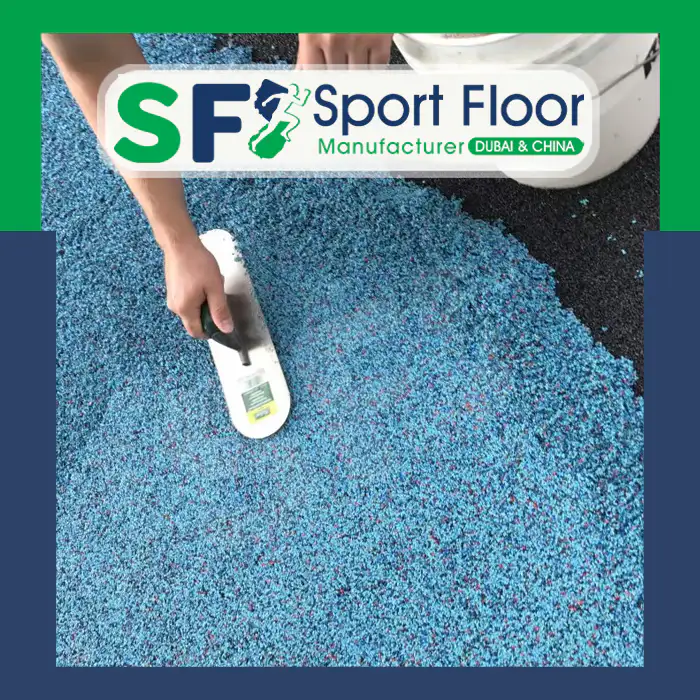
Sealers, Levelling Materials, Topcoats and Line Paints
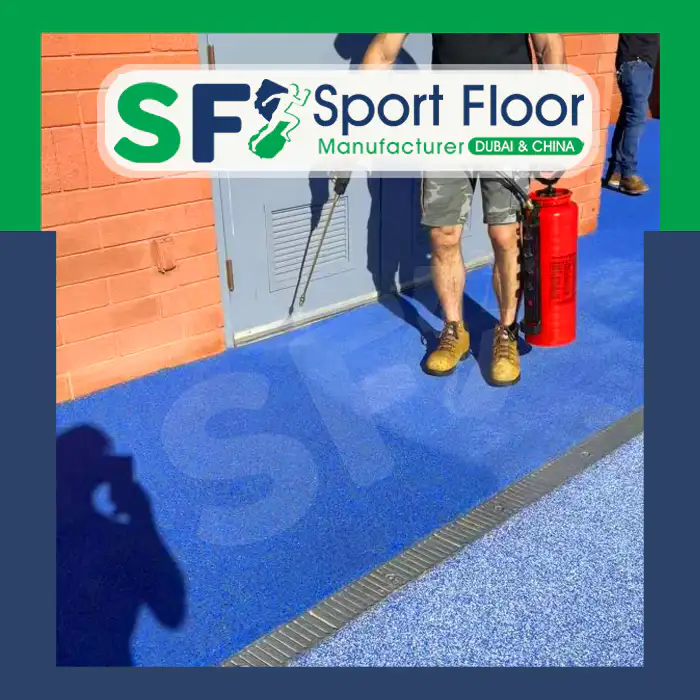
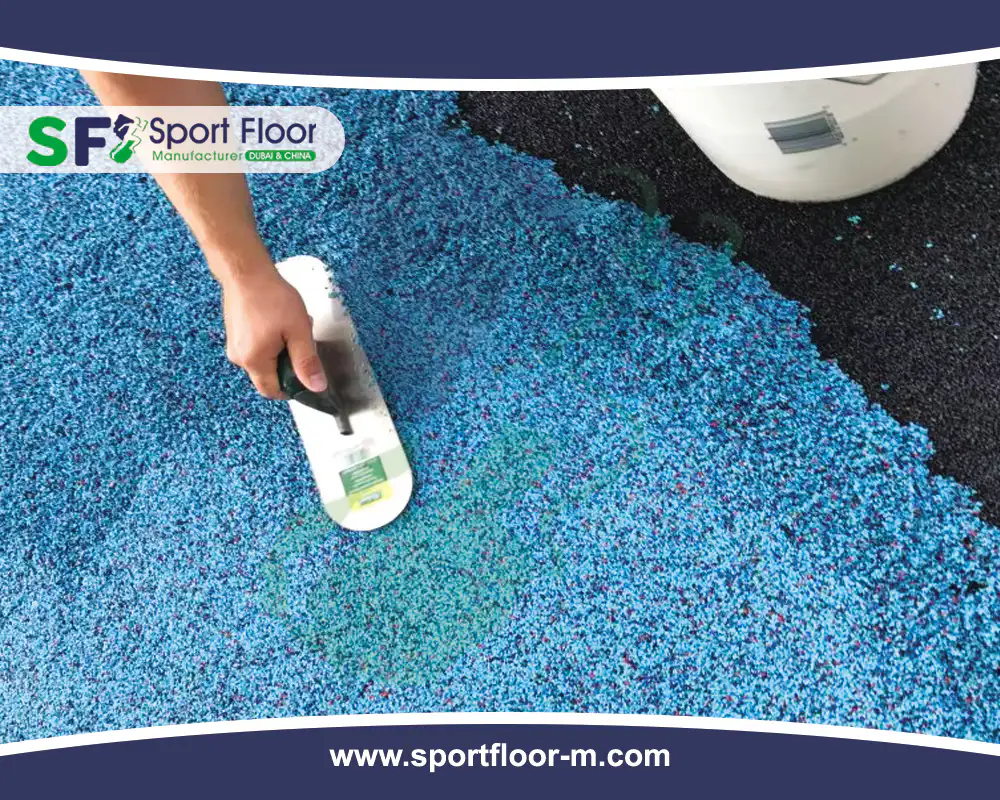
Secondary materials can have a major effect on adhesion, texture, layer continuity and appearance. They should not be substituted without checking compatibility.
- Use the specified pore sealer for the approved rubber layer.
- Confirm whether levelling PU is one- or multi-component.
- Verify the required layer before and after the sealer.
- Confirm topcoat application rate and surface preparation.
- Use compatible line paint over the cured wearing surface.
- Confirm approved colors before material production.
- Use repair materials suitable for the existing system.
- Do not mix products from unrelated systems without approval.
Repair and Levelling Compound
Selected according to the substrate defect, required thickness and compatibility with the following primer.
Pore-Sealing Compound
Used where the approved system requires a closed receiving surface over an open rubber layer.
Self-Levelling Layer
Forms a dense PU layer where included in Sandwich, Full PU or project-defined constructions.
Spray-Coat Compound
Requires compatible fine granules, spray machinery, application passes and environmental controls.
Colored Topcoat
Selected according to the complete system, intended exposure and required finish.
Sports Line Paint
Used only after accurate setting-out and verification of the governing sport or track drawing.
Approved Cleaning Materials
Use only products and methods permitted for the substrate and following PU layer.
Application Accessories
Mixing tools, trowels, rollers, spray equipment and measuring devices should suit the system.
Compatibility Is More Important Than Buying Components Separately
Primer to Base
Confirm that the primer is intended for the actual concrete, asphalt or existing surface.
Binder to Granule
Confirm that the PU binder and granule characteristics are suitable for the intended layer.
Sealer to Rubber Layer
The pore sealer should be selected according to the installed rubber surface and following PU layer.
PU Layer to Topcoat
Observe surface preparation and overcoating requirements before applying the finishing material.
Line Paint to Surface
Use a compatible product over a properly cured and prepared wearing layer.
Repair to Existing System
Identify the existing material before choosing local repair or resurfacing products.
Color Compatibility
Approve samples while considering granule color, resin appearance and final application method.
Environmental Conditions
Use only within the temperature, humidity and substrate-moisture limits stated for the exact product.
Batch Coordination
Plan material batches and application zones to manage consistency across the project.
How Tartan Material Quantities Should Be Calculated
Final quantities should be based on the approved layer schedule and technical consumption rates—not on one generic kilogram-per-square- metre figure.
Confirm Net Area
Measure every surface zone and separate areas using different systems or colors.
Approve Layer Schedule
Identify each primer, granule, binder, sealer, PU and finishing layer.
Confirm Thickness
State the specified thickness for each applicable rubber or PU layer.
Use TDS Consumption
Apply the published or approved consumption for the exact material.
Review Base Texture
Roughness and porosity can influence primer, repair and levelling quantities.
Allow Application Loss
Include only the project-appropriate allowance for mixing, packaging and installation loss.
Round to Pack Sizes
Convert calculated quantities into complete drums, sets and bags.
Sequence Deliveries
Plan shipment and storage according to the installation programme.
Storage, Handling and Batch Control
- Store materials according to the exact product instructions.
- Keep PU materials protected from moisture and contamination.
- Keep drums sealed until required for controlled use.
- Store bags on clean, dry and stable pallets.
- Protect granules from water, dirt and foreign materials.
- Record batch numbers and receipt dates.
- Use stock according to an approved rotation system.
- Check packages for leakage or damage on arrival.
- Separate components to prevent incorrect mixing.
- Protect materials during internal site transport.
- Maintain the required safety and fire arrangements.
- Review shelf-life status before application.
Documents to Request Before Approving Tartan Materials
Technical Data Sheet
Should identify the product, intended use, application and relevant technical information.
Safety Data Sheet
Provides hazard, handling, storage, exposure and emergency information for the exact material.
System Build-Up
Lists every layer, product reference, target thickness and application sequence.
Color Reference
Identifies approved granule, coating and line colors for the project.
Test Report
Should identify the tested product or system, test method, date and reported result.
Certificate
Must identify the product, manufacturer, scope, issuing body and validity where applicable.
Method Statement
Explains substrate preparation, mixing, application, curing and inspection procedures.
Material Schedule
Connects project quantities, pack sizes and material codes to the approved system.
Packaging and Export Information for PU and Rubber Materials
| Export Item | Information to Confirm | Why It Matters |
|---|---|---|
| Material List | Exact product codes, components and total quantities. | Establishes the shipment scope. |
| Packaging | Drum, pail, bag or set size for each component. | Controls handling, container planning and site use. |
| Net and Gross Weight | Weight per pack and complete shipment. | Required for logistics and transport planning. |
| Pallet Arrangement | Number of packs, pallet dimensions and wrapping. | Supports loading and warehouse preparation. |
| Dangerous-Goods Status | Confirm from the exact SDS and transport classification. | Can affect carrier acceptance and shipping procedures. |
| Shelf Life | Remaining shelf life and production date information. | Important for transit and project scheduling. |
| Destination | Country, city, port and final delivery point. | Required for freight planning and quotation. |
| Incoterms® Rule | Agree the named place and applicable delivery rule. | Clarifies costs, tasks and transfer of risk. |
| Required Documents | Invoice, packing list, origin and technical documents. | Requirements vary by shipment and destination. |
| Delivery Programme | Required dispatch and site-installation dates. | Helps align production, transit and application. |
Information Required for a Tartan Materials Quotation
Application
State running track, sports court, recreational surface or repair project.
System Type
State Full PU, Sandwich, Spray Coat, PU Court or another approved build-up.
Total Area
Provide the complete net surface area and separate color zones.
Layer Schedule
Provide the consultant specification or request a proposed system.
Base Type
Identify concrete, asphalt or existing surface.
Granule Requirements
State SBR and EPDM sizes, colors and required quantities.
PU Material Requirements
Identify primer, binder, sealer, resin, topcoat and line paint.
Documents
List required TDS, SDS, reports, certificates and submittals.
Packaging
State any pack-size, pallet or container requirements.
Destination
Provide country, city and port where relevant.
Delivery Term
State the preferred Incoterms® rule and named place.
Required Date
Provide the dispatch, delivery and installation programme.
Track Product Certification and Delivery References
Continue to the Required System or Application
Tartan Materials FAQ
What are tartan materials?
They are the polyurethane, rubber and supporting materials used to construct PU courts, running tracks and recreational sports surfaces.
Which materials are included in a PU sports surface system?
A system may include primer, PU binder, SBR, EPDM, pore sealer, self-levelling PU, spray material, topcoat and line paint.
Can tartan materials be purchased separately?
Individual components may be quoted, but compatibility and the completeness of the remaining system should be confirmed first.
What is PU binder used for?
It is used to bind compatible rubber granules in resilient base, wet-pour or other project-defined layers.
What is the difference between PU primer and PU binder?
Primer promotes adhesion to the substrate, while binder bonds rubber granules or performs another specifically defined system function.
What are SBR granules used for?
They are commonly used in project-dependent resilient base or cushion layers.
What are EPDM granules used for?
They are commonly used in selected colored upper layers, wet-pour surfaces and recreational flooring constructions.
Can SBR and EPDM use the same binder ratio?
Not automatically. Use the specified ratio for the exact granule, binder, grading and application.
What is pore sealer?
It is a material used in selected systems to close or regulate the pores in a rubber base before dense PU layers.
What is self-levelling polyurethane?
It is a dense PU compound used as an elastic or levelling layer in specified sports-surface systems.
Can materials from different suppliers be mixed?
Do not assume compatibility. Obtain written technical approval before combining components from unrelated systems.
How are material quantities calculated?
Quantities depend on area, layer thickness, TDS consumption, substrate condition, packaging and project-appropriate loss.
What documents should be supplied with PU materials?
Request the exact TDS, SDS, system schedule and applicable test or certification documents required by the project.
Are all tartan materials World Athletics certified?
No. World Athletics product certification applies to specifically identified track-surfacing products and constructions.
How should PU materials be stored?
Follow the exact product documentation and protect materials from moisture, contamination and unsuitable storage conditions.
How should rubber granules be stored?
Keep bags dry, clean, protected and stored on suitable pallets according to supplier guidance.
Can Sport Floor supply materials without installation?
A materials-only quotation may be prepared where the system, quantities, destination and local installation responsibilities are defined.
How is tartan material pricing calculated?
Pricing depends on material type, quantity, packaging, system scope, documents, destination, freight and agreed delivery terms.
What information is required for a materials quote?
Provide the application, area, target system, base, layer schedule, colors, granule sizes, documents, destination and delivery term.