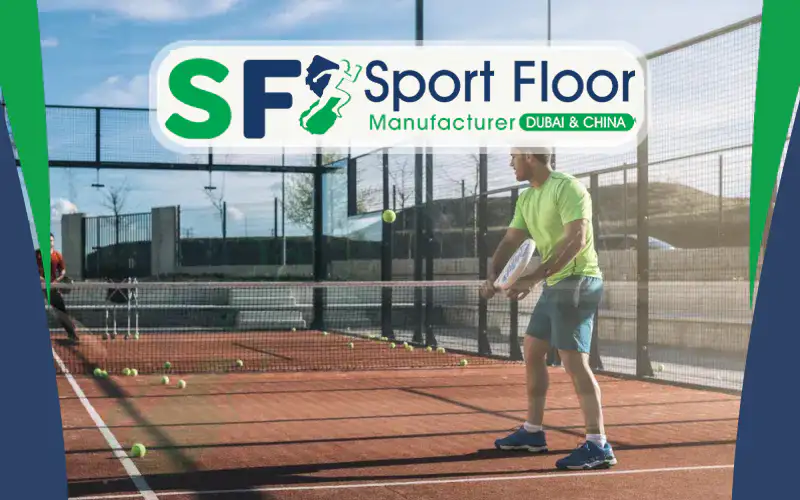
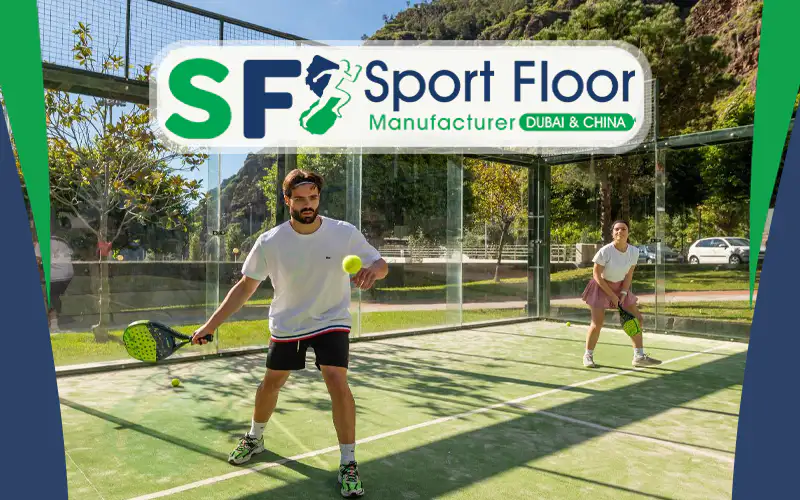
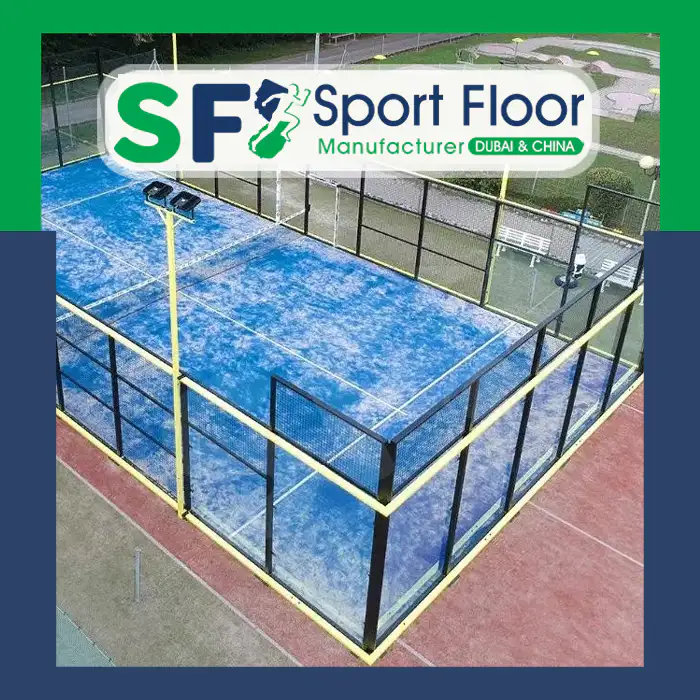
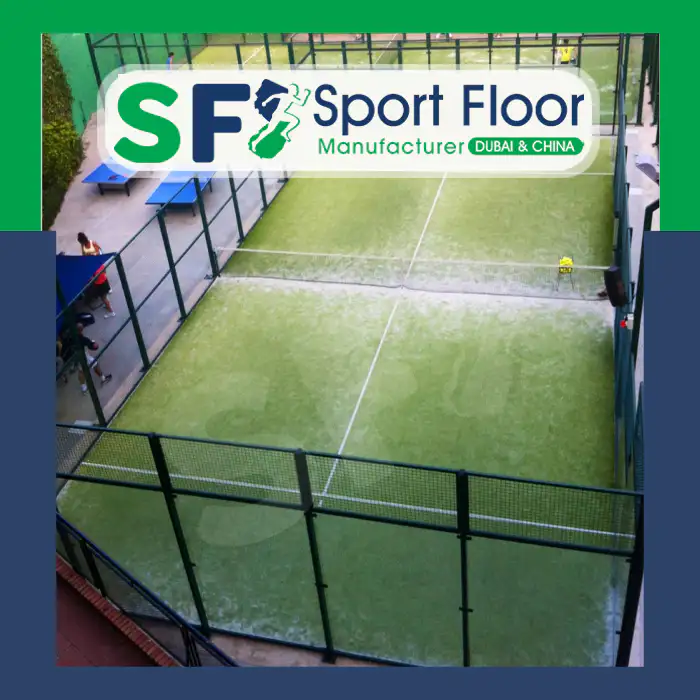
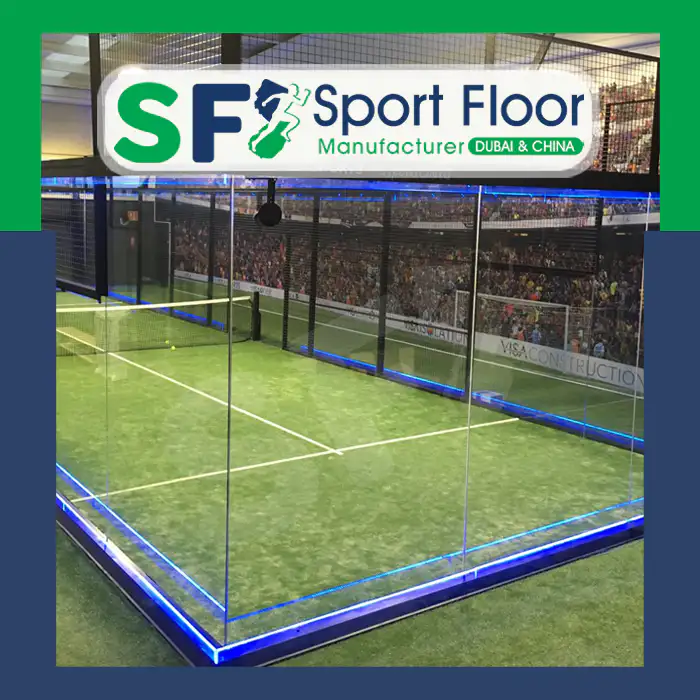
| Total Required Area | Large: 10.97 × 23.77 m (Doubles) | Small: 10 × 20 m (Double lighting) | Padel allows for more courts in the same space |
| Base & Structures | No rebound walls (only fencing) | Glass walls + metal fences (complex installation) | Requires strong impact-resistant internal structures |
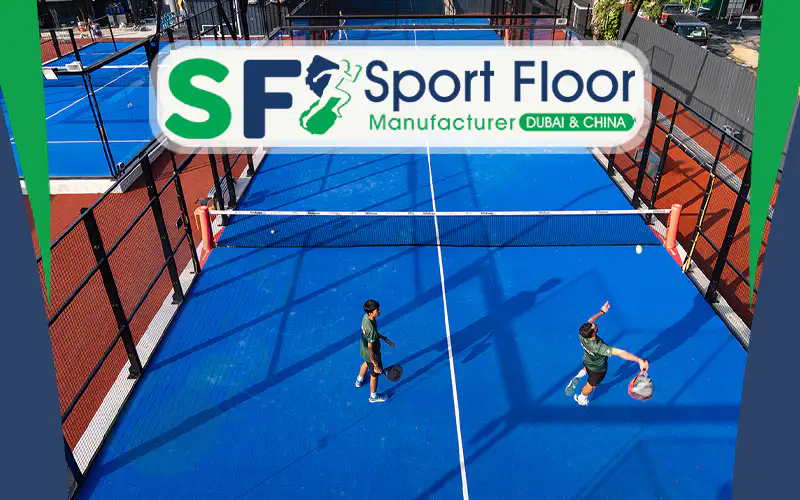
| Common Surface Type | Acrylic / Clay / Artificial grass / Grass with infill | Rubberized artificial turf + sand infill + similar base | Surfaces are quite similar between both courts |
| Construction Cost (Components) | High cost + equipment + larger area | Lower cost + equipment + smaller area | Padel is cheaper due to space and structure type |
| Regular Maintenance | Depends on surface: clay requires renewal, turf needs cleaning | Refilling + cleaning + checking glass and frames | Padel requires less routine maintenance |
| Expected Lifespan | 15–20 years depending on surface type | 10–15 years (with proper maintenance) | Values are approximate and depend on material quality |
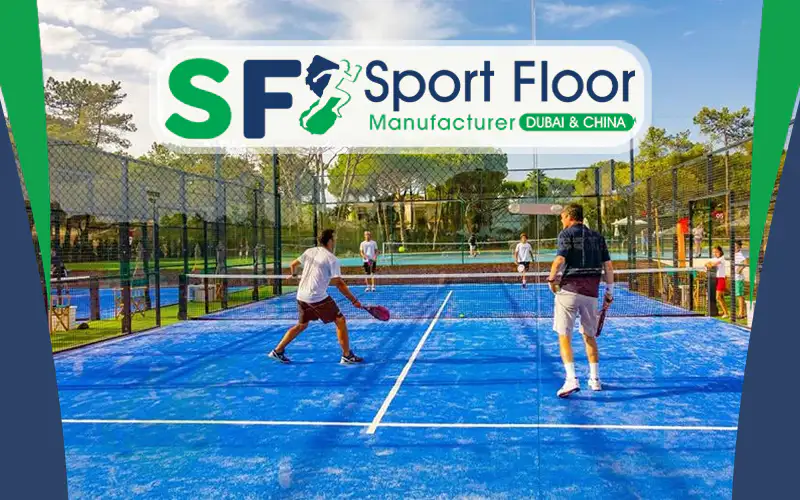
| Playing Style | More movement area, tactical, requires high fitness | Tactical + wall rebounds + social nature | Tennis requires more fitness, padel is more social |
| Equipment / Gear | Tennis balls + tennis rackets + net | Padel rackets + special balls + net | Equipment differs clearly between both sports |
| Commercial Return / Occupancy | Average occupancy and playing hours | High occupancy and very long playing hours | Padel courts are generally more profitable |
| Potential Risks | Running injuries + collisions (if walls exist) | Wall collisions + fewer sprains | Padel is relatively safer |
| Installation Ease / Execution Time | 6–8 weeks (after base casting) | 4–10 weeks (after base and frame setup) | Padel is relatively faster to build |
| Lighting Requirements (Night) | 500–1500 lux (higher for tournaments) | 500–1000 lux (balanced light distribution required) | Lighting distribution is crucial for glass-walled courts |