Artificial Grass for Padel Courts, Clubs and Export Projects
Padel artificial grass for indoor and outdoor courts, sports clubs, resorts, residential compounds and commercial padel projects. Select the surface by yarn construction, pile profile, density, backing, silica sand, court color, roll plan, maintenance and required playing characteristics.
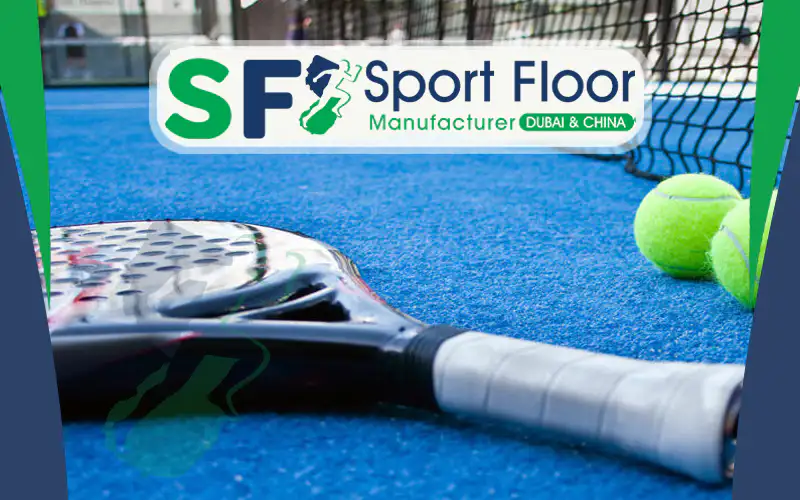
What Is Artificial Grass for Padel Courts?
Padel artificial grass is a short-pile synthetic sports surface designed to support regular ball bounce, controlled player movement and a consistent playing area throughout the court.
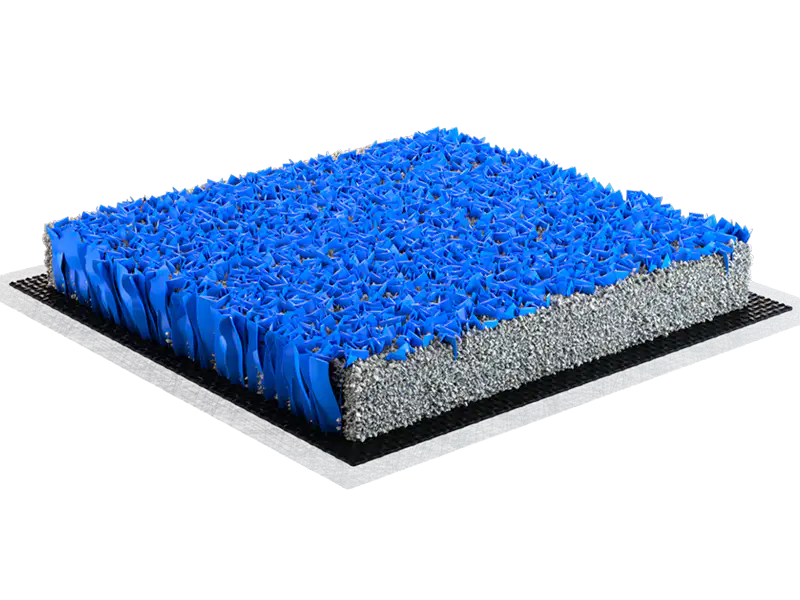
The turf is installed over a stable, level court base and normally works with a specified quantity and grading of silica sand. The sand helps support the fibers, stabilize the surface and influence the interaction between the court, the ball and the players.
Padel turf should not be selected only by color or pile height. Yarn type, density, dtex, backing, tuft retention, roll direction, sand distribution, court levels and maintenance all influence the completed surface.
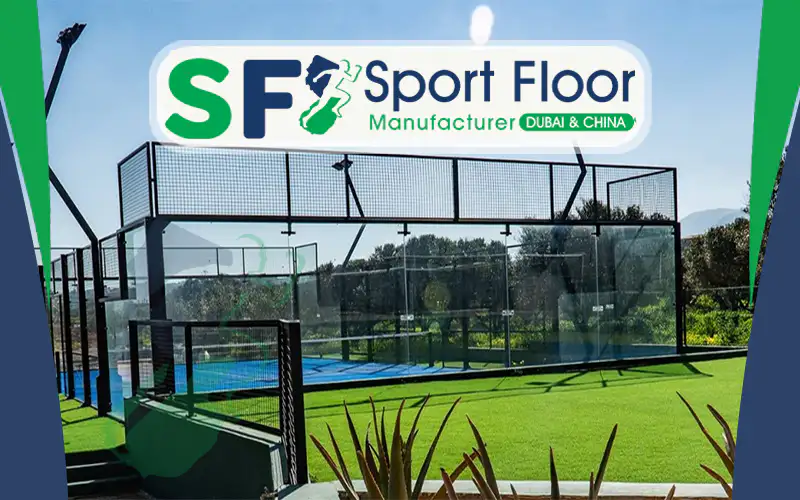
What a Professional Padel Turf Surface Should Deliver
Surface performance depends on the relationship between the turf, silica sand, base, joints, levels and regular maintenance.
Regular Ball Response
The court should provide a consistent surface without loose joints, waves, uncovered areas or irregular sand accumulation.
Controlled Traction
Yarn construction and sand distribution should support player movement without uncontrolled slipping or excessive resistance.
Uniform Court Appearance
Roll direction, joint quality, line placement and brushing should create a visually consistent playing area.
Practical Maintenance
The installed surface should permit cleaning, brushing, sand redistribution and localized repair when required.
Types of Artificial Grass Used for Padel Courts
Product descriptions vary between manufacturers. The exact yarn, density, backing and infill requirements should be confirmed for every model.
Textured Monofilament Turf
Textured fibers create a compact surface profile and can help retain and distribute silica sand within the yarn structure.
- Compact and uniform visual profile.
- Available in several court colors.
- Requires controlled sand distribution.
- Suitable for selected club and competition projects.
Straight Monofilament Turf
Straight individual fibers can provide a defined yarn structure and are selected according to blade shape, density and required play.
- Clear individual blade construction.
- Different profiles and dtex options.
- Requires regular brushing and sand management.
- Selection depends on usage and maintenance.
Fibrillated Padel Turf
Fibrillated yarn begins as a tape-like structure that opens into a network of smaller fibers during production and use.
- Established option for recreational courts.
- Supports silica-sand retention.
- Available in different weights and densities.
- Must match the expected playing intensity.
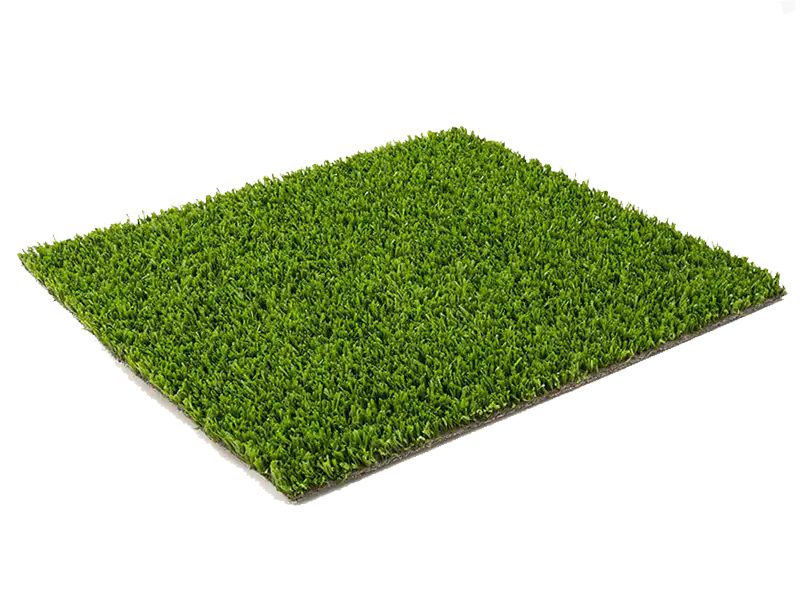
Review Padel Turf Color, Yarn and Backing
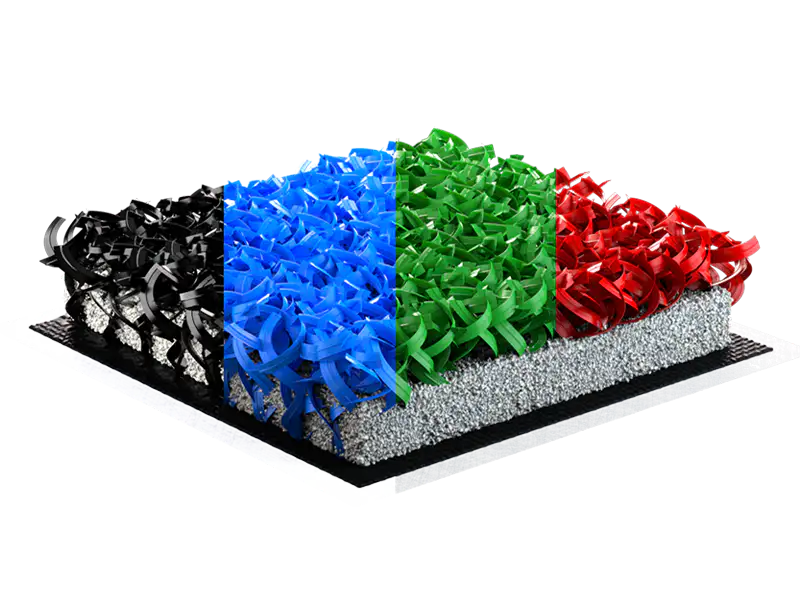
Available Court Colors
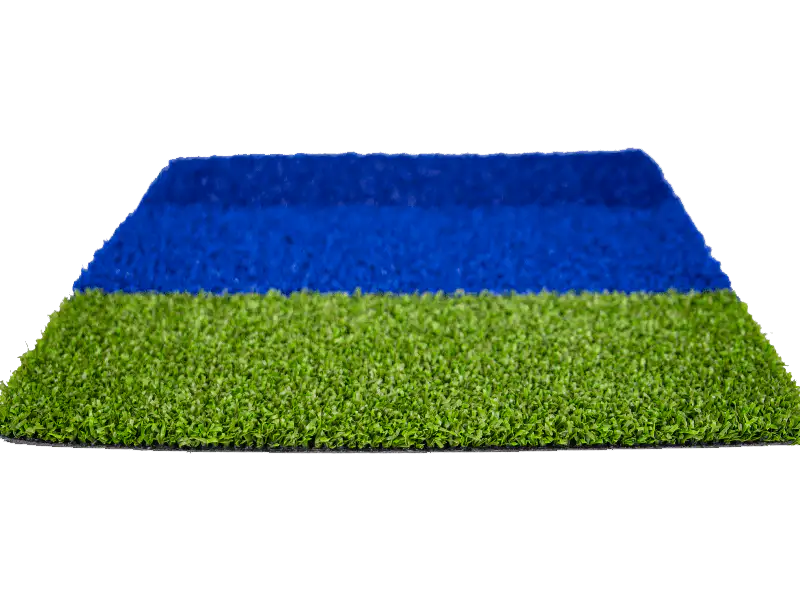
Review the approved physical sample because screen colors and photographs may differ from the final manufactured batch.
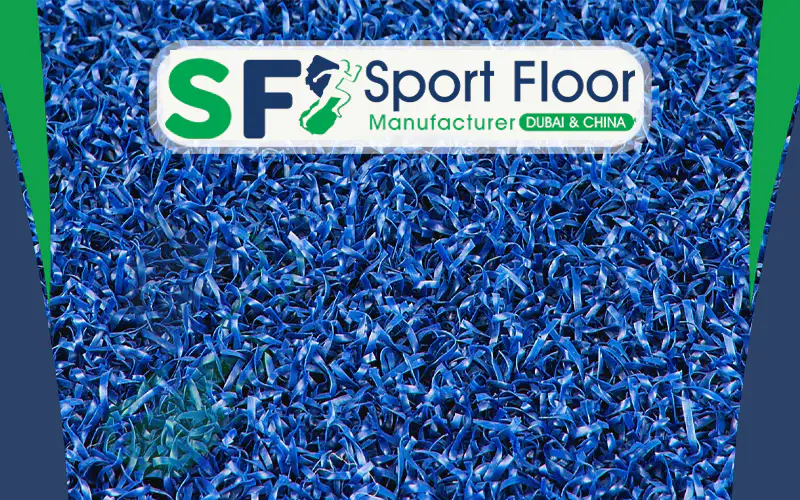
Yarn Density and Texture
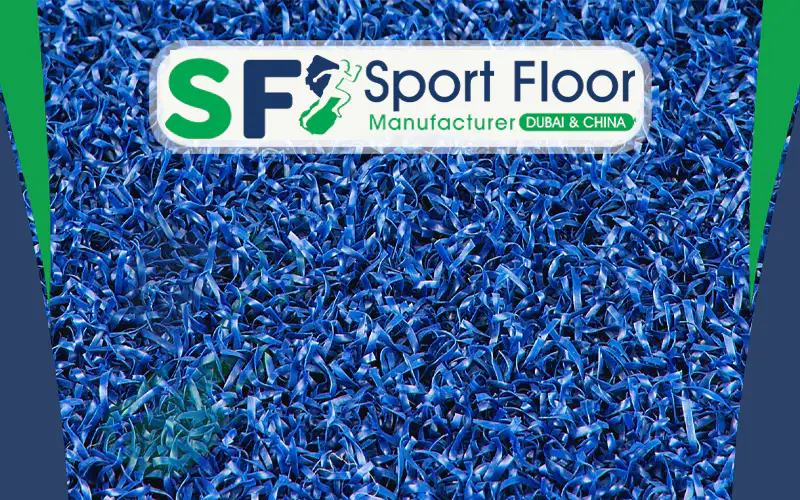
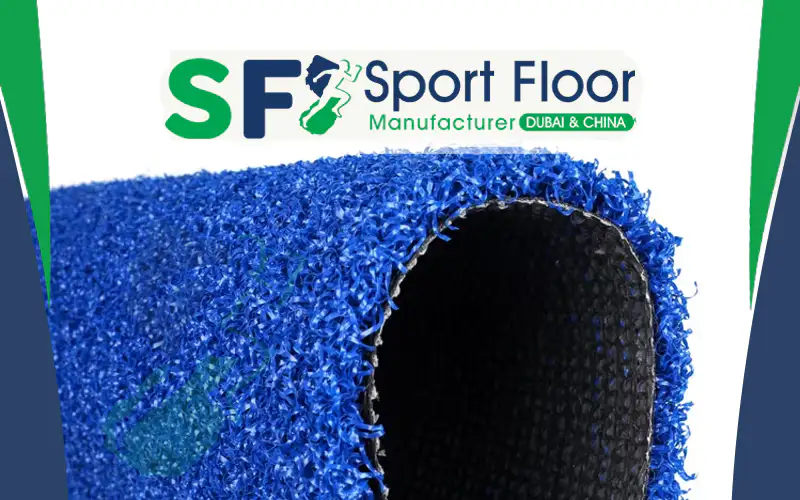
Check fiber distribution, yarn form, surface coverage and the consistency of the tufting across the sample.
Backing Construction
Inspect the primary backing, secondary coating, drainage arrangement, flexibility and condition of the roll edges.
Padel Artificial Grass Specifications to Confirm
The quotation, technical data sheet, approved sample and purchase order should all identify the same product construction.
| Specification | What to Confirm | Why It Matters |
|---|---|---|
| Court Use | Indoor or outdoor, recreational, club, intensive commercial or competition use. | Determines the required surface construction and maintenance level. |
| Yarn Type | Textured monofilament, straight monofilament, fibrillated or another construction. | Influences surface profile, sand interaction and maintenance. |
| Yarn Material | Confirm the polymer and complete yarn construction of the offered model. | Influences feel, resilience, wear and outdoor suitability. |
| Pile Height | Confirm the nominal yarn height above the backing. | Influences the surface profile and required silica-sand depth. |
| Dtex | Confirm the declared yarn mass over the specified length. | Supports comparison when reviewed with yarn shape and density. |
| Gauge | Confirm the spacing between the tufting rows. | Works with stitch rate to determine the distribution of fibers. |
| Stitch Rate | Confirm the number of stitches over the stated roll length. | Contributes to surface density and yarn distribution. |
| Total Density | Confirm stitches or tufts per square meter. | Influences surface coverage and the relationship with silica sand. |
| Yarn Weight | Confirm the declared yarn content per square meter. | Helps distinguish products with similar pile heights. |
| Total Weight | Confirm the complete weight of the yarn and backing. | Supports comparison but should not replace component-level review. |
| Backing | Review primary backing, secondary coating and available tuft-retention data. | Supports dimensional stability, joining and installation. |
| Drainage | Confirm the product drainage construction and the court drainage design. | Water management depends on the complete installed surface. |
| Silica Sand | Confirm the required grading, cleanliness and quantity per square meter. | Influences fiber support, surface stability and playing characteristics. |
| Court Color | Confirm blue, green, terracotta or another approved project color. | Affects visual contrast with the ball, walls, lines and surroundings. |
| Roll Dimensions | Confirm roll width, length, direction and the proposed court roll plan. | Affects seam positions, waste, packing and installation sequence. |
| Technical Documents | Request technical data, safety information, batch data, packing details and applicable tests. | Provides a documented basis for approval and procurement. |
Coordinate the Turf with the Complete Padel Court
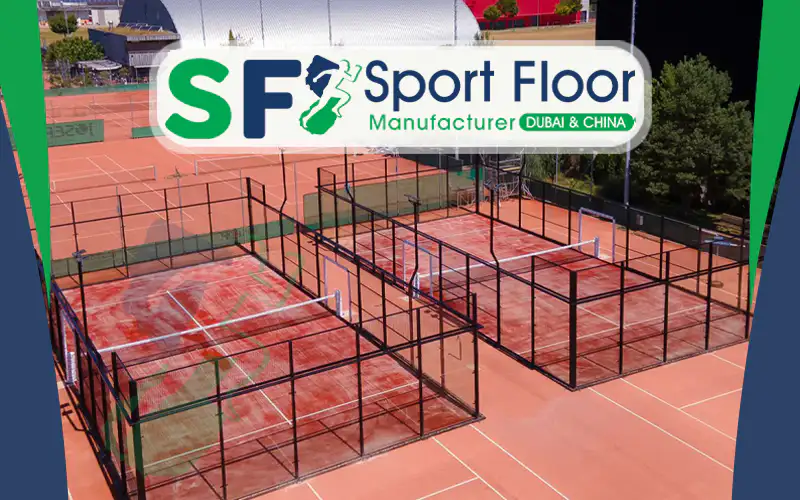
A regulation padel court has internal playing dimensions of 20 metres by 10 metres. The net playing area is therefore 200 m², but the purchase quantity should be calculated from the actual roll plan, cutting direction, seams and installation allowance.
The International Padel Federation permits artificial grass as a court surface when it allows regular ball bounce. The court surface should be uniform and clearly different in color from the walls.
Court levels, slopes and drainage must be completed before the turf is installed. Surface irregularities can remain visible after installation and may affect sand distribution and playing consistency.
- Confirm the finished internal court dimensions.
- Approve the court color and line color.
- Check levels with the required surveying equipment.
- Confirm indoor or outdoor drainage requirements.
- Prepare a roll plan before ordering the turf.
- Coordinate turf joints with doors, net posts and court lines.
Why Silica Sand Is Important for Padel Turf
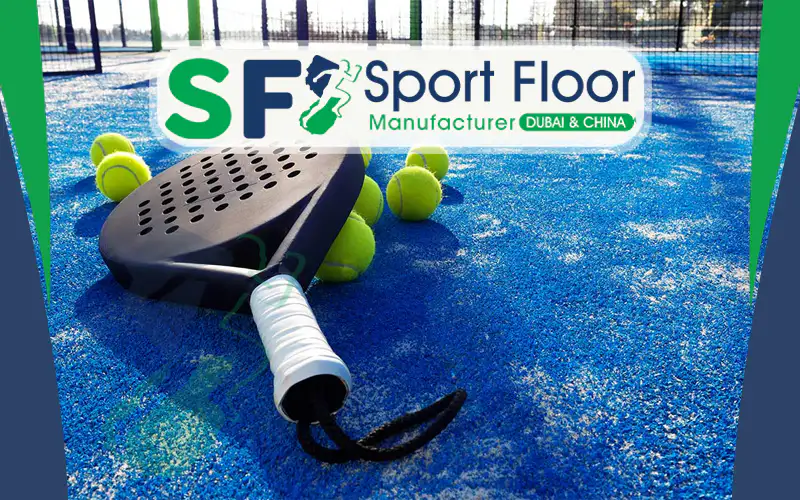
Silica sand is a functional part of many padel turf systems. It is applied between the fibers in a controlled quantity and should be distributed evenly throughout the court.
The required quantity depends on the turf construction, pile profile, yarn type and project specification. Too little, too much or unevenly distributed sand can change the court appearance and playing behavior.
- Supports and stabilizes the turf fibers.
- Adds ballast to the installed surface.
- Influences traction and player movement.
- Contributes to consistent ball response.
- Requires periodic brushing and redistribution.
- Must be clean, dry and suitable for the specified system.
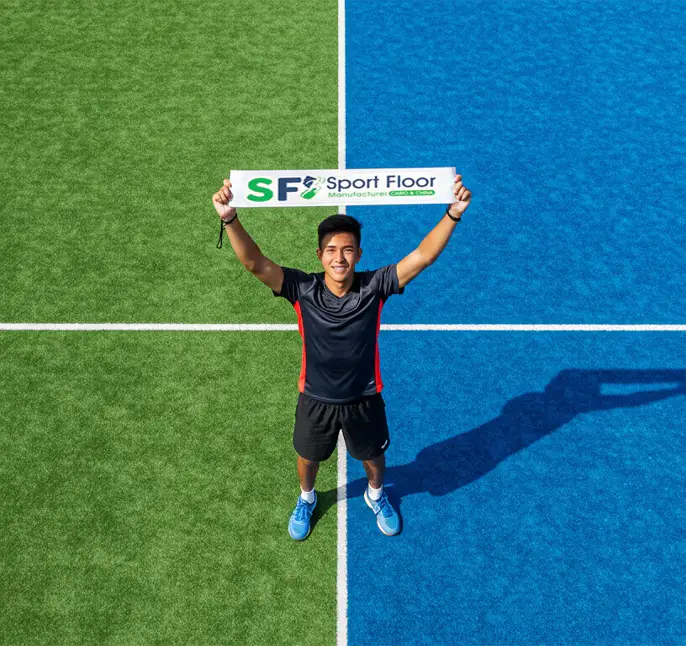
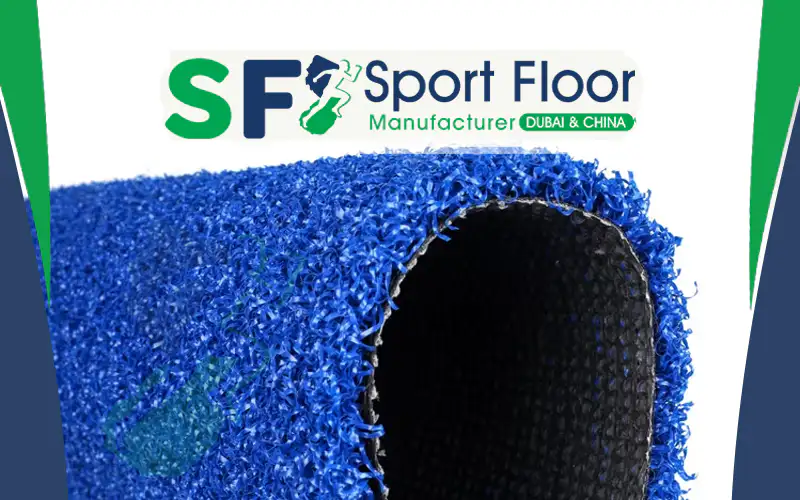
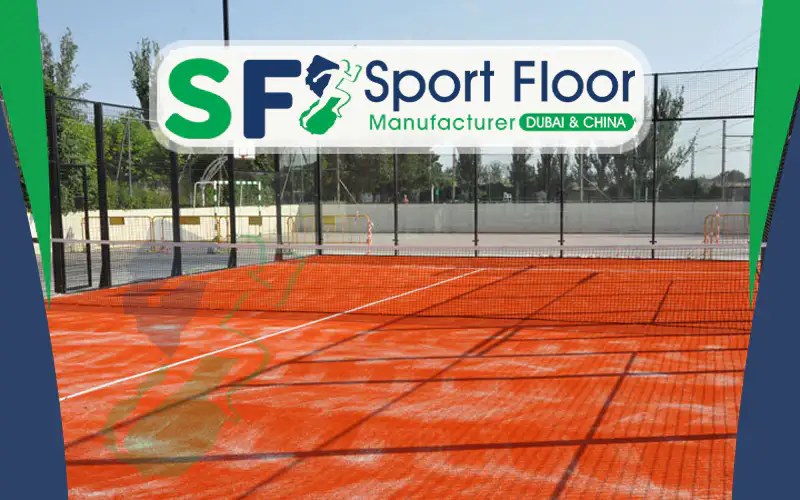
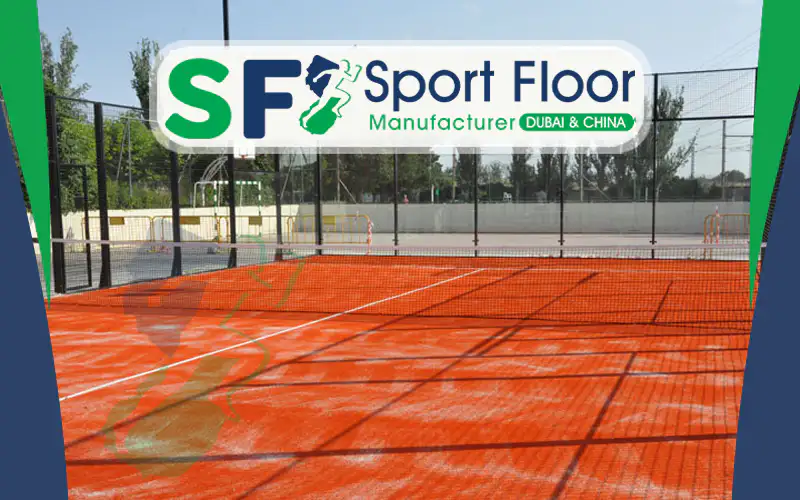
Blue, Green and Terracotta Padel Turf
Color selection should consider the court structure, wall color, lighting, ball visibility, branding and the surrounding environment.
How Artificial Grass Is Installed on a Padel Court
Installation should follow the approved turf, adhesive, jointing and silica-sand requirements for the project.
Inspect the Court Base
Check levels, slopes, drainage, cleanliness, cracks and the condition of the completed supporting surface.
Prepare the Roll Plan
Confirm roll widths, pile direction, joint positions, service lines and installation sequence before cutting.
Position the Turf Rolls
Unroll the material, allow it to settle and keep all adjoining sections facing the specified direction.
Trim and Join
Cut the adjoining edges accurately and connect them using compatible jointing tape and adhesive.
Install Court Lines
Set out and install the service lines according to the approved court dimensions and line color.
Secure the Perimeter
Complete the edge details around the glass, steel structure, entrances and net-post locations.
Apply Silica Sand
Spread the specified sand in controlled stages while brushing between applications.
Brush the Court
Brush the turf in the required directions to distribute the sand and establish a uniform surface.
Inspect and Handover
Check joints, lines, sand distribution, levels, drainage and surface consistency before court use.
Maintaining Padel Artificial Grass
Padel turf requires scheduled maintenance to preserve a consistent surface and prevent silica sand from concentrating in selected areas of the court.
- Remove leaves, dust, litter and loose contamination.
- Brush the court using suitable non-metallic equipment.
- Redistribute sand from low-traffic to high-traffic areas.
- Check joints, court lines and perimeter edges.
- Inspect areas near the net, doors and service lines.
- Keep drainage paths and surrounding channels clear.
- Repair lifted or separated sections promptly.
- Record inspections and completed maintenance.
Maintenance frequency depends on playing hours, indoor or outdoor conditions, dust, rainfall, footwear and the exact turf system.
How to Request a Padel Artificial Grass Quotation
Complete project information helps determine the correct turf, quantity, court roll plan, silica sand, packing and delivery cost.
Provide the Court Quantity
State the number of courts and whether the enquiry covers new courts, replacement turf or spare rolls.
Identify the Court Use
Confirm indoor or outdoor installation, expected playing hours and the level of the club or facility.
Select the Turf Construction
State the required yarn type, pile height, dtex, density, backing and court color when already specified.
Confirm the Roll Plan
Provide court drawings or request a roll layout based on the available turf dimensions.
List the Accessories
Confirm whether silica sand, joint tape, adhesive, lines or installation tools are required.
Provide the Destination
Include the destination country, city or port and the preferred delivery basis, such as EXW, FOB or CIF.
Select the Turf with the Correct Court Structure
Classic Padel Court
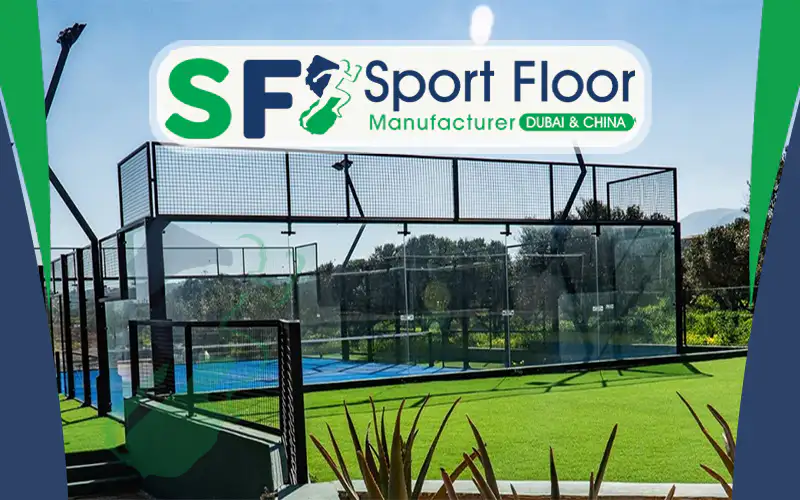
A traditional court configuration with steel framing, tempered glass, mesh panels, lighting and an artificial grass surface.
View classic padel courtsPanoramic Padel Court
A court design that reduces visual obstruction around selected glass areas to improve the viewing experience.
View panoramic padel courtsSuper Panoramic Padel Court
A premium panoramic configuration intended for clubs, resorts and projects requiring maximum visual openness.
View super panoramic courtsVerify Court Rules and International Delivery Terms
Continue Planning Your Padel Project
Padel Artificial Grass FAQ
What artificial grass is used for padel courts?
Padel courts use short-pile sports turf designed for regular ball response and controlled player movement. Products may use textured monofilament, straight monofilament, fibrillated or another application-specific yarn construction.
What is the size of a padel court?
A regulation padel court has internal dimensions of 20 metres by 10 metres. Turf purchasing should still be calculated using the actual roll plan, seams and installation allowance.
How many square metres of artificial grass are required for one court?
The net playing area is 200 m², but the purchased quantity may be higher because of roll dimensions, joint positions, cutting, service lines and installation allowance.
What is the best pile height for padel artificial grass?
The appropriate pile height depends on the yarn construction, silica-sand system, court use and required playing characteristics. The complete approved specification should be followed rather than selecting by height alone.
What is the difference between monofilament and fibrillated padel turf?
Monofilament products use individual yarn blades, while fibrillated products use a tape-like yarn that opens into smaller fibers. Each construction has different surface and maintenance characteristics.
Does padel artificial grass require silica sand?
Many padel turf systems use silica sand to support the fibers, add stability and help establish the required surface behavior. The grading and quantity depend on the exact turf model.
Which padel court color is best?
Blue, green and terracotta are established options. Selection should consider contrast with the ball and walls, lighting, branding and the approved court design.
Can padel turf be installed indoors and outdoors?
Yes, provided the exact turf and installation system are suitable for the environment. Outdoor projects require particular attention to drainage, weather exposure and UV documentation.
Can artificial grass be installed over an existing padel court?
Replacement turf can be installed after the existing surface is removed and the base, levels, drainage, cracks and perimeter details are inspected and repaired where necessary.
How often should padel turf be maintained?
Frequency depends on playing hours, indoor or outdoor conditions, dust and the turf system. Commercial clubs normally require more frequent brushing, cleaning and sand redistribution.
How should I compare padel turf prices?
Compare quotations using the same yarn type, pile height, dtex, gauge, density, backing, total weight, roll plan, silica sand, accessories, quantity and delivery basis.
What information is required for an export quotation?
Provide the number of courts, indoor or outdoor use, required specification, court color, roll plan, accessories, destination, documentation requirements and preferred delivery term.