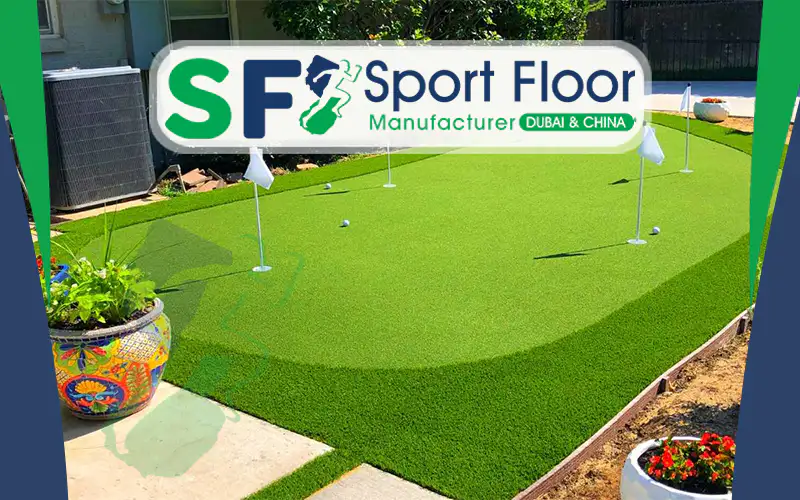
Artificial Grass for Golf Putting Greens and Practice Areas
Artificial golf turf for residential putting greens, training centres, sports clubs, hotels, resorts, commercial leisure projects and golf-themed landscapes. Select the surface by the intended use, required ball roll, yarn construction, density, backing, contours, base, drainage and installation method.

What Is Artificial Grass for Golf?
Artificial grass for golf is a synthetic turf system selected for putting, short-game practice, recreational training or golf-themed landscaping. The exact construction changes according to whether the surface must provide controlled ball roll or primarily create a decorative golf-course appearance.
A putting surface normally uses a short, dense and uniform turf. Surrounding fringe, collar and rough-style areas may use separate products with different pile heights, blade shapes and visual characteristics.
The completed result depends on more than the turf roll. Base stability, contours, drainage, cup positions, seam direction, finishing and maintenance all influence the appearance and performance of the finished green.
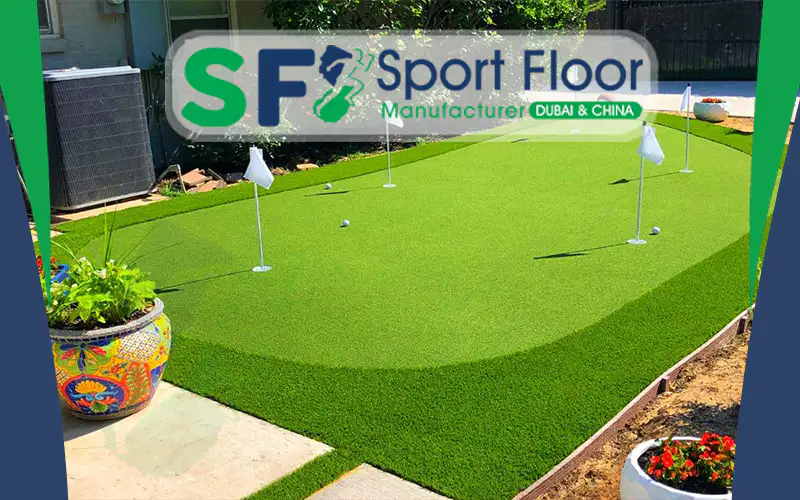
Controlled Surface Profile
Short, dense turf can be selected for a consistent putting and training surface.
Custom Green Layout
The area can include contours, multiple cups, fringe zones and surrounding landscape features.
Indoor or Outdoor Use
Golf turf can be specified for residential, commercial and training applications in suitable environments.
Project-Specific Supply
Turf quantity, roll plan, accessories and packing can be prepared according to the project layout.
Where Artificial Golf Grass Can Be Used
Suitability depends on the required ball behavior, user level, substrate, contours, drainage and exact product specification.
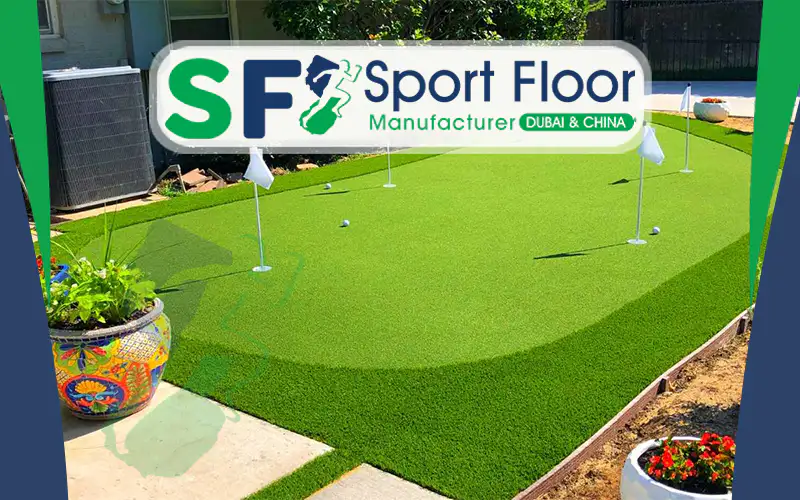
Residential Putting Greens
Custom practice greens for villas, gardens, rooftops and private recreation areas, subject to structural and drainage conditions.
Indoor Golf Training
Short-game, putting and coaching areas for academies, clubs, sports centres and indoor training facilities.

Hotels and Resorts
Recreational putting greens and golf-themed landscape features for hospitality and leisure projects.

Golf Academies and Clubs
Dedicated practice areas for coaching, warm-up, putting drills and short-game development.

Commercial Leisure Projects
Putting challenges and recreational golf areas for clubs, offices, entertainment venues and branded events.
Golf-Themed Landscaping
Decorative green areas for developments seeking a golf-inspired appearance without requiring a complete playing green.
Putting Surface, Fringe and Landscape Turf
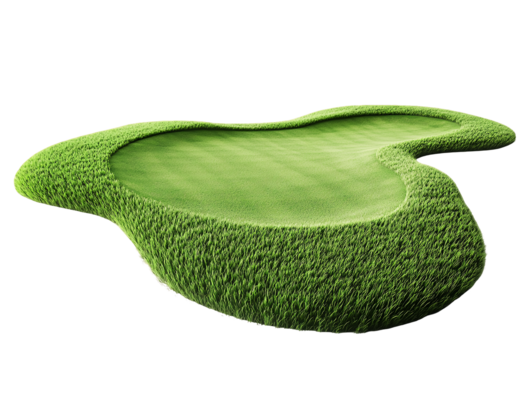
A complete golf practice green may use more than one artificial grass product to create different playing and visual zones.
Putting Green Surface
A short and dense turf selected to create a smooth surface for putting practice and controlled ball movement.
- Short and uniform pile profile.
- Dense surface coverage.
- Careful seam and roll-direction planning.
- Base contours designed for the required challenge.
- Finished speed confirmed after installation.
Fringe and Collar Turf
A surrounding transition area that can create a visual and functional separation between the putting surface and landscape.
- Taller pile than the putting surface.
- Defined edge and transition details.
- May support short chipping practice.
- Requires compatible jointing and drainage.
- Selected according to the overall design.
Rough and Landscape Areas
Landscape artificial grass may be used outside the main practice zone to create a fuller golf-course appearance.
- Longer and softer-looking fibers.
- Suitable for decorative surroundings.
- Can be combined with bunkers and planting.
- Not intended to duplicate putting performance.
- Selected for traffic and maintenance needs.
What Controls Ball Roll on Artificial Golf Turf?
Ball roll is created by the completed surface rather than by one product value. The turf must be coordinated with the base, contours, infill or finishing treatment and installation quality.
- Yarn profile: influences surface texture and contact with the golf ball.
- Pile height: affects how deeply the ball interacts with the surface.
- Density: contributes to coverage and surface uniformity.
- Infill or finishing: can influence firmness, stability and speed where included.
- Base smoothness: affects whether the ball follows the intended contour without irregular deflection.
- Seams: must remain flat, secure and positioned to minimize interference with the playing lines.
- Maintenance: cleaning and brushing help preserve a uniform surface condition.
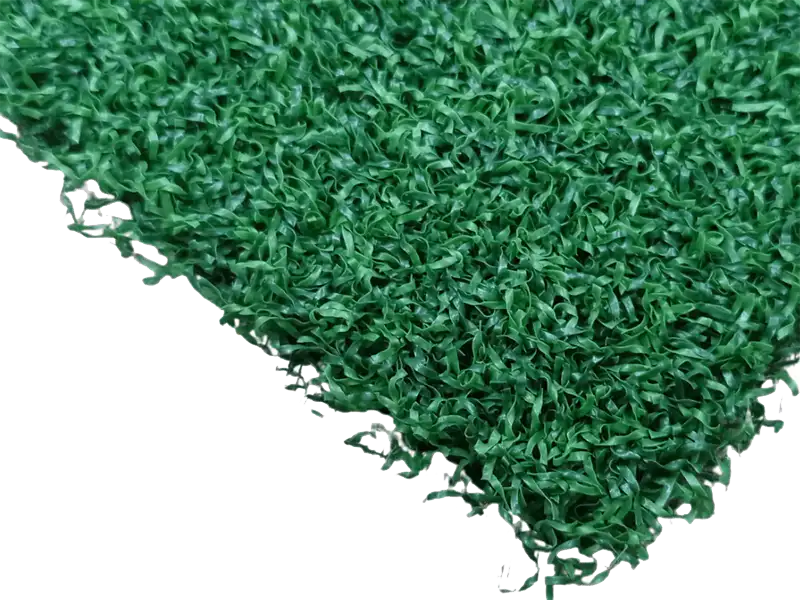
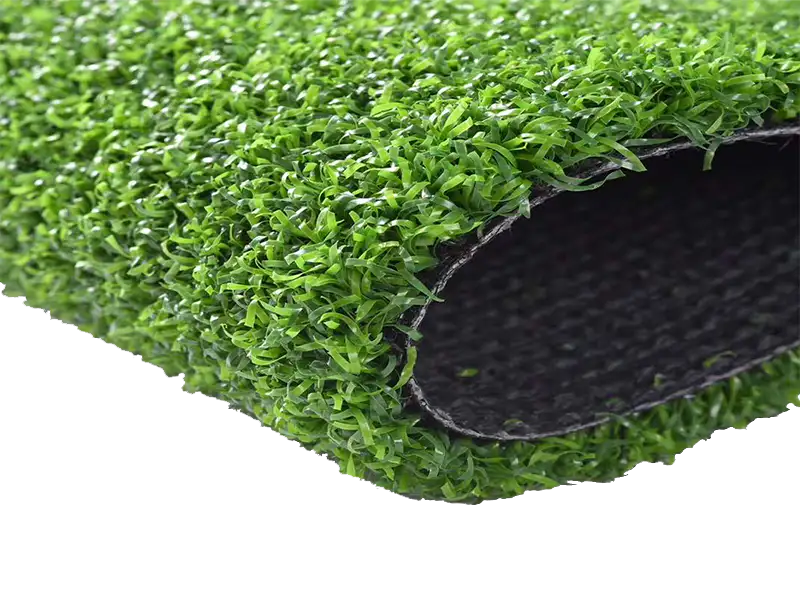
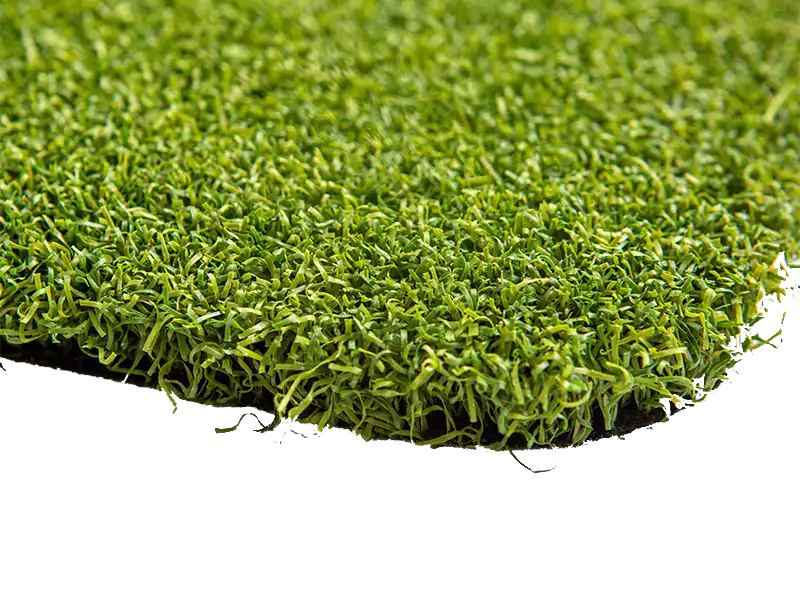
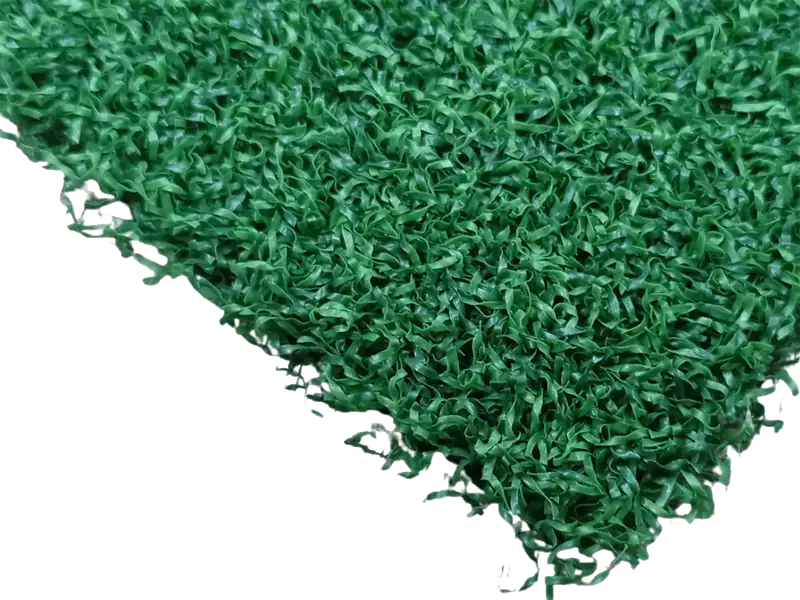
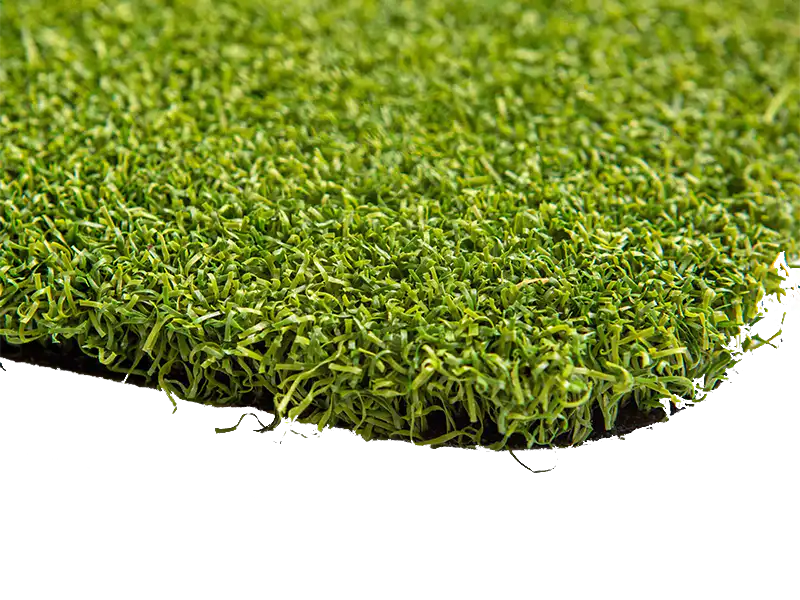
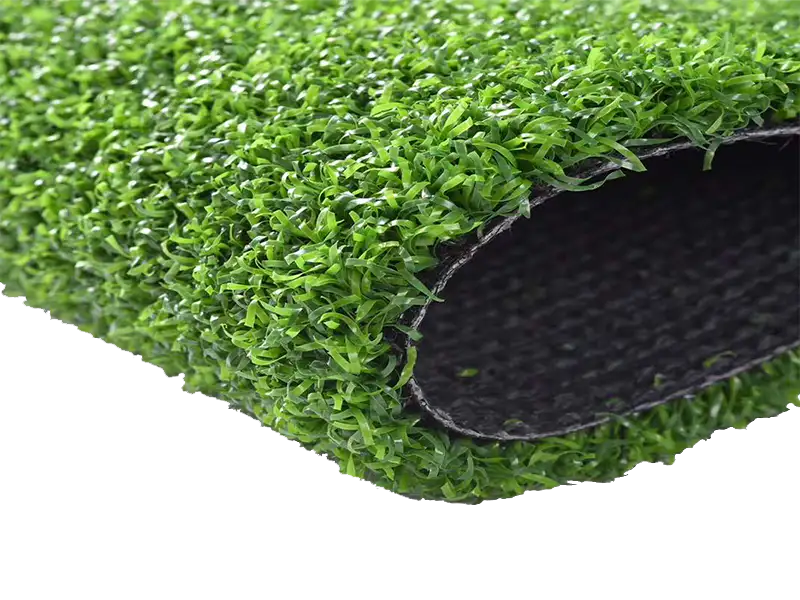
Inspect the Golf Turf Surface and Backing
Review the physical sample and confirm that it matches the technical documents and approved project application.
Golf Artificial Grass Specifications to Confirm
The quotation, technical data, approved sample and purchase order should identify the same exact product and application.
| Specification | What to Confirm | Why It Matters |
|---|---|---|
| Application | Putting green, short-game practice, fringe, rough or golf-themed landscape. | Determines the required turf construction and surface profile. |
| Indoor or Outdoor Use | Confirm the installation environment and exposure conditions. | Influences drainage, fixing, documentation and maintenance. |
| Yarn Construction | Confirm the material, form and construction of the exact offered yarn. | Influences surface texture, appearance and ball interaction. |
| Pile Height | Confirm the nominal yarn height required for each golf zone. | Putting, fringe and landscape areas may require different heights. |
| Dtex | Review the declared yarn mass over the specified length. | Supports comparison when considered with density and yarn construction. |
| Gauge | Confirm the spacing between the tufting rows. | Works with stitch rate to determine yarn distribution. |
| Stitch Rate | Confirm the number of stitches over the stated roll length. | Contributes to density and surface coverage. |
| Total Density | Confirm stitches or tufts per square metre. | Influences surface uniformity and the amount of visible backing. |
| Yarn Weight | Confirm the declared yarn content per square metre. | Helps distinguish products with similar pile heights. |
| Total Weight | Confirm the combined weight of the yarn and backing. | Supports comparison but should not replace component review. |
| Backing | Review primary backing, secondary coating and available tuft-retention information. | Supports stability, joining and installation quality. |
| Drainage | Confirm turf perforations and the drainage route through the complete system. | Water movement depends on the base, contours and drainage design. |
| Infill or Finishing | Confirm whether the proposed turf requires silica sand or another finishing method. | Can influence stability, firmness and ball roll. |
| Roll Dimensions | Confirm available roll widths, lengths and the proposed roll layout. | Affects seams, waste, packing and installation sequence. |
| Documents | Request technical data, safety information, packing details and applicable reports. | Provides a documented basis for project approval and procurement. |
The Base Determines the Shape of the Putting Green
The turf follows the prepared surface beneath it. Any unwanted depression, ridge, joint or irregularity can remain visible and affect the direction of the golf ball.
- Confirm the green shape and total dimensions.
- Define cup quantity and cup positions.
- Design gradual and playable contours.
- Provide a stable and accurately finished base.
- Coordinate drainage with the lowest surface points.
- Keep transitions between putting and fringe turf secure.
- Avoid abrupt edges that interrupt the ball path.
- Inspect the completed base before laying the turf.
The required construction changes according to soil conditions, structural slabs, rooftop loading, drainage, climate and the intended level of practice.
How Artificial Golf Turf Is Installed
Installation should follow the approved base design, turf specification, roll plan and finishing requirements.
Survey the Area
Record dimensions, levels, drainage, access, obstacles and the proposed putting and fringe zones.
Approve the Layout
Confirm the shape, contours, cup positions, fringe width and surrounding landscape details.
Prepare the Formation
Remove unsuitable materials and establish the required structural support and drainage route.
Construct the Base
Form a stable, accurately graded and smooth base that follows the approved contours.
Install Cups and Edges
Position the golf cups and complete the perimeter restraints and transitions before laying the turf.
Plan the Turf Rolls
Select the roll direction and seam locations to reduce waste and interference with common putting lines.
Cut and Join
Trim adjoining edges accurately and connect the rolls using compatible jointing materials.
Complete the Surface
Apply the required finishing or infill, brush the turf and trim around cups and transitions.
Inspect Ball Roll
Check seams, contours, cups, surface uniformity, drainage and ball movement before handover.
Maintaining an Artificial Putting Green
Artificial golf turf avoids mowing and fertilising, but routine care is still needed to preserve the condition of the playing surface.
- Remove leaves, dust, litter and loose contamination.
- Brush the turf with suitable non-metallic equipment.
- Clean spills using product-compatible methods.
- Inspect seams, cups, fringe transitions and perimeter edges.
- Keep drainage outlets and surrounding channels clear.
- Redistribute infill where it forms part of the system.
- Repair lifted or separated sections promptly.
- Prevent heavy vehicles and sharp equipment from crossing the green.
Maintenance frequency depends on outdoor exposure, dust, trees, rainfall, user traffic and the required consistency of the surface.
Natural Putting Green vs Artificial Golf Turf
Natural Putting Green
A living turf system whose playing condition depends on the selected grass, climate, construction, mowing, irrigation, fertilisation and specialist maintenance.
- Requires regular mowing at putting-green height.
- Requires irrigation and plant-health management.
- Condition changes with weather and maintenance.
- Requires specialist construction and ongoing care.
- Can be appropriate for golf-course playing greens.
Artificial Golf Turf
A synthetic system suited to selected residential, training, hospitality and recreational applications where consistent availability and simplified maintenance are priorities.
- Does not require mowing or fertilisation.
- Requires cleaning, brushing and seam inspection.
- Can be installed indoors or outdoors.
- Contours remain defined by the prepared base.
- Final ball roll depends on the complete installed system.
How to Request a Golf Artificial Grass Quotation
Complete information helps determine the correct turf zones, quantity, roll plan, accessories, packing and delivery cost.
Define the Application
State whether the area is for putting, short-game training, residential recreation, hospitality or landscaping.
Provide the Area
Send the total square metres, dimensions, drawings and proposed shape of the green.
List the Turf Zones
Confirm whether the project requires putting turf, fringe, collar, rough or surrounding landscape grass.
Describe the Base
Identify prepared soil, aggregate, concrete, indoor flooring, rooftop or another supporting surface.
List Accessories
State the required cups, flags, joint tape, adhesive, infill, edging and installation materials.
Provide the Destination
Include the country, city or port and the preferred delivery term, such as EXW, FOB or CIF.
Review Putting Green and International Trade Guidance
Continue Planning Your Artificial Grass Project
Golf Artificial Grass FAQ
What artificial grass is used for putting greens?
Putting greens normally use short, dense and uniform artificial turf selected for controlled ball roll. The final result also depends on the base, contours, seams and finishing method.
Is putting green turf different from garden artificial grass?
Yes. Putting turf is selected to provide a short and controlled playing surface, while garden turf usually uses taller fibers to create a softer and fuller landscape appearance.
Can artificial golf turf be installed indoors?
Yes. It can be used in indoor putting studios, academies, offices and training centres when the base, fixing and seam details are suitable.
Can an artificial putting green be installed outdoors?
Yes. Outdoor installations require suitable base preparation, drainage, secure edges and product documentation appropriate to the expected climate and exposure.
Can golf artificial grass be installed over concrete?
It can be installed over stable and accurately finished concrete when drainage, contours, fixing, cup details and surface transitions are properly designed.
Can a putting green be installed over soil?
It should be installed over a prepared and stable base rather than loose untreated soil. The base must provide the required contours, drainage and surface accuracy.
Does artificial putting turf require silica sand?
Some products use silica sand or another finishing treatment, while others use a different construction. Follow the requirements of the exact offered turf system.
What controls the speed of an artificial putting green?
Speed is influenced by the yarn, pile profile, density, base smoothness, contours, infill or finishing, installation quality and maintenance condition.
Can the speed be selected before installation?
A target can be discussed during product selection, but the finished ball roll should be confirmed after the complete surface has been installed and conditioned.
Can the green include several holes and contours?
Yes. The layout can include multiple cups, slopes, breaks, fringe areas and surrounding landscape zones according to the available area and approved design.
Does artificial golf turf require maintenance?
Yes. Routine maintenance includes debris removal, brushing, cleaning, seam and cup inspection, drainage checks and infill maintenance where applicable.
Can artificial turf be used for a professional golf course?
Product suitability must be evaluated for the exact application. Residential and training putting greens should not automatically be presented as equivalent to natural tournament golf-course greens.
How should I compare golf turf prices?
Compare quotations using the same application, turf zones, yarn, pile height, density, backing, total weight, roll plan, accessories, quantity and delivery basis.
What information is required for an export quotation?
Provide the application, total area, drawings, required turf zones, technical specification, accessories, destination, documentation requirements and preferred delivery term.