
Running Track Systems Manufacturer and PU Track Supplier
Source complete polyurethane running track systems using a defined layer schedule, coordinated materials, technical documentation, export packaging and clear commercial scope. Compare Full PU, Sandwich and Spray Coat systems for materials-only supply, technical support or project-dependent installation.
What Should a Running Track Systems Manufacturer Supply?
A professional running track offer should define more than the visible red or blue surface. It should identify the complete system, every material, planned layer thickness, quantity, packaging, technical documents and responsibilities for installation and testing.
The scope may cover materials only, materials with technical support, supervised installation or a project-dependent installed package.
The buyer should be able to trace every quoted material to its function in the Full PU, Sandwich or Spray Coat build-up.

Defined System
The offer identifies Full PU, Sandwich, Spray Coat or another approved construction.
Coordinated Materials
Primers, binders, granules, sealers and PU layers are selected as a compatible package.
Technical Documentation
TDS, SDS, system schedules and applicable reports refer to the actual offered products.
Commercial Clarity
Packaging, shipping, installation, testing and exclusions are separated in the quotation.
Information the Manufacturer Needs Before Recommending a Track System
A system recommendation made without project information is only a general suggestion. Provide the following data before requesting a final technical and commercial offer.
Facility Level
School, community, training, club, stadium or formal competition facility.
Track Geometry
Track length, lane count, event zones, warm-up areas and total synthetic surface area.
Base Type
New asphalt, existing asphalt, concrete or an existing synthetic track.
Base Condition
Levels, cracks, settlement, moisture, contamination, drainage and readiness.
Specified System
Consultant-required build-up or a request to compare suitable options.
Performance Criteria
Required thickness, force reduction, deformation, friction or other test values.
Certification Scope
Exact product certification, facility certification or no formal certification requirement.
Supply Responsibility
Materials only, technical support, supervision, installation or turnkey scope.
Destination
Country, city, port, final delivery point and available site storage.
Commercial Term
Requested Incoterms® rule, named place and transport method.
Programme
Required submittal, production, dispatch and site-installation dates.
Required Documents
Tender forms, material submittals, tests, certificates and shipping documents.
Full PU, Sandwich and Spray Coat Track Supply
The system name is only the beginning. The final offer must provide the precise products, layer construction and material quantities.

Full PU Running Track System
A polyurethane-intensive track construction using multiple defined PU layers and a specified wearing surface.
- Compatible base primer.
- Defined elastic PU construction.
- Specified upper wearing layer.
- Project-dependent granule broadcast.
- Compatible line-marking material.
- Exact system documentation required.
Sandwich Running Track System
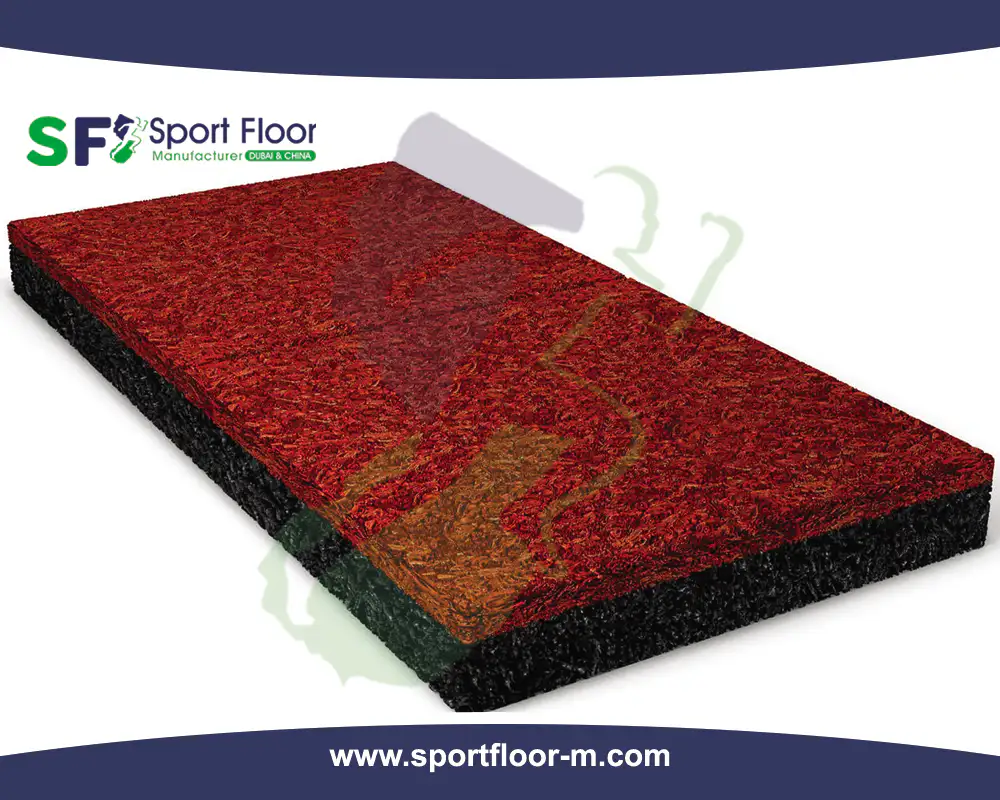
A multi-layer construction generally using a PU-bound rubber base, pore sealing, PU layers and an upper granule surface.
- PU primer.
- SBR rubber granules and binder.
- Compatible pore sealer.
- Elastic PU layer.
- EPDM or specified wearing surface.
- Track line paint.

Spray Coat Running Track System
A system commonly using a PU-bound rubber base with a spray-applied polyurethane and fine-granule upper surface.
- Compatible primer.
- SBR and PU binder base layer.
- Spray resin and fine granules.
- Controlled spray equipment.
- System-dependent permeability.
- Compatible marking materials.
How to Compare Full PU, Sandwich and Spray Coat Quotations
| Procurement Point | Full PU | Sandwich | Spray Coat |
|---|---|---|---|
| Broad Construction | Dense multi-layer polyurethane construction. | Rubber base, sealing, PU elastic layer and upper granules. | Rubber base with spray-applied upper finish. |
| Key Material Groups | Primer, multiple PU components, wearing granules and markings. | Primer, SBR, binder, sealer, PU, EPDM and markings. | Primer, SBR, binder, spray resin, fine granules and markings. |
| Permeability | Commonly designed as a dense or impermeable system. | Commonly designed as a sealed or impermeable system. | May be porous or semi-porous depending on the construction. |
| Base Coordination | Requires a high-quality engineered base and surface drainage. | Requires a stable base, controlled levels and drainage. | Requires a compatible draining base where the system is open. |
| Installation Equipment | PU mixing, levelling and broadcast equipment. | Rubber mixing, paving, sealing and upper-layer equipment. | Rubber-layer equipment and specialist spray machinery. |
| Quotation Control | Compare exact thicknesses, consumption, product references, packaging, application loss, testing and scope exclusions. | ||
| Certification | Verify any product certificate against the exact offered product name and build-up. Facility certification remains a separate project scope. | ||
Materials Only, Technical Support or Installed Track Scope
Materials-Only Supply
Coordinated PU and rubber materials supplied for installation by the buyer’s approved local contractor.
Materials with Remote Support
Material package supported by application guidance and scheduled technical communication.
Materials with Site Supervision
Project-dependent technical supervision while the local contractor provides labour, equipment and site facilities.
Installed Synthetic Surface
Agreed PU track installation over a technically accepted base.
Turnkey Track Package
Project-dependent scope covering agreed civil, asphalt, synthetic surface, markings and handover work.
Resurfacing Package
Materials and work selected after identifying and assessing the existing track system.
Testing Coordination
Contractually defined laboratory, field and track-measurement services.
Export Supply Package
Agreed materials, packaging, commercial documents and delivery scope for international procurement.
Materials Included in a Running Track System Supply
The material package should be built from the approved track system rather than from a generic list. Every item should show its product reference, function, package size and planned quantity.
- Compatible PU primer.
- PU binder for the specified rubber layer.
- SBR granules in the required grading.
- Pore sealer where included.
- Self-levelling or elastic PU components.
- EPDM or specified upper granules.
- Spray resin and fine granules where applicable.
- Compatible line-marking materials.
- Approved local repair materials.
- System-specific application guidance.
PU Primer
Selected according to the actual asphalt, concrete or existing track substrate.
PU Binder
Specified for the granule type, layer function and application method.
SBR Granules
Supplied in the grading required by the resilient base construction.
EPDM Granules
Supplied in the approved grading, color and quantity for the upper layer.
Pore Sealer
Used only where required by the specified Sandwich or sealed system.
Elastic PU
One- or multi-component product supplied according to the approved dense layer.
Spray Material
Coordinated PU resin and fine granules for the specified spray finish.
Line Paint
Compatible material for approved lane, event and track markings.
Documents a Running Track Manufacturer Should Provide
System Build-Up
Complete layer sequence showing products, functions and target thicknesses.
Technical Data Sheets
Product-specific application, consumption and technical information.
Safety Data Sheets
Handling, storage, hazard and emergency information for each applicable material.
Material Schedule
Product code, package size, quantity, layer and planned area.
Method Statement
Base preparation, mixing, application, curing and inspection sequence.
Applicable Test Reports
Reports identifying the tested product or system and test method.
Applicable Certificates
Certificates identifying the exact product, scope, issuer and validity.
Color Schedule
Approved surface, granule and line-marking colors.
Packaging List
Drums, sets, bags, pallets, net weights and gross weights.
Storage Guidance
Product-specific protection, shelf life and warehouse requirements.
Inspection Forms
Base acceptance, mixing, application and completed-surface records.
Maintenance Guidance
Cleaning, inspection, repair and operational protection recommendations.
Quality Controls from Material Approval to Track Handover
Review Specification
Confirm system, products, thicknesses, tests and responsibilities.
Approve Submittals
Submit the coordinated technical package before production or dispatch.
Confirm Quantities
Calculate each material using area, thickness and approved consumption.
Coordinate Batches
Plan product and color batches against installation zones.
Inspect Packaging
Check labels, sets, drum condition, bag condition and pallet arrangement.
Verify Documents
Match technical and shipping documents to the actual shipment.
Accept the Base
Inspect track levels, moisture, condition and drainage before installation.
Control Mixing
Record product batches, component ratios and granule weights.
Control Application
Monitor consumption, thickness, curing and environmental conditions.
Inspect Wearing Surface
Review texture, color, defects, edges and completed transitions.
Complete Testing
Perform only the specified laboratory, field and measurement scope.
Submit Handover Records
Provide agreed as-built, test and maintenance documentation.

Manufacturer Supply Does Not Replace Base Engineering
Even a correctly supplied track system can fail when the supporting base is unstable, incorrectly levelled, contaminated or poorly drained.
- Confirm subgrade and civil design responsibility.
- Define granular and asphalt layer specifications.
- Complete drainage channels and outlets.
- Survey track geometry and base levels.
- Check asphalt stability and surface condition.
- Resolve unacceptable ponding.
- Review cracks, joints and structural movement.
- Complete base-acceptance records.
- Protect the accepted base from contamination.
- Coordinate equipment and event-area foundations.
Export Packaging for PU Running Track Materials
Component Labelling
Identify product code, component, net weight, batch and handling information.
Matched Sets
Coordinate multi-component products so the shipped quantities maintain the correct set ratios.
Granule Bags
Protect SBR and EPDM bags from water, contamination and damage.
Drum Protection
Inspect seals and arrange drums to reduce movement or damage in transport.
Pallet Planning
Record pallet dimensions, pack count, net weight and gross weight.
Container Planning
Review weight distribution, segregation, securing and unloading requirements.
Shelf-Life Planning
Coordinate production, transit, storage and installation dates.
Transport Classification
Verify handling and dangerous-goods status from the exact SDS.
Shipping Documents
Confirm invoice, packing list, origin and destination-specific documents.
Incoterms® Rules for Running Track Material Quotations
Always state the selected rule, the named place or port and “Incoterms® 2020.” The trade term does not define product quality, payment terms or transfer of ownership.
| Rule | General Commercial Position | Important Procurement Note |
|---|---|---|
| EXW | Goods are made available at the agreed seller location. | The buyer carries extensive loading, transport and clearance responsibilities. Review whether FCA is more practical for an export transaction. |
| FCA | Seller delivers to the carrier at the named place and completes export clearance. | Suitable for various transport modes and often relevant to containerized or multimodal shipments. |
| FOB | Seller delivers the goods on board the vessel at the named port of shipment. | Intended for sea or inland-waterway transport. Confirm whether it is appropriate for the actual container process. |
| CIF | Seller arranges cost, insurance and freight to the named destination port under the rule’s defined obligations. | Used for sea or inland-waterway transport. It does not include every destination charge or import responsibility. |
| CFR | Seller arranges cost and freight to the named destination port. | Insurance responsibility differs from CIF and should be addressed separately. |
| CPT / CIP | Seller arranges carriage to the named destination under the selected rule. | These rules can be considered for multimodal transport. CIP includes the rule’s insurance obligation. |
Running Track Quotation Comparison Checklist
| Quotation Field | Required Detail | Common Risk if Missing |
|---|---|---|
| System Name | Full PU, Sandwich, Spray Coat or another defined construction. | Offers may cover different system families. |
| Layer Schedule | Every primer, rubber, sealer, PU, granule and marking layer. | Important layers may be excluded. |
| Product References | Exact product names or codes. | Supplied materials cannot be matched to the submittal. |
| Thickness | Nominal or specified thickness by layer. | Prices may represent different material build-ups. |
| Consumption | Planned quantity per square metre and total quantity. | Material allowance may be insufficient. |
| Pack Sizes | Drums, sets, bags and pallet quantities. | Final quantity and logistics cannot be verified. |
| Base Scope | Civil works, asphalt, repairs, levelling and exclusions. | Responsibility for base defects becomes disputed. |
| Installation Scope | Labour, machinery, supervision, accommodation and site services. | The apparent turnkey price may be incomplete. |
| Testing | Tests, frequency, laboratory, acceptance criteria and reports. | Certification and testing costs may appear later. |
| Delivery Term | Incoterms® rule, named place, transport and destination. | Freight and port responsibilities remain unclear. |
| Validity and Programme | Offer validity, submittal, production and dispatch dates. | Pricing and programme expectations may not align. |
Running Track Surface and Facility Examples
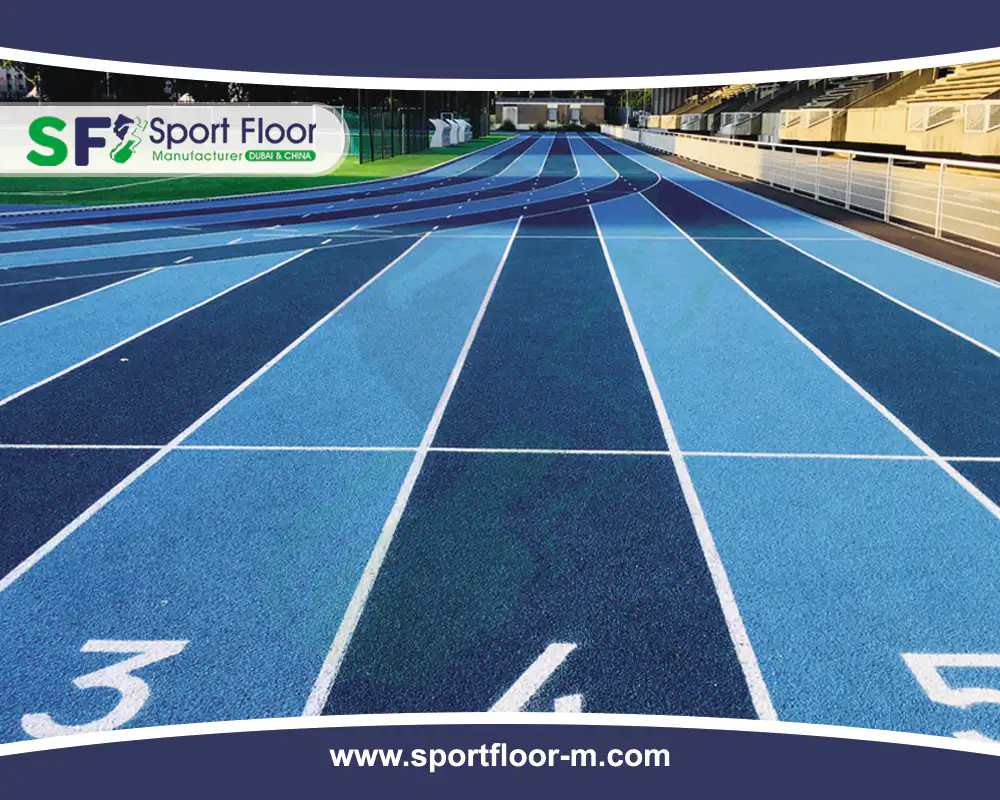
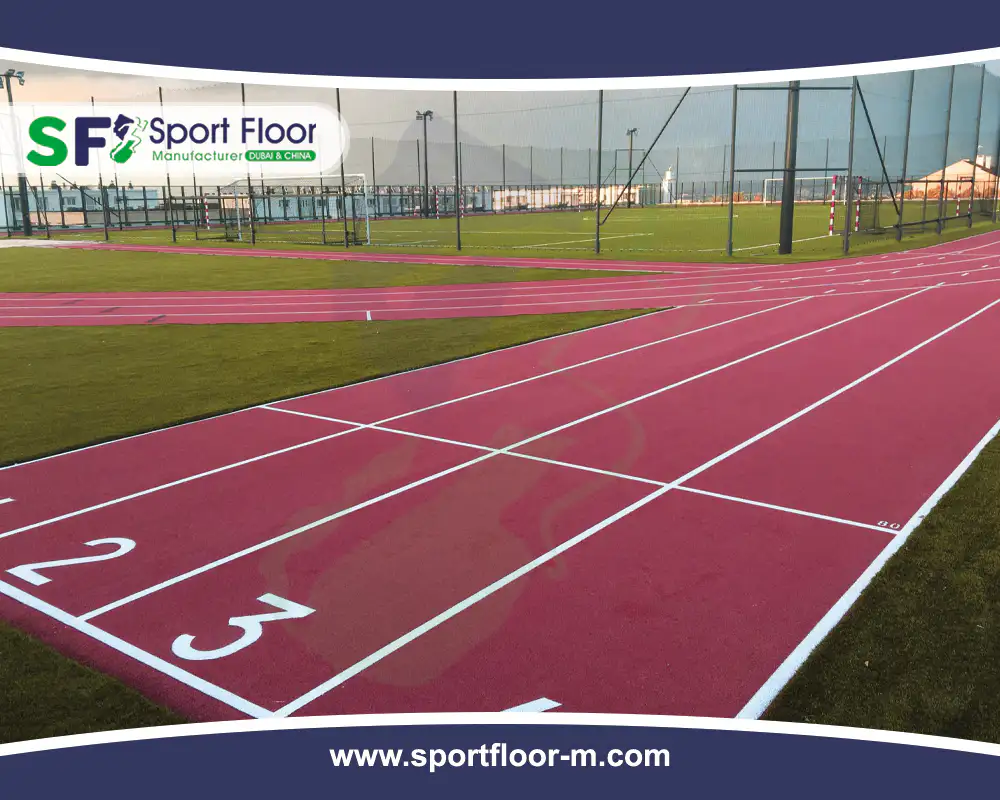
The images illustrate track colors, facility arrangements and markings. They do not prove a particular system, project location or certification.




Common Mistakes When Buying Running Track Systems
Comparing Only Price per m²
The competing quotations may contain different layers, thicknesses and supply responsibilities.
Ordering Before Base Review
The selected system may not match the supporting base or drainage arrangement.
Using Generic Material Names
“PU resin” or “EPDM” alone does not identify the required product, grading or function.
Assuming Standard Thickness
System names do not create one universal thickness for every supplier or project.
Ignoring Installation Equipment
Materials may arrive before suitable mixers, pavers, spray equipment or trained labour are available.
Assuming Certification
A generic description or unrelated report does not certify the offered product or completed track.
Using an Incomplete Incoterm
Writing “FOB” or “CIF” without the named port and edition leaves the delivery term incomplete.
Ignoring Shelf Life
Production, shipping and site delays may reduce the usable period before installation.
Track Certification, Systems and International Delivery
Continue to the Required Track or Material Scope
Running Track Systems Manufacturer FAQ
What does a running track systems manufacturer supply?
The scope may include coordinated primers, binders, SBR, EPDM, sealers, polyurethane layers, line paint, technical documents and project-dependent installation support.
What information is needed before recommending a track system?
Provide the facility level, area, lane count, base condition, performance requirements, certification scope, supply scope and destination.
Can running track materials be supplied without installation?
Materials-only supply may be quoted when the system, quantities, local contractor responsibilities, equipment and destination are clearly defined.
What is included in a Full PU track material package?
The exact package depends on the approved system and may include primer, multiple PU components, upper granules, line paint and supporting documentation.
What is included in a Sandwich track material package?
It commonly includes primer, SBR granules, PU binder, pore sealer, elastic PU, upper granules and line paint.
What is included in a Spray Coat track material package?
It commonly includes primer, SBR, PU binder, spray resin, fine granules and compatible marking materials.
Which running track system is best?
There is no universal best system. Selection depends on the facility level, base, drainage, performance specification, budget, testing and certification requirements.
Can different suppliers’ PU materials be combined?
Do not assume compatibility. Obtain written technical approval before combining components from unrelated systems.
How are running track material quantities calculated?
Quantities depend on area, layer thickness, product consumption, base texture, packaging and project-appropriate application loss.
What technical documents should be supplied?
Request the system build-up, TDS, SDS, material schedule, method statement and applicable test or certification documents.
Are all supplied track systems World Athletics certified?
No. Certification must be verified for the exact track-surfacing product, and completed-facility certification is a separate scope.
Does a product certificate certify the completed track?
No. Product certification and facility certification cover different technical scopes.
Can the manufacturer guarantee the base?
Responsibility depends on the contract. Materials-only supply does not normally transfer responsibility for hidden civil, asphalt or drainage defects.
Which Incoterms rule should be used?
Selection depends on transport, clearance and delivery responsibilities. State the rule, named place or port and Incoterms® 2020 in the contract.
Can FOB be used for every shipment?
FOB is intended for sea or inland-waterway transport. For containerized or multimodal shipments, review whether FCA is more appropriate.
What does CIF include?
CIF allocates specified cost, insurance and freight obligations to the named destination port. It does not automatically include all import or destination charges.
How should track quotations be compared?
Compare system layers, product references, thickness, consumption, quantities, packaging, base scope, installation, testing, documents and delivery terms.
How is running track system pricing calculated?
Pricing depends on system type, area, thickness, materials, packaging, documentation, support, installation, testing, destination and delivery term.
What is required for an export quotation?
Provide the material scope, area, system, pack requirements, destination country, city, port, Incoterms rule, named place and required delivery date.