
Total Surface Area
Track lanes, straights, bends, runways and event zones included in the synthetic system.
Running-track material quantities should be calculated from the approved system—not guessed from surface area alone. Primer, PU binder, SBR, pore sealer, dense or self-leveling polyurethane, EPDM, spray material and line paint each follow a different quantity basis.
The same 5,000 m² track can require very different tonnes and kilograms depending on whether the project uses Full PU, Sandwich or Spray Coat, how the layer thickness is distributed and whether the EPDM is broadcast, embedded or spray-applied.
Sport Floor manufactures its own polyurethane sports-flooring products and supplies coordinated track material packages. German raw materials are used within applicable Sport Floor PU formulations, so project quantities can be converted directly into manufacturer-level purchase units for local projects and international supply.
Every polyurethane manufacturer formulates products differently. Density, solids, viscosity, binder demand, application method and layer architecture can all change consumption. That is why a figure published by another manufacturer should never be transferred directly into a Sport Floor quotation.
International manufacturers publish product-specific consumption values, and even those values can change with substrate porosity, existing surface condition or the application method. Broadcast EPDM systems can also require more granules on site than remain permanently embedded in the finished surface.
The reliable route is simple: approve the Sport Floor system, identify each product layer, use the current TDS or system data, then add only the allowances that belong to the actual project.
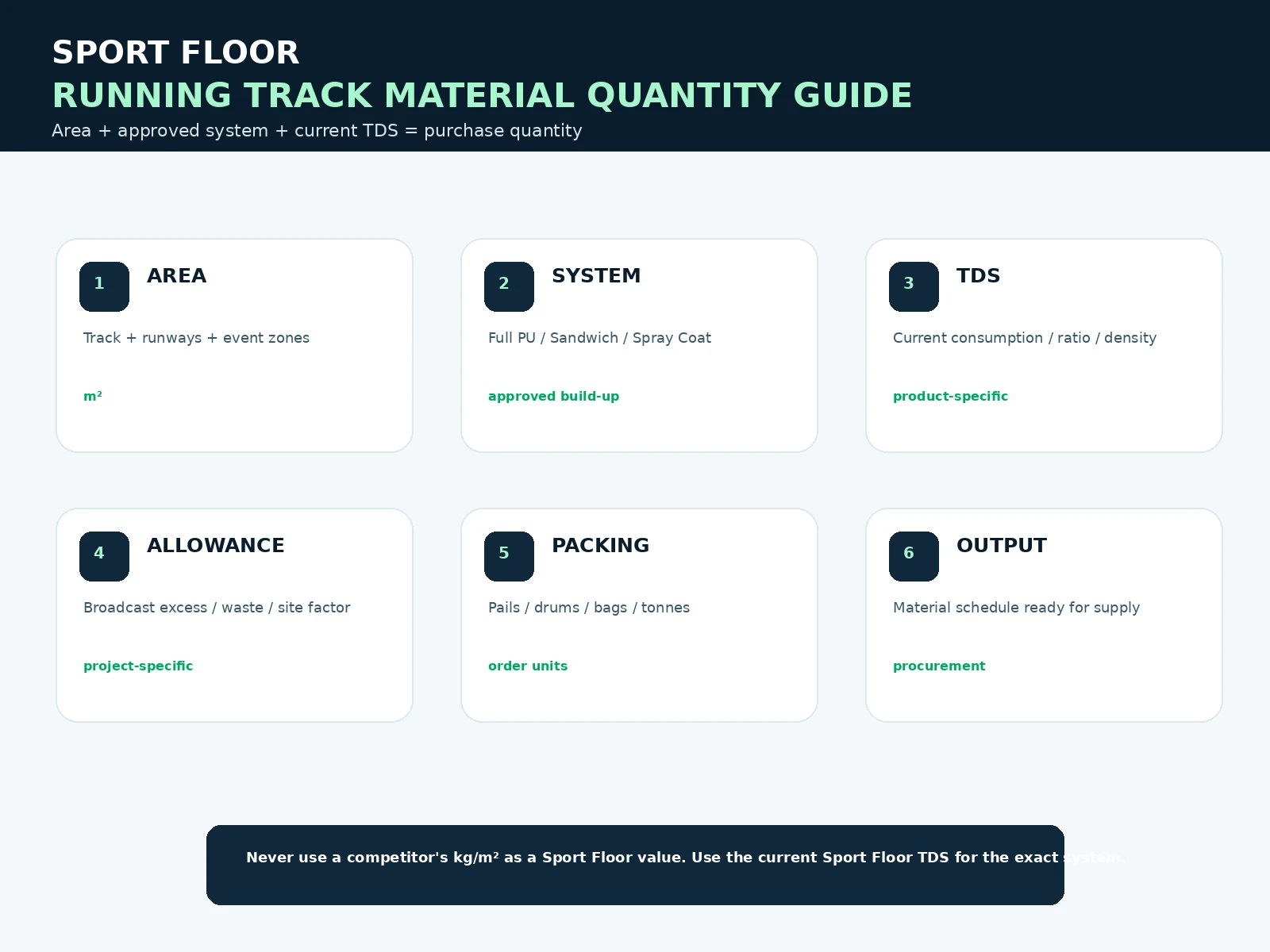
Track lanes, straights, bends, runways and event zones included in the synthetic system.
Full PU, Sandwich, Spray Coat or another approved Sport Floor system.
The approved sequence and thickness for each material layer.
Consumption, binder ratio, density or application requirement for the actual product supplied.
SBR and EPDM granulometry can influence packing, binder demand and application behavior.
Broadcast, embedded, mixed, sprayed, squeegee or roller application changes quantity logic.
Define broadcast excess, site waste and handling allowance separately from net design quantity.
Final procurement is rounded to available bags, pails, drums or other order units.
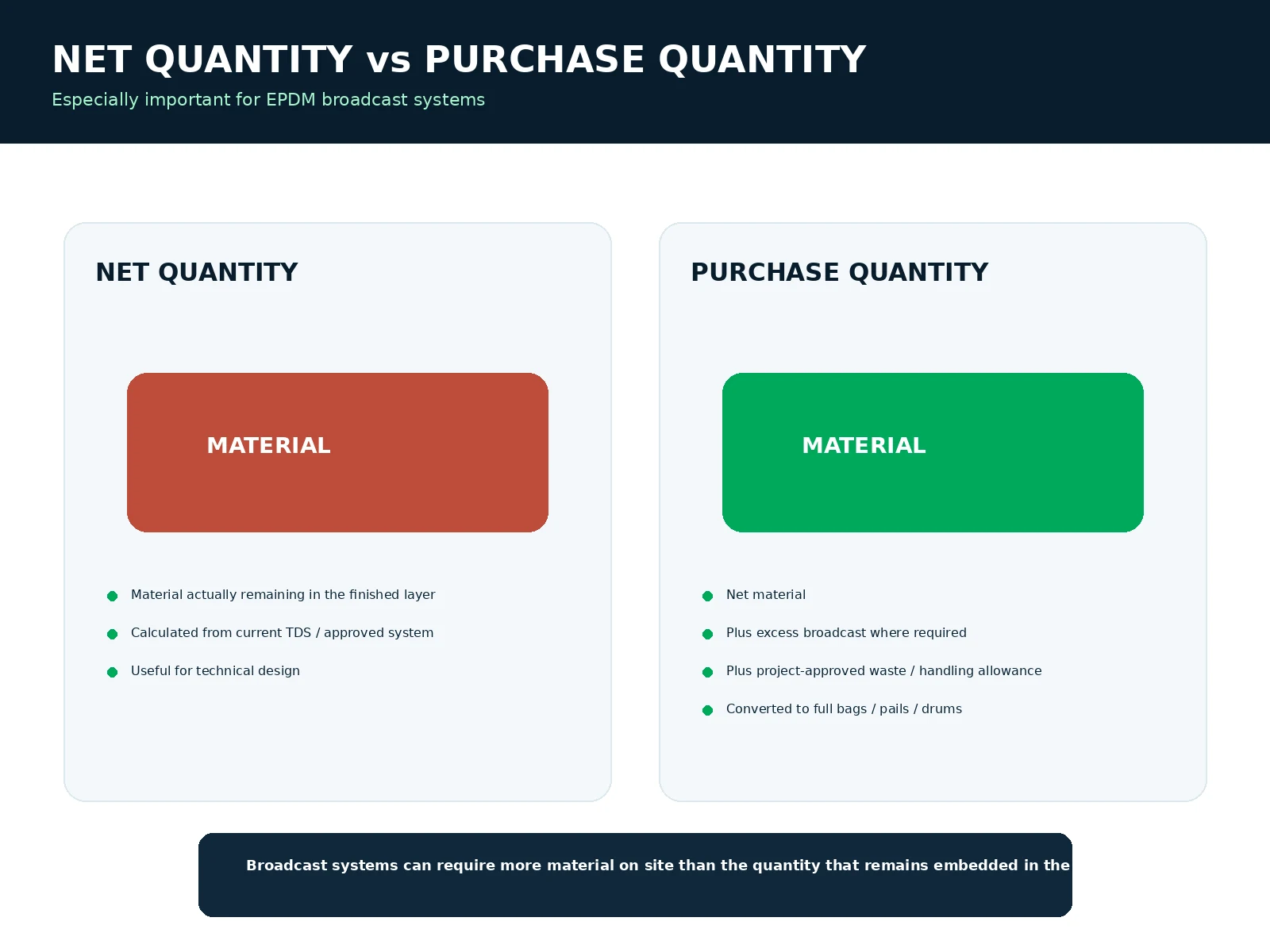
In a broadcast surface, the installer applies enough granules to saturate the wet polyurethane layer. Only part of that material becomes permanently embedded. Excess loose granules can remain above the cured surface and are removed, recovered or managed according to the installation method.
This creates two different numbers: net consumption, which describes the material retained in the system, and purchase/application quantity, which may need to be higher for practical installation.
The exact excess requirement depends on the Sport Floor system, EPDM size, surface, climate and application method. It should never be copied from another manufacturer's published example.
| Material | Calculation basis | What changes the result | Sport Floor action |
|---|---|---|---|
| Primer | Area × current TDS consumption. | Substrate type, porosity and condition. | Use the primer approved for asphalt/concrete and actual base condition. |
| SBR / rubber granules | Area × approved base-layer requirement. | Layer thickness, density/compaction, granule size and system. | Use current Sandwich/Spray/PU base design. |
| PU Binder | Approved rubber quantity × current Sport Floor binder ratio. | Rubber type, size, formulation and climate/application requirements. | Use current binder TDS/system data. |
| Pore Sealer | Area × current TDS consumption. | Porosity and texture of the rubber base. | Confirm actual base condition before final order. |
| Dense / Self-Leveling PU | Area × current product consumption for approved layer. | Layer thickness, density and substrate tolerance. | Do not use PU to compensate for major civil-level defects. |
| EPDM Broadcast | Area × net requirement, then add approved broadcast excess. | Granule size, embedment, surface texture and application method. | Separate net and purchase quantities. |
| Spray PU | Area × current spray-system consumption. | Number of passes, equipment, texture and product formulation. | Use current Sport Floor spray system data. |
| Fine EPDM for Spray | Area × approved spray-system EPDM requirement. | Granule size, PU/EPDM mix and finish. | Use current spray system specification. |
| Line Paint | Approved marking layout × current product coverage. | Lane count, event layout, line width and number of coats. | Calculate after final survey/marking plan. |
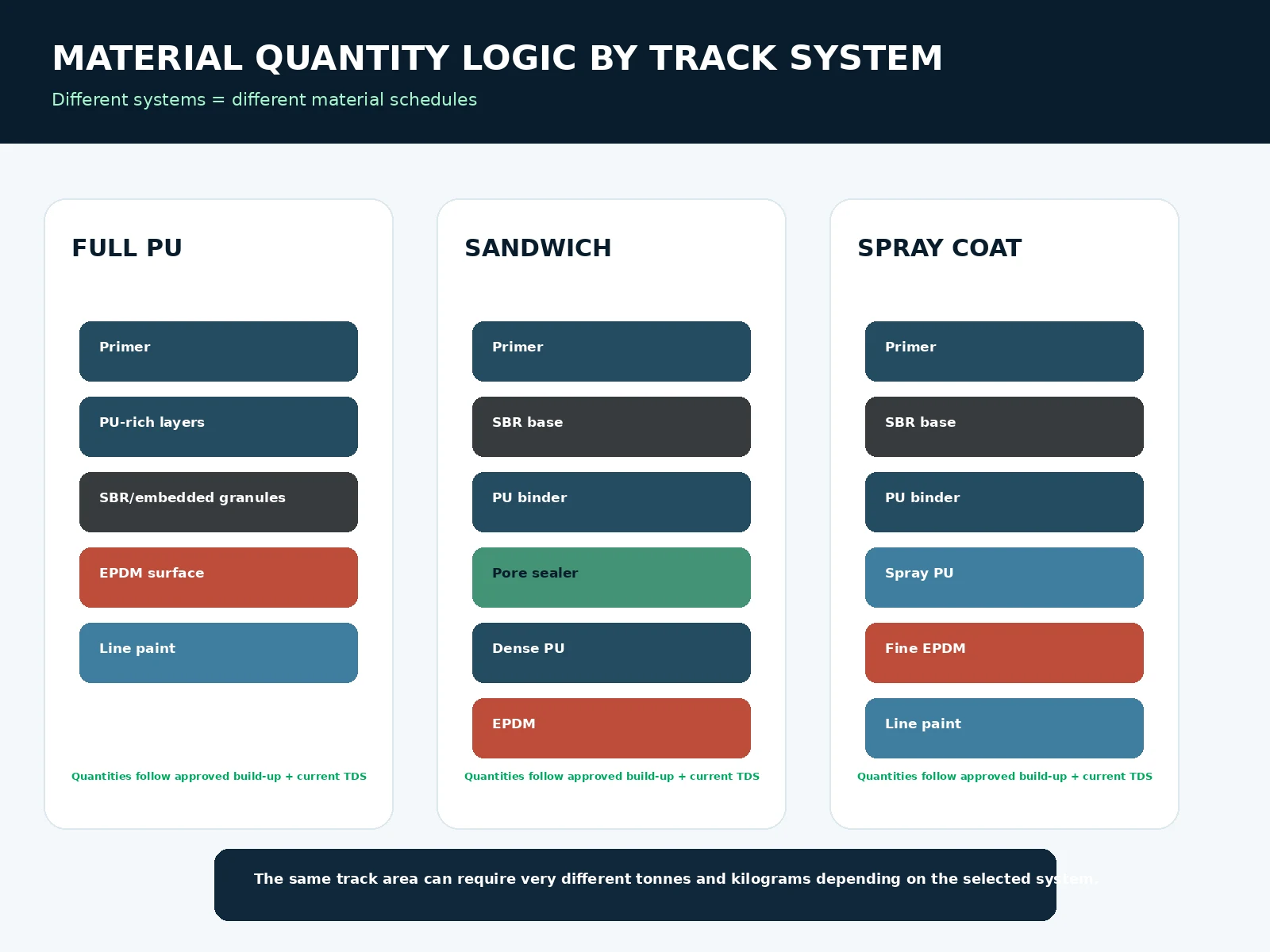
| Material group | Quantity method | Important note |
|---|---|---|
| Primer | Area × current Sport Floor primer consumption. | Substrate-specific. |
| PU structural layer(s) | Area × current product consumption for each approved layer. | Do not merge multiple PU layers into one generic average. |
| Embedded SBR / rubber | Area × approved granule requirement where included. | Exact role depends on Full PU architecture. |
| Upper PU layer | Area × current TDS consumption. | Keep separate from lower PU layers. |
| EPDM surface granules | Net requirement + approved broadcast excess where applicable. | Purchase quantity can exceed net embedded quantity. |
| Line paint | Final marking plan × current coverage. | Calculate after survey and layout. |
| Material group | Quantity method | Important note |
|---|---|---|
| Primer | Area × current primer consumption. | Depends on substrate and porosity. |
| SBR / rubber base | Area × approved resilient-layer requirement. | Do not infer tonnes from thickness alone without current system data. |
| PU binder | SBR quantity × approved current binder ratio. | Binder ratio is formulation/granule specific. |
| Pore sealer | Area × current TDS consumption. | Base porosity can affect actual demand. |
| Dense PU layer | Area × current product consumption. | Based on approved layer build-up. |
| EPDM | Net system requirement + approved broadcast excess. | Separate design and purchase quantity. |
| Line paint | Final marking plan × current coverage. | Keep as a separate procurement line. |
| Material group | Quantity method | Important note |
|---|---|---|
| Primer | Area × current Sport Floor primer consumption. | Base-specific. |
| SBR base | Area × approved resilient-layer requirement. | Main rubber volume in the classic porous route. |
| PU binder | SBR quantity × approved current binder ratio. | Do not use a generic market percentage. |
| Spray PU | Area × current spray-system requirement. | Application passes and finish affect quantity. |
| Fine EPDM | Area × approved spray-mix requirement. | Granule size and mix are system-specific. |
| Line paint | Final marking plan × current coverage. | Final procurement after track survey. |
Technical application quantity required to saturate a wet PU layer; not the same as normal waste.
Small losses can occur during mixing, transfers, equipment cleaning and site handling.
Porous or rough substrates can change primer and sealer demand; major civil defects should be corrected, not absorbed into uncontrolled PU consumption.
Procurement must be rounded to complete available packs, which can create a small difference from theoretical quantity.
Major manufacturers publish detailed system sheets showing consumption for their own primers, polyurethane layers and EPDM. Those values prove an important principle: consumption is product-specific and system-specific.
For example, manufacturer documentation can show different primer quantities for concrete versus asphalt, different PU consumption depending on the existing substrate, and a distinction between net EPDM embedded in the surface and the larger quantity required during broadcasting.
Sport Floor should therefore publish exact kg/m², binder ratio and layer quantity only from the current Sport Floor TDS or approved system sheet for the products being supplied.
| Stage | Example output type | Why it matters |
|---|---|---|
| Technical quantity | kg / tonne / m² requirement. | Design and BOQ basis. |
| Purchase quantity | Net + approved allowance. | Ensures enough material for actual installation. |
| Pack conversion | Number of pails / drums / bags / pallets. | Needed for purchase order and loading. |
| Shipment grouping | Pallet / container / truck allocation. | Supports export logistics. |
| Batch planning | Project or phased delivery groups. | Supports site sequence and storage strategy. |
| Documentation | TDS, SDS, packing list and available supporting documents. | Supports consultant review and customs/import process. |
Sport Floor uses German raw materials within applicable polyurethane primers, binders, intermediate layers and finishing formulations.
Sport Floor manufactures the polyurethane products being quantified instead of combining unrelated consumption data from multiple brands.
Sport Floor combines formulation knowledge, application experience and direct international material supply when preparing project quantities.
Primer, binder, pore sealer and dense PU do not share one universal consumption.
Base-layer design and current system requirement must be known first.
Can leave an EPDM broadcast installation short even when the net design quantity looks correct.
Different material losses and application allowances have different causes.
Theoretical kilograms rarely equal an exact number of commercial packs.
Another manufacturer's density and formulation may make that number unsuitable for Sport Floor products.
Total synthetic-surface area by zone.
Full PU, Sandwich, Spray Coat or request a recommendation.
Consultant build-up or approved Sport Floor system.
Asphalt, concrete or existing synthetic track.
Specified sizes, colors and grades where applicable.
Broadcast, spray, mixed resilient layer or other system process.
Country, city and preferred port/delivery point.
TDS, SDS, tender, packing or consultant-submittal requirements.
Start with the total area, select the exact system, approve the layer schedule and apply the current Sport Floor TDS consumption or ratio for each product. Then add only the allowances required by the application and convert the result into packing units.
No. Area is only the first input. System type, layer thickness, product consumption, granule size and application method are also required.
The correct amount is based on the actual SBR/rubber quantity and the current Sport Floor binder ratio for that system. Do not use a generic market percentage.
It depends on whether EPDM is broadcast, embedded, mixed in wet-pour or used in a spray coat. Use the current Sport Floor system data for the exact application.
Net quantity is the material incorporated into the finished layer. Purchase quantity can be higher when the installation requires excess broadcast, project allowance or rounding to complete packs.
SBR quantity depends on the approved resilient-layer design and current Sport Floor system specification. Thickness alone should not be converted into tonnes without the relevant density/system data.
Use the area and current Sport Floor TDS consumption. Actual demand can also be affected by the porosity and texture of the rubber base.
Use the approved Spray Coat area and current Sport Floor spray-system data for PU and fine EPDM. Number of passes, product formulation and finish all matter.
Use project-specific allowances rather than one arbitrary percentage. Broadcast excess, handling loss, substrate variation and pack rounding are separate issues.
Those figures belong to their formulations and systems. Use Sport Floor current TDS/system data for Sport Floor materials.
Yes. Sport Floor manufactures its own polyurethane sports-flooring materials and uses them in sports applications.
Yes. German raw materials are used within applicable Sport Floor polyurethane formulations.
Yes. Send the area, system, layer schedule, granule requirements and destination. Sport Floor can prepare a coordinated purchase schedule for international supply.
Send the track area, selected system, approved layers, substrate, EPDM/SBR requirements and destination. Sport Floor can convert the project into a coordinated manufacturer-direct material schedule ready for procurement and export.