
Movement Accommodation
The sealant is selected so a compatible joint can open and close without being filled by a rigid material.
Sport Floor manufactures PU Joint Sealant for compatible flooring and sports-flooring applications where joints must remain sealed while allowing controlled movement between adjacent floor sections.
A floor joint is not a defect to be hidden. It is a deliberate movement interface that may open, close or deform as the substrate and surrounding flooring respond to temperature, structural movement and service conditions. The sealant must therefore remain bonded to the joint sides while maintaining the flexibility required by the selected joint design.
Sport Floor manufactures its PU Joint Sealant using German raw materials within the applicable formulation and supplies it directly to sports-flooring contractors, flooring installers, distributors, importers and international project buyers.
PU Joint Sealant is a polyurethane sealing material used inside compatible floor joints where the joint must remain closed against dirt and surface contamination while still being able to respond to movement.
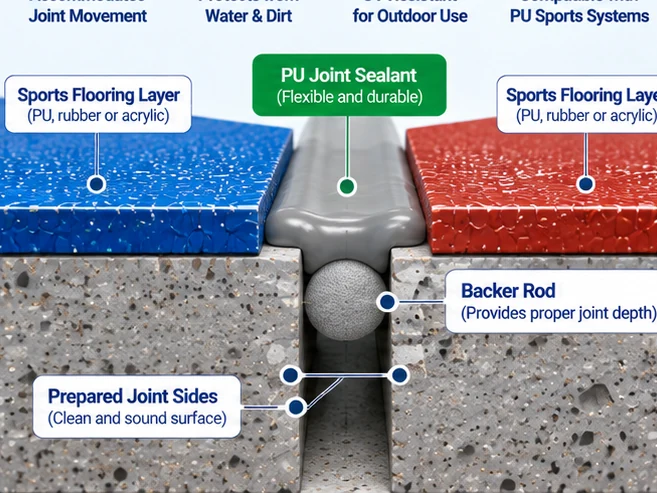
The sealant bonds to the prepared joint sides and spans the gap above the correct backing material or backer rod where the joint design requires it.
Unlike a rigid filler, the sealant is selected because the joint may move. Correct design therefore depends on joint width, depth, movement demand, substrate condition and the flooring system around it.
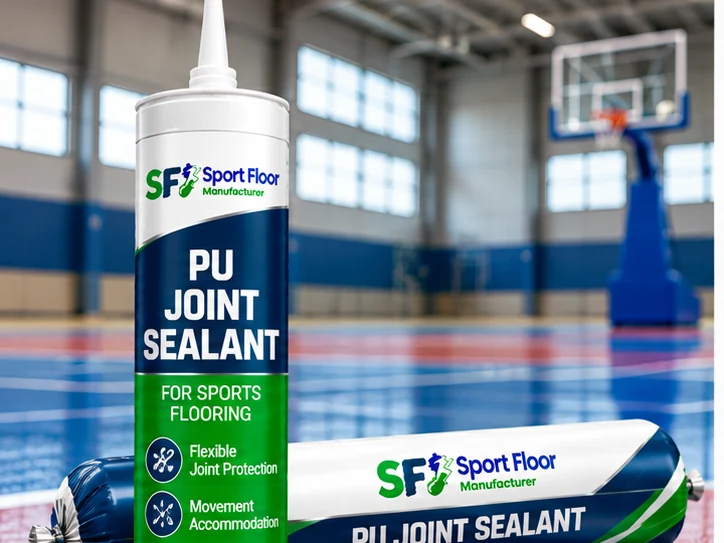
The sealant is selected so a compatible joint can open and close without being filled by a rigid material.
A properly sealed joint helps keep the opening controlled and reduces direct contamination of the joint cavity.
Correct sealing creates a cleaner transition between neighboring flooring sections.
The sealant must match the movement demand, joint geometry and surrounding flooring materials.
A defined sealant joint can be inspected and maintained as a distinct element of the finished floor.
Correct joint detailing improves the technical and visual quality of the completed flooring installation.
The joint sides should be sound, clean and prepared for adhesion before sealant application. Loose material, dust, contamination or weak edges can undermine the bond even when the sealant itself is suitable.
Where the joint design requires a backer rod or bond-breaker, it should be installed at the correct depth before the sealant is applied. This helps control the sealant cross-section and avoids unwanted bonding to the joint base.
The exact joint width/depth ratio, primer requirement, backing material, application temperature and cure conditions should follow the current Sport Floor TDS and the actual project joint design.
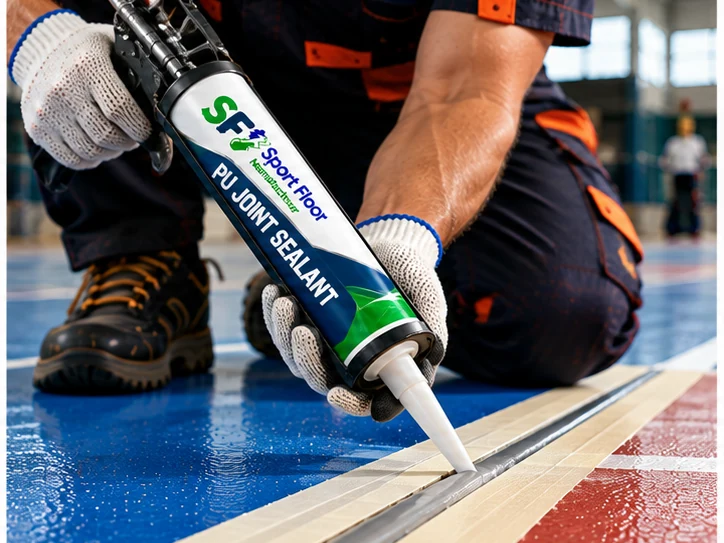
In a typical movement-joint detail, the sealant bonds to the two prepared sides of the joint. A backer rod or approved backing material sits below the sealant where the design requires it.
The backing helps control sealant depth and encourages the sealant to work between the two joint sides rather than being bonded rigidly to the base of the joint.
This detail is especially important because joint performance is not determined by sealant alone. Geometry, substrate adhesion and movement demand all work together.
Compatible floor-joint details in seamless sports-flooring and adjacent slab areas.
Compatible movement and construction joints where the selected system requires flexible sealing.
Flooring transitions and prepared joints within compatible resilient or PU-flooring installations.
Flexible joint details in sports, recreation and event floors where movement must be accommodated.
Compatible joints at concrete slab interfaces where the flooring design requires a resilient joint seal.
Selected transition joints between compatible flooring zones or adjacent floor sections.
A joint sealant is exposed to repeated movement and direct contact with the floor environment, making formulation quality important.
Sport Floor uses German raw materials within the applicable PU Joint Sealant formulation.
The sealant belongs to the same wider Sport Floor range as primers, adhesives, binders, self-leveling PU, sealers and top coats.
Sport Floor manufactures PU sports-flooring materials, uses system materials in project activity and supplies them directly for international orders.
| Selection point | PU Joint Sealant | PU Adhesive | Rigid Repair / Filler |
|---|---|---|---|
| Primary function | Seals a joint while allowing designed movement. | Bonds two compatible surfaces or flooring layers together. | Repairs or fills a non-moving defect where rigidity is acceptable. |
| Where used | Inside a prepared movement, connection or floor joint. | Between substrate and flooring layer. | Inside cracks, voids or repairs that are not intended to move. |
| Flexibility role | Core requirement. | Bonding is primary; flexibility depends on the adhesive system. | Usually not designed as a movement joint. |
| Dedicated page | Current product | PU Adhesive | Use the approved repair material for the actual substrate condition. |
The expected movement and project design determine the required joint width.
Depth should follow the joint design and current Sport Floor technical requirements.
Where required, the backing material controls sealant depth and helps avoid three-sided adhesion.
The sealant must bond to sound, properly prepared joint faces.
The expected joint movement should be established before the sealant is selected.
Pedestrian, sports, cleaning and outdoor exposure conditions influence product selection.
Confirm whether the joint is a movement, connection, crack-control or other approved floor joint.
Check soundness, cleanliness, width and condition of the joint faces.
Place the approved backer rod or backing material where the design requires it.
Use the current Sport Floor primer route where joint-side priming is specified.
Gun the material continuously into the joint without trapping voids.
Finish the sealant profile and protect the joint until the current technical cure requirements are met.
Do not copy another manufacturer's movement capability, modulus, Shore hardness, elongation, skin time, cure rate, packaging or service-temperature range.
| Item | Sport Floor PU Joint Sealant | Buyer relevance |
|---|---|---|
| Product Category | Polyurethane joint sealant for compatible floor and sports-flooring joints. | Defines the commercial product type. |
| Primary Function | Flexible sealing of prepared joints while allowing the designed movement. | Core system role. |
| Raw Materials | German raw materials used within the applicable formulation. | Key Sport Floor quality differentiator. |
| Movement Capability | Confirm on current Sport Floor TDS. | Critical to correct joint selection. |
| Modulus / Hardness | Confirm on current Sport Floor technical data. | Important to traffic and joint behavior. |
| Compatible Joint Sides | Confirm against the actual substrate and current Sport Floor data. | Controls adhesion reliability. |
| Primer Requirement | Use where current Sport Floor documentation requires it. | Important for joint-side adhesion. |
| Joint Width / Depth | Follow approved joint design and current technical data. | Controls movement performance and consumption. |
| Backer Rod | Use where required by the joint design. | Controls depth and prevents unwanted base adhesion. |
| Skin / Cure Time | Follow current Sport Floor TDS and site conditions. | Controls finishing and return-to-service timing. |
| Packaging | Confirmed in the current commercial offer. | Important for quantity and export planning. |
| Storage / Shelf Life | Follow current product label and technical documentation. | Important for contractors and distributors. |
Bonding to both joint sides and the base can restrict correct sealant movement.
An incorrect sealant cross-section can compromise the intended joint behavior.
Dust, laitance, oils or weak edges can reduce side adhesion.
A movement joint should not be turned into a rigid repair without engineering justification.
The sealant must be selected around the actual movement demand of the joint.
Movement, cure and mechanical data must come from the current Sport Floor product documentation.
Sport Floor can supply PU Joint Sealant together with compatible primers, flooring materials and related polyurethane products for professional installations.
Joint-sealing materials for compatible indoor and outdoor sports-floor installations.
Flexible sealant for prepared movement and connection joints within professional flooring projects.
Manufacturer-direct supply as part of a wider polyurethane flooring product range.
BOQ-based supply of sealant and the surrounding flooring materials required by the project.
Movement, connection, slab, crack-control or another approved floor joint.
Provide the actual or designed width.
State the designed sealant depth or construction detail.
Concrete, PU flooring edge or another compatible joint side.
Provide expected movement data where available.
Confirm exposure, cleaning and traffic conditions.
Country, city and port/delivery point for export.
TDS, SDS or consultant-submittal requirements.
It is used to seal compatible floor and sports-flooring joints where the joint must remain closed while allowing the designed movement.
No. Joint sealant is designed for flexible joint sealing. PU Adhesive is used to bond compatible flooring layers or materials together.
Yes where the joint design and current Sport Floor technical documentation confirm suitability for the required movement.
Where required, a backer rod controls sealant depth and helps prevent bonding to the joint base so the sealant can work correctly between the two joint sides.
Yes where the selected flooring and joint detail specify a compatible flexible PU sealant.
Use current Sport Floor technical data to confirm outdoor suitability for the actual product and project conditions.
Yes. It is part of the Sport Floor polyurethane sports-flooring product family.
Yes. German raw materials are used within the applicable Sport Floor PU Joint Sealant formulation.
Use the current Sport Floor TDS for the exact product supplied. Do not copy movement values from another manufacturer.
Joint geometry depends on the construction detail, expected movement and current Sport Floor technical requirements.
Use primer where the current Sport Floor sealant/substrate specification requires it.
Yes. Contractors, distributors, importers and project buyers can request international supply at info@sportfloor-m.com.
Yes. Request current technical documentation at info@sportfloor-m.com.
Send the joint type, width, depth, substrate, expected movement, indoor/outdoor condition and destination. Sport Floor can quote PU Joint Sealant individually or together with compatible primers and surrounding polyurethane flooring materials.