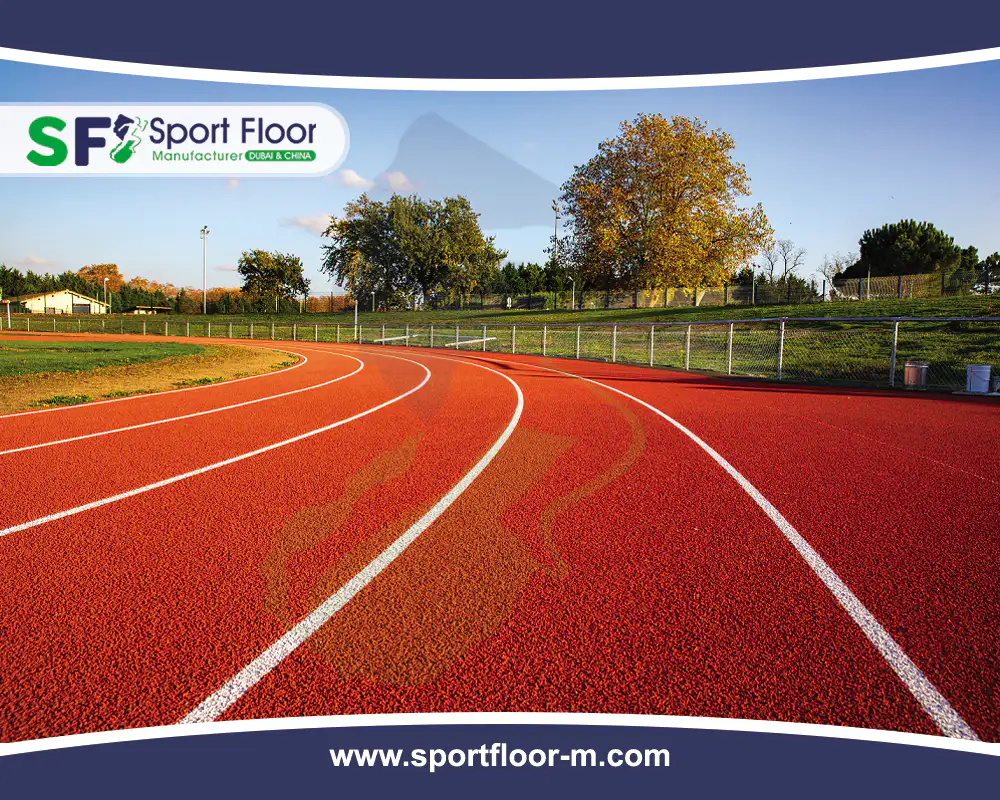














Tartan Running Track Systems and Polyurethane Athletic Surfaces
Plan polyurethane running tracks using a defined surface system, engineered supporting base, correct track geometry, drainage, markings, quality control and project-specific testing. Compare Full PU, Sandwich and Spray Coat systems for school, training, club and formal athletics facilities.
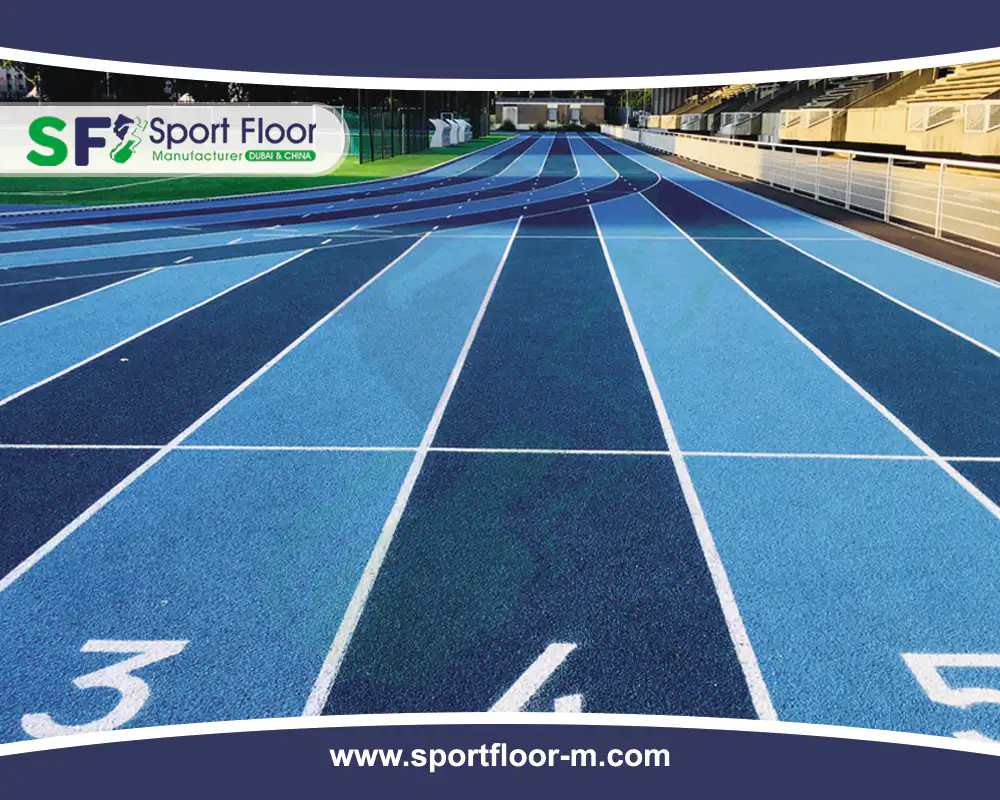
What Is a Tartan Running Track?
A tartan running track is a synthetic athletics surface commonly constructed from polyurethane and rubber-based layers over an engineered supporting base.
The word “tartan” does not identify one universal build-up. Different projects may use Spray Coat, Sandwich, Full PU, prefabricated or other defined synthetic systems.
Track performance depends on the complete construction, including the base, primer, resilient layers, wearing surface, thickness, drainage, setting-out and installation quality.
System-Defined Surface
Materials, thickness and permeability depend on the selected track construction.
Engineered Base
Track geometry, levels and drainage begin with the civil and asphalt works.
Measured Geometry
Formal tracks require accurate survey, setting-out and final measurement.
Project-Specific Testing
Testing and certification should be defined in the contract rather than assumed.
Where PU Running Track Systems Are Used
System selection should reflect the facility level, athlete use, required testing, budget, maintenance capacity and certification scope.
Physical Education Tracks
School tracks for supervised athletics, training programmes and sports-day events.
Club and Academy Tracks
Regular training tracks requiring a defined resilient system and controlled maintenance.
Municipal Running Tracks
Athletics and public-use facilities designed for scheduled training and community programmes.
Competition Athletics Tracks
Specialist tracks requiring exact geometry, specified surfaces, testing and project-dependent certification.
Campus Athletics Tracks
Training and event facilities serving students, clubs and organised competitions.
Supporting Athletics Surfaces
Separate warm-up or training routes associated with a stadium or athletics centre.
Project-Specific School Tracks
Shorter tracks designed for available sites and described clearly as non-standard where applicable.
Track Resurfacing
Renovation of technically suitable existing tracks after survey, testing and compatibility assessment.
400 m Track Dimensions, Lanes and Markings
The figures below are key references, not a complete design. Formal track geometry requires the applicable World Athletics manual, current rules and specialist surveying.
Standard oval-track reference measured according to the applicable measurement rules.
Subject to the applicable tolerance and measurement definition.
Applied according to the current technical rules.
Reference width displayed on the standard marking plan.
Determined by facility classification, site and project brief.
Completed geometry should be measured through the specified reporting procedure.
Longitudinal and lateral levels must follow the approved facility design.
Starts, relays, hurdles and event marks require the official marking plan.
Spray Coat, Sandwich and Full PU Running Track Systems
System names describe broad families. Exact materials, thicknesses, permeability and test values must be confirmed for the offered construction.
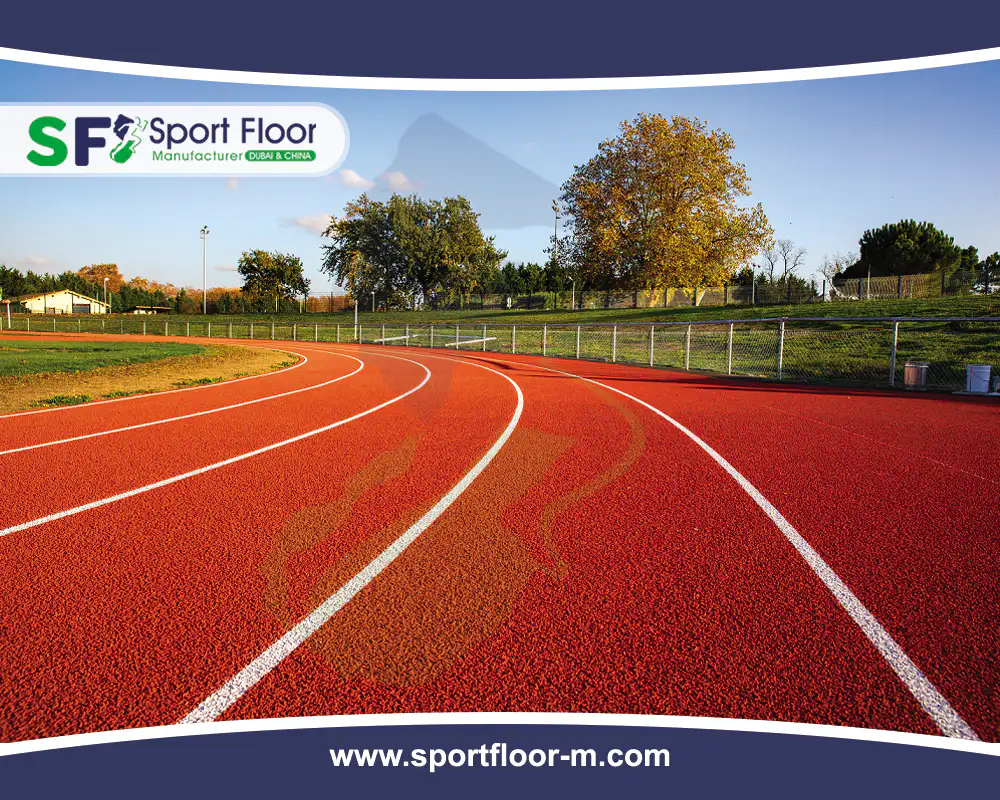
Spray Coat Running Track
Commonly formed with a PU-bound rubber base and spray-applied polyurethane and fine-granule wearing surface.
- Project-dependent permeable construction.
- Requires a compatible draining base.
- Controlled rubber-layer installation.
- Specialist spray application.
- Suitable applications depend on specification.
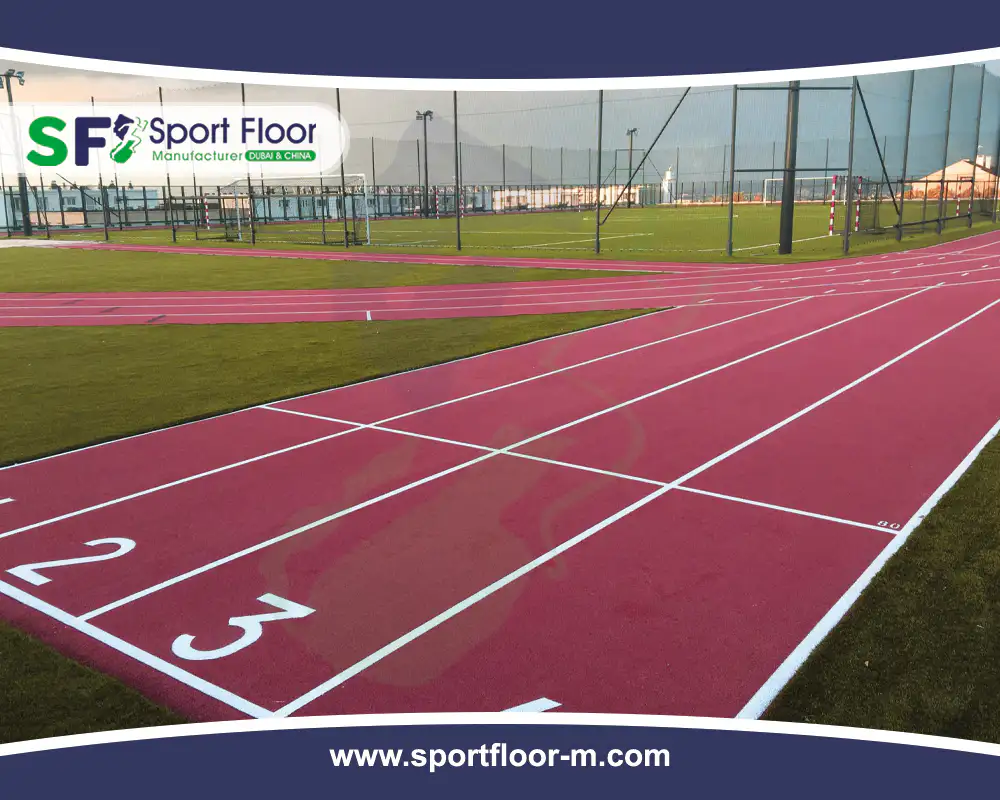
Sandwich Running Track
A multi-layer construction generally combining a resilient rubber base, pore sealing, PU layers and an upper granule surface.
- PU-bound rubber base layer.
- Pore-sealing construction.
- Dense elastic PU layer.
- Granule-finished upper surface.
- Surface drainage generally required.

Full PU Running Track
A polyurethane-intensive system using multiple elastic PU layers and a specified upper wearing construction.
- Dense polyurethane layer build-up.
- High base-quality requirements.
- Impermeable drainage strategy.
- Specialist mixing and application.
- Exact test reports required for performance claims.
How the Main PU Track Systems Differ
| Comparison Point | Spray Coat | Sandwich | Full PU |
|---|---|---|---|
| General Construction | Rubber base with spray-applied PU and fine-granule finish. | Rubber base, pore sealing, PU elastic layers and granule surface. | Multiple dense polyurethane layers with specified wearing finish. |
| Permeability | May be designed as porous or semi-porous. | Commonly a sealed or impermeable system. | Commonly dense and impermeable. |
| Water Management | Requires compatibility with the draining base. | Requires designed surface falls and perimeter drainage. | Requires designed surface falls and controlled outlets. |
| Application Complexity | Controlled rubber installation and spray application. | Multiple stages including sealing and granule broadcast. | Specialist multi-layer PU application and curing control. |
| Typical Positioning | School, training and project-dependent athletics facilities. | Club, training and project-specific competition facilities. | Performance projects requiring a defined dense PU system. |
| Performance Values | Must be confirmed from the exact product or completed-surface test documentation. | ||
| Certification | Verify the exact certified product and the separate requirements for the completed facility. | ||
Typical Layers in a Polyurethane Running Track
Subgrade and Civil Works
Engineered formation, drainage and supporting construction.
Asphalt Base
Stable and accurately levelled base designed for the selected track system.
Surface Preparation
Cleaning, inspection, repairs and removal of contamination.
PU Primer
Compatible adhesion layer applied to the prepared base.
Resilient Layer
PU-bound SBR or another specified elastic construction.
Sealing or PU Layers
Pore sealer and dense elastic layers where included.
Wearing Surface
Spray finish, granule broadcast or another defined upper surface.
Track Markings
Lines, starts, relay zones, event markings and lane numbers.
Running Track Base, Levels and Drainage
The synthetic surface follows the geometry and movement of the base. Base construction therefore requires the same technical attention as the visible PU surface.
Subgrade Stability
Confirm bearing capacity, compaction and protection against settlement.
Base Layers
Construct approved granular and asphalt layers to the project design.
Asphalt Quality
Review compaction, stability, texture, contamination and readiness.
Track Geometry
Set out straights, bends, kerbs and event zones accurately.
Surface Levels
Measure the completed base before beginning synthetic surfacing.
Drainage Channels
Coordinate channels, covers, outlets and maintenance access.
Water Ponding
Correct unacceptable depressions before final PU application.
Kerbs and Edges
Complete inner kerbs, edge restraints and transitions correctly.
Base Acceptance
Record survey, condition and readiness before surface handover.

Running Track Lines and Event Markings
Formal track markings are not limited to parallel lane lines. Starts, staggered starts, relay markings, hurdle positions, break lines and event zones must follow the approved marking plan.
- Confirm the applicable marking-plan edition.
- Complete track geometry and measurement first.
- Use calibrated survey and setting-out equipment.
- Confirm line width and color for each event.
- Set out staggered starts from approved measurements.
- Coordinate relay and hurdle markings.
- Apply compatible marking paint.
- Record the final as-built marking plan.
Track Testing Must Match the Project Specification
Formal track projects may require product testing, field testing, geometric measurement and inspection by an appropriately qualified or accredited organisation.
Surface Thickness
Check installed thickness using the specified sampling and reporting method.
Force Reduction
Assess resilient response where required by the applicable testing specification.
Vertical Deformation
Evaluate surface deformation according to the specified method.
Friction
Assess the completed surface using the applicable track-testing procedure.
Evenness
Check surface irregularities and record non-compliant areas.
Tensile Properties
Product or surface samples may be tested where required.
Drainage and Levels
Verify completed levels and water-management performance.
Track Measurement
Measure geometry and event locations through the required report forms.
Visual Inspection
Review color, texture, joints, repairs, defects and line quality.
Track Product Certification and Facility Certification Are Separate
| Scope | What It Relates To | What It Does Not Automatically Prove |
|---|---|---|
| Track-Surfacing Product Certificate | An identified synthetic track product and defined system. | It does not automatically certify every installation using the product. |
| Facility Certification | A completed athletics facility assessed through the applicable procedure. | It does not apply to other stadiums or future projects. |
| Laboratory Test Report | The identified sample, surface, facility or test locations. | It does not prove unrelated systems have identical values. |
| Measurement Report | Completed track geometry, levels and event locations. | It does not certify surface materials by itself. |
| Technical Data Sheet | Product application and technical information. | It is not a completed-facility certificate. |
Typical PU Running Track Installation Process
Define Facility Level
Confirm school, training, club or formal competition use.
Complete Track Design
Approve geometry, lanes, event areas, drainage and details.
Construct Civil Base
Complete subgrade, granular layers, drainage and kerbs.
Install Asphalt
Construct and cure the approved track base layers.
Survey and Accept Base
Check geometry, levels, condition and water management.
Prepare and Prime
Clean the base and apply compatible primer.
Install Resilient Layers
Apply rubber or PU layers to the approved construction.
Seal or Level
Complete pore sealing or dense PU layers where required.
Apply Wearing Surface
Install the specified spray, broadcast or PU finish.
Complete Track Markings
Apply markings from the approved setting-out plan.
Test and Measure
Complete the contractually required inspections and reports.
Handover the Track
Submit as-built, testing and maintenance documentation.
Tartan Running Track Resurfacing
Resurfacing may restore texture, color, markings or selected performance where the existing system and supporting base remain suitable.
- Identify the existing track system.
- Review delamination, cracking and worn areas.
- Inspect the supporting base for movement.
- Check levels, drainage and water ponding.
- Test existing-surface adhesion where required.
- Measure remaining thickness where relevant.
- Confirm chemical compatibility.
- Repair damaged edges and local areas.
- Define full overlay or local repair scope.
- Re-measure and re-mark where required.

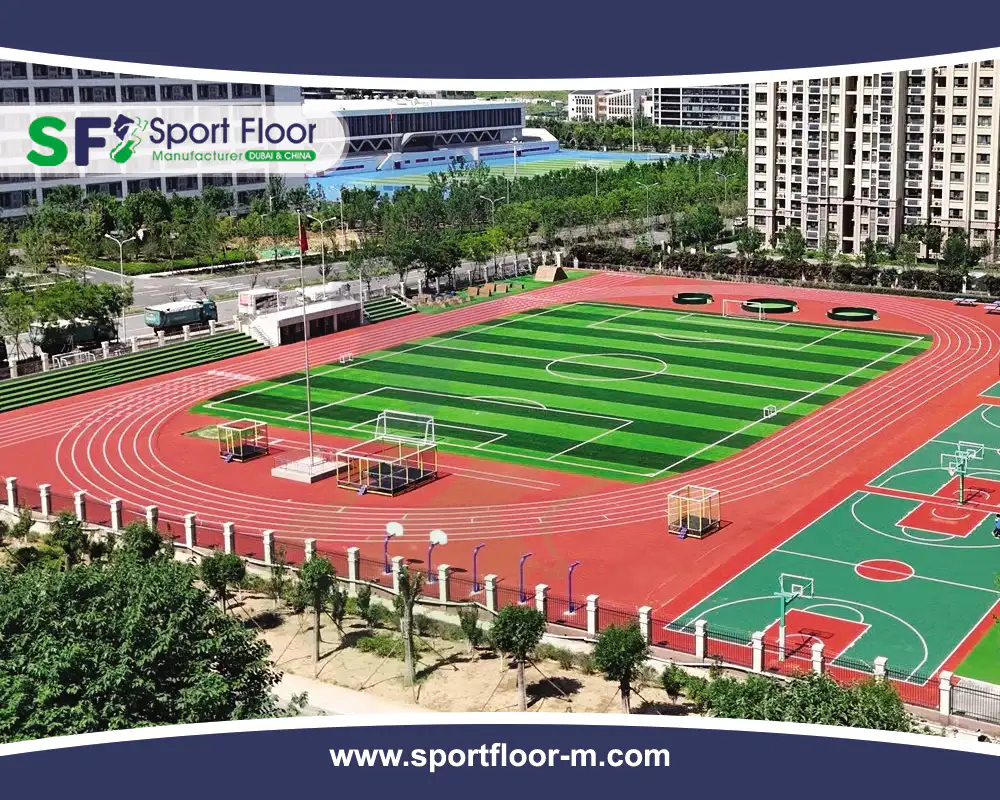
Tartan Running Track Surface and Marking Examples
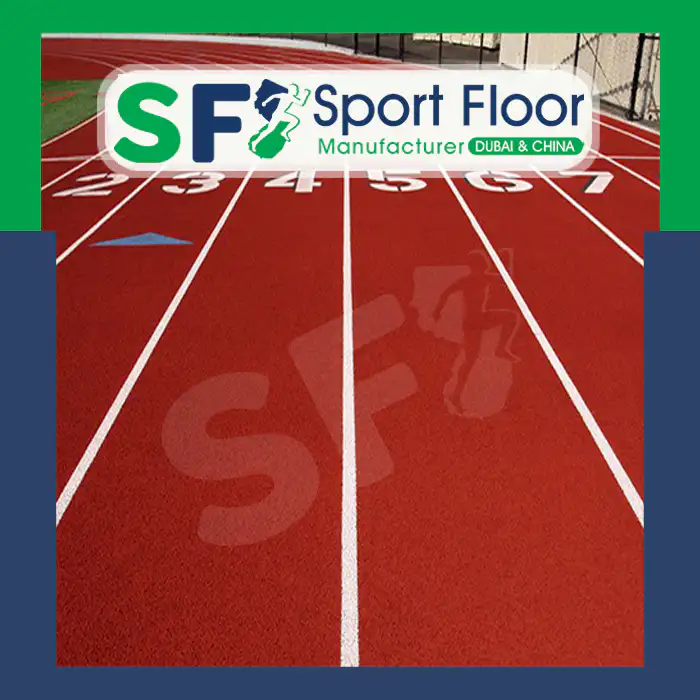
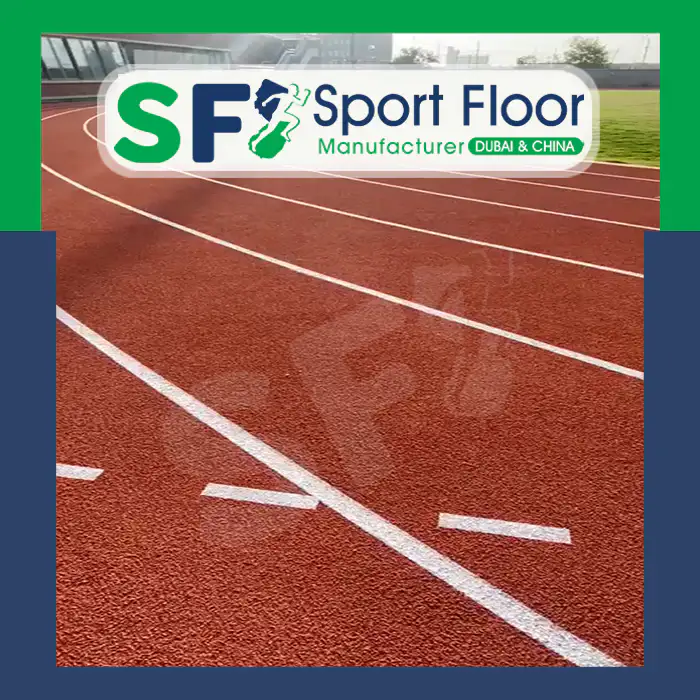
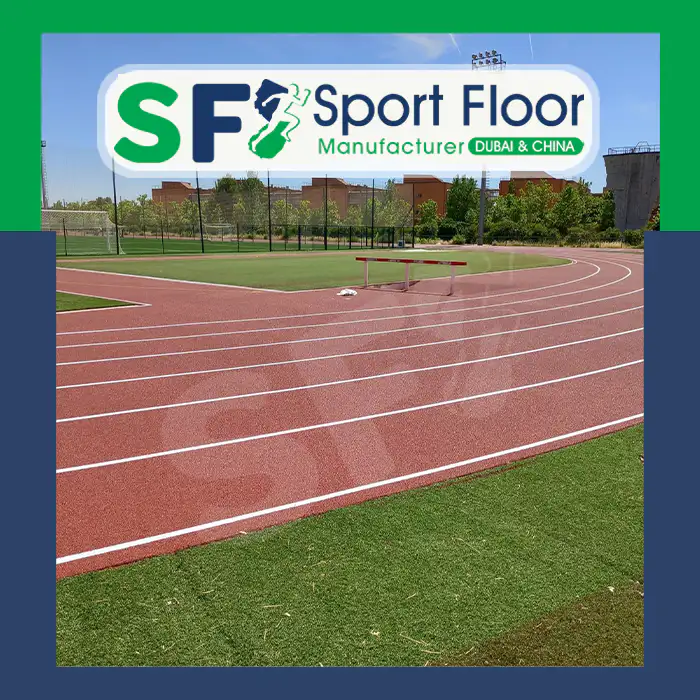
Every image in this gallery uses the same original square dimensions. The photographs illustrate track appearance and markings only and do not prove a particular system or certification.


Running Track Facility and Lane Layout Examples


Tartan Running Track Maintenance
Remove Debris
Clear leaves, sand, soil and loose material using compatible methods.
Use Approved Cleaning
Follow the surface supplier’s cleaning and chemical guidance.
Maintain Drainage
Keep channels, covers, kerbs and outlets clear.
Inspect High-Wear Areas
Review starts, bends, finish areas and concentrated training zones.
Monitor Delamination
Investigate bubbles, lifting or loss of bond promptly.
Review Cracks
Determine whether cracking comes from the surface or supporting base.
Protect Markings
Reapply worn markings accurately using compatible material.
Control Equipment
Use suitable protection beneath movable equipment and event loads.
Resurface by Condition
Base renewal decisions on inspection, testing and operational needs.
Information Required for a Tartan Running Track Quote
Track Use
State school, training, club or competition use.
Track Layout
Provide track length, number of lanes and event facilities.
Total Surface Area
Provide the synthetic surface quantity in square metres.
New or Existing Track
State whether the scope is new construction or resurfacing.
Base Information
Identify civil scope, asphalt condition and drainage.
System Preference
Select Full PU, Sandwich, Spray Coat or request comparison.
Performance Requirements
Provide required test values and acceptance criteria.
Certification Scope
State product and completed-facility requirements.
Color and Marking Plan
Provide surface colors and required event markings.
Commercial Scope
Materials only, supervision, installation or turnkey execution.
Destination
Provide country, city, port and site location.
Delivery Term
State the preferred Incoterms® rule and required date.
World Athletics and Commercial Delivery References
Continue Planning the Athletics Facility
Tartan Running Track FAQ
What is a tartan running track?
It is a synthetic athletics surface commonly constructed from polyurethane and rubber-based layers over an engineered base.
Is tartan one specific running-track system?
No. The term may describe Spray Coat, Sandwich, Full PU and other synthetic track constructions.
What is the standard outdoor running-track length?
The standard outdoor oval-track reference is 400 metres, measured according to the applicable technical rules.
What is the standard running-track lane width?
For races up to and including 400 metres, the current rules state a lane width of 1.22 metres plus or minus 0.01 metre, including the lane line on the right.
How wide are standard track markings?
The standard 400-metre marking plan shows a mark width of 0.05 metre.
What is a Spray Coat running track?
It commonly consists of a PU-bound rubber base and a spray-applied PU and fine-granule upper surface.
What is a Sandwich running track?
It generally combines a resilient rubber base, pore sealing, dense polyurethane layers and an upper granule surface.
What is a Full PU running track?
It is a dense polyurethane-intensive system using multiple elastic PU layers and a specified wearing surface.
Which PU running-track system is best?
Selection depends on facility level, base, drainage, budget, performance specification, testing and certification requirements.
Are all tartan tracks World Athletics certified?
No. Product certification and completed-facility certification must be verified separately for the exact project.
Does a certified surface product certify the completed stadium?
No. A product certificate and a completed-facility certificate cover different scopes.
What tests may be required for a PU running track?
Project-dependent testing may include thickness, force reduction, vertical deformation, friction, evenness, tensile properties, track measurement and levels.
Can a tartan track be installed over concrete?
Some project-specific surfaces may use concrete, but formal track systems commonly require an engineered base defined by the approved design.
Can a tartan track be installed over asphalt?
Yes. Many synthetic athletics-track systems use a carefully constructed asphalt supporting base.
Can an old tartan track be resurfaced?
It may be resurfaced after identifying the existing system and assessing adhesion, thickness, base condition, cracks, levels and drainage.
Does resurfacing repair structural settlement?
No. Settlement and structural movement require corrective base works before synthetic resurfacing.
How long does a PU running track last?
Service life depends on system, base quality, climate, use, drainage, installation and maintenance. There is no universal fixed lifespan.
How is tartan running-track pricing calculated?
Pricing depends on area, geometry, civil works, selected system, thickness, materials, markings, testing, certification, installation and destination.
Can materials be supplied without installation?
A materials-only quotation may be prepared when the system, quantities, local installation responsibility and destination are clearly defined.
What information is required for a track quotation?
Provide track use, layout, lanes, area, base, system preference, performance criteria, certification scope, commercial scope, destination and delivery term.