
Shock Absorption
The cushion layer helps the system absorb a portion of impact energy instead of transferring the full load directly to the rigid substrate.
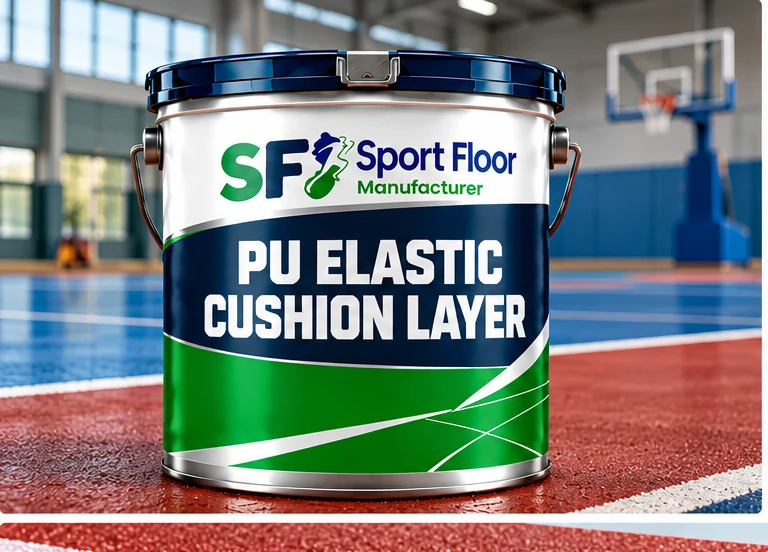
Sport Floor manufactures PU Elastic Cushion Layer for compatible polyurethane sports-flooring systems where controlled resilience, impact absorption and a more comfortable playing surface are required.
The cushion layer sits beneath the upper polyurethane surface and helps the system deform under impact before recovering. In indoor sports halls, training areas, multi-purpose courts and suitable outdoor applications, this resilient layer can improve player comfort and reduce the harshness of a rigid substrate.
Sport Floor PU Elastic Cushion Layer is manufactured using German raw materials within the applicable formulation and is available for direct B2B supply and international export to sports-flooring contractors, distributors, importers and project procurement teams.
PU Elastic Cushion Layer is a resilient polyurethane component installed below the upper sports-flooring layers to create a controlled cushioning effect. It is designed to deform under impact and recover, helping the complete floor provide a softer, more forgiving response than a hard concrete or asphalt base alone.
The cushion layer is not the final sports surface. It works underneath the self-leveling, coating or top layers that create the final appearance, friction and wear surface. Its value is mechanical: it helps define the comfort, impact response and resilience of the system.
Sport Floor positions the product as part of a complete polyurethane build-up. Primer, cushion layer, self-leveling PU, top coat and line marking should be selected as compatible components based on the sport, expected traffic, substrate and required floor response.
Leading sports-floor manufacturers separate the elastic layer from the visible surface because the two parts perform different jobs.
The cushion layer helps the system absorb a portion of impact energy instead of transferring the full load directly to the rigid substrate.
A resilient floor can feel less harsh under repeated running, jumping and training movements.
The aim is not maximum softness; the system should provide a controlled response appropriate to the intended sport and use.
Cushioned systems can support safer, more forgiving sports environments where repeated impact and falls are part of normal use.
The thickness and type of elastic layer influence the overall floor response and should be selected with the complete system.
A liquid-applied elastic layer can form part of a seamless polyurethane system without relying on a separate prefabricated shock pad.
Elastic performance should not be used to hide substrate defects, contamination or unresolved moisture.
Before the cushion layer is applied, the substrate should be evaluated and prepared according to the selected Sport Floor system. Concrete or other compatible bases must be sound, clean and suitable to receive the specified primer and following polyurethane layers.
Where moisture risk exists, the correct moisture-barrier route should be selected before the elastic layer. Where the concrete is highly porous, a penetrating primer route may be required. This keeps each product focused on the problem it is designed to solve.
The cushion layer is then installed to the specified system build-up before compatible upper PU layers are applied.
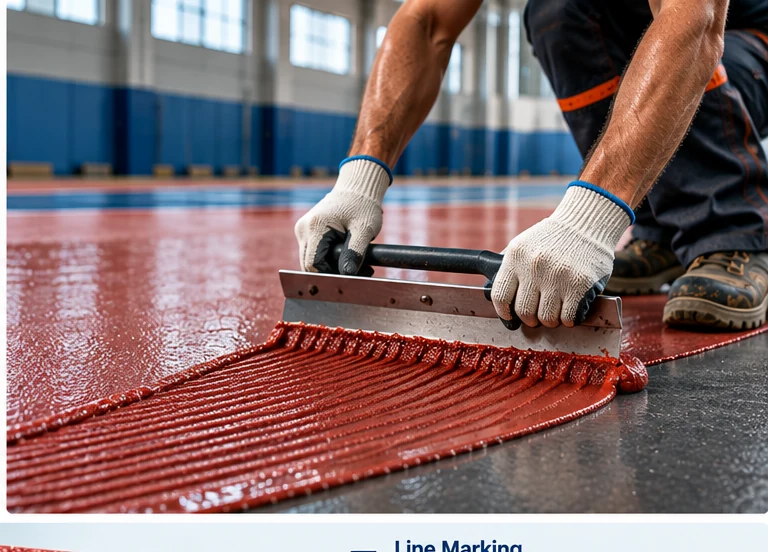
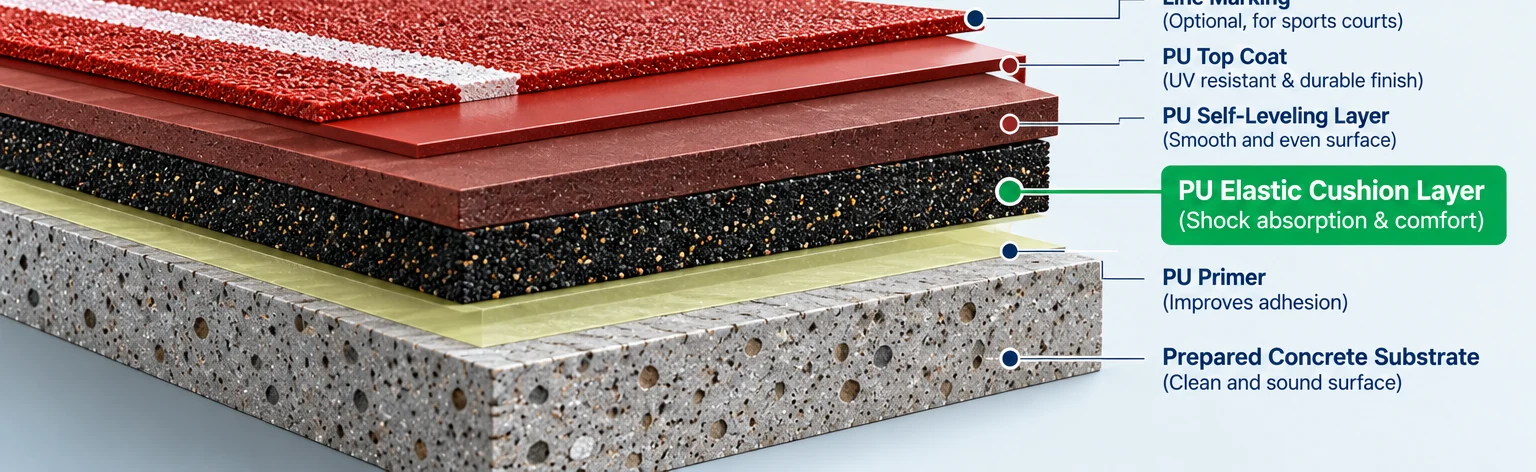
The exact build-up depends on the system, but the cushion layer typically sits between substrate preparation and the dense upper PU flooring layers.
In a typical compatible indoor PU sports floor, the prepared concrete receives the appropriate primer. The PU Elastic Cushion Layer then creates the resilient body of the system. Above it, the floor may use a self-leveling polyurethane layer, protective/functional top coat and line marking.
Some systems may include other intermediate products according to the intended use. The role of the cushion layer does not change: it provides the controlled elastic response beneath the wearing surface.
This layer-by-layer structure is one reason Sport Floor manufactures a full range of PU products rather than selling the cushion material in isolation.
Cushioned PU systems can improve comfort during repeated running, jumping and landing in indoor basketball facilities.
Suitable for compatible seamless PU systems where impact response and comfortable movement are important.
Used within compatible cushioned polyurethane floors for dynamic indoor sports with frequent acceleration and stopping.
Helps create a balanced floor response for facilities serving several sports and training activities.
Relevant to suitable sports halls where comfort, repeated use and broad age-group participation are important.
Can be used within compatible systems where repeated exercise impact and user comfort influence floor selection.
A cushion layer is hidden beneath the final surface, but its behavior affects how the entire floor feels. That makes formulation quality important even when the product is no longer visible after installation.
Sport Floor uses German raw materials within the applicable PU Elastic Cushion Layer formulation.
The cushion layer is developed within a wider Sport Floor PU range covering primers, self-leveling products, sealers, top coats, adhesives and line marking.
Sport Floor manufactures its PU materials, uses sports-flooring materials within its own projects and supplies them directly for international orders.
Global sports-floor manufacturers commonly use either prefabricated elastic mats or liquid/in-situ polyurethane cushion layers depending on the system and project.
| Selection point | PU Elastic Cushion Layer | Prefabricated Rubber / Foam Mat |
|---|---|---|
| Installation form | Liquid-applied or in-situ resilient layer within the compatible PU system. | Factory-made sheet/mat bonded to the substrate before upper layers. |
| Seams | Can form a seamless resilient layer when applied correctly. | Includes mat joints that must be installed and treated correctly. |
| Substrate adaptation | Can follow the prepared substrate continuously and may suit complex areas. | Requires accurate cutting, fitting and adhesive installation. |
| System integration | Directly integrated with the surrounding liquid PU layers. | Usually requires compatible adhesive and pore-sealing/closing layers. |
| Project decision | Useful where a liquid-applied seamless cushion route is specified. | Useful where a proven prefabricated mat system is selected. |
Both can add resilience, but they are different product families and may belong to different system designs.
A polyurethane elastic layer designed to create controlled cushioning within a compatible seamless PU flooring system.
A flexible base layer incorporating rubber granules with polyurethane binder where the system specifies a rubberized construction.
The correct product depends on required thickness, shock absorption, substrate, sport, cost structure and the upper flooring layers.
Follow the current Sport Floor TDS, system specification and approved project method statement for the actual material supplied.
Identify the intended indoor, outdoor, multi-purpose or cushioned PU system before selecting the product route.
Ensure the base is sound, clean and suitable for the specified primer and resilient layer.
Select Indoor, Outdoor, Low Viscosity or Moisture Barrier primer according to the actual substrate condition.
Apply the PU Elastic Cushion Layer to the system-specific thickness and method stated in current technical data.
Proceed only when the elastic layer meets the required condition for receiving the next compatible PU material.
Install self-leveling, top coat and line marking according to the selected Sport Floor build-up.
Do not copy another manufacturer’s thickness, density, Shore hardness, elongation, cure time or impact-reduction value into a Sport Floor specification.
| Item | Sport Floor PU Elastic Cushion Layer | Buyer relevance |
|---|---|---|
| Product Category | Elastic polyurethane cushion layer for compatible sports-flooring systems. | Defines the product as the resilience component of the system. |
| Primary Function | Controlled cushioning, shock absorption and comfort beneath compatible PU upper layers. | Explains why the layer is included in the flooring build-up. |
| Raw Materials | German raw materials used within the applicable formulation. | Key Sport Floor product-quality differentiator. |
| Component Type | Confirm on the current Sport Floor TDS. | Determines mixing, preparation and installation procedure. |
| Density | Confirm on the current Sport Floor TDS. | Important for material calculations and technical submittals. |
| Hardness / Elasticity | Confirm on the current Sport Floor TDS. | Relevant to the intended system response. |
| Recommended Thickness | Determined by the selected Sport Floor system and project specification. | Thickness affects overall floor response and quantity. |
| Consumption | Use current Sport Floor TDS and actual system thickness. | Required for accurate BOQ and project planning. |
| Working / Cure Time | Follow current Sport Floor technical data and site conditions. | Temperature and humidity can affect application timing. |
| Next Compatible Layer | According to the selected system; may include self-leveling or other compatible PU layers. | Keeps the product tied to the complete flooring build-up. |
| Packaging | Confirmed in the current commercial offer. | Needed for order, pallet and export planning. |
| Storage / Shelf Life | Follow current Sport Floor product label and TDS. | Important for distributors, warehouses and international shipments. |
Too much deformation can affect stability and sport performance. Cushion level should match the system requirement.
The elastic layer and self-leveling/top-coat system must work together rather than being selected independently.
Elastic material is not a substitute for repairing an unsound, contaminated or moisture-problem substrate.
Layer thickness belongs to a specific system design. Use the current Sport Floor system data rather than another brand’s number.
The two can provide resilience in different ways and should not be treated as interchangeable without system review.
Primer, cushion, self-leveling layer, top coat and line marking should be ordered as a compatible build-up.
Sport Floor manufactures a broad PU sports-flooring range so professional buyers can source the cushion layer together with compatible primers, intermediate layers, finishing coats and markings.
For installers building cushioned seamless polyurethane sports floors.
For companies developing a professional polyurethane sports-flooring material range.
Manufacturer-direct supply for international buyers requiring PU system materials and documentation.
BOQ-based supply for sports halls, courts, schools, clubs and multi-purpose facilities.
The correct supply depends on the application, area, substrate, selected PU system and required resilience.
Basketball, volleyball, handball, multi-purpose hall, training floor, school gym or another compatible sports use.
Provide the project square metres for material and commercial planning.
State whether the base is new concrete, existing concrete or another substrate requiring technical review.
Cushioned PU, indoor PU, multi-purpose PU or another Sport Floor build-up.
Comfort, shock absorption, training use, multi-sport use or another project requirement.
Share the specified self-leveling, top coat and line-marking route where already defined.
For export, provide country, city and preferred port or delivery point.
List the required TDS, SDS or consultant-submittal documents.
It is used as the resilient layer in compatible polyurethane sports-flooring systems to provide controlled cushioning, impact absorption and player comfort beneath the upper PU layers.
No. It normally sits below compatible upper layers such as self-leveling PU, functional top coats and line marking.
Yes. Its role is to provide elastic response within the system, helping reduce the harshness of impact compared with a rigid substrate alone. Exact performance depends on the complete system.
Yes, where the selected Sport Floor indoor or cushioned PU system specifies this elastic layer.
Yes. It can form part of compatible seamless PU systems for indoor volleyball, handball and multi-purpose sports halls.
Only where the selected Sport Floor outdoor system specifies this product route. Outdoor exposure, substrate and finishing layers should be reviewed as a complete system.
PU Elastic Cushion Layer is an elastic polyurethane cushioning component. Rubberized PU Base Layer incorporates rubber granules within a polyurethane-bound base. Both can add resilience but belong to different system designs.
Not universally. Liquid/in-situ elastic layers can provide a seamless resilient route, while prefabricated mats offer a different proven construction method. The correct choice depends on system and project requirements.
Yes. It is part of the Sport Floor polyurethane sports-flooring product range for contractor supply, distribution and international export.
Yes. German raw materials are used within the applicable Sport Floor PU Elastic Cushion Layer formulation.
Use the selected Sport Floor system specification and current TDS. Required thickness depends on the intended floor response and complete build-up.
Send the total area, selected system and required layer thickness. Material consumption should be calculated from current Sport Floor product data.
Yes. Buyers can request compatible primer, cushion layer, self-leveling PU, top coats, line marking and other required Sport Floor products as one material package.
Yes. International contractors, distributors, importers and project buyers can request direct supply at info@sportfloor-m.com.
Yes. Request the current product documents at info@sportfloor-m.com and use the latest issued Sport Floor data for approval and installation.
Send the project application, area, substrate, required cushioning performance, selected system and destination. Sport Floor can quote PU Elastic Cushion Layer individually or prepare a wider compatible polyurethane sports-flooring package for international supply.