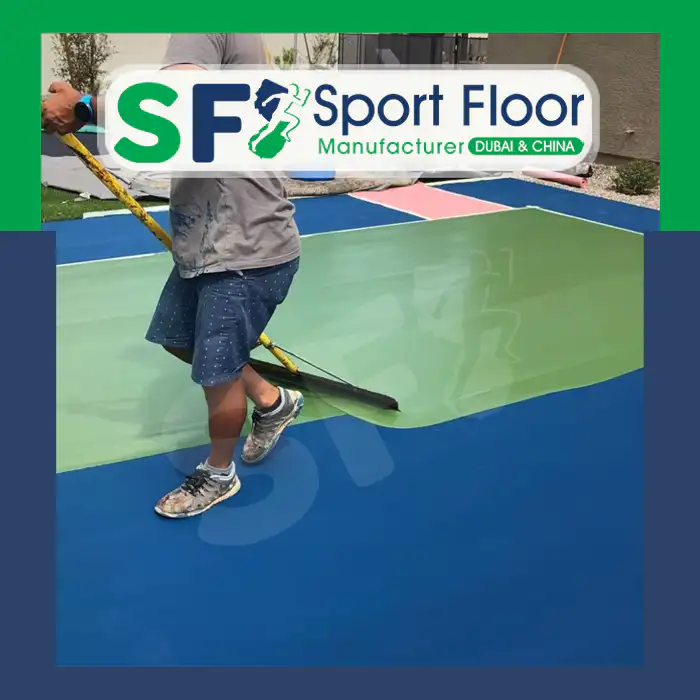














Acrylic Materials for Sports Courts and Resurfacing Systems
Acrylic materials for standard, cushioned and resurfacing court systems. Plan the supply according to the sport, total area, concrete or asphalt base, substrate condition, approved layer build-up, coverage, colors, line plan, packaging, application method and destination.
Acrylic Court Materials Should Be Selected as One System
Acrylic sports flooring is constructed from several compatible materials applied in a controlled sequence. Depending on the project, the set may include repair compounds, primer, acrylic resurfacer, cushion coats, texture materials, color coats and line paint.
One bucket does not represent a complete court. Surface performance and appearance depend on the substrate, preparation, layer sequence, material compatibility, application rate, aggregate arrangement, curing conditions and installation quality.
Buyers should approve the complete material schedule rather than ordering generic “acrylic paint.” The quotation, technical data, packaging and installation method should refer to the same system.
System Compatibility
Materials should be selected to work together over the specified concrete, asphalt or existing coated base.
Coverage Planning
Required quantity depends on area, surface profile, layer build-up, application rate and site wastage.
Application Control
Mixing, aggregate addition, tools, coat sequence and curing must follow the exact material guidance.
Traceable Supply
Labels, product references and packing lists should identify every component included in the order.
Main Materials Used in an Acrylic Court Build-Up
Not every project uses every component. Confirm the exact product, number of applications and consumption for the offered system.
Repair Materials
Compatible compounds used for approved local defects, depressions or substrate preparation before the surfacing layers.
Acrylic Primer
A substrate-dependent material used where required to support adhesion between the prepared base and the next layer.
Acrylic Resurfacer
A preparation layer used to create a more uniform receiving surface and support the subsequent acrylic construction.
Cushion Materials
Resilient components used only where they form part of the approved cushioned acrylic system.
Texture Coat
Acrylic material used with the specified aggregate arrangement to develop the intended surface texture.
Color Coating
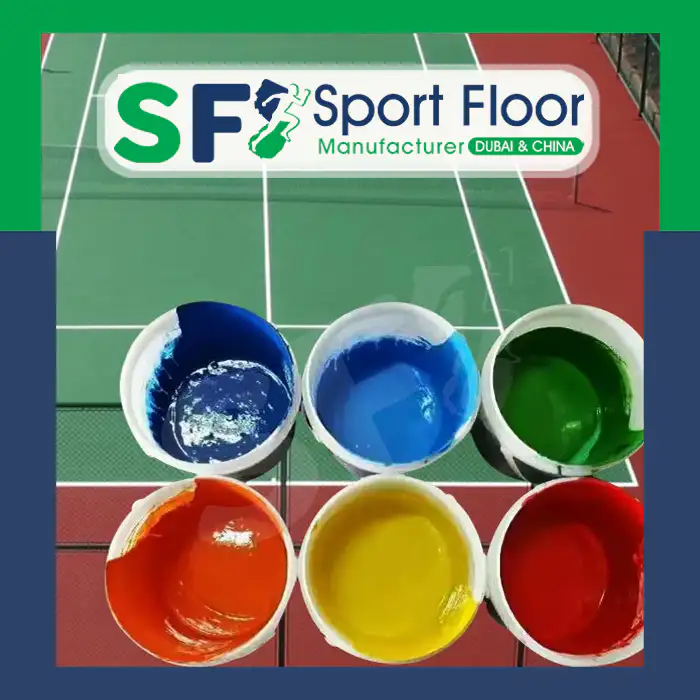
Pigmented acrylic material forming the final playing and surround zones according to the approved color schedule.
Line-Marking Paint
Compatible coating for accurately marked sport boundaries, centres, keys and other approved lines.
Specified Aggregate
Project- and product-dependent aggregate used where required by the resurfacer, texture coat or another system component.
Standard, Cushioned and Resurfacing Material Sets
Standard Hard-Court Set
A firm acrylic system without a separate resilient cushion construction.
- Compatible repair materials where required.
- Primer according to the substrate.
- Resurfacing or preparation layers.
- Specified texture materials.
- Playing and surround color coats.
- Compatible line-marking material.
Cushioned Acrylic Set
A coordinated system adding resilient layers below the upper texture and color construction.
- Base preparation and primer materials.
- Resurfacing or leveling components.
- Specified cushion-layer products.
- Texture and color materials.
- Line-marking paint.
- Project-dependent repair accessories.
Resurfacing Material Set
Materials for renovating an existing court after inspection of adhesion, cracks, drainage and compatibility.
- Cleaning and preparation requirements.
- Compatible local repair materials.
- Primer where required.
- Resurfacing and texture coats.
- New color coatings.
- Replacement line markings.
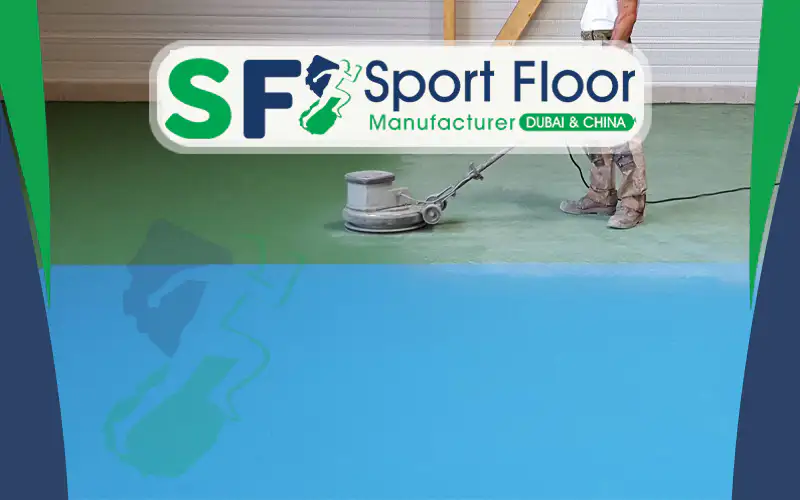
Match Acrylic Materials to the Existing Base
Material selection begins with the supporting substrate. New concrete, new asphalt and an existing coated court may require different preparation, repair products and primers.
- Identify concrete, asphalt or existing coating.
- Confirm the age and current condition of the base.
- Inspect contamination, dust and weak surface material.
- Review cracks, joints and signs of movement.
- Check flatness, slopes and water ponding.
- Evaluate moisture and application readiness.
- Check adhesion of existing layers.
- Confirm compatibility before covering old coatings.
How Acrylic Material Consumption Is Calculated
Consumption should be calculated separately for every material and layer. Final quantities remain project-dependent.
| Planning Item | Information Required | Effect on Quantity |
|---|---|---|
| Total Surface Area | Playing zones, surrounds, run-off areas and any associated paths. | Establishes the basic square metres for each applicable layer. |
| Base Profile | Smooth, porous, rough, patched or previously coated condition. | Influences primer, resurfacer and repair consumption. |
| System Type | Standard, cushioned or resurfacing acrylic. | Determines which materials and layers are required. |
| Number of Applications | Confirm the approved sequence for every material. | Additional applications increase total material requirements. |
| Application Rate | Use the exact material guidance or approved project calculation. | Converts the surface area into kilograms or packaging units. |
| Aggregate Addition | Confirm whether aggregate is pre-mixed or added on site. | Affects separate material quantities and site mixing. |
| Color Zoning | Playing area, surrounds, keys, lanes and logos. | Divides finish-coat quantities between different colors. |
| Line Marking | Sport layouts, line lengths, widths and number of colors. | Determines the required line-paint quantity. |
| Repairs | Crack lengths, depressions, patch areas and local defects. | Adds project-specific repair and preparation materials. |
| Site Allowance | Packaging residuals, tools, surface variation and controlled wastage. | Helps prevent shortages during application. |
| Package Size | Net quantity supplied in each bucket, bag or set. | Converts calculated kilograms into complete saleable units. |
| Separate Project Phases | Confirm whether the court will be installed in one or more stages. | May require separately packed or labeled material lots. |
Mixing and Applying Acrylic Court Materials
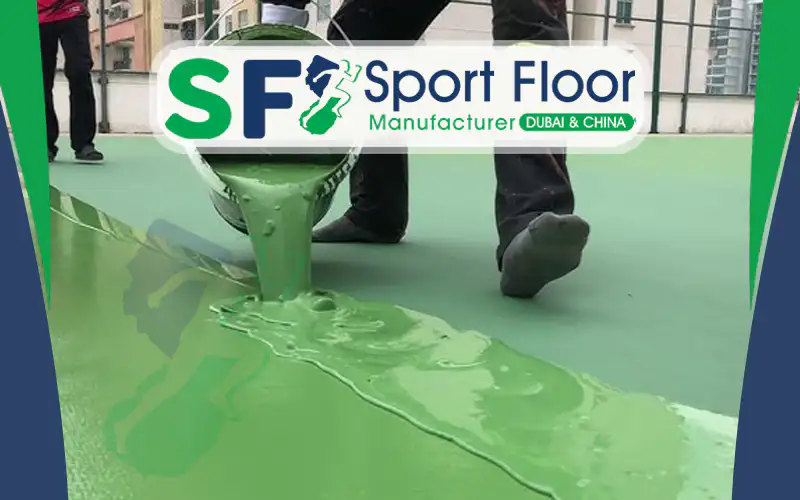
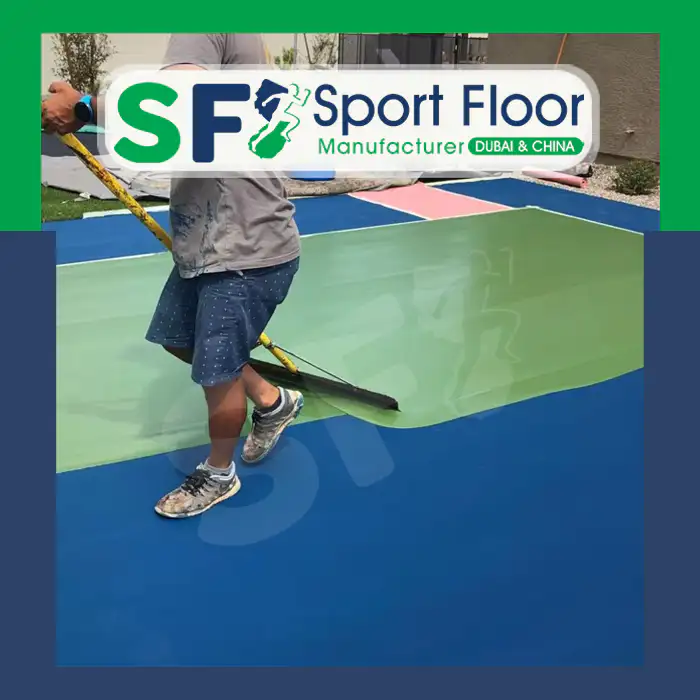
Application procedures differ between primers, resurfacers, cushion coats, texture materials, color coats and line paints. Follow the exact technical data and method statement supplied for each component.
- Confirm material identity before opening the package.
- Check package condition and stated shelf-life information.
- Use clean and suitable mixing equipment.
- Follow the specified mixing time and sequence.
- Add water or aggregate only where expressly permitted.
- Maintain consistent site mixing between batches.
- Use compatible squeegees, rollers or other tools.
- Respect environmental and surface-condition limits.
- Allow the required curing before the next layer.
- Protect the work from rain, dust and premature traffic.
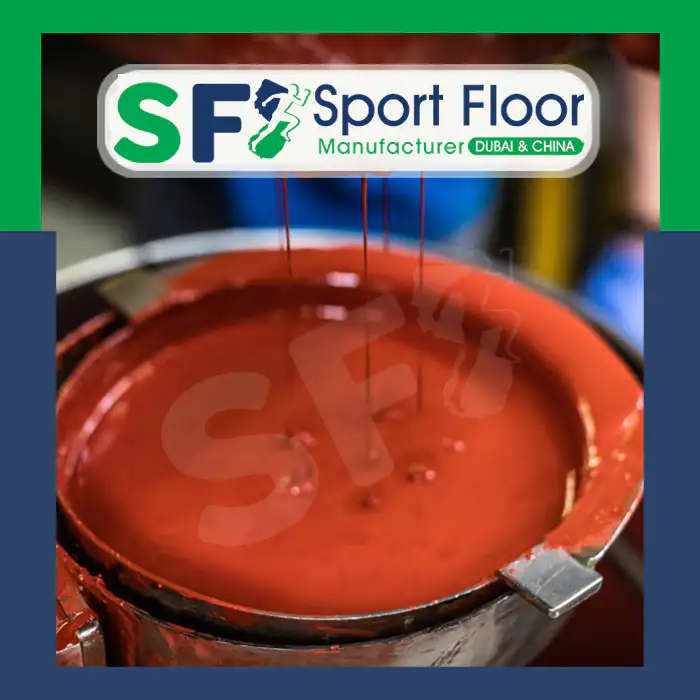
Acrylic Material Information and Documents to Request
Document requirements vary by the product, project, destination and contractual specification.
Protecting Acrylic Materials Before Application
Materials should be received, stored and handled according to their exact technical and safety information. Incorrect storage can affect usability, consistency and application.
- Inspect packages for damage or leakage on arrival.
- Confirm product, color and quantity against the packing list.
- Keep labels readable and attached to each package.
- Store containers upright in an appropriate protected area.
- Avoid uncontrolled heat, cold or direct weather exposure.
- Prevent contamination by dust, water or other materials.
- Separate different products and color batches clearly.
- Follow the stated shelf-life and stock-rotation guidance.
- Do not use damaged or questionable material without review.
- Keep opened packages controlled and protected as specified.
Planning an Acrylic Materials Shipment
Package Quantity
Calculate each component separately and convert the requirement into complete packages.
Material Identification
Every package should be identifiable by material reference, color and applicable shipment information.
Mixed System Components
Primers, resurfacers, cushion products, colors and lines must remain separately identifiable.
Pallet and Packing Plan
Packing depends on package type, total weight, handling and transport requirements.
Transport Review
Confirm whether any material classification or carrier requirement affects the selected transport route.
Document Scope
Agree the technical, safety, commercial, origin and transport documents before dispatch.
Destination Conditions
Plan for customs procedures, storage, unloading and protection after arrival.
Incoterms® Rule
State the rule, edition and named place or port in the quotation and contract.
Installation Sequence
Coordinate shipment timing so materials are not stored unnecessarily before the base is ready.
Information Required for an Acrylic Materials Quotation
Complete information allows the material schedule and package quantities to be calculated on a project-specific basis.
State the Sport
Identify tennis, basketball, volleyball, handball, multi-sport or another application.
Provide the Area
Send the total square metres and dimensions of each color zone.
Describe the Base
Confirm concrete, asphalt or existing coating and its current condition.
Select the System
State standard, cushioned or resurfacing construction where already specified.
List the Layers
Provide the specified primer, resurfacer, cushion, texture, color and line requirements.
Confirm Colors
Identify each playing, surround and line-marking color.
Request Documents
List the required technical, safety, test and shipment documents.
Provide the Destination
State the country, city or port and preferred delivery term.
Continue Planning the Complete Acrylic System
Acrylic Materials FAQ
What materials are used in an acrylic court system?
Depending on the system, materials may include repair compounds, primer, resurfacer, cushion components, texture coats, color coatings, line paint and specified aggregate.
Can I buy only the acrylic color coat?
A color coat may be supplied when technically appropriate, but the base condition and compatibility with existing layers must be confirmed. A complete new court normally requires a wider material system.
Is acrylic court material the same as normal paint?
No. Acrylic sports-court materials are selected as components of a surface system with defined substrate, texture, coverage and application requirements.
What is an acrylic resurfacer?
It is a preparation material used within the approved system to help create a more uniform receiving surface before subsequent coats.
Is primer always required?
Primer requirements depend on the substrate, its condition and the selected system. Follow the exact product and system instructions.
What materials create a cushioned acrylic court?
A cushioned system incorporates specified resilient components beneath the upper texture and color layers. The exact products and build-up vary by system.
Can silica or aggregate be added to acrylic material?
Aggregate should be added only where required by the exact product instructions. Grading, cleanliness and addition rate must be controlled.
How much acrylic material is required per square metre?
There is no single rate for a complete court. Consumption depends on the material, substrate, layer, application rate and number of coats.
How are package quantities calculated?
Calculate each material from the applicable area and approved consumption, add the required project allowance, then convert the result into complete package units.
Can different acrylic brands be mixed in one system?
Mixing unrelated products may create compatibility and warranty risks. The complete build-up should be technically reviewed and approved before use.
Can acrylic materials be installed over an existing court?
They may be used after evaluating adhesion, compatibility, cracks, drainage, moisture and the condition of the existing coating.
Can acrylic materials repair structural cracks?
No. Compatible materials may treat suitable local defects, but they cannot stop structural movement, settlement or recurring active cracking.
Are acrylic materials supplied in custom colors?
Available and project-dependent colors should be confirmed for the exact offered product. Approve physical samples where color matching is important.
How should acrylic materials be stored?
Store each product according to its technical and safety information, protect packages from damage and uncontrolled exposure, and maintain clear labels and stock rotation.
Which documents should be requested?
Depending on the project, request technical and safety data, system build-up, coverage guidance, color references, method statement and applicable test reports.
What information is required for an export quotation?
Provide the sport, area, base type and condition, system build-up, colors, line plan, required documents, destination and preferred delivery term.