









Acrylic Basketball Courts for Schools, Clubs and Community Facilities
Standard and cushioned acrylic basketball court systems for new construction and resurfacing projects. Plan the complete court according to the playing level, full court or half court layout, concrete or asphalt base, drainage, surface texture, colors, markings, basketball equipment, maintenance and required technical documentation.
What Is an Acrylic Basketball Court?
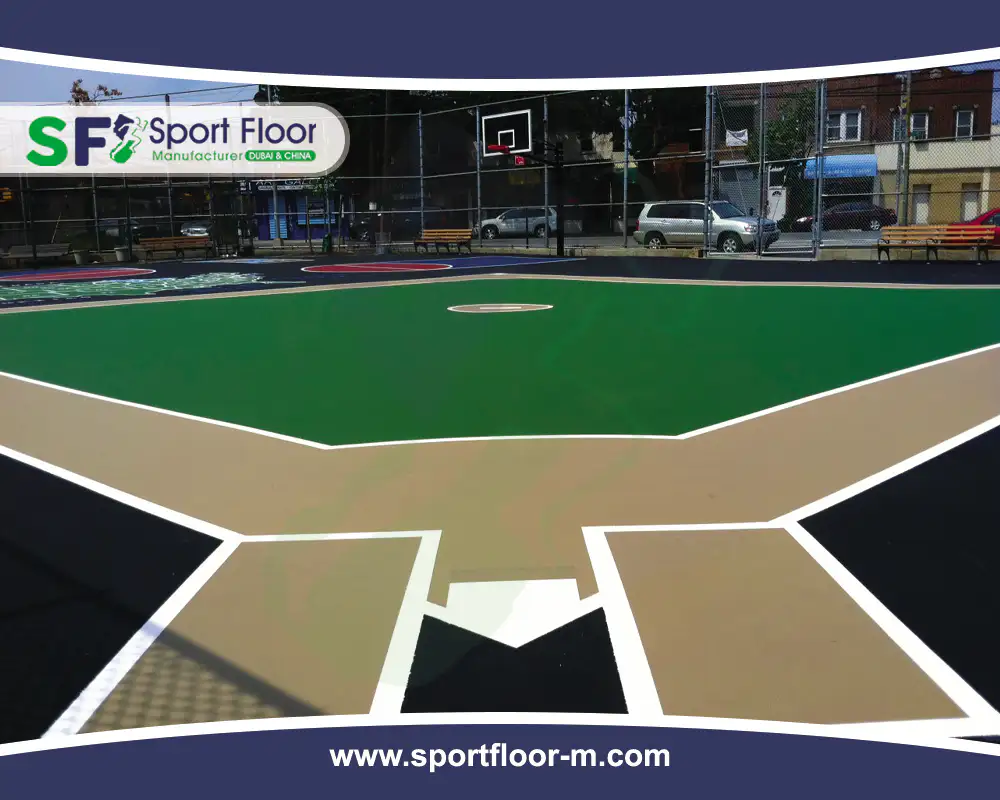
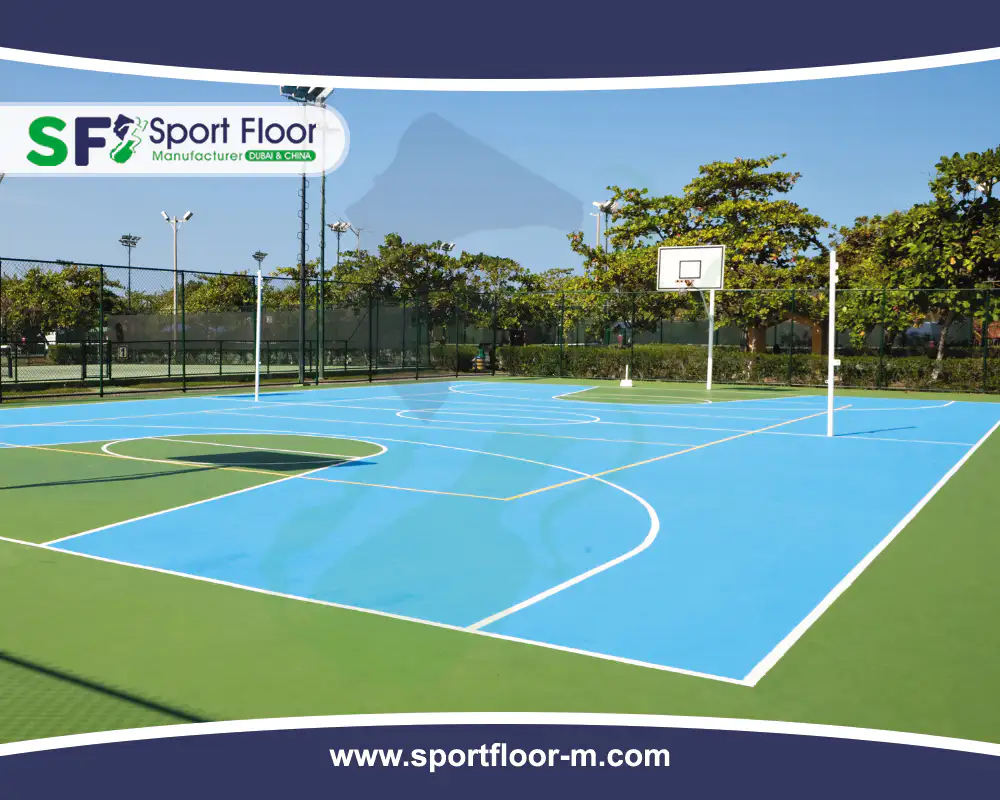
An acrylic basketball court is a hard sports surface system installed over a suitable concrete or asphalt base. Its upper layers create the playing colors, surface texture and basketball line markings.
The construction may include base repairs, primer, acrylic resurfacing compounds, optional cushion layers, texture coats, color coats and compatible line paint.
Standard acrylic courts remain firm hard courts. A resilient or shock-absorbing response should only be claimed where a specified cushion construction forms part of the complete installed system.
Firm Playing Surface
Standard acrylic provides a hard-court response suitable for many outdoor recreational and training facilities.
Clear Court Zoning
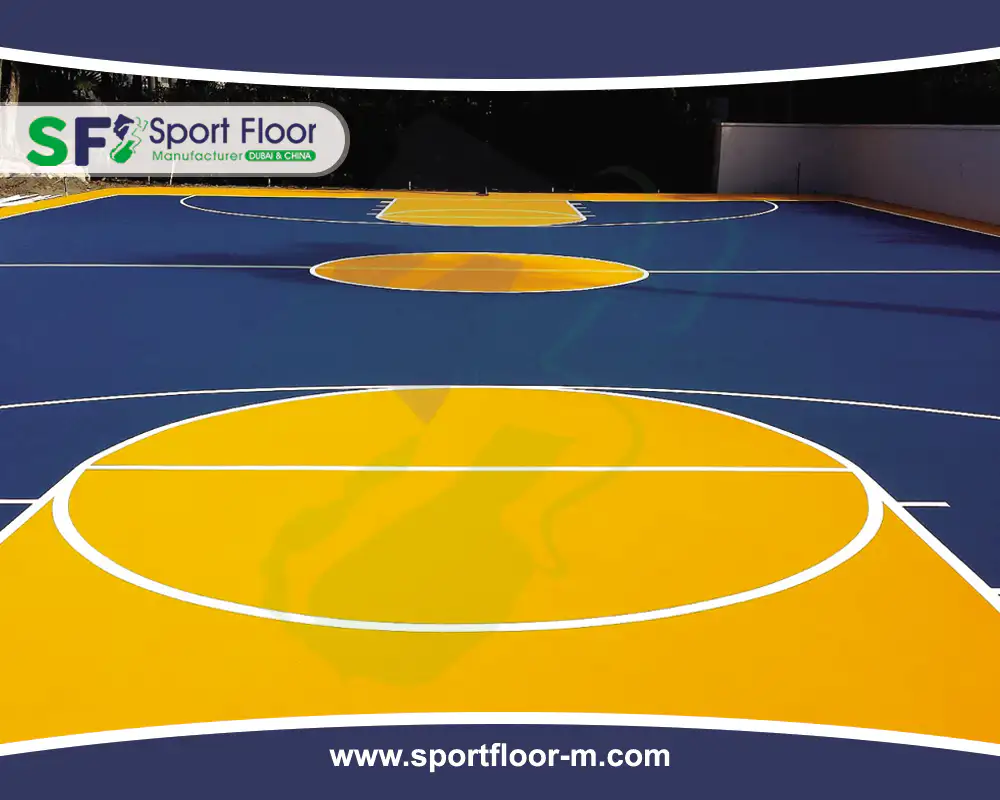
Keys, circles, boundaries and surrounds can use coordinated contrasting colors.
New or Resurfaced Courts
Acrylic systems may be selected for new bases or compatible existing courts after assessment.
Project-Specific Build-Up
Layer sequence, texture, cushioning, quantities and documents vary by system and project.
Acrylic Basketball Courts for Different Facilities
Define the primary users and playing level before selecting the dimensions, equipment, base, surface system and maintenance plan.
Schools
Outdoor courts for physical education, supervised play, training and project-dependent multi-sport use.
Basketball Academies
Training courts planned around repeated use, clear markings, equipment and organised maintenance.
Sports Clubs
Full or half courts for coaching, community programmes and club-level activities.
Residential Developments
Shared outdoor courts coordinated with fencing, lighting, access and nearby residential areas.
Community Facilities
Public courts requiring practical inspection, cleaning, drainage and repair procedures.
Hotels and Resorts
Recreational basketball courts planned around aesthetics, guest use and operational maintenance.
3x3 Facilities
Dedicated or shared outdoor layouts designed to the applicable 3x3 court and equipment requirements.
Multi-Sport Courts
Shared facilities with basketball as the defined primary or secondary activity and a controlled line plan.
Full Basketball Court and 3x3 Planning Dimensions
Use the rules and guidance applicable to the project’s competition, country and facility type. Playing dimensions are not the same as the total construction footprint.
FIBA inner playing area length.
FIBA inner playing area width.
Recommended surrounding boundary for a full-size court.
Playing court plus a 2 m surrounding boundary.
Outdoor facility footprint stated in the FIBA Venue Guide.
Court markings should follow the applicable official layout.
Confirm the exact equipment and level requirements.
Coordinate the available site with the intended rules and safe boundary space.
Standard, Cushioned and Resurfacing Basketball Systems
Standard Acrylic Basketball Court
A firm hard-court system without a separate resilient cushion construction.
- Prepared concrete or asphalt base.
- Compatible primer where required.
- Resurfacing and texture layers.
- Playing and surrounding colors.
- Basketball line markings.
- Final project inspection.
Cushioned Acrylic Basketball Court
An acrylic construction incorporating specified resilient layers beneath the upper surface.
- Stable supporting base.
- Compatible repair and primer system.
- Defined cushion-layer construction.
- Upper texture and color coats.
- Basketball court markings.
- System-dependent performance.
Acrylic Basketball Resurfacing
A renovation system for a suitable existing court after adhesion, cracks, levels and drainage have been reviewed.
- Existing-surface inspection.
- Removal of loose material.
- Compatible local repairs.
- Resurfacing and texture coats.
- Replacement color zones.
- New basketball lines.
Main Layers of an Acrylic Basketball Court
Structural Base
Concrete or asphalt providing structural support, levels and designed slopes.
Surface Preparation
Cleaning and removal of dust, contamination, weak material and unsuitable existing layers.
Repairs
Compatible treatment of approved cracks, depressions and local substrate defects.
Primer
Applied where required by the substrate and selected material system.
Acrylic Resurfacer
Creates a more uniform receiving layer for later acrylic applications.
Cushion Layers
Optional resilient construction included only in a specified cushioned system.
Texture and Color Coats
Form the final surface profile and approved basketball color zones.
Line Marking
Compatible paint applied to the approved court layout and line widths.
Basketball Court Base, Flatness and Drainage
The acrylic surface reflects the shape and movement of its supporting base. Outdoor court quality therefore depends on the substrate, slopes, drainage outlets and perimeter details.
- Confirm structural stability and adequate support.
- Inspect high points and local depressions.
- Identify water ponding after rain or testing.
- Review cracks, joints and evidence of movement.
- Check concrete curing and surface laitance.
- Confirm asphalt stability and readiness.
- Inspect moisture and previous surface treatments.
- Test adhesion of existing coatings.
- Coordinate slopes with channels and outlets.
- Seal equipment bases where water ingress could occur.
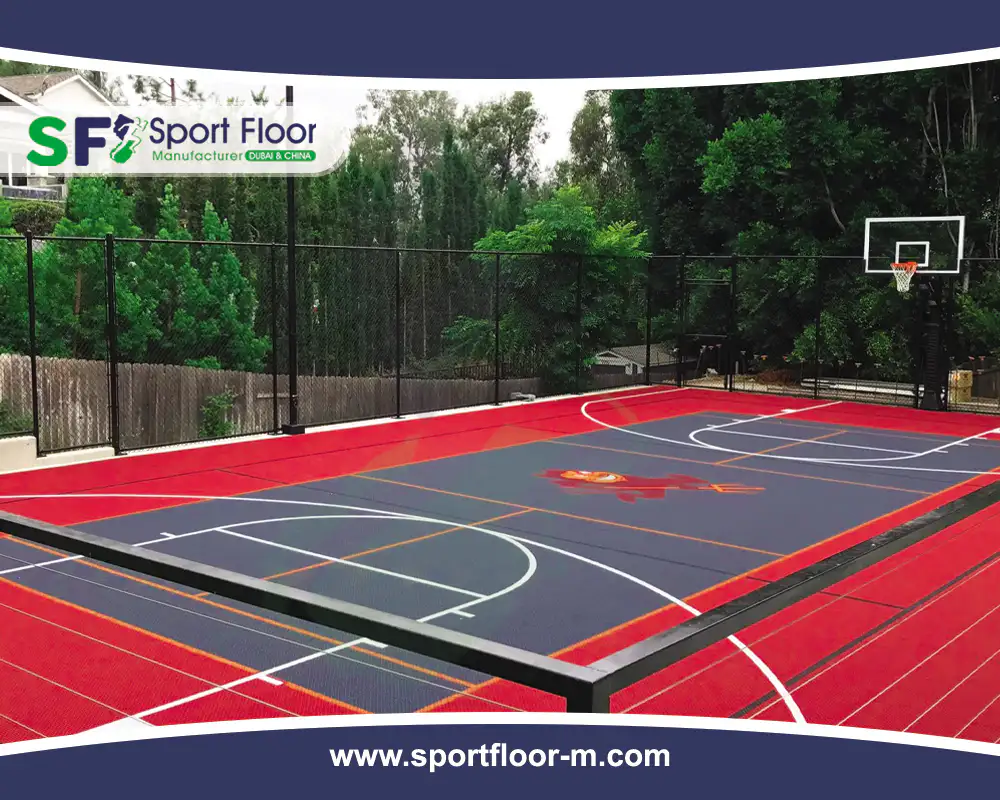
Concrete Base
Review curing, moisture, joints, contamination, laitance and compatibility with the primer.
Asphalt Base
Confirm age, stability, compaction, levels and suitability for the acrylic build-up.
Existing Coatings
Identify weak, peeling or incompatible layers before adding a new system.
Surface Slopes
Outdoor slopes should move water from the playing area without creating abrupt changes.
Perimeter Drainage
Channels and outlets should remain accessible and should not create a player hazard.
Weather Conditions
Temperature, humidity, wind, rain and surface moisture affect application and curing.
Backboards, Hoops, Supports, Padding and Court Access
Equipment foundations and fixing details should be completed before final acrylic application wherever they affect the base.
Backstop Type
Confirm fixed, portable, wall-mounted or another approved support arrangement.
Foundation and Anchors
Structural foundations and fixings should suit the equipment and site conditions.
Backboard and Ring
Select the dimensions and performance requirements appropriate to the intended playing level.
Equipment Padding
Provide and maintain project-required padding around exposed basketball supports and backboards.
Water Sealing
Equipment bases penetrating or meeting the court should be detailed to limit water ingress and ponding.
Fencing and Gates
Gate positions should support access without conflicting with playing and run-off zones.
Lighting
Lighting should provide suitable visibility while controlling glare, shadows and pole interference.
Benches and Seating
Locate player and spectator facilities beyond the required playing and safety areas.
Inspection and Maintenance
Inspect rings, nets, backboards, supports, anchors and padding regularly.
Acrylic Basketball Court Installation Process
Survey the Site
Confirm court type, dimensions, levels, access, drainage, equipment, fencing and lighting.
Inspect the Base
Review cracks, flatness, moisture, contamination, adhesion and existing coatings.
Prepare the Surface
Remove dust, loose material, oils, algae and other contaminants.
Complete Repairs
Treat approved depressions, cracks and local surface defects using compatible materials.
Install Equipment Bases
Complete required foundations, sleeves, anchors and penetrations before final coating.
Apply Primer
Use the compatible primer where required for the selected substrate and system.
Apply Resurfacer
Build the approved preparation layers at the specified application rate.
Apply Cushion Layers
Install the defined resilient construction only where included in the system.
Apply Texture Coats
Create the specified surface profile using controlled materials and aggregate.
Apply Color Zones
Complete the court, keys, surrounds and other approved color areas.
Mark Basketball Lines
Set out and apply accurate lines using the approved layout and contrasting colors.
Inspect and Handover
Review the finish, markings, drainage, equipment and agreed completion records.
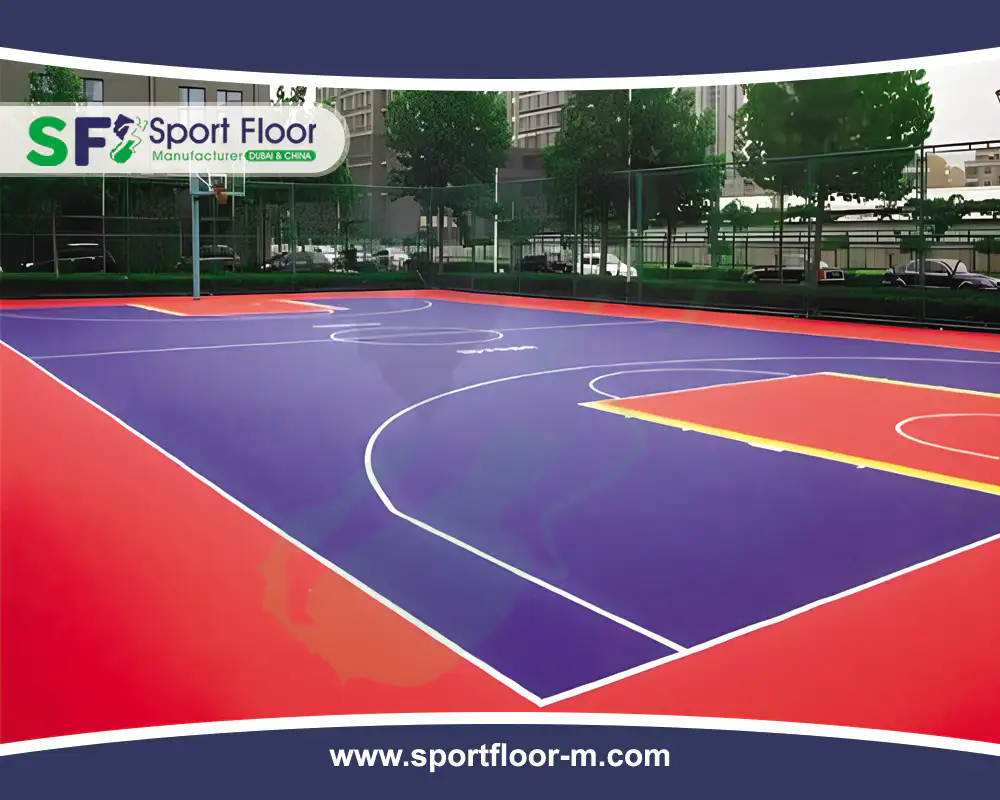
Resurfacing an Acrylic Basketball Court
Resurfacing can restore a compatible court’s appearance, texture and line visibility, but the existing surface and base must be evaluated first.
- Identify worn, faded and polished areas.
- Inspect coating adhesion.
- Review cracks and evidence of movement.
- Check levels and water ponding.
- Remove loose or contaminated materials.
- Confirm compatibility with new coatings.
- Treat approved local surface defects.
- Restore surface texture consistently.
- Reapply approved color zones.
- Replace faded or inaccurate lines.
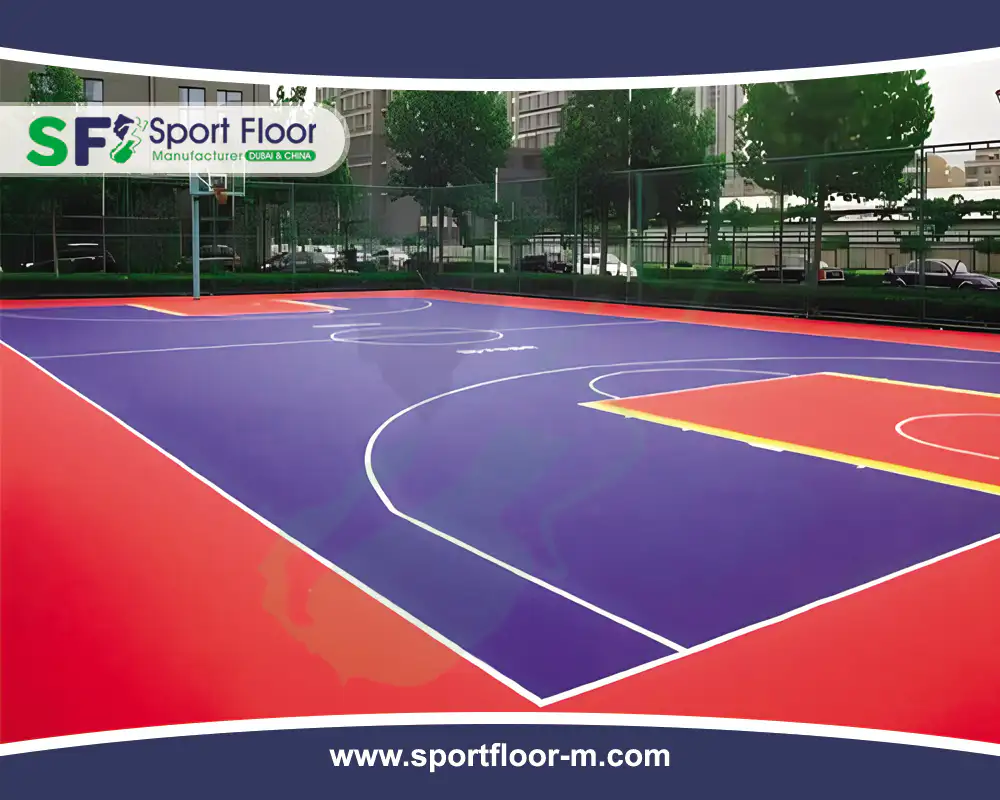
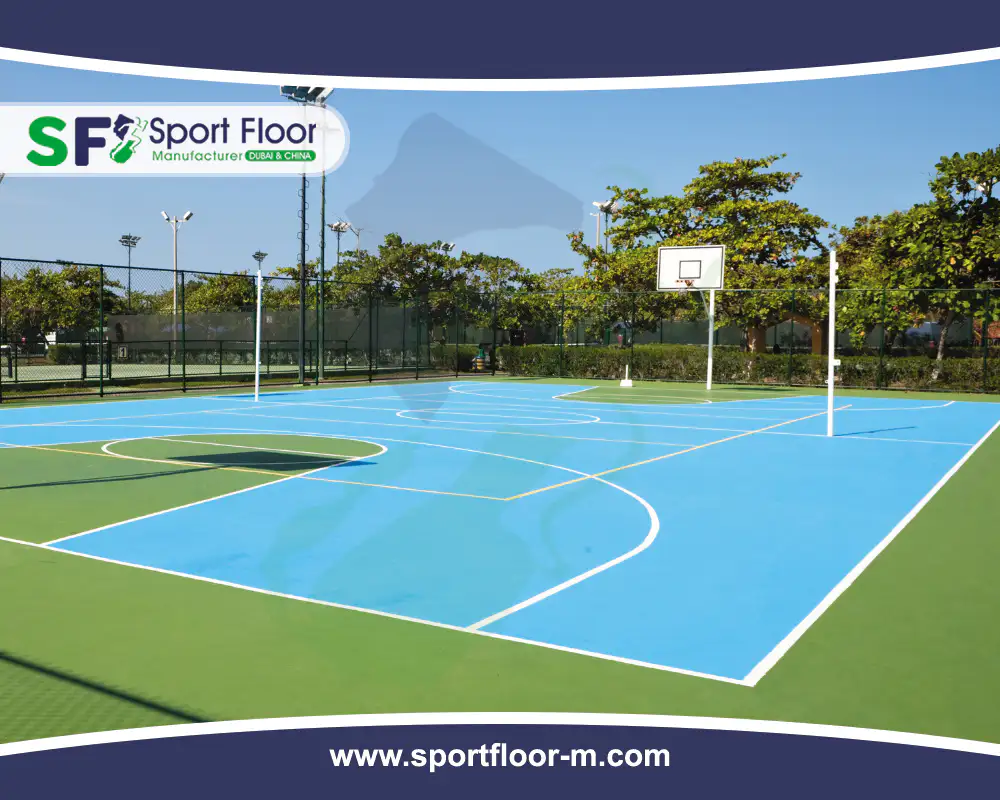
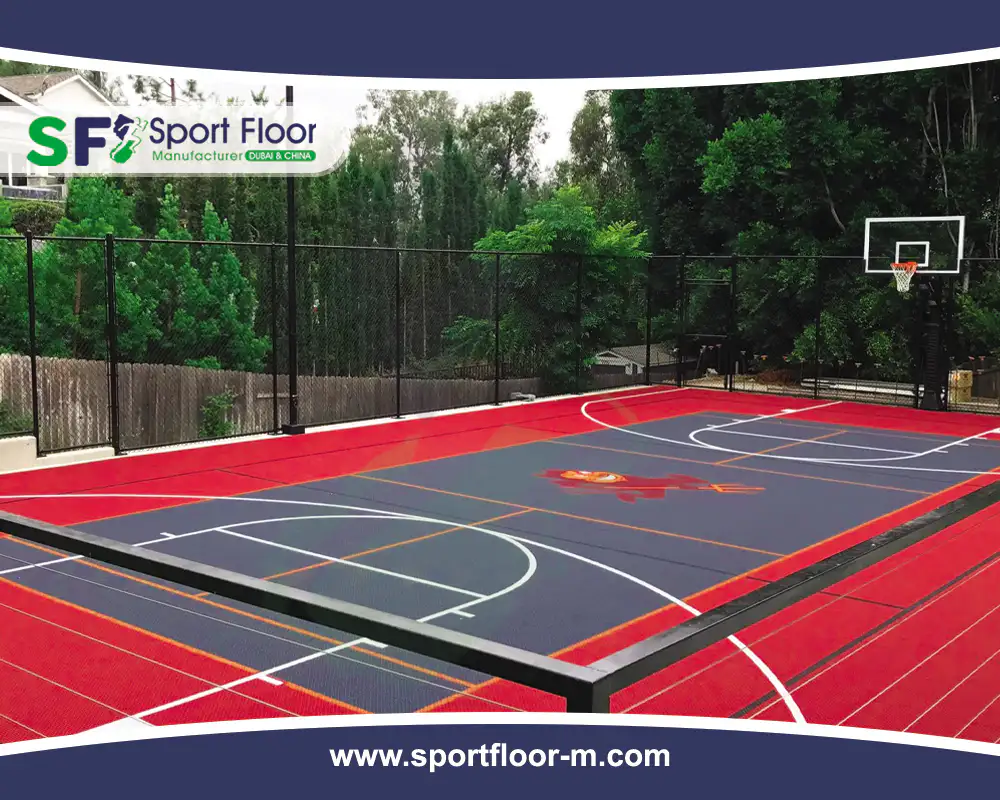
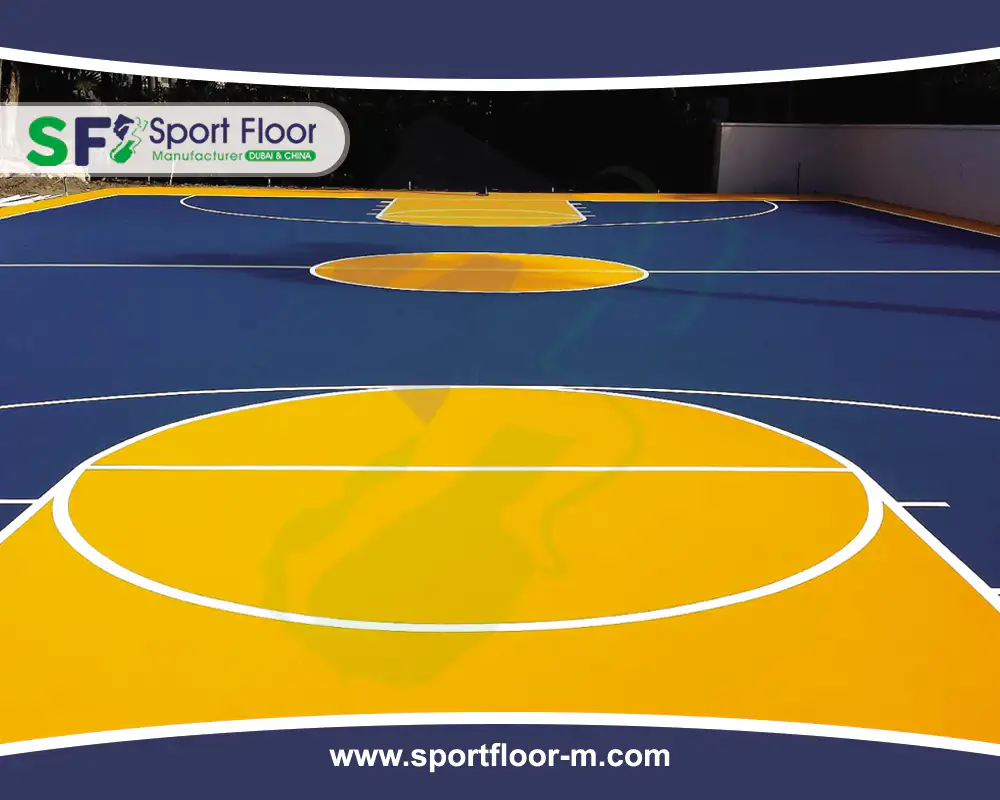
Acrylic Basketball Court Colors and Layouts
Every image in this gallery has the same original dimensions and square ratio. No small image is placed beside a larger image.
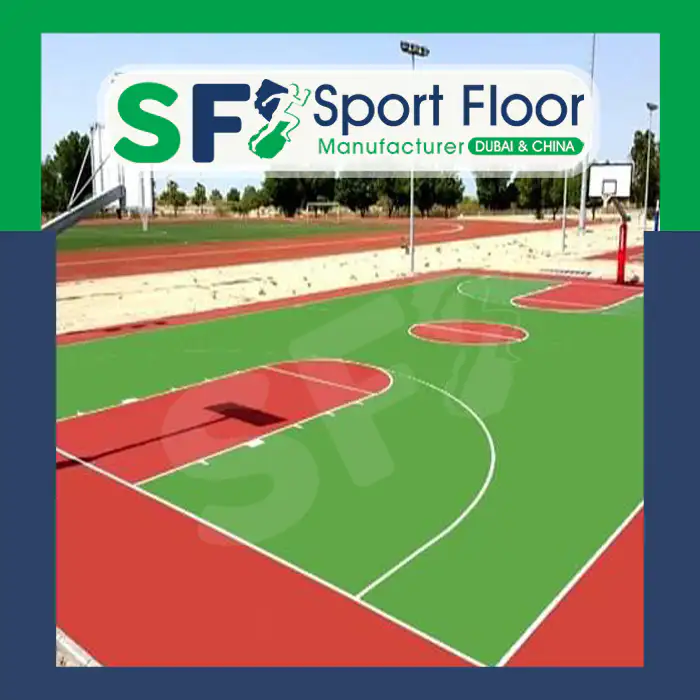
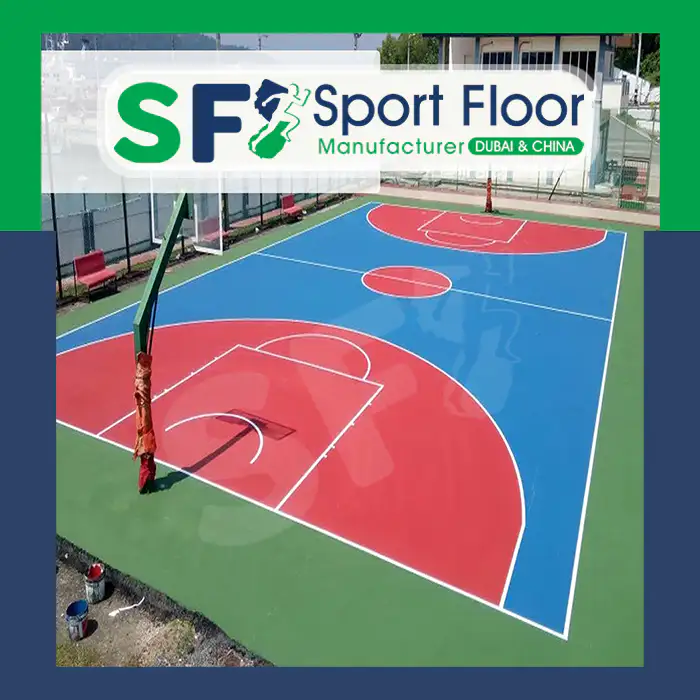
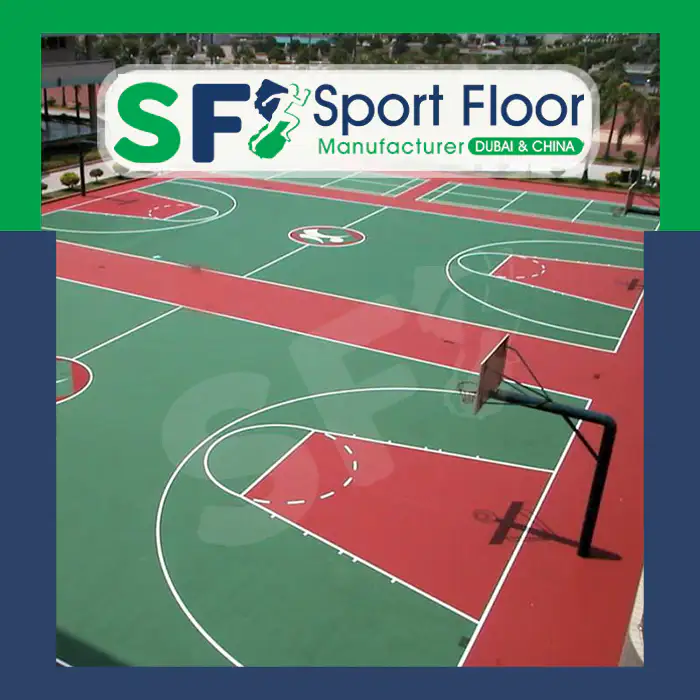
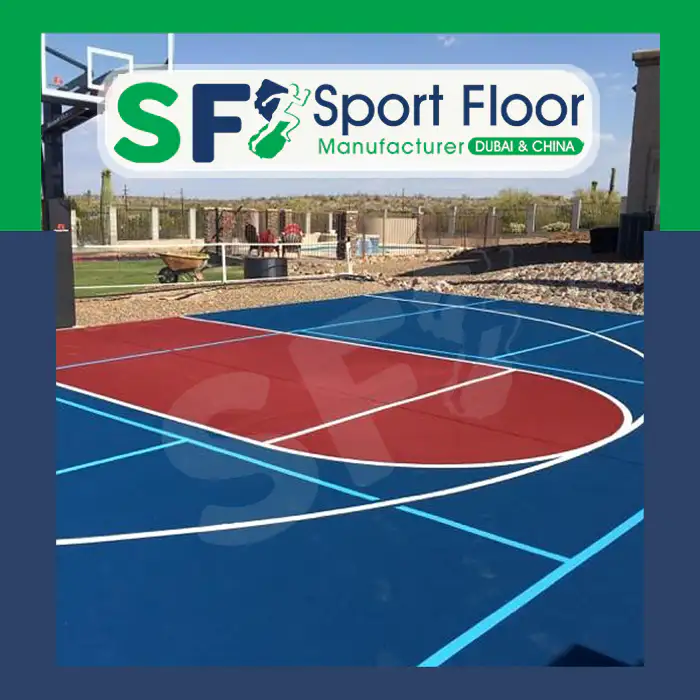
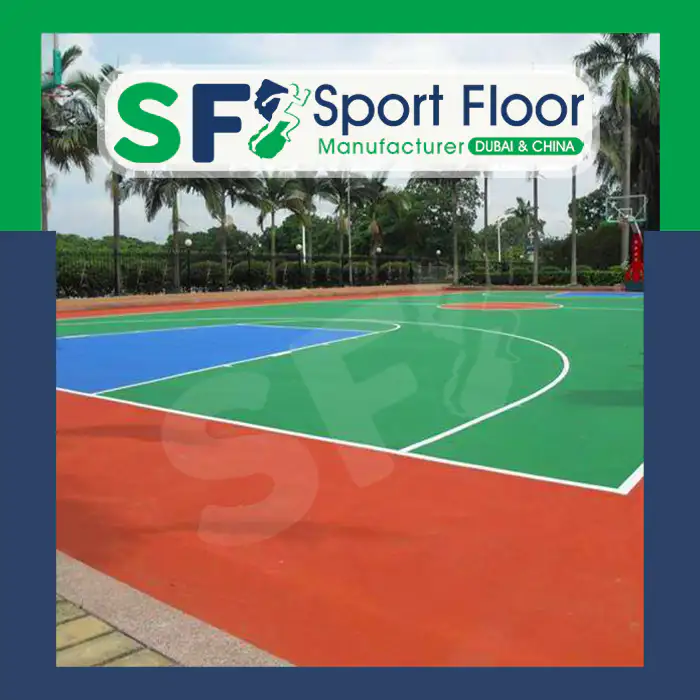
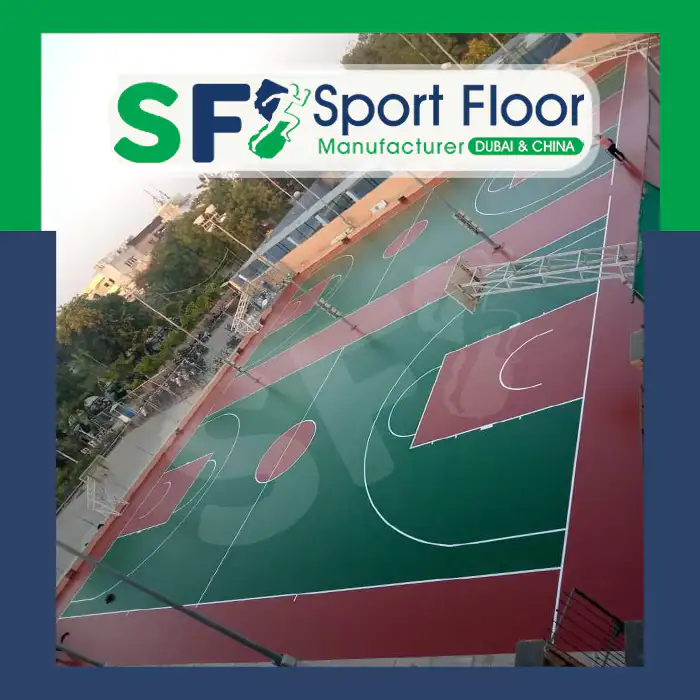
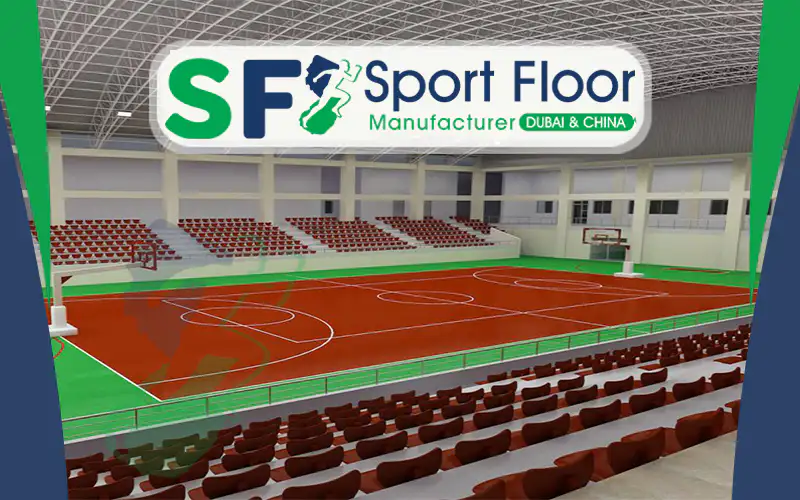
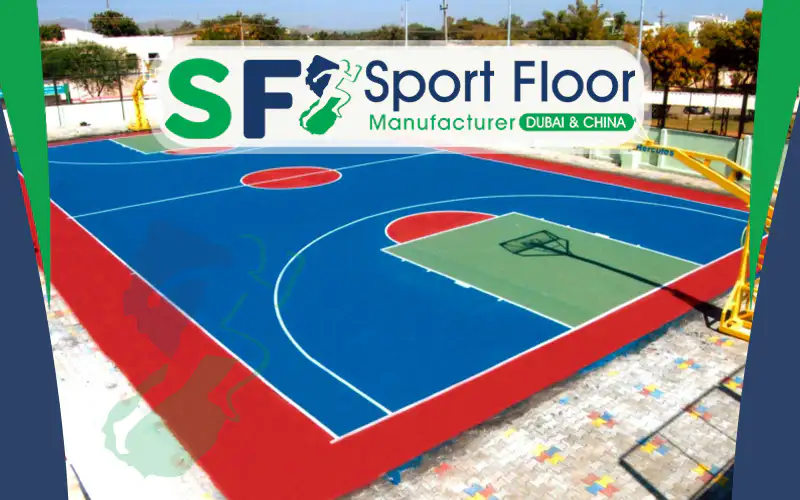
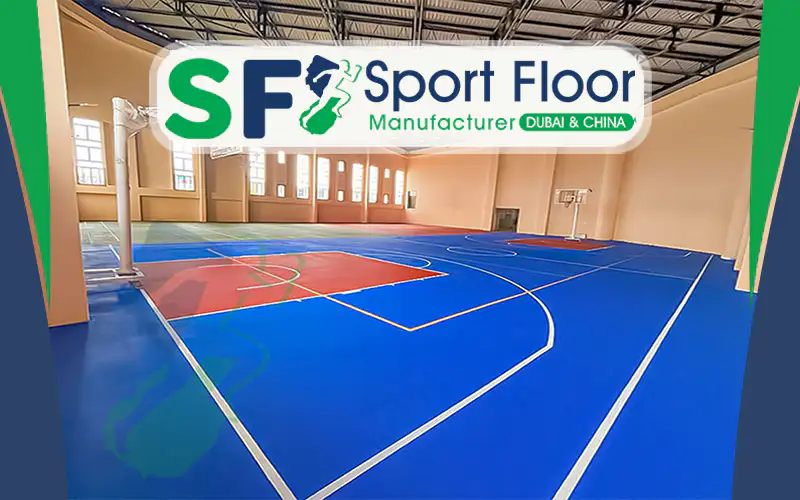
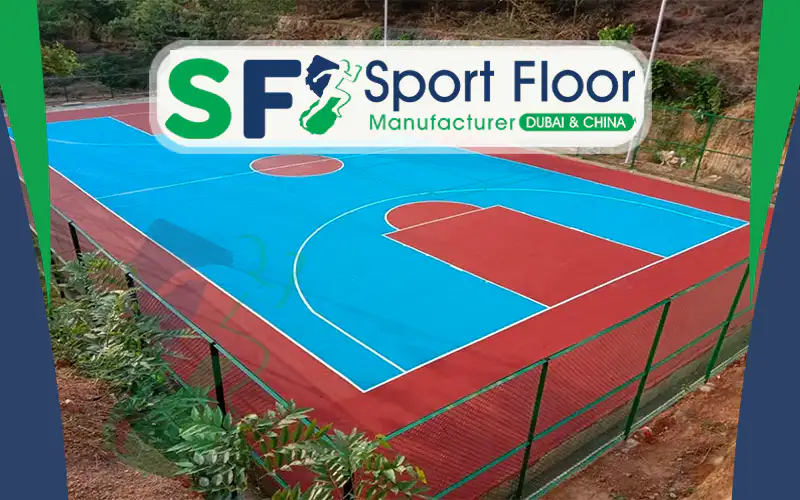
Indoor and Outdoor Basketball Facility Examples
Acrylic Basketball Court Maintenance
Remove Loose Debris
Clear dust, leaves, sand and other loose material before it affects play or stains the surface.
Use Compatible Cleaning
Follow the coating guidance and avoid aggressive chemicals or tools.
Maintain Drainage
Keep channels, outlets and court edges clear, especially after storms.
Monitor Cracks
Record new or recurring cracks and investigate their cause before cosmetic repair.
Inspect Worn Zones
Check keys, free-throw areas, centres, boundaries and other high-traffic locations.
Maintain Court Lines
Repair faded or damaged markings using compatible material and accurate set-out.
Control Footwear and Access
Prevent vehicles, sharp equipment and unsuitable footwear from damaging the court.
Inspect Basketball Equipment
Check rings, nets, backboards, padding, supports, fixings and foundations.
Plan Resurfacing by Condition
Base resurfacing decisions on adhesion, cracks, texture, color, lines and operational needs.
Acrylic Basketball Court Specifications to Confirm
| Specification | What to Confirm | Why It Matters |
|---|---|---|
| Court Type | Full court, half court, 3x3 or multi-sport. | Determines dimensions, quantities, lines and equipment. |
| Playing Level | Recreational, school, training, club or formal competition. | Influences rules, equipment, documents and testing. |
| Total Area | Playing court, outer boundary, access and associated areas. | Required for material and execution calculations. |
| Base Type | Concrete, asphalt or existing coated surface. | Determines preparation and primer requirements. |
| Base Condition | Cracks, unevenness, moisture, peeling, contamination or ponding. | Can materially change the scope and price. |
| System Type | Standard, cushioned or resurfacing acrylic. | Determines the layer build-up and performance expectations. |
| Layer Schedule | Repairs, primer, resurfacer, cushion, texture, colors and lines. | Prevents comparison of incomplete quotations. |
| Surface Texture | Product, aggregate and application requirements. | Affects the completed surface response and upkeep. |
| Colors | Main court, keys, circles, surrounds and logos. | Required for quantity and application planning. |
| Line Plan | Basketball only or basketball plus approved secondary sports. | Controls layout clarity and separate line colors. |
| Basketball Equipment | Backstop type, backboards, hoops, nets, padding and anchors. | Equipment interfaces affect foundations and court layout. |
| Fencing and Lighting | Heights, gates, pole positions and required illumination. | These systems must be coordinated with the court. |
| Testing | State any required material, surface or completed-court tests. | Testing is not automatically included. |
| Documents | TDS, SDS, method statement, drawings and applicable reports. | Documents must match the exact offered system. |
| Commercial Scope | Materials, installation, equipment, supervision and delivery. | Aligns competing technical and commercial offers. |
Information Required for an Acrylic Basketball Court Quote
Define the Court
State full court, half court, 3x3 or multi-sport use.
Provide Dimensions
Send the total available space, drawings and required boundary area.
Describe the Base
Identify concrete, asphalt or existing coating and provide current photographs.
State the Court Condition
Identify cracks, ponding, unevenness, peeling and previous repairs.
Select the System
Confirm standard, cushioned or consultant-specified construction.
Confirm Colors and Lines
Provide court colors, key zones, logos and secondary markings.
List Equipment
State basketball backstops, fencing, lights, benches and required accessories.
Define the Supply Scope
State materials only, installation, equipment, supervision or turnkey execution.
Basketball Rules, Outdoor Courts and Delivery Guidance
Continue Planning the Basketball Facility
Acrylic Basketball Court FAQ
What is an acrylic basketball court?
It is a hard-court surface system applied over a suitable concrete or asphalt base. The construction may include repairs, primer, resurfacer, optional cushion layers, texture, colors and basketball line markings.
What are the dimensions of a full basketball court?
A full FIBA playing area is 28 metres long and 15 metres wide. The venue guide adds a surrounding boundary area, producing a minimum overall court area of 32 by 19 metres.
What is the footprint of a 3x3 basketball court?
The FIBA Venue Guide states a footprint of 18 by 14 metres for a 3x3 court. Confirm the current 3x3 rules and equipment requirements for the project.
Can acrylic be used for a half basketball court?
Yes, subject to the available area, intended use, base condition, equipment and approved layout.
What is the difference between standard and cushioned acrylic?
Standard acrylic is a firm hard-court system. Cushioned acrylic incorporates specified resilient layers below the upper surface.
Does every acrylic basketball court absorb shock?
No. Standard acrylic courts do not automatically include a cushion layer. Verify the complete installed build-up where cushioning is required.
Can acrylic be installed over concrete?
Yes, when the concrete is stable, properly prepared and compatible with the selected primer and coating system.
Can acrylic be installed over asphalt?
Yes, when the asphalt is sufficiently stable, cured and suitable for the selected acrylic build-up.
Can an old basketball court be resurfaced?
It may be resurfaced after assessing cracks, adhesion, drainage, moisture, levels, contamination and compatibility.
Will acrylic coatings repair structural cracks?
No. Surface repairs can treat suitable local defects, but coatings do not stop structural movement or settlement.
Is an acrylic basketball court waterproof?
Do not use the coating as a substitute for a complete drainage or waterproofing design. Water management depends on the base, slopes, joints, edges and outlets.
Can acrylic basketball courts be used outdoors?
Yes, when the materials, base, drainage and installation process are specified for outdoor exposure.
Can acrylic basketball courts be used indoors?
Project-dependent systems may be considered indoors after reviewing moisture, ventilation, material suitability, glare, cleaning and the required basketball level.
Are all acrylic basketball courts FIBA-approved?
No. A generic acrylic surface does not prove FIBA approval. Verify the exact flooring system, equipment, playing level and required documentation.
Can basketball and other sports share one acrylic court?
Yes, where project-dependent multi-sport use is approved. Define the priority sport and use clearly differentiated line colors.
How long does an acrylic basketball court last?
Service life depends on the base, system, use, climate, drainage, installation and maintenance. There is no universal fixed lifespan.
How often should the court be resurfaced?
Resurfacing should be based on adhesion, cracks, texture, color, line condition and operational requirements rather than one fixed interval.
How is acrylic basketball court pricing calculated?
Pricing depends on area, base repairs, court type, system build-up, colors, lines, equipment, installation, documents, destination and delivery scope.
What information is required for a quotation?
Provide the court type, dimensions, total area, playing level, base type and condition, system preference, colors, equipment, scope, destination and required documents.