













Acrylic Handball Courts for Schools, Clubs and Sports Facilities
Standard and cushioned acrylic handball court systems for new construction and resurfacing projects. Plan the complete court according to the playing level, 40 × 20 metre layout, safety zones, concrete or asphalt base, drainage, indoor or outdoor environment, colors, handball markings, goals, maintenance and required documentation.
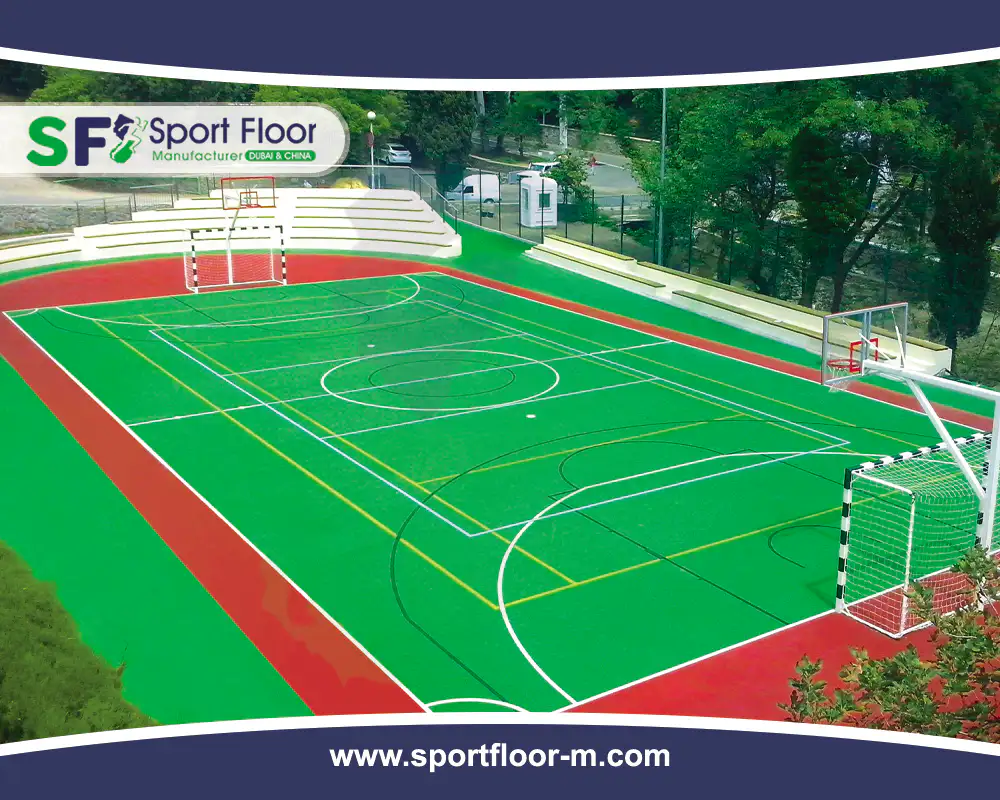
What Is an Acrylic Handball Court?
An acrylic handball court is a firm hard-court surface system installed over a suitable concrete or asphalt base. The upper layers create the final colors, texture and handball court markings.
A complete system may include compatible base repairs, primer, acrylic resurfacing layers, optional cushion layers, texture coats, color coats and line-marking materials.
Standard acrylic does not automatically absorb impact. Where a resilient response is required, the quotation should identify the exact cushioned system, its individual components and any applicable performance requirements.
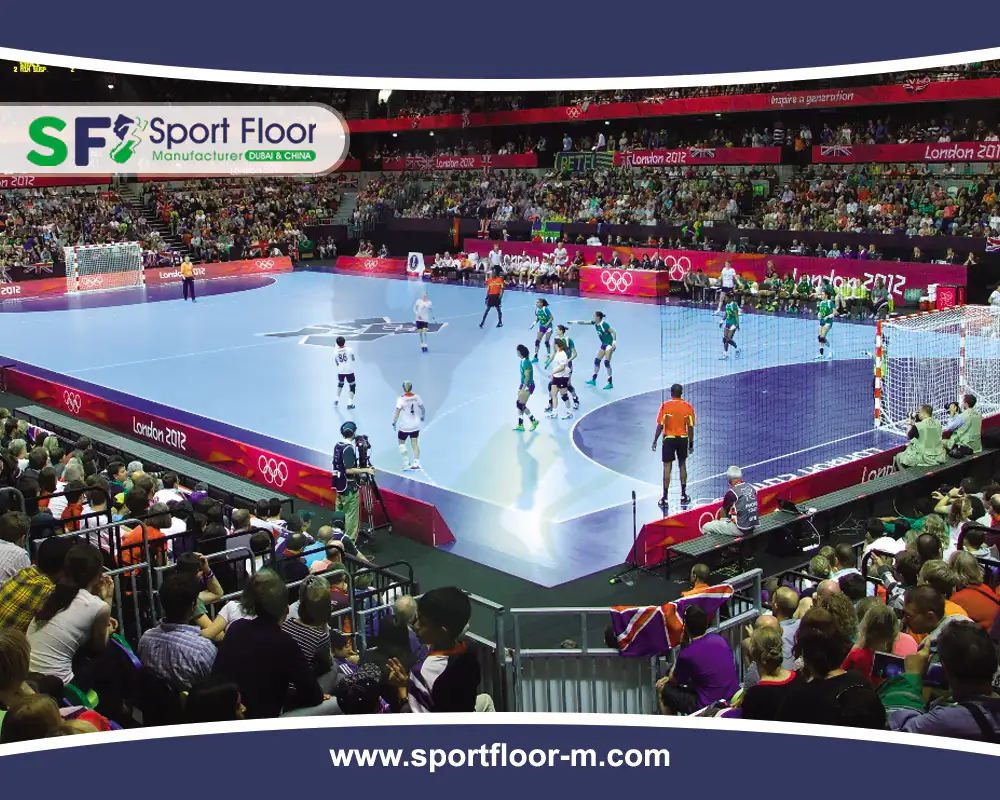
Firm Court Response
Standard acrylic provides a hard surface for many school, recreational and outdoor training facilities.
Detailed Line Layout
Handball includes goal-area curves, broken free-throw lines, seven-metre lines and other specific markings.
New or Existing Courts
Acrylic systems may be installed over new bases or suitable existing courts after assessment.
Project-Specific Build-Up
Base repairs, cushioning, texture, coat quantities and testing vary by project.
Where Acrylic Handball Courts Are Used
The surface should be selected according to the playing level, daily traffic, indoor or outdoor environment, user age, maintenance capacity and applicable federation requirements.
Schools
Outdoor courts for physical education, supervised recreation and project-dependent multi-sport use.
Universities
Training and recreational handball courts coordinated with wider campus facilities.
Sports Clubs
Dedicated or shared courts for coaching, practice and project-defined club activities.
Handball Academies
Practice facilities requiring accurate markings, goals and organised maintenance.
Community Facilities
Public outdoor courts requiring practical cleaning, drainage and repair procedures.
Residential Developments
Shared recreation courts coordinated with fencing, lighting, access and nearby buildings.
Training Courts
Facilities where the surface, dimensions and equipment are selected for practice rather than formal competition.
Multi-Sport Courts
Shared courts where handball is assigned a clear priority and differentiated line color.
Handball Court Dimensions, Safety Zones and Markings
The 40 × 20 metre playing court is only part of the required facility. Additional safety zones, goal depth, team areas, access and surrounding construction increase the overall footprint.
Distance between the two outer goal lines.
Distance between the two sidelines.
Minimum safety width beside the playing court.
Minimum safety depth behind each outer goal line.
Playing court plus the general minimum safety zones.
Defines the goal area in front of each goal.
Broken line positioned outside the goal-area line.
One-metre-long line positioned directly in front of each goal.
Short line positioned directly in front of the goal.
Circle located at the centre of the court.
Applies to court lines except the goal line between the posts.
Width of the goal line between the goalposts.
Standard, Cushioned and Resurfacing Handball Systems
Standard Acrylic Handball Court
A firm hard-court system without a separate resilient cushioning construction.
- Prepared concrete or asphalt base.
- Compatible primer where required.
- Acrylic resurfacing layers.
- Specified texture coats.
- Playing and goal-area colors.
- Accurate handball markings.
Commonly considered for schools, outdoor recreation, community courts and project-dependent training facilities.
Cushioned Acrylic Handball Court
An acrylic system incorporating specified resilient layers below the upper texture and color construction.
- Stable prepared supporting base.
- Compatible repair and primer materials.
- Defined cushion-layer construction.
- Upper texture and color coats.
- Handball court markings.
- System-specific application process.
Exact cushioning and sports performance depend on the complete offered system and its applicable documentation.
Acrylic Handball Resurfacing
A renovation system for a suitable existing court after the base, cracks, drainage and previous coatings have been assessed.
- Existing-surface inspection.
- Removal of weak or loose material.
- Compatible local repairs.
- Resurfacing and texture layers.
- New color zones.
- Replacement handball markings.
Resurfacing improves a suitable existing surface but does not stop structural movement or recurring settlement.
Main Layers of an Acrylic Handball Court
Concrete or Asphalt Base
Provides structural support, court levels and project-designed slopes.
Surface Preparation
Removes contamination, dust, weak material and unsuitable previous coatings.
Compatible Repairs
Treats suitable local depressions, inactive cracks and substrate defects.
Primer
Used where required by the substrate and selected acrylic system.
Acrylic Resurfacer
Helps create a more uniform receiving layer for the following applications.
Cushion Layers
Optional resilient construction included only in the approved cushioned system.
Texture and Color Coats
Create the specified surface profile and approved color zones.
Handball Line Paint
Forms the sidelines, goal areas, free-throw lines and other markings.
Handball Court Base, Flatness and Drainage
Acrylic coatings follow the profile and movement of their supporting base. Base construction and preparation must therefore be reviewed before the finish system is approved.
- Confirm structural stability and adequate support.
- Inspect flatness, high points and depressions.
- Identify water ponding after rain or testing.
- Review cracks, joints and evidence of movement.
- Check concrete curing, moisture and laitance.
- Confirm asphalt stability and application readiness.
- Test adhesion of existing coatings.
- Coordinate court slopes with perimeter drainage.
- Complete goal foundations before final coating.
- Protect the prepared surface from contamination.
Concrete Base
Review curing, moisture, joints, surface laitance, contamination and primer compatibility.
Asphalt Base
Confirm age, stability, compaction, levels and suitability for the selected acrylic build-up.
Existing Coated Court
Test adhesion and remove loose, weak or incompatible areas before resurfacing.
Surface Slopes
Outdoor slopes should move water without creating abrupt changes that interfere with play.
Perimeter Drainage
Channels and outlets should remain outside unsafe movement and goal areas.
Application Weather
Temperature, humidity, wind, rain and substrate moisture influence application and curing.
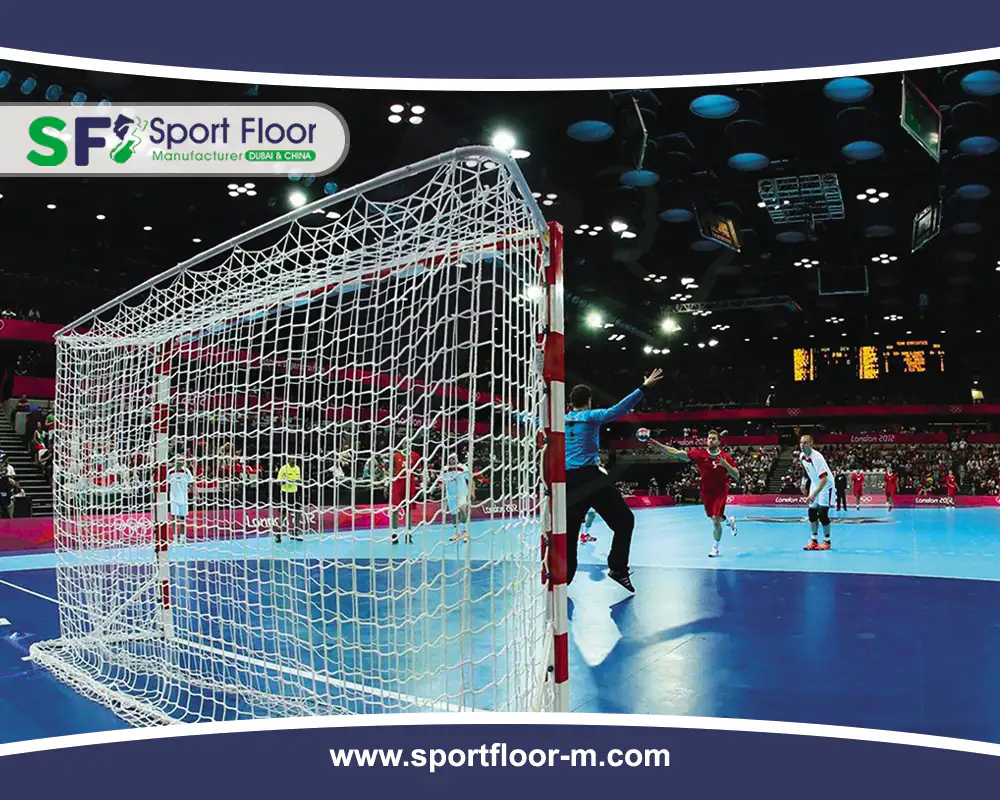
Handball Goals, Nets, Foundations and Safety
Goal foundations, fixing points and surrounding details should be completed before the final acrylic layers where they affect the base.
Clear distance between the inner faces of the posts.
Clear distance from the floor to the underside of the crossbar.
Goalposts and crossbar use a square cross section.
Visible sides use contrasting bands that also contrast with the background.
Structural Fixing
Goals must be securely fixed to the floor or the wall structure behind them.
Goal Net
Select and attach the net so that a ball entering the goal normally remains inside.
Foundation Details
Coordinate foundations, anchors and removable systems with the base design.
Floor Interface
Avoid projecting plates, open sockets or abrupt level changes around the goal.
Goal Inspection
Inspect frames, fixings, welds, nets and surrounding floor details regularly.
IHF Seal Requirements
Request exact goal documentation where an IHF Seal of Approval is required by the project.
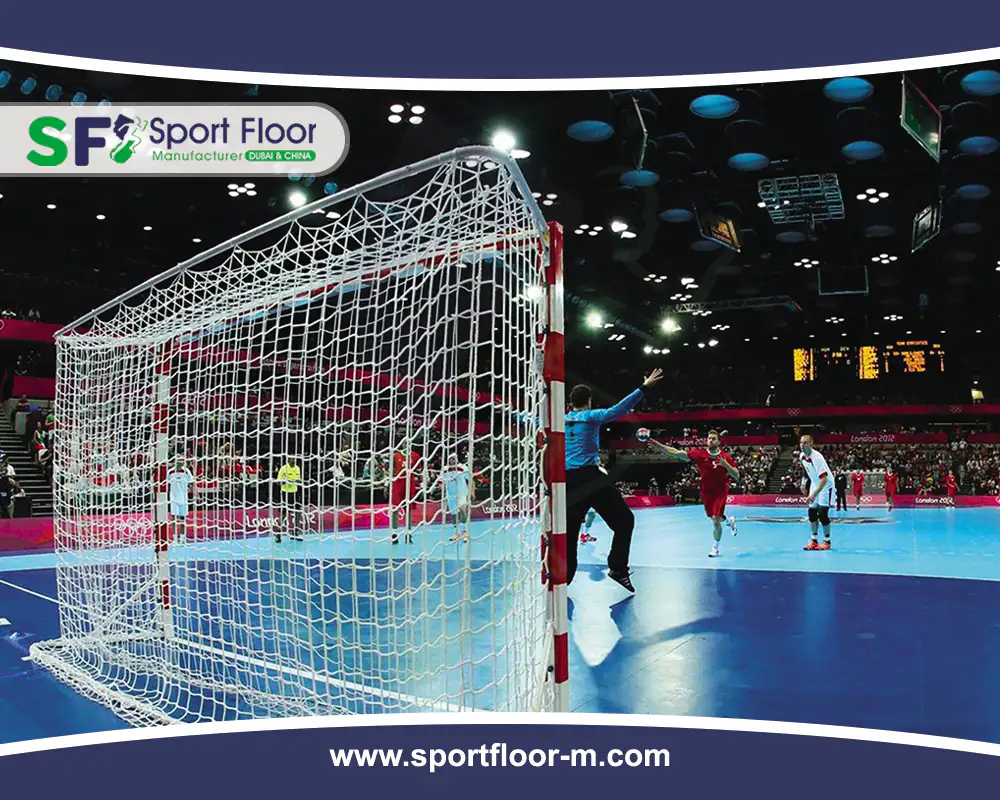
Outdoor Acrylic vs Indoor Handball Flooring
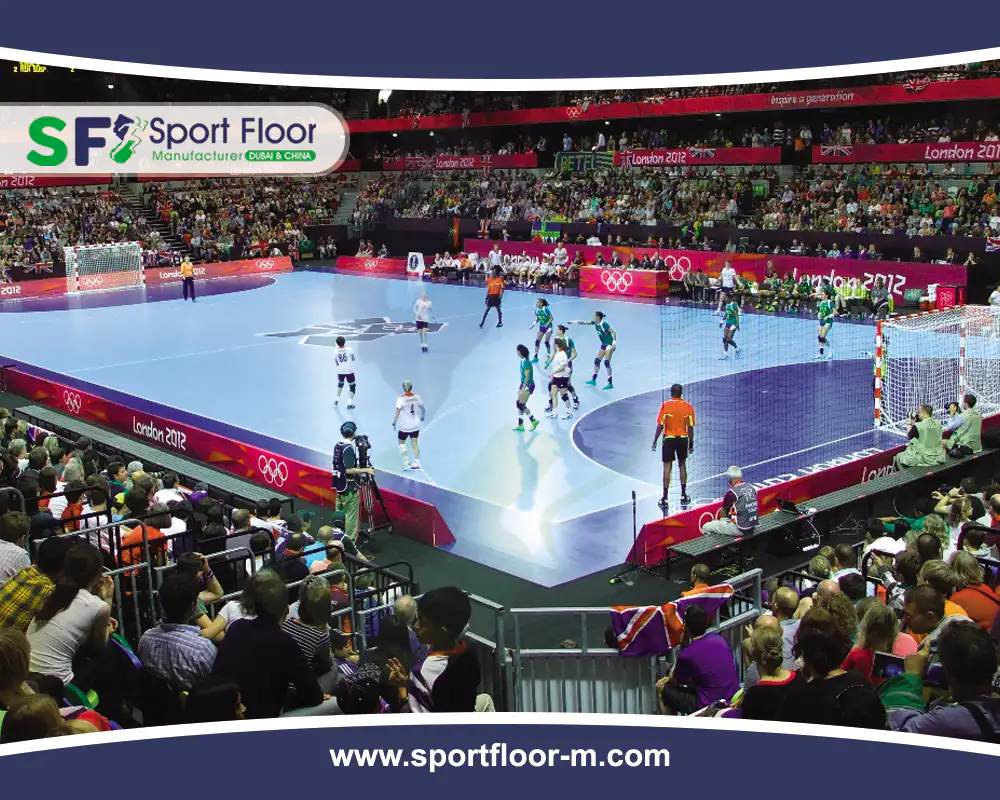
Acrylic is positioned on this page primarily as a hard-court option for outdoor, school, recreational and project-dependent training applications.
Indoor handball may require a resilient synthetic, polyurethane, PVC or other sports flooring system depending on competition level, impact performance, deformation, ball response and the applicable event or federation requirements.
- Confirm recreational, training or formal competition use.
- Review required shock-absorption performance.
- Check vertical deformation and ball response criteria.
- Review substrate moisture and building ventilation.
- Assess lighting glare and color contrast.
- Confirm cleaning and operational procedures.
- Verify the exact flooring approval required.
Acrylic Handball Court Installation Process
Survey the Site
Confirm dimensions, safety zones, levels, access, drainage, fencing, lighting and goals.
Inspect the Base
Review cracks, flatness, moisture, contamination and existing coating adhesion.
Prepare the Surface
Remove weak material, dust, oils, algae and other contaminants.
Complete Repairs
Treat approved depressions, inactive cracks and local defects.
Install Goal Fixings
Complete foundations, anchors and sleeves before final coating.
Apply Primer
Use the compatible primer where required by the substrate and system.
Apply Resurfacer
Build the approved preparation layers at controlled application rates.
Install Cushion Layers
Apply the specified resilient construction where included.
Apply Texture Coats
Create the required surface profile using controlled material and aggregate.
Apply Color Coats
Complete the playing area, goal areas and surrounding zones.
Mark the Court
Set out all solid and broken lines using the approved geometry.
Inspect and Handover
Review finish, lines, drainage, goals and required completion records.
Resurfacing an Acrylic Handball Court
Resurfacing can restore color, texture and line visibility when the existing base and coating remain suitable for renovation.
- Inspect faded and polished surface areas.
- Test adhesion of previous coatings.
- Review cracks and evidence of movement.
- Identify ponding and drainage defects.
- Remove loose or contaminated material.
- Confirm compatibility with new coatings.
- Treat approved local surface defects.
- Restore surface texture consistently.
- Reapply approved court colors.
- Replace faded or inaccurate markings.
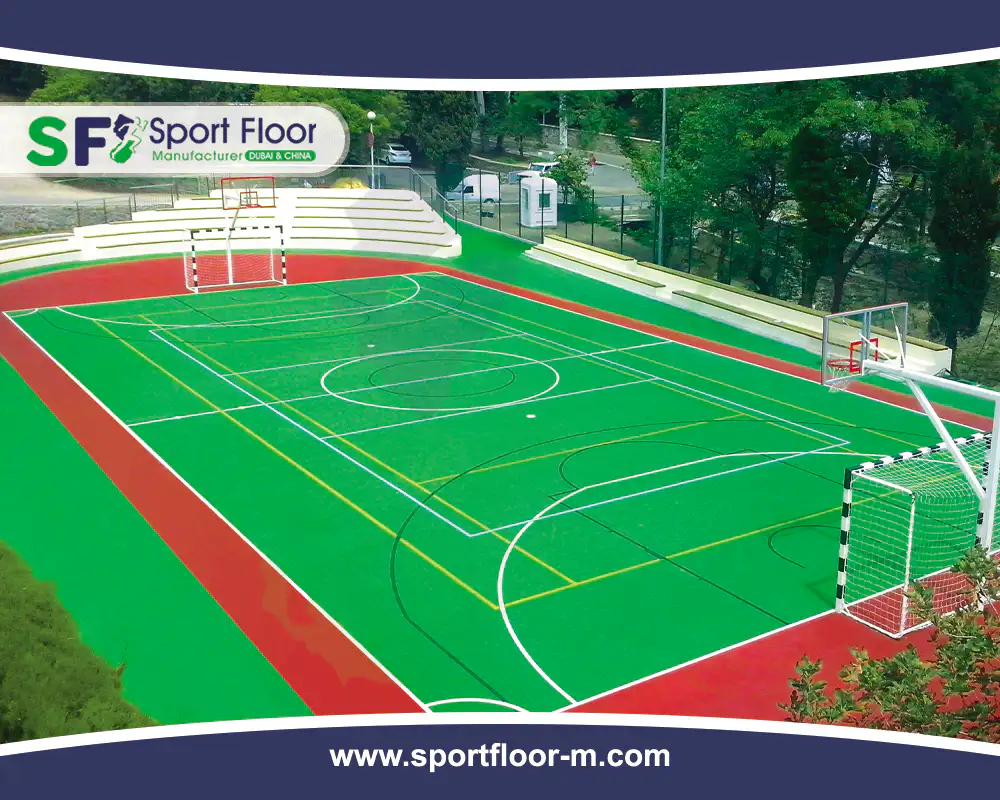
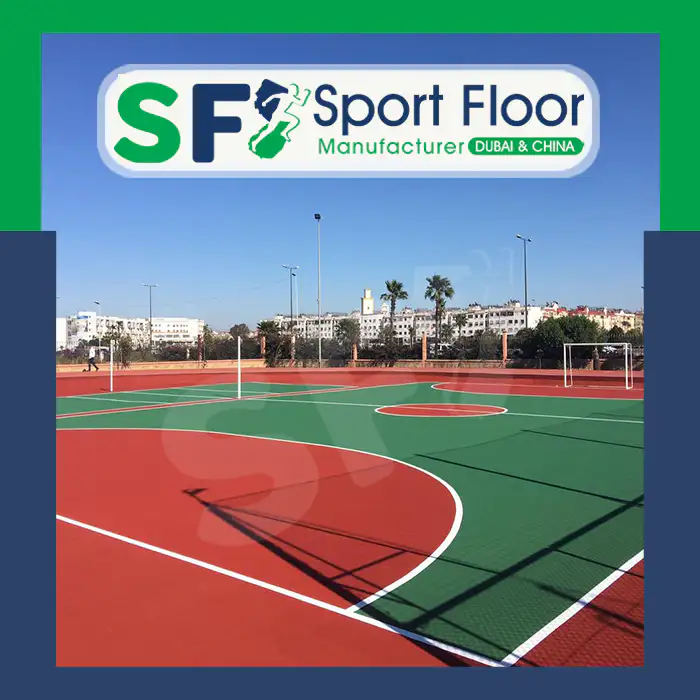
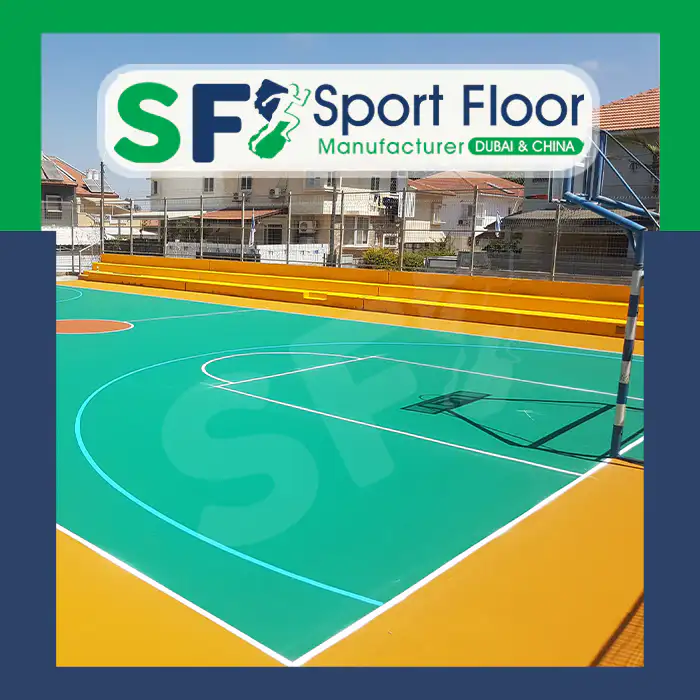
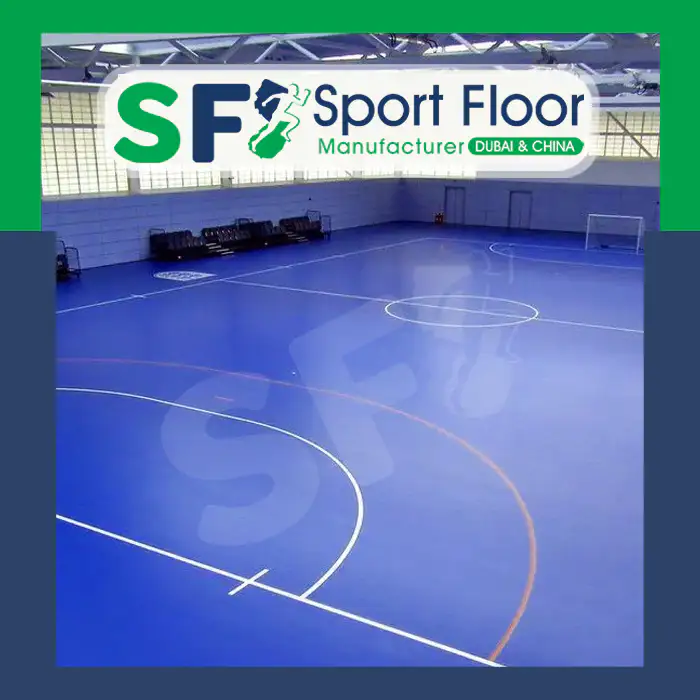
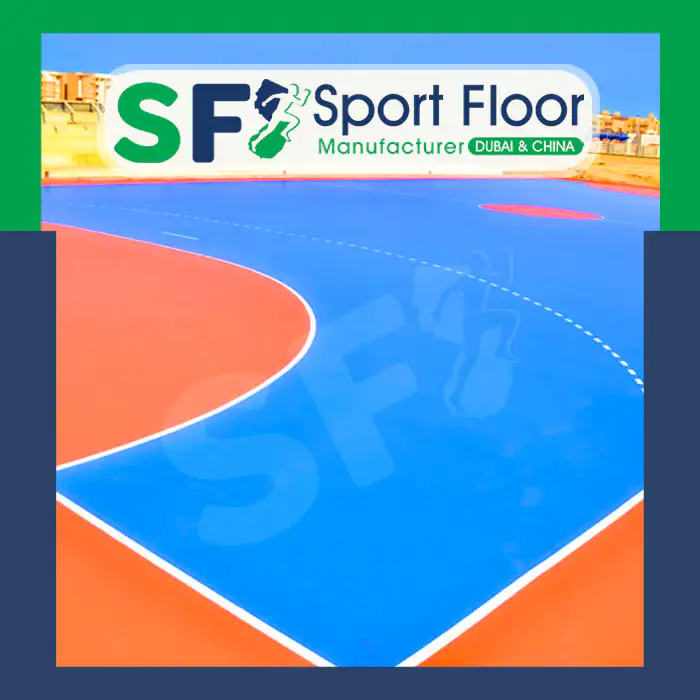
Handball Court Colors and Layout Examples
Every image in this gallery has the same original dimensions and square ratio. No small image is positioned beside a larger image.
Acrylic Handball Court Maintenance
Remove Loose Debris
Clear leaves, dust, sand and loose material before it affects the surface.
Use Compatible Cleaning
Follow the exact coating guidance and avoid aggressive chemicals or abrasive tools.
Keep Drainage Clear
Inspect perimeter channels, outlets and court edges after rainfall.
Monitor Cracks
Record new or recurring cracks and investigate the cause before repair.
Inspect High-Wear Areas
Review goal areas, free-throw zones, centre areas and other intensive movement locations.
Maintain Line Visibility
Repair damaged solid and broken markings using compatible material.
Inspect Goals and Nets
Check frames, anchors, nets and floor interfaces for damage or movement.
Control Court Access
Prevent vehicles, unsuitable footwear and sharp equipment from damaging the surface.
Resurface by Condition
Base resurfacing decisions on adhesion, cracks, texture, color, markings and operational requirements.
Acrylic Handball Court Specifications to Confirm
| Specification | What to Confirm | Why It Matters |
|---|---|---|
| Playing Level | Recreational, school, training, club or formal competition. | Influences flooring, dimensions, goals and documentation. |
| Court Type | Dedicated handball or shared multi-sport court. | Determines line hierarchy and surface zoning. |
| Playing Dimensions | Confirm 40 × 20 m or an approved reduced layout. | Reduced courts should not be described as full regulation courts. |
| Safety Zones | State required spaces beside sidelines and behind goals. | Increases the total construction and surface area. |
| Base Type | Concrete, asphalt or existing coated surface. | Determines preparation, repairs and primer requirements. |
| Base Condition | Cracks, unevenness, moisture, peeling, contamination or ponding. | May materially change the scope and price. |
| System Type | Standard, cushioned or resurfacing acrylic. | Defines the layer build-up and expected surface response. |
| Layer Schedule | Repairs, primer, resurfacer, cushion, texture, colors and lines. | Prevents comparison of incomplete systems. |
| Indoor or Outdoor | State the environment, exposure and building conditions. | Influences the correct flooring-system selection. |
| Color Schedule | Playing area, goal areas, surrounds and logos. | Required for ordering and application sequencing. |
| Line Plan | Handball markings and any approved secondary sports. | Controls geometry, widths, broken lines and color contrast. |
| Goals | Model, dimensions, fixing, net and required approval. | Goals affect structural details and safety. |
| Testing | State any required material or completed-surface tests. | Testing is not automatically included. |
| Documents | TDS, SDS, method statement, drawings and applicable reports. | Documents must match the exact offered system. |
| Commercial Scope | Materials, installation, goals, supervision and delivery. | Aligns competing technical and commercial quotations. |
Information Required for an Acrylic Handball Court Quote
Define the Playing Level
State recreational, school, training, club or competition use.
Provide Dimensions
Send the playing area, safety zones, total area and drawings.
Describe the Base
Identify concrete, asphalt or existing coating and provide current photos.
State the Base Condition
Identify cracks, ponding, unevenness, peeling and previous repairs.
Select the System
Confirm standard, cushioned or specified resurfacing construction.
Confirm Colors and Lines
Provide playing colors, goal-area colors and secondary markings.
List Goals and Equipment
State required goals, nets, fixings, fencing, lighting and benches.
Define Scope and Destination
State materials, installation or turnkey scope, destination and delivery term.
Handball Rules, Goal Requirements and Delivery Terms
Continue Planning the Handball Facility
Acrylic Handball Court FAQ
What is an acrylic handball court?
It is a firm hard-court surface system installed over a suitable concrete or asphalt base. The complete build-up may include repairs, primer, resurfacer, optional cushion layers, texture, colors and handball markings.
What are the official handball court dimensions?
The IHF playing court is 40 metres long and 20 metres wide. Additional safety areas are required around the playing court.
How much safety space is required around the court?
The general minimum is 1 metre beside the sidelines and 2 metres behind the outer goal lines.
What is the basic footprint including safety zones?
A 40 by 20 metre playing court with the general minimum safety zones creates a basic footprint of approximately 42 by 24 metres, excluding additional facility areas.
What size is a handball goal?
The internal opening is 3 metres wide and 2 metres high. Exact goal construction and approval requirements should also be confirmed.
Where is the handball goal-area line?
The goal area is defined by the 6-metre line in front of each goal.
Where is the free-throw line?
The broken free-throw line is positioned 3 metres outside the goal-area line and is commonly called the 9-metre line.
How wide are handball court lines?
Most court lines are 5 centimetres wide. The goal line between the goalposts is 8 centimetres wide.
What is the difference between standard and cushioned acrylic?
Standard acrylic is a firm hard-court system. Cushioned acrylic incorporates separately specified resilient layers beneath the upper surface.
Does every acrylic handball court absorb shock?
No. Standard acrylic does not automatically include cushioning. Verify the complete system where resilient performance is required.
Can acrylic be installed over concrete?
Yes, when the concrete is stable, properly prepared and compatible with the selected primer and acrylic system.
Can acrylic be installed over asphalt?
Yes, when the asphalt is stable, sufficiently cured and suitable for the proposed acrylic build-up.
Can an existing handball court be resurfaced?
It may be resurfaced after assessing cracks, adhesion, drainage, moisture, levels, contamination and compatibility.
Will acrylic coating repair structural cracks?
No. Compatible materials may treat suitable local defects, but acrylic coatings cannot stop active structural movement or settlement.
Can acrylic handball courts be installed outdoors?
Yes, when the materials, base, drainage and installation method are suitable for outdoor exposure.
Can acrylic be used for indoor handball?
It may be considered for some project-dependent recreational or training applications. Formal indoor handball may require a different resilient sports flooring system.
Are all acrylic handball courts IHF-approved?
No. A generic acrylic surface is not proof of IHF approval. Verify the exact flooring, playing level, testing and approval documentation.
Can handball share a court with other sports?
Yes, where a multi-sport layout is approved. Define the primary sport and use clearly differentiated line colors.
How long does an acrylic handball court last?
Service life depends on the base, system, usage, environment, drainage, installation and maintenance. There is no universal fixed lifespan.
How is acrylic handball court pricing calculated?
Pricing depends on total area, base repairs, system type, layer build-up, colors, lines, goals, installation, documents, destination and delivery scope.
What information is required for a quotation?
Provide the playing level, dimensions, total area, base type and condition, indoor or outdoor use, system preference, colors, goals, scope, destination and required documents.