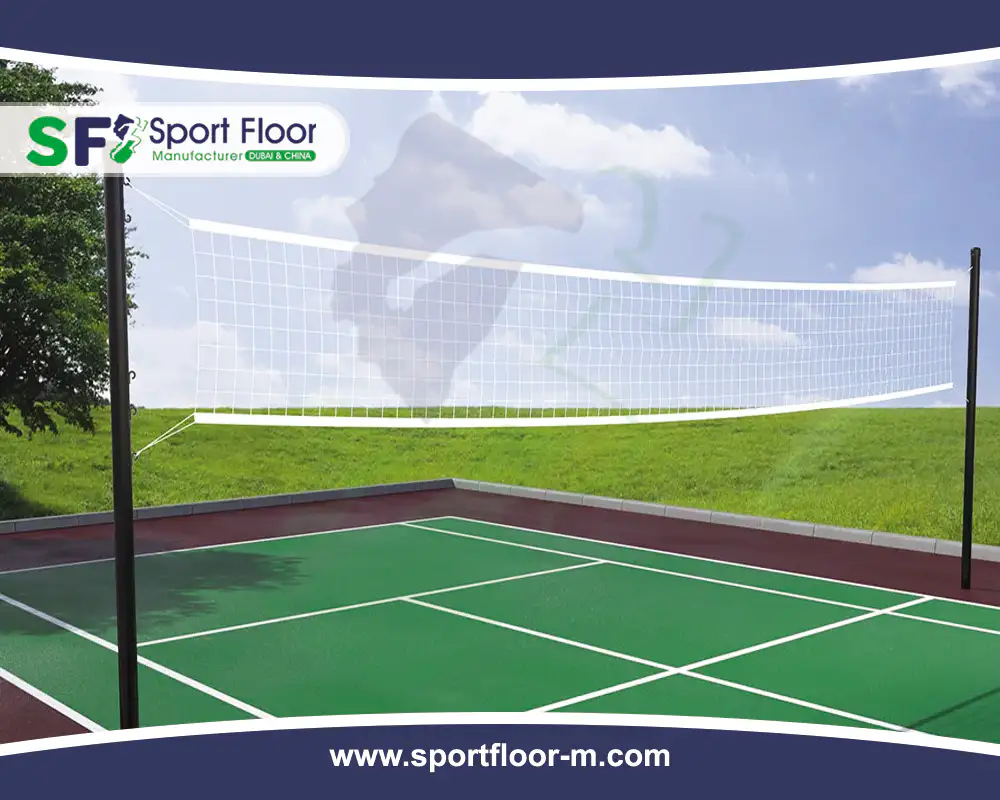














Acrylic Volleyball Courts for Schools, Clubs and Sports Facilities
Standard and cushioned acrylic volleyball court systems for new construction and resurfacing projects. Plan the complete surface around the playing level, court dimensions, free zone, concrete or asphalt base, drainage, indoor or outdoor exposure, colors, line plan, net-post system, maintenance and required documentation.
What Is an Acrylic Volleyball Court?
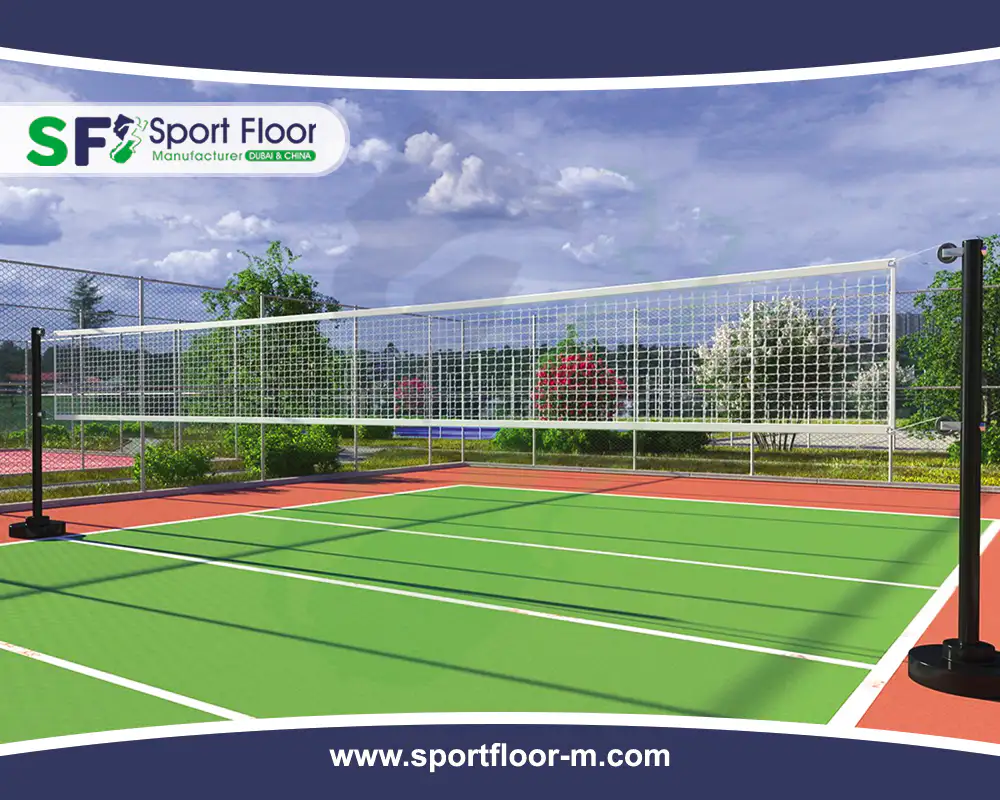
An acrylic volleyball court is a firm hard-court surface system installed over a suitable concrete or asphalt base. The upper acrylic layers create the playing colors, surface texture and volleyball line markings.
A complete system may include base repairs, compatible primer, acrylic resurfacer, optional cushion layers, textured coats, color finish coats and line-marking material.
Standard acrylic does not automatically provide a resilient sports floor. Where a softer response is required, the quotation should identify the exact cushioned system and its component layers.
Firm Hard-Court Surface
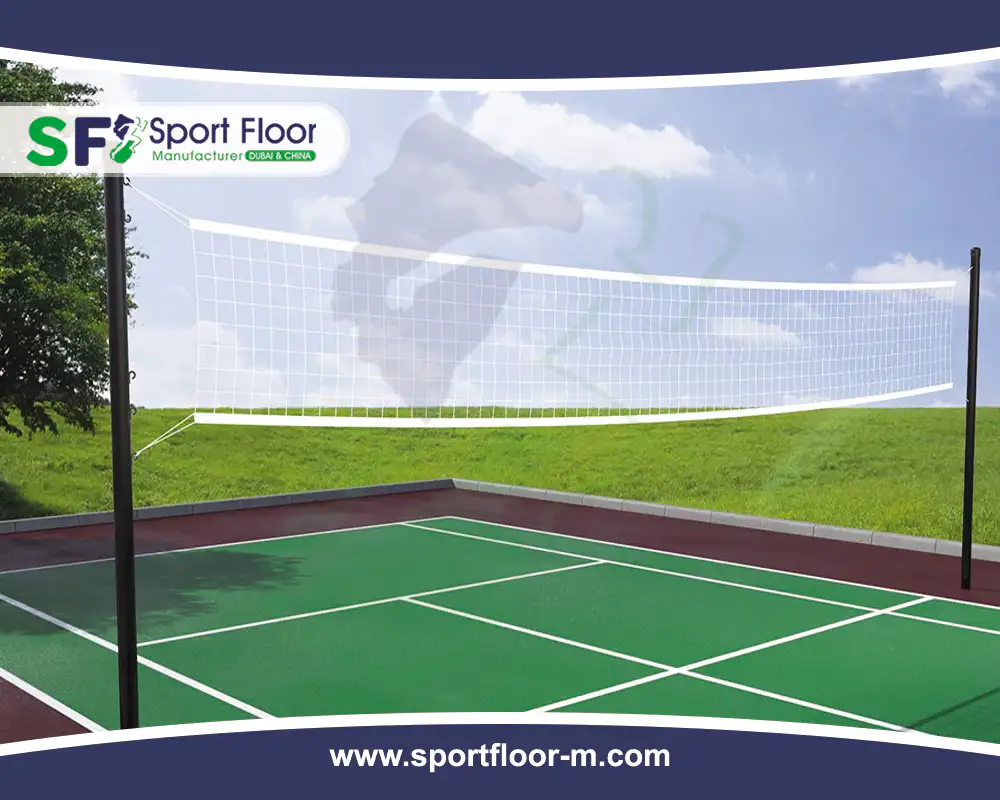
Standard acrylic provides a firm response for many school, training and recreational outdoor facilities.
Clear Volleyball Lines
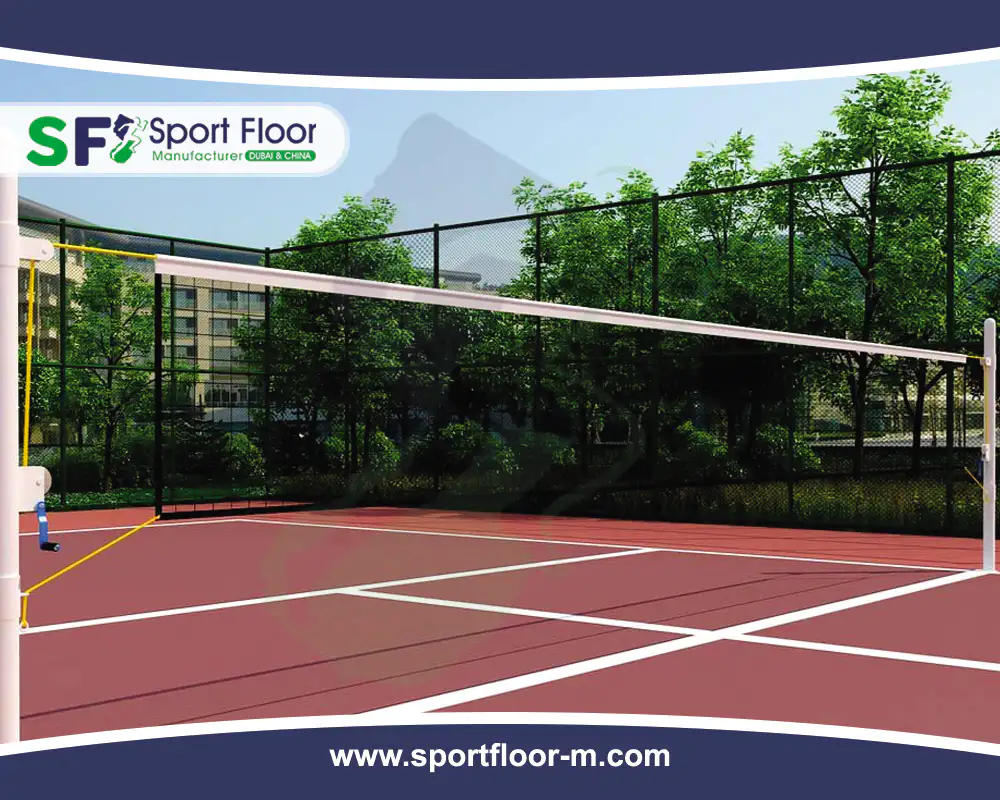
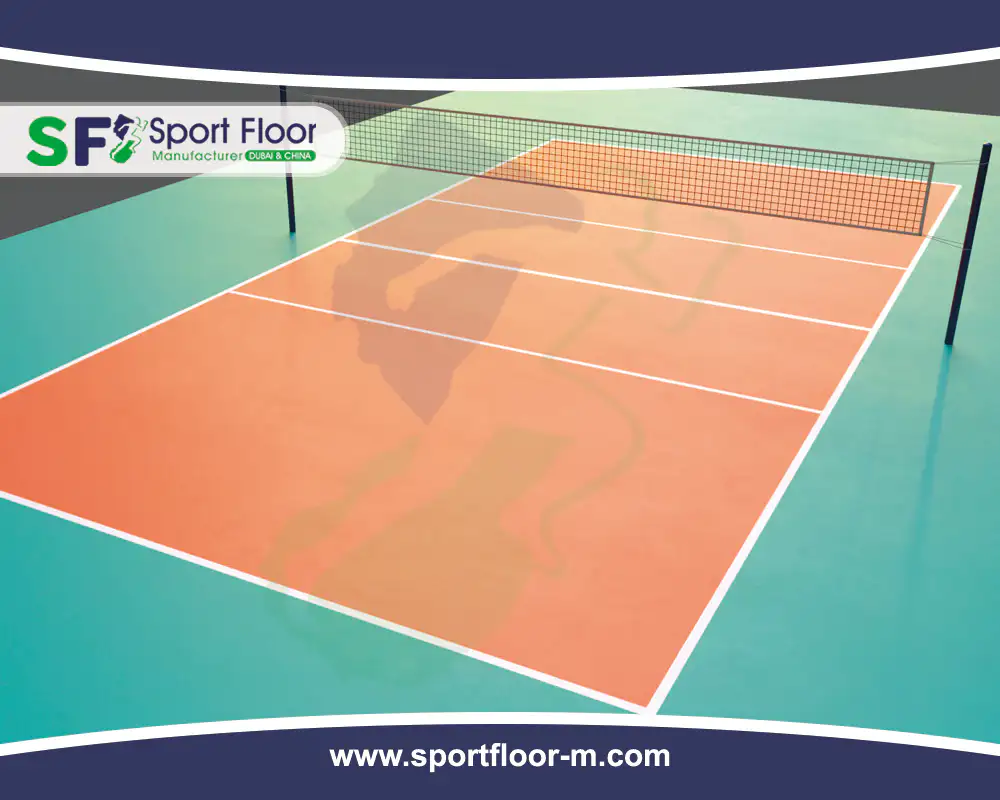
The court, centre line and attack lines can be set out in contrasting colors according to the approved layout.
New or Existing Bases
Acrylic systems may be installed on new construction or suitable existing courts after assessment.
Project-Dependent System
Base preparation, cushioning, coat sequence, texture and testing vary by project.
Where Acrylic Volleyball Courts Are Used
Select the surface and facility layout according to the primary users, playing level, hours of use, climate and maintenance resources.
Schools
Outdoor courts for physical education, supervised recreation and project-dependent multi-sport use.
Universities
Training and recreational facilities coordinated with other campus sports infrastructure.
Sports Clubs
Dedicated or shared courts for training, coaching and club activities.
Volleyball Academies
Practice courts requiring accurate lines, net positions and organised maintenance.
Residential Developments
Shared recreation courts coordinated with fencing, lighting and neighbouring properties.
Community Facilities
Public outdoor courts requiring practical cleaning, drainage and repair procedures.
Hotels and Resorts
Recreational volleyball facilities planned around guest use and visual design.
Multi-Sport Courts
Shared courts where volleyball is assigned a clear priority and line color.
Volleyball Court Dimensions, Lines and Free Space
The playing court is only one part of the facility. The complete area also includes the free zone, net posts, benches, access and any project-specific competition-control areas.
Overall distance between the two end lines.
Overall distance between the two side lines.
The centre line divides the court into equal halves.
General minimum around all sides of the playing court.
Playing court plus a 3 m free zone on all sides.
Lines should contrast with the floor and other markings.
Measured from the axis of the centre line.
General minimum unobstructed height above the playing surface.
Standard, Cushioned and Resurfacing Volleyball Systems
Standard Acrylic System
A firm hard-court system without a separate resilient cushion construction.
- Prepared concrete or asphalt base.
- Compatible primer where required.
- Acrylic resurfacing layers.
- Specified texture coats.
- Playing and free-zone colors.
- Volleyball line marking.
Cushioned Acrylic System
An acrylic system containing specified resilient layers beneath the upper texture and color coats.
- Stable prepared substrate.
- Compatible primer and resurfacer.
- Defined cushion-layer construction.
- Upper texture and color coats.
- Accurate volleyball markings.
- System-specific application process.
Acrylic Resurfacing System
A renovation build-up for a suitable existing court after the base and previous coatings have been assessed.
- Existing-surface inspection.
- Removal of weak or loose material.
- Compatible local repairs.
- Resurfacing and texture layers.
- New playing-zone colors.
- Replacement line markings.
Main Layers of an Acrylic Volleyball Court
Concrete or Asphalt Base
Provides the structural support, court levels and designed slopes.
Surface Preparation
Removes contamination, weak material, dust and unsuitable previous coatings.
Repairs
Treats approved depressions, inactive cracks and local surface defects.
Compatible Primer
Used where required by the substrate and selected material system.
Acrylic Resurfacer
Helps create a more uniform receiving layer for later coats.
Cushion Layers
Optional resilient layers used only in the approved cushioned build-up.
Texture and Color Coats
Create the approved surface profile and court zoning.
Line-Marking Material
Forms the boundaries, centre line and attack lines.
Volleyball Court Base, Levels and Drainage
Acrylic coatings are relatively thin and follow the profile and movement of the supporting base. The concrete or asphalt construction must therefore be assessed before surfacing.
- Confirm structural stability and adequate support.
- Inspect flatness and local depressions.
- Identify ponding after rainfall or water testing.
- Review cracks, joints and evidence of movement.
- Check concrete curing, moisture and laitance.
- Confirm asphalt stability and application readiness.
- Test adhesion of existing coatings.
- Coordinate slopes with perimeter outlets.
- Complete post sockets before finish coating.
- Protect prepared areas from contamination.
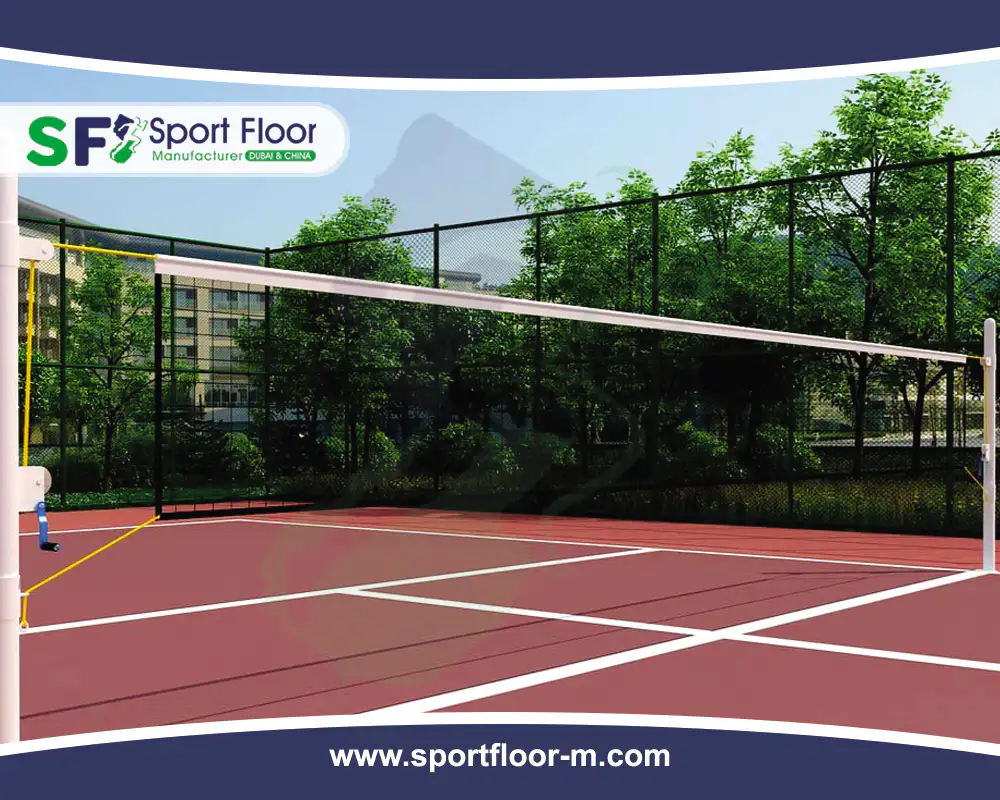
Concrete Base
Review curing, moisture, joints, contamination and compatibility with the selected primer.
Asphalt Base
Confirm age, stability, compaction, levels and suitability for acrylic application.
Existing Court
Test coating adhesion and identify loose or incompatible areas before resurfacing.
Outdoor Slope
The current volleyball rules allow an outdoor drainage slope of up to 5 mm per metre.
Perimeter Outlets
Channels and drains should remain outside unsafe player-movement zones.
Weather Readiness
Temperature, humidity, wind, rain and surface moisture affect application and curing.
Volleyball Net, Posts, Sleeves and Padding
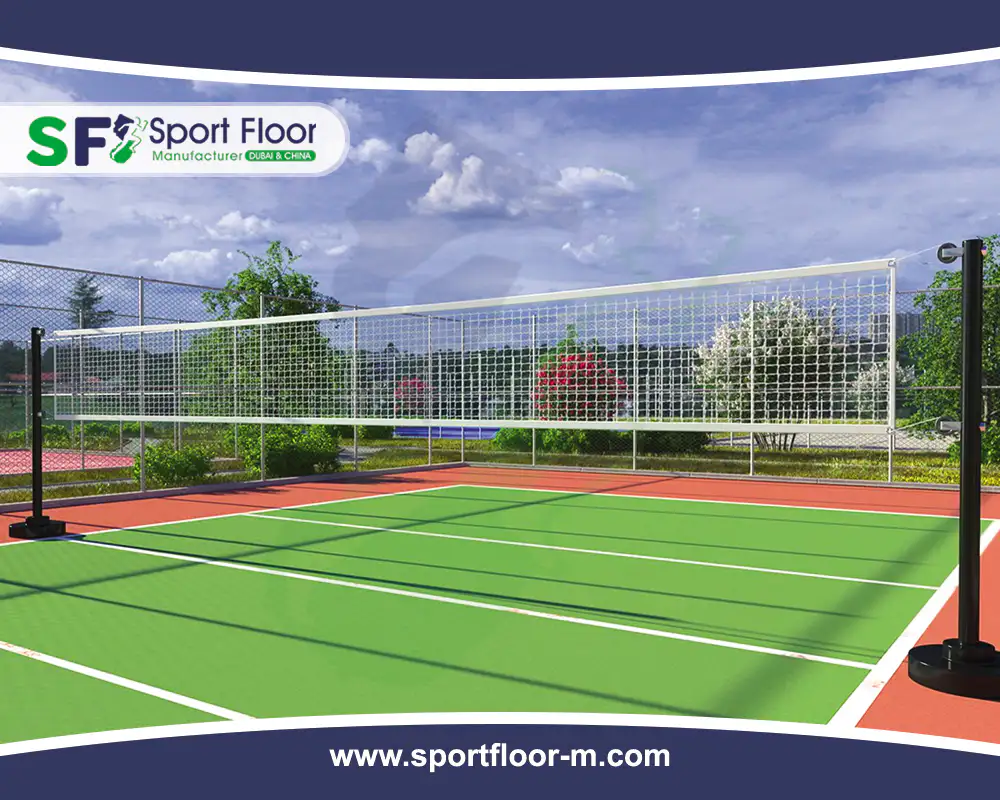
Net-post foundations, sockets and fixing details should be completed before the final acrylic layers wherever they penetrate the base.
Measured from the centre of the playing court.
Confirm age-group or competition-specific requirements separately.
General post position stated in the current rules.
Posts should preferably be adjustable.
Post Foundations
Design foundations and anchors for the selected post system and site conditions.
Removable Sleeves
Keep sleeves aligned, protected and flush with the finished court when posts are removed.
Post Padding
Provide suitable padding where required by the competition or facility specification.
Net Dimensions
Confirm the required net length, width, mesh, bands and tensioning arrangement.
Antennae and Side Bands
Include these components where required for the intended playing level.
Safe Fixing Details
Posts should remain smooth and free from dangerous guy wires or projecting devices.
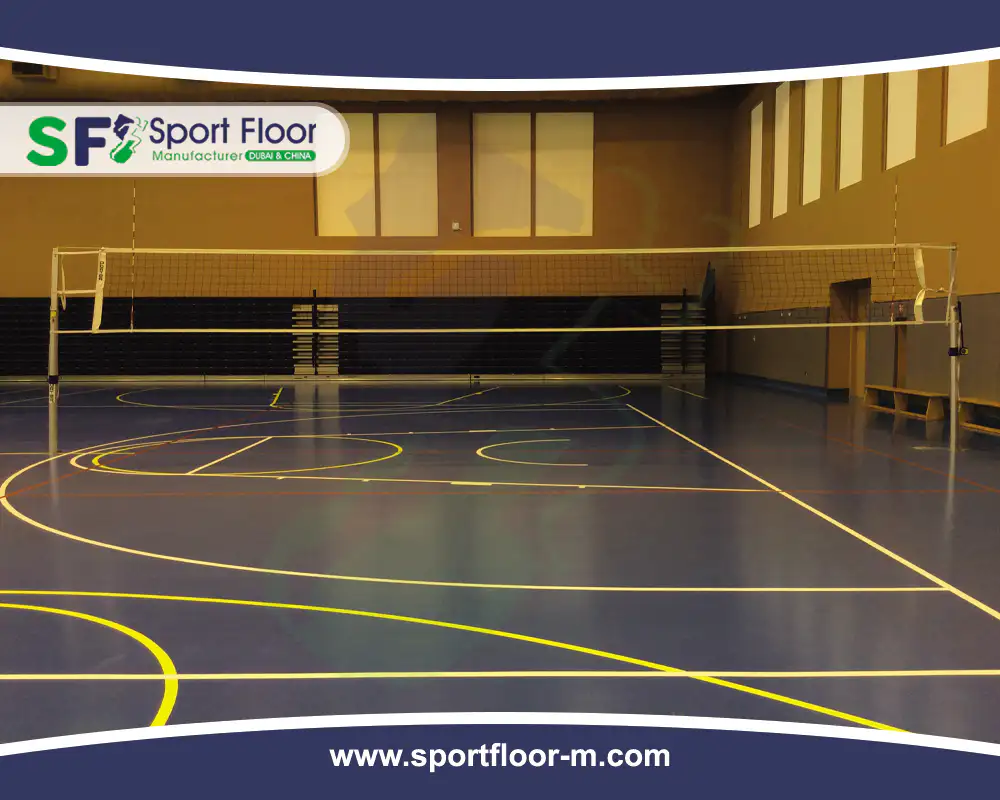
Outdoor Acrylic vs Indoor Volleyball Flooring
Acrylic is primarily positioned on this page as a hard-court option for outdoor, school, training and recreational facilities.
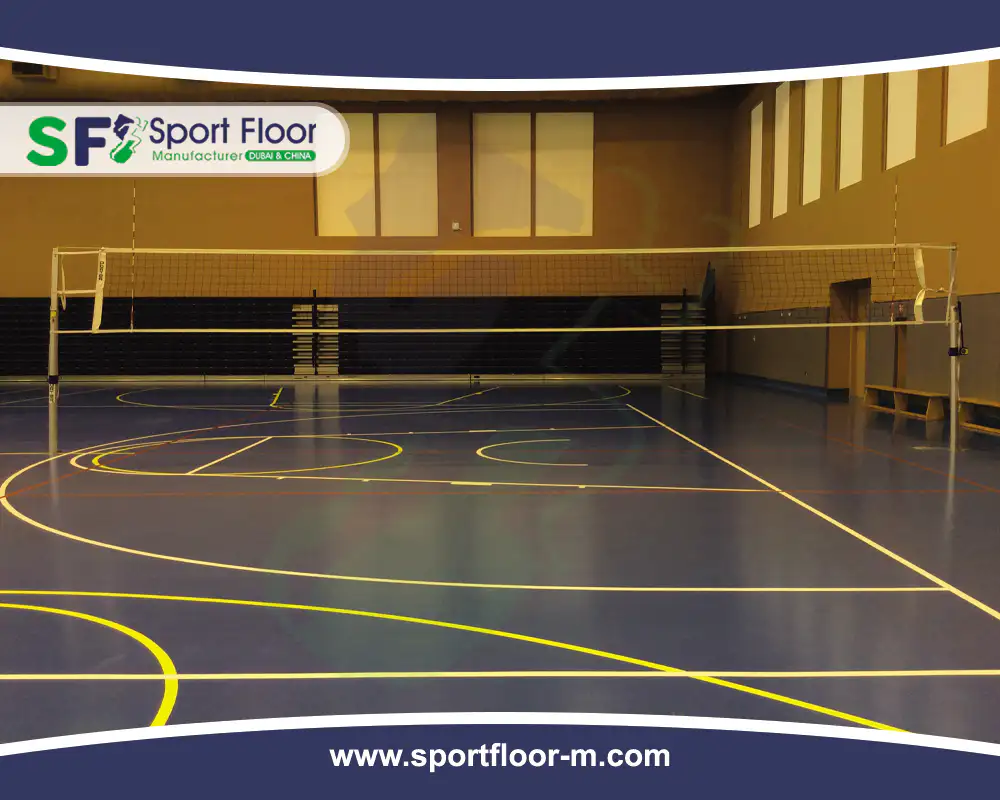
Indoor volleyball may require a different sports flooring system, depending on the competition level, shock absorption, deformation, ball response and governing-body requirements.
- Confirm whether the court is recreational or competitive.
- Review required impact and deformation performance.
- Check substrate moisture and indoor ventilation.
- Assess glare and color contrast.
- Coordinate cleaning and operational procedures.
- Verify the required flooring approval programme.
Acrylic Volleyball Court Installation Process
Survey the Site
Confirm court area, free zone, clear height, drainage, access and surrounding construction.
Inspect the Base
Review cracks, flatness, moisture, contamination and existing coating adhesion.
Prepare the Surface
Remove weak material, dust, oils, algae and other contaminants.
Complete Repairs
Treat approved defects and depressions with compatible materials.
Install Post Sockets
Complete sleeves, anchors and foundations before finish coating.
Apply Primer
Use the specified primer where required by the substrate and system.
Apply Resurfacer
Build the approved preparation layers at controlled application rates.
Install Cushion Layers
Apply the defined resilient construction where included.
Apply Texture Coats
Create the specified surface profile with controlled aggregate.
Apply Color Coats
Complete playing and free-zone colors according to the approved schedule.
Mark the Court
Set out boundaries, centre line and attack lines accurately.
Inspect and Handover
Review finish, lines, drainage, net system and required records.
Resurfacing an Acrylic Volleyball Court
Resurfacing can restore color, texture and line visibility when the existing court remains technically suitable.
- Inspect worn and polished areas.
- Test adhesion of previous coatings.
- Review cracks and signs of movement.
- Identify ponding and drainage defects.
- Remove loose or contaminated material.
- Check compatibility with the new system.
- Treat suitable local surface defects.
- Restore texture consistently.
- Reapply approved colors.
- Replace faded or inaccurate lines.
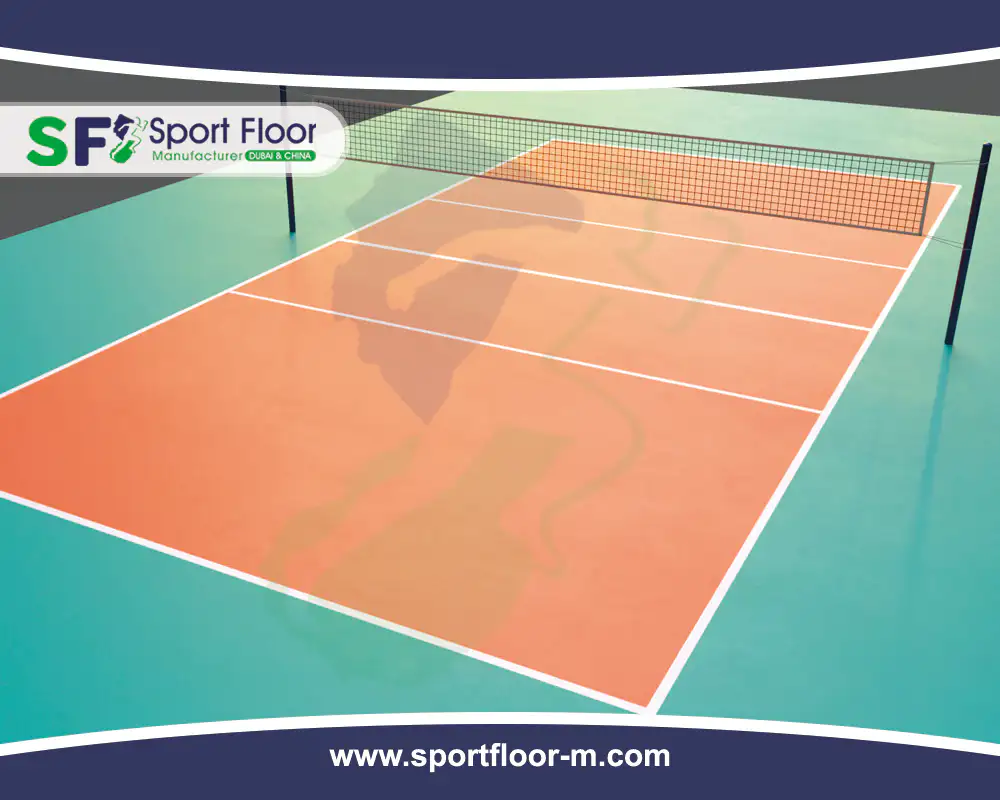
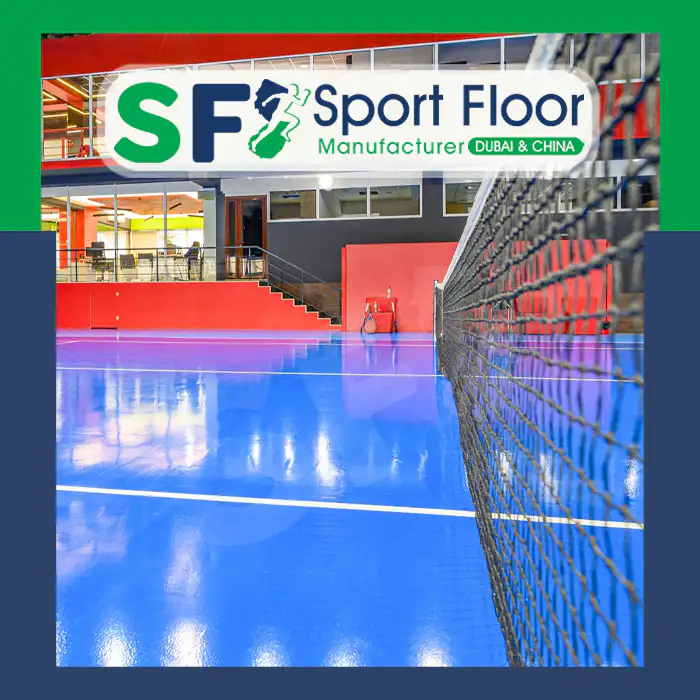
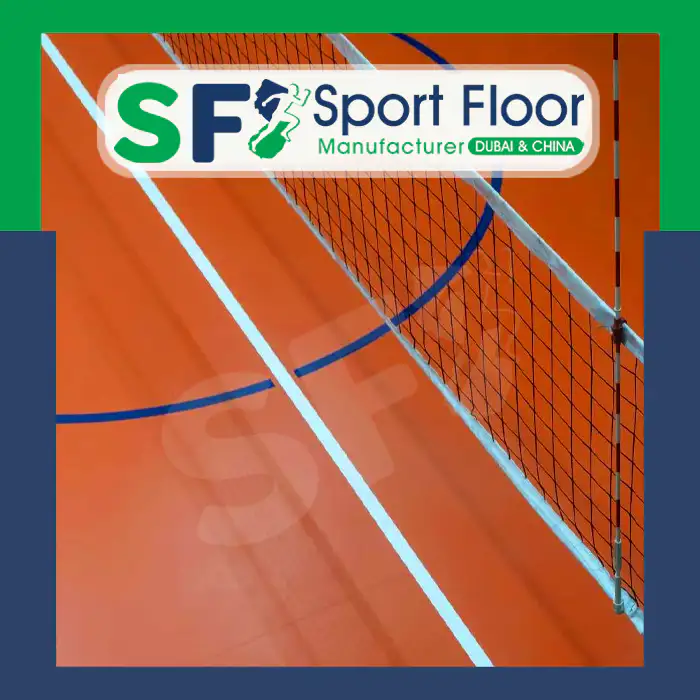
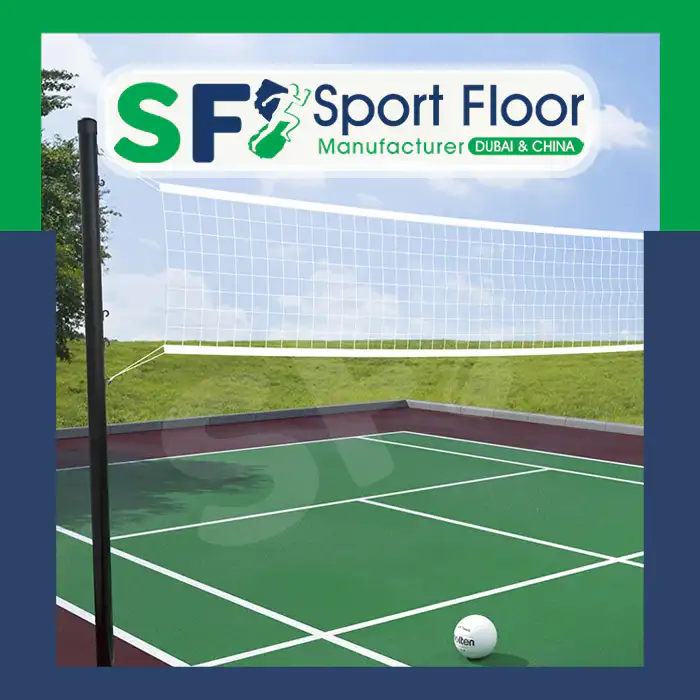
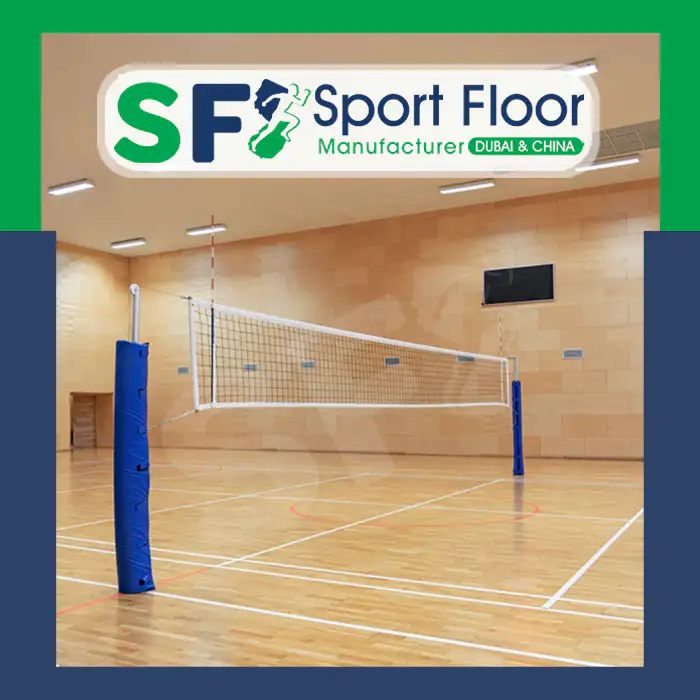
Acrylic Volleyball Court Colors and Layouts
Every image in this gallery has the same original dimensions and square ratio. No small image is placed beside a larger image.
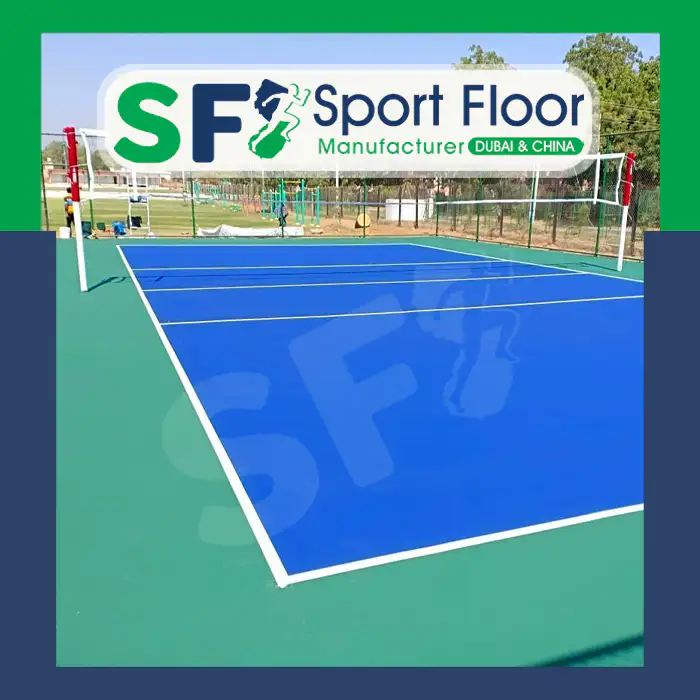
Acrylic Volleyball Court Maintenance
Remove Debris
Clear leaves, dust, sand and loose materials before they affect traction or stain the surface.
Use Compatible Cleaning
Follow the coating guidance and avoid aggressive chemicals or abrasive tools.
Keep Drainage Clear
Inspect perimeter channels, outlets and court edges after rainfall.
Monitor Cracks
Record new or recurring cracks and investigate their cause.
Inspect High-Wear Zones
Review areas around the net, attack lines and service zones.
Maintain Line Visibility
Repair damaged markings using compatible material and accurate set-out.
Inspect Posts and Sleeves
Check post alignment, padding, anchors, covers and net-tensioning components.
Control Court Access
Prevent vehicles, unsuitable footwear and sharp equipment from damaging the surface.
Resurface by Condition
Base resurfacing decisions on adhesion, cracks, texture, color, lines and operating requirements.
Acrylic Volleyball Court Specifications to Confirm
| Specification | What to Confirm | Why It Matters |
|---|---|---|
| Playing Level | Recreational, school, training, club or formal competition. | Influences flooring, dimensions, equipment and approvals. |
| Court Type | Volleyball-only or shared multi-sport facility. | Determines line layout and color hierarchy. |
| Playing Area | Confirm the required 18 × 9 m court or approved reduced layout. | Reduced courts should not be described as regulation courts. |
| Free Zone | State the surrounding clear area required by the project. | Affects the overall surface area and facility layout. |
| Clear Height | Confirm unobstructed height above the playing area. | Important for indoor and covered facilities. |
| Base Type | Concrete, asphalt or existing coated surface. | Determines preparation, repair and primer requirements. |
| Base Condition | Cracks, unevenness, moisture, peeling, contamination or ponding. | May materially change the scope and price. |
| System Type | Standard, cushioned or resurfacing acrylic. | Defines the layer construction and material quantities. |
| Layer Schedule | Repairs, primer, resurfacer, cushion, texture, colors and lines. | Prevents comparison of incomplete quotations. |
| Indoor or Outdoor | State exposure and facility environment. | Influences material and flooring-system selection. |
| Colors | Playing area, free zone, front zones and logos. | Required for ordering and application sequencing. |
| Line Plan | Volleyball lines and any approved secondary sports. | Controls clarity, widths and line colors. |
| Net Equipment | Posts, sleeves, net, antennae, padding and covers. | Equipment interfaces affect the base and court layout. |
| Testing and Approval | State applicable surface or completed-facility requirements. | Testing is not automatically included. |
| Documents | TDS, SDS, method statement, drawings and applicable reports. | Documents must match the exact offered system. |
| Commercial Scope | Materials, installation, equipment, supervision and delivery. | Aligns competing technical and commercial quotations. |
Information Required for an Acrylic Volleyball Court Quote
Define the Playing Level
State recreational, school, training, club or competition use.
Provide Dimensions
Send the playing area, free zone, overall space and drawings.
Describe the Base
Identify concrete, asphalt or existing coating and provide photos.
State the Base Condition
Identify cracks, ponding, unevenness, peeling and previous repairs.
Select the System
Confirm standard, cushioned or specified resurfacing construction.
Confirm Colors and Lines
Provide court colors, free-zone colors and secondary markings.
List Equipment
State the required net, posts, sleeves, padding and accessories.
Define Scope and Destination
State materials, installation or turnkey scope, destination and delivery term.
Volleyball Rules, Surface Requirements and Export Terms
Continue Planning the Volleyball Facility
Acrylic Volleyball Court FAQ
What is an acrylic volleyball court?
It is a hard-court surface system installed over a suitable concrete or asphalt base. It may include repairs, primer, resurfacer, optional cushion layers, texture, colors and volleyball markings.
What are the official volleyball court dimensions?
The playing court is 18 metres long and 9 metres wide, divided into two equal 9 by 9 metre courts.
How much free space is required around a volleyball court?
The general minimum free zone is 3 metres on all sides. Higher competition levels may require substantially larger free zones.
What is the basic minimum overall court footprint?
An 18 by 9 metre court with a 3 metre free zone on every side creates a basic minimum footprint of 24 by 15 metres.
How wide are volleyball court lines?
Court lines are 5 centimetres wide and should contrast with the playing surface and any other lines.
How far is the attack line from the centre line?
The rear edge of each attack line is positioned 3 metres from the axis of the centre line.
What is the volleyball net height?
The standard net height is 2.43 metres for men and 2.24 metres for women. Age-group and project requirements should be confirmed separately.
Where should volleyball posts be positioned?
The general rules place posts 0.50 to 1.00 metre outside the sidelines. Competition requirements may specify an exact position and padding.
What is the difference between standard and cushioned acrylic?
Standard acrylic is a firm hard-court system. Cushioned acrylic includes separately specified resilient layers beneath the upper surface.
Does every acrylic volleyball court absorb impact?
No. Standard acrylic does not automatically include cushioning. Verify the complete layer build-up where a resilient response is required.
Can acrylic be installed over concrete?
Yes, when the concrete is stable, properly prepared and compatible with the selected primer and acrylic system.
Can acrylic be installed over asphalt?
Yes, when the asphalt is stable, sufficiently cured and suitable for the proposed acrylic construction.
Can an existing volleyball court be resurfaced?
It may be resurfaced after assessing cracks, adhesion, drainage, moisture, levels, contamination and compatibility.
Will acrylic coating repair structural cracks?
No. Compatible repairs may treat suitable local defects, but acrylic coatings do not stop structural movement or settlement.
Can an acrylic volleyball court be installed outdoors?
Yes, when the materials, base, drainage and installation method are suitable for outdoor exposure.
Can acrylic be used for indoor volleyball?
It may be considered for some project-dependent recreational applications. Formal indoor volleyball may require an approved resilient synthetic or wooden flooring system.
Are all acrylic volleyball courts FIVB-approved?
No. A generic acrylic surface is not proof of FIVB approval. Verify the exact floor, competition level, testing and approval documentation.
Can volleyball share a court with other sports?
Yes, where a multi-sport layout is approved. Define the priority sport and use separate, clearly differentiated line colors.
How long does an acrylic volleyball court last?
Service life depends on the base, system, use, environment, drainage, installation and maintenance. There is no universal fixed lifespan.
How is acrylic volleyball court pricing calculated?
Pricing depends on total area, base repairs, system type, layer schedule, colors, lines, equipment, installation, documents, destination and delivery scope.
What information is required for a quotation?
Provide the playing level, dimensions, total area, base type and condition, indoor or outdoor use, system preference, colors, equipment, scope, destination and required documents.