
Resilience
The rubber-granule structure creates controlled elasticity beneath the upper sports surface.
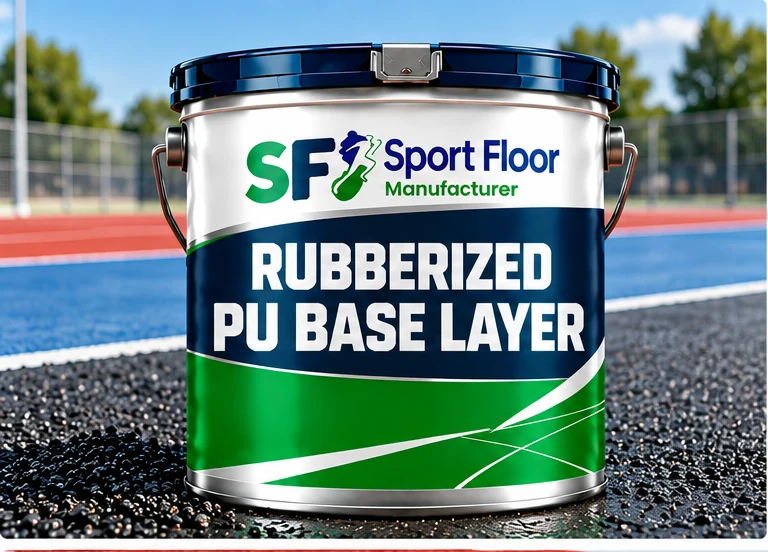
Sport Floor manufactures Rubberized PU Base Layer for compatible sports-flooring and running-track systems where a resilient rubber-granule base is required beneath the upper polyurethane or EPDM layers.
The layer combines compatible rubber granules with polyurethane binder to create a flexible, shock-absorbing foundation inside the flooring system. It is not the final wearing surface; it is the resilient body beneath the visible sports layer.
Sport Floor manufactures its polyurethane materials using German raw materials within the applicable formulations and supplies the rubberized base as part of a wider B2B material route for contractors, distributors, importers and international projects.
Rubberized PU Base Layer is a resilient layer formed from compatible rubber granules bound with polyurethane. It is installed as part of a multi-layer sports-flooring system where the project requires cushioning, thickness build-up and a flexible base beneath the final PU or EPDM surface.
In many track and poured-rubber systems, SBR granules are used in this lower resilient layer because they provide an efficient way to build thickness and elasticity. The upper wearing layers are then selected separately according to the required system, color, UV exposure and sport.
Sport Floor does not treat this as an isolated “rubber mix.” The base layer is selected together with the primer below it, the binder chemistry, rubber granule size, required thickness, pore sealer or intermediate layers and the final wearing surface above.
Its job is to create the resilient foundation that supports the performance layers above.
The rubber-granule structure creates controlled elasticity beneath the upper sports surface.
The layer helps the complete system absorb impact and reduce the rigid feel of concrete or asphalt.
Rubberized bases can efficiently build system thickness without making every millimetre from dense upper PU material.
It creates a stable resilient base for compatible pore sealer, self-leveling PU, spray coat or EPDM layers.
Using SBR in the resilient base can provide a commercially efficient structure while premium materials are concentrated in the visible upper layers.
The same base concept can support different compatible sports systems depending on the upper build-up.
The selected rubber granules are mixed with the compatible Sport Floor polyurethane binder according to the current product and system specification. The mixture is then spread, levelled and compacted to the required system thickness over the prepared and primed substrate.
Uniform binder distribution is important because dry zones, excessive binder, inconsistent mixing or variable thickness can affect the behavior of the final layer. This is why the base should be installed from a defined material schedule rather than by visual approximation.
After the layer reaches the condition required by the system, compatible upper materials can be installed according to the selected track, wet-pour or sports-flooring build-up.
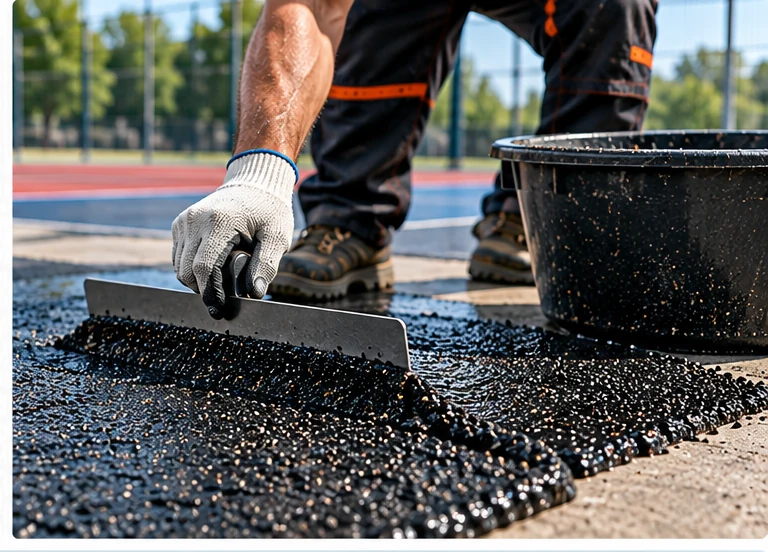
The base layer belongs in the middle of the flooring system. It normally follows the compatible primer and precedes the denser or visible layers that deliver final surface texture, color and wear performance.
In a Sandwich running track, for example, a resilient SBR/PU base can support pore sealer and denser polyurethane layers before the final EPDM wearing surface. In a Spray Coat system, the resilient base supports the spray-applied wearing construction above.
The exact materials, thicknesses and sequence should follow the selected Sport Floor system and project specification.
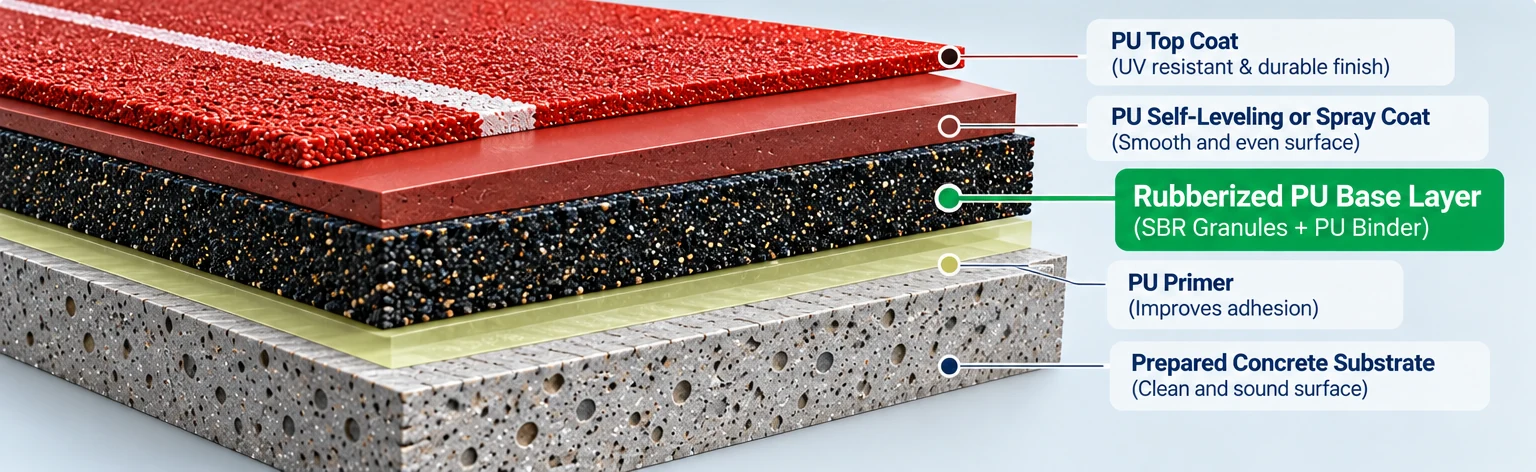
Resilient SBR/PU base beneath sealed and dense polyurethane layers with a compatible EPDM wearing surface.
Flexible rubber-granule base supporting the spray-applied wearing construction.
Compatible rubberized base construction for systems requiring a resilient lower layer below colored rubber or PU surfaces.
Can form part of compatible resilient court systems where a rubberized construction is specified beneath the upper sports layer.
Useful in compatible recreational and training surfaces requiring a resilient rubber base.
Suitable where the approved system uses a bonded rubber layer to provide resilience beneath the finished sports surface.
The rubber granules provide the resilient structure; the polyurethane binder is what holds that structure together. Binder formulation therefore matters to the complete layer.
Sport Floor uses German raw materials within the applicable polyurethane binder and system formulations.
Sport Floor manufactures the surrounding PU products, allowing the rubberized base to be specified inside a complete material family.
Buyers can source binder, SBR/EPDM, base-layer materials and the following PU system components through one commercial route.
| Selection point | Rubberized PU Base Layer | PU Elastic Cushion Layer |
|---|---|---|
| Material structure | Rubber granules bound with compatible polyurethane. | Elastic polyurethane cushion material without the same rubber-granule base structure. |
| Typical use | Running tracks, wet-pour and resilient rubberized systems. | Seamless cushioned PU sports-flooring systems. |
| Thickness build-up | Efficient route for building resilient thickness using rubber granules. | System-specific elastic polyurethane layer. |
| Upper layers | Can receive pore sealer, dense PU, spray coat or compatible surface layers. | Typically receives compatible self-leveling and top-coat layers. |
| Product page | Current product | PU Elastic Cushion Layer |
SBR is commonly selected for buried resilient base layers because it provides an efficient way to build elasticity and thickness.
EPDM is commonly selected for colored visible surfaces where appearance and outdoor exposure matter.
Granule type, size and layer position should follow the approved sports-flooring build-up rather than a generic rule.
Identify the exact running-track, court or wet-pour system before calculating materials.
Ensure the substrate is sound, clean and primed with the correct Sport Floor primer route.
Confirm SBR or EPDM, particle size and total resilient-layer thickness.
Use the current Sport Floor binder ratio and mixing procedure for the actual product supplied.
Install the mixture evenly to the specified layer thickness using the approved project method.
Apply the compatible pore sealer, self-leveling, spray or surface layers after the base is ready.
Do not copy thickness, binder ratio, density, cure time or consumption from another brand. These values depend on the Sport Floor product, granule type and selected system.
| Item | Sport Floor Rubberized PU Base Layer | Buyer relevance |
|---|---|---|
| Product Category | Rubber-granule resilient base layer bound with polyurethane. | Defines its role beneath upper sports-flooring layers. |
| Typical Rubber | Compatible SBR or other specified rubber granules according to the system. | Granule type affects cost, resilience and system design. |
| Binder | Compatible Sport Floor polyurethane binder according to the selected system. | Controls the cohesion of the resilient layer. |
| Raw Materials | German raw materials used within applicable Sport Floor PU formulations. | Key product-quality differentiator. |
| Granule Size | Confirm against the selected Sport Floor system. | Influences packing, texture and binder demand. |
| Binder Ratio | Use the current Sport Floor TDS and system specification. | Product- and granule-specific; do not copy competitor ratios. |
| Layer Thickness | Defined by the selected sports-flooring system and project specification. | Directly affects material quantity and floor response. |
| Consumption | Calculate from area, thickness, granule specification and current product data. | Required for accurate BOQ planning. |
| Working / Cure Time | Follow current Sport Floor technical data and site conditions. | Temperature and humidity influence practical installation timing. |
| Following Layer | May include pore sealer, self-leveling PU, spray coat or compatible EPDM/PU surface. | Connects the base to the complete system. |
| Packaging | Confirmed in the current commercial offer. | Important for pallet and export planning. |
| Storage / Shelf Life | Follow the current product labels and Sport Floor TDS/SDS. | Important for distributors and international shipments. |
Binder percentage should follow current Sport Floor data, granule size and system requirements.
Rubber type and size influence packing, resilience, binder demand and compatibility with the upper system.
Uneven base thickness can change floor response and create problems for the layers above.
A resilient base should not be used to cover an unresolved moisture or adhesion problem beneath the system.
Some systems require pore sealing or other intermediate treatment before dense PU layers are installed.
The real system cost includes granules, binder, primer, upper layers, installation method, documentation and material compatibility.
Sport Floor can supply the rubberized base layer together with the compatible primer, binder, SBR/EPDM, pore sealer and upper polyurethane materials required by the selected project.
Material packages for compatible Sandwich, Spray Coat and related resilient track systems.
Rubberized base materials for compatible resilient courts and multi-purpose systems.
Manufacturer-direct supply of polyurethane and rubber materials for international markets.
BOQ-based supply of rubber granules, binder and connected system materials.
Running track, wet pour, sports court, jogging track or another compatible resilient system.
Provide the total project square metres.
State the specified resilient-base thickness where already defined.
Specify SBR, EPDM or the required project granule.
Provide the requested size range where available.
Sandwich, Spray Coat, Wet Pour, Rubberized PU or another approved build-up.
For export, provide country, city and preferred port or delivery point.
List TDS, SDS or project-submittal requirements.
It is a resilient layer made from compatible rubber granules bound with polyurethane and installed beneath the upper layers of a sports-flooring or running-track system.
Yes. SBR is commonly used in compatible resilient base layers because it can efficiently build thickness and elasticity beneath the final sports surface.
EPDM can be used in compatible rubberized systems where the project specification requires it, although visible colored EPDM is more commonly associated with upper surface layers.
The rubberized base uses rubber granules plus PU binder. The elastic cushion layer is a different polyurethane cushioning product. Both add resilience but use different material structures.
Yes. A resilient SBR/PU base is a common structural element in compatible Sandwich running-track systems.
Yes. Compatible Spray Coat systems commonly use a resilient rubber-granule base beneath the spray-applied wearing layer.
Yes. Sport Floor manufactures its own polyurethane sports-flooring materials and can supply the base-layer components as part of a wider material package.
Yes. German raw materials are used within the applicable Sport Floor polyurethane formulations.
Use the current Sport Floor TDS and selected system specification. The correct ratio depends on the product, rubber type, granule size and application.
The required thickness depends on the selected Sport Floor system and project specification. Do not copy a generic thickness from another manufacturer.
Yes. Sport Floor can review supply of compatible SBR granules, PU binder and the additional system materials required by the project.
Yes. International contractors, distributors, importers and project buyers can request direct material supply at info@sportfloor-m.com.
Yes. Request the current technical documents at info@sportfloor-m.com and use the latest issued Sport Floor data for approval and installation.
Send the application, area, rubber type, granule size, base-layer thickness, selected system and destination. Sport Floor can quote Rubberized PU Base Layer materials individually or prepare a wider compatible running-track or sports-flooring material package.