
Wet Pour Rubber Granules Flooring: EPDM, SBR and Poured Rubber Systems
A complete technical and procurement guide to wet pour rubber flooring, EPDM wet pour granules, SBR base layers, PU binder, installation, quality control, supplier selection and export quotations.
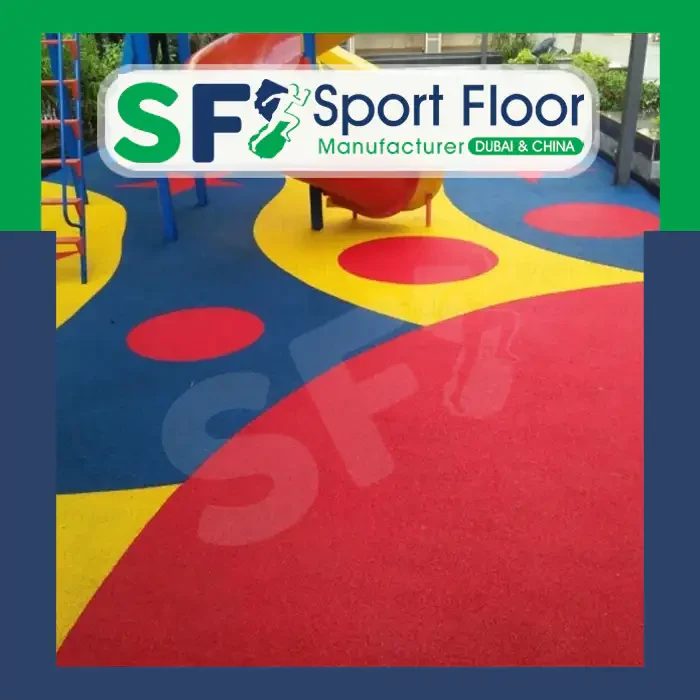
Wet pour rubber flooring is a seamless, site-installed surface made by mixing rubber granules with polyurethane binder and placing the mixture in one or more layers. A common playground system uses SBR rubber granules in the shock-absorbing base and colored EPDM granules in the exposed top layer.
View System LayersWhat Is Wet Pour Rubber Flooring?
Wet pour rubber flooring is a resilient surface mixed and installed on site. Rubber crumb or granules are combined with a compatible polyurethane binder, spread over a prepared substrate, finished to the designed level and allowed to cure into a continuous surface.
The system is commonly used in playgrounds, schools, nurseries, parks, recreational spaces, pathways and selected sports areas. Unlike modular rubber tiles, wet pour surfacing can follow curves, equipment footprints, custom graphics and irregular boundaries without creating a grid of visible tile joints.
A typical two-layer system separates performance roles. The lower SBR layer provides resilience and system depth, while the upper EPDM layer provides the visible color, texture and final design. The exact layer build-up must follow the project specification and the intended performance requirement.
This page targets related search phrases such as wet pour rubber granules flooring, poured rubber flooring, wetpour rubber flooring, EPDM wet pour rubber granules and EPDM wet pour flooring.
Wet Pour, Wetpour, Poured Rubber and Pour-in-Place Flooring
Different markets use different names for closely related site-applied rubber surfacing systems. Understanding the terminology helps buyers compare specifications instead of assuming that every phrase describes a different product.
| Term | What buyers usually mean | What to verify |
|---|---|---|
| Wet pour rubber flooring | A rubber-and-binder mixture installed wet on site and cured into a seamless surface. | Layer design, materials, thickness and application. |
| Wetpour rubber flooring | Alternative spelling of wet pour, commonly used in commercial searches. | Whether the quoted system is one layer or two layers. |
| Poured rubber flooring | Broader phrase for site-poured rubber surfacing. | Granule type, binder and intended performance. |
| Pour-in-place rubber | Common term in some markets for a seamless site-installed rubber system. | Local specification, safety testing and installer scope. |
| Rubber crumb flooring | May refer to recycled SBR crumb, EPDM granules or a complete bound-rubber system. | Do not assume the material type from the phrase alone. |
| EPDM wet pour flooring | Usually emphasizes the colored EPDM top layer. | Whether an SBR base and PU binder are included. |
Wet Pour Rubber Flooring Layers
A reliable specification identifies every layer from the substrate upward. The system should not be described only as “EPDM flooring,” because the visible EPDM layer is usually one part of a larger construction.
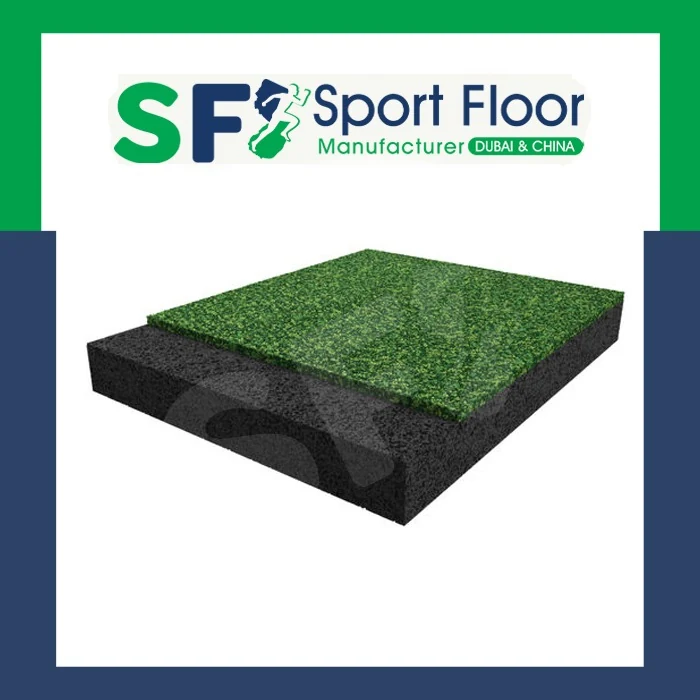
Colored EPDM top layer
The exposed layer delivers color, surface texture and design identity.
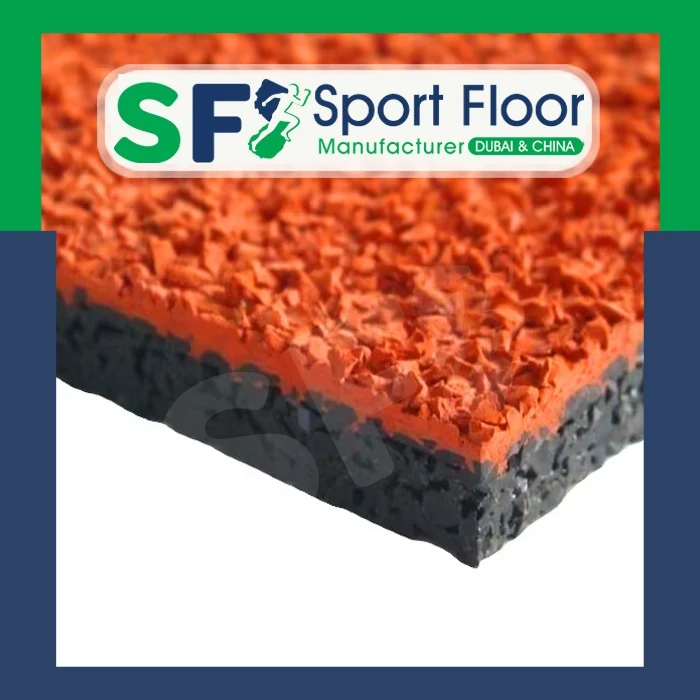
SBR resilient base
The lower rubber layer builds depth and contributes to impact attenuation.
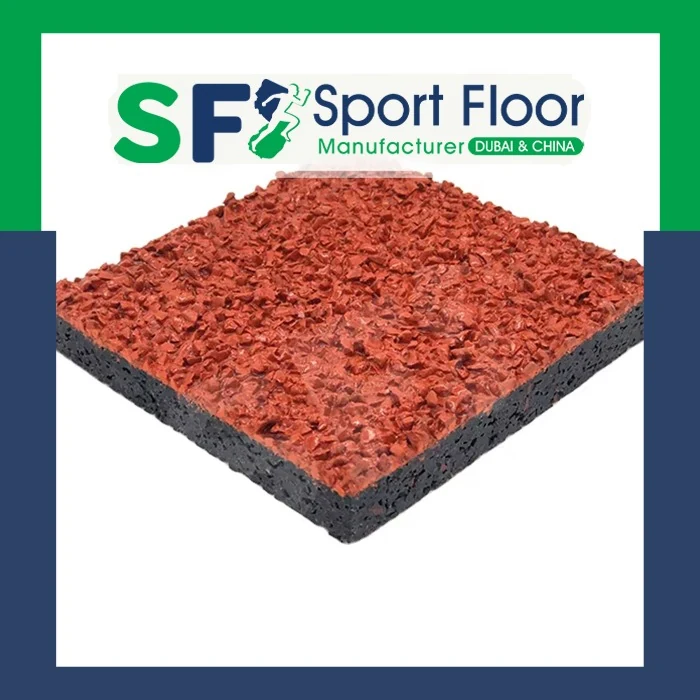
Complete bonded system
Primer, binder, substrate and curing conditions connect the layers into one construction.
Prepared substrate
A stable, clean and appropriately drained base designed for the site and system.
Primer or bonding preparation
Used where required by the approved binder and substrate specification.
SBR rubber base layer
Mixed with binder and installed to the designed depth.
Colored EPDM top layer
Installed after the base is ready, with controlled color, grading and finish.
Materials Required for Poured Rubber Flooring
A quotation should list each material separately. This makes it easier to verify quantities, compare suppliers and identify which items are included in the material package.
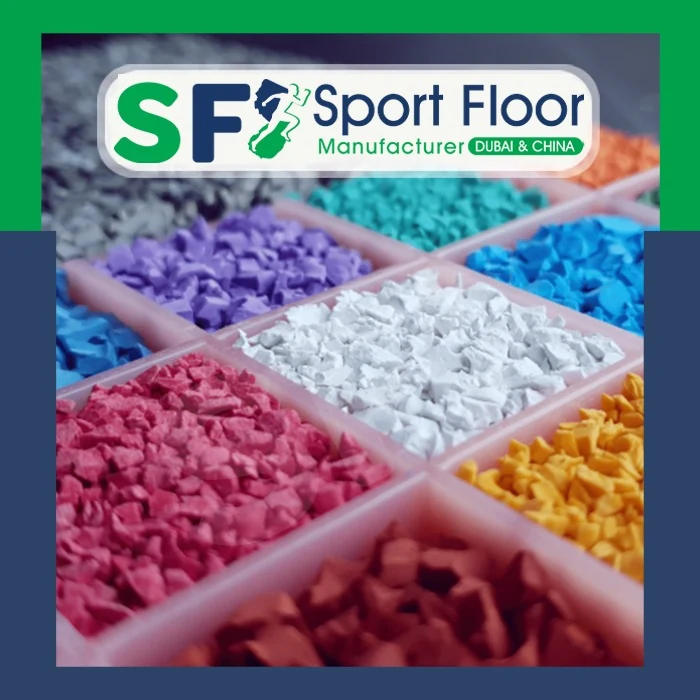
EPDM granules
Colored particles used in the visible top layer. Review EPDM rubber granules.
SBR rubber crumb
Recycled rubber granules commonly used in the lower resilient layer. See SBR rubber granules.
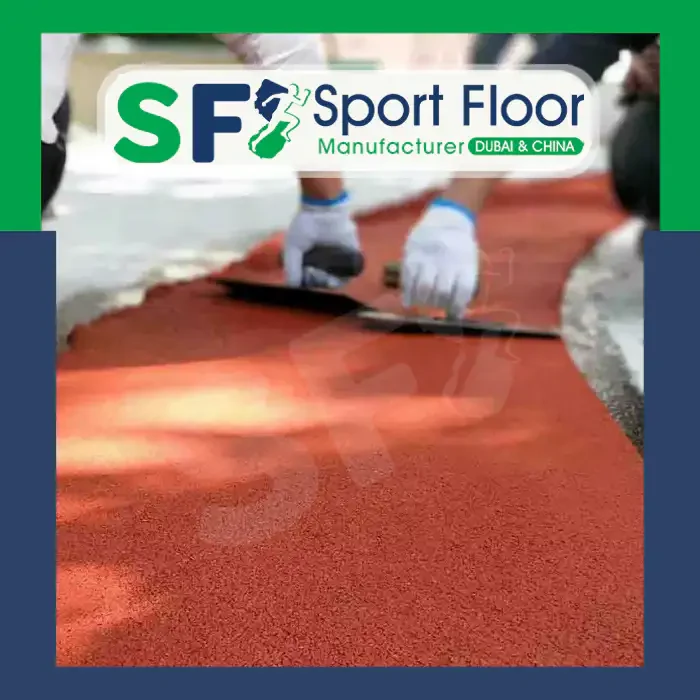
PU binder
A compatible polyurethane binder coats and bonds the granules. Review PU binder.
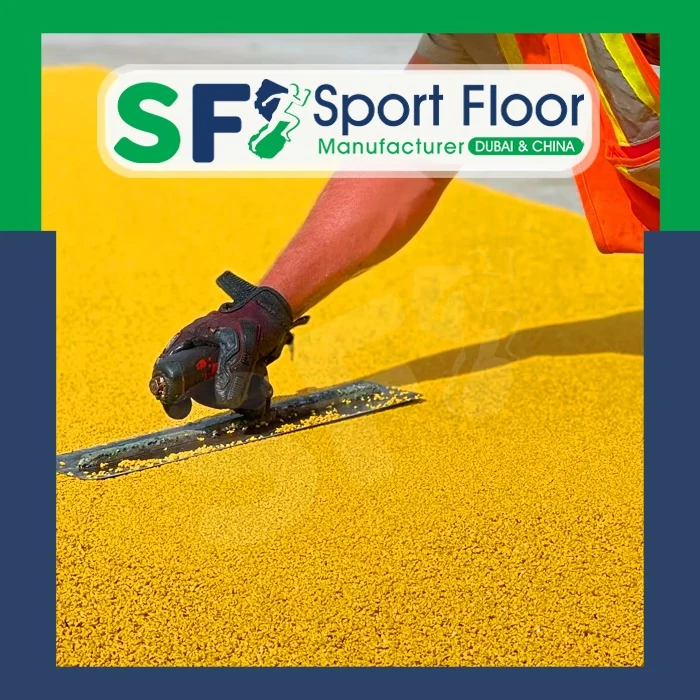
Primer, tools and consumables
System-dependent primer, mixers, screeds, trowels and controlled cleaning materials.
EPDM Wet Pour Granules vs SBR Rubber Crumb
EPDM and SBR are not normally direct substitutes within a standard two-layer system. They are selected for different roles, and their quantities should be calculated separately.
| Comparison | EPDM granules | SBR rubber crumb |
|---|---|---|
| Typical system role | Visible colored top layer. | Lower resilient or impact-absorbing base. |
| Main value | Color, visual finish, surface texture and design flexibility. | System build-up, resilience and cost-efficient depth. |
| Common appearance | Multiple colors and custom blends. | Usually black recycled rubber. |
| Procurement question | Confirm color, size, tons, batch and top-layer thickness. | Confirm grading, tons and base-layer thickness. |
| Related page | EPDM granules | Rubber crumb / SBR granules |
Choosing EPDM Size and Color for Wet Pour Flooring
The top-layer appearance depends on granule grading, color, layer depth and workmanship. Color and size should be approved as separate specification items.
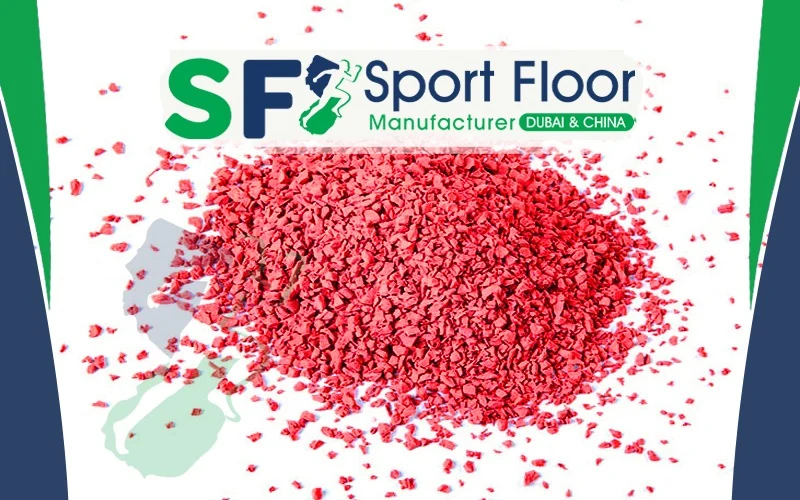
Granule size
Common discussions compare 1–3 mm and 2–4 mm, but the approved system should decide. Use the EPDM size guide.

Color selection
Define standard shades, custom colors, color split and physical sample approval. Use the EPDM color chart.
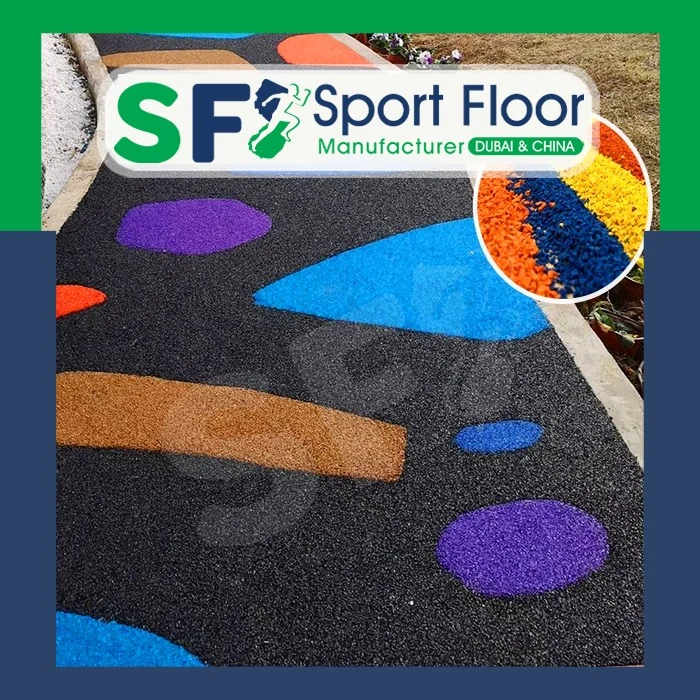
Graphics and blends
Logos, routes and shapes require controlled borders, batch records and repeatable on-site mixing.
Wet Pour Thickness, Critical Fall Height and Project Design
Wet pour thickness should be engineered around the intended use. For playgrounds, the total system depth may be linked to equipment fall height and required impact performance. For decorative paths or low-impact zones, the design basis may be different.
Do not use one thickness everywhere
Equipment zones, circulation areas and decorative spaces may have different performance requirements.
Separate base and top layers
The quotation should identify the SBR base thickness and EPDM top-layer thickness individually.
Use approved test data
Do not claim a critical fall height without the relevant system design, installation and test basis.
Substrate, Levels and Drainage
A high-quality rubber layer cannot correct a weak or poorly drained substrate. Base design and site preparation should be resolved before the wet pour materials arrive.
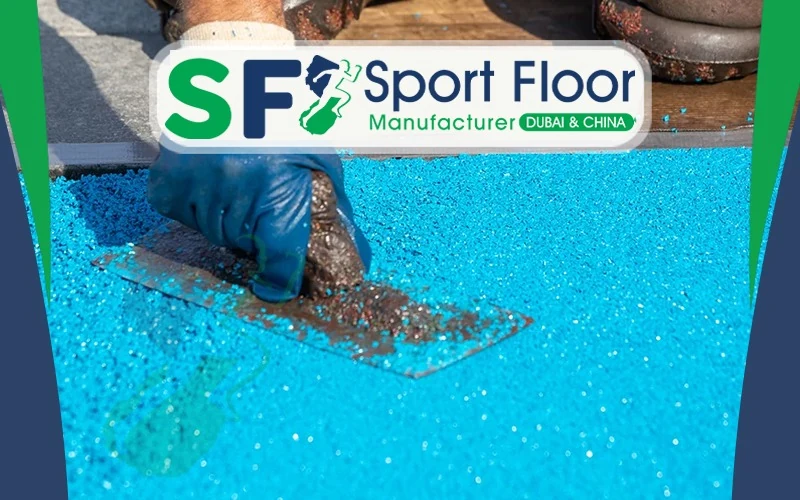
Structural stability
The base should be sound, compacted or constructed to suit the specified system.
Surface cleanliness
Remove loose material, contamination and conditions that can prevent bonding.
Levels and falls
Coordinate finished levels, edges, drains, curbs and equipment foundations.
Water management
Drainage design should prevent trapped water and support the specified surface construction.
How Wet Pour Rubber Flooring Is Installed
The exact procedure should follow the material technical data and installer method statement. The sequence below explains the general workflow without replacing product-specific instructions.
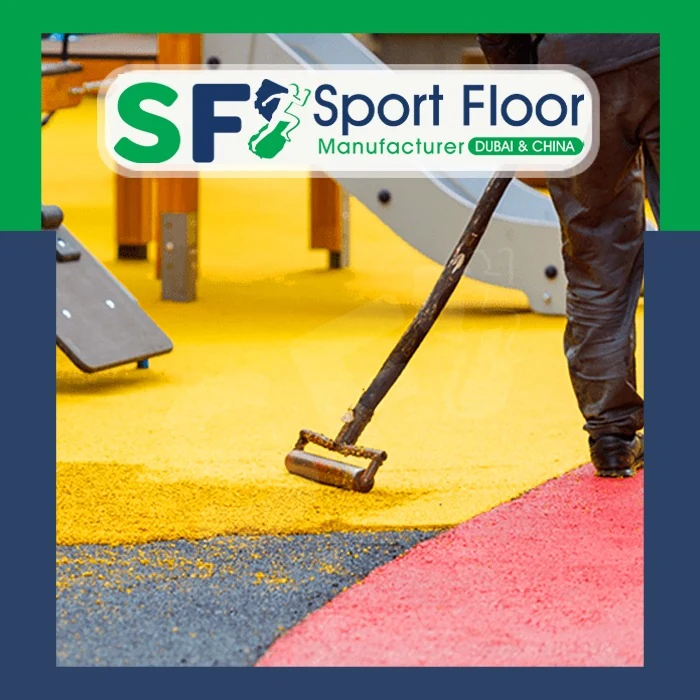
1. Prepare and set out
Verify levels, edges, graphics, equipment bases, weather and substrate readiness.

2. Measure and mix
Use controlled weights, clean dry granules and the approved binder ratio.
3. Spread and level
Place the mixture within its workable time and control depth, edges and transitions.
4. Finish and cure
Trowel the surface consistently, protect it from traffic and allow the specified cure period.
Wet Pour Quality-Control Checklist
Quality control should start before installation and continue through material receipt, mixing, layer placement, curing and final inspection.
| Inspection stage | What to check | Why it matters |
|---|---|---|
| Material delivery | Product names, colors, sizes, batch labels, bag condition and documents. | Prevents use of the wrong granules or mixed batches. |
| Weather and moisture | Ambient conditions, dry granules and dry substrate as required by the approved method. | Moisture and unsuitable weather can affect binder reaction and finish. |
| Substrate approval | Stability, cleanliness, levels, edges, drainage and primer condition. | The rubber layer depends on the base below it. |
| Mix control | Measured granules, binder, mixing time and clean equipment. | Supports consistency between batches. |
| Layer depth | Wet or installed depth checks according to the method statement. | Protects designed thickness and quantity control. |
| Surface finish | Texture, trowel marks, joints, edge quality, graphics and contamination. | Determines visible quality and user experience. |
| Curing protection | Barriers, access control, weather protection and release time. | Prevents premature traffic and surface damage. |
| Final handover | Appearance, records, repairs, cleaning and applicable test documentation. | Creates a clear basis for acceptance and maintenance. |
Common Wet Pour Rubber Flooring Problems
Most failures are system failures rather than granule-only failures. The cause may involve moisture, substrate movement, incorrect mixing, contamination, weak edges, unsuitable weather or premature traffic.
Loose granules
Investigate binder dosage, mixing coverage, contamination, cure conditions and surface wear before deciding on a repair.
Color variation
Review batch labels, blend percentages, installation sequence, lighting and whether different production batches were mixed.
Cracking or separation
Check substrate movement, layer bonding, joints, thickness transitions and edge restraint.
Bubbles or foaming
Review moisture, wet granules, substrate condition and binder reaction during installation.
Ponding water
Check base levels, drainage strategy, local depressions and blocked outlets.
Uneven texture
Review batch consistency, mixing, workable time, screeding, troweling and installer access.
Where Poured Rubber Flooring Is Used
The system can be adapted to different visual and performance briefs, but every application should have an appropriate substrate, thickness and maintenance plan.
Playgrounds
Seamless color zones around equipment and activity areas.
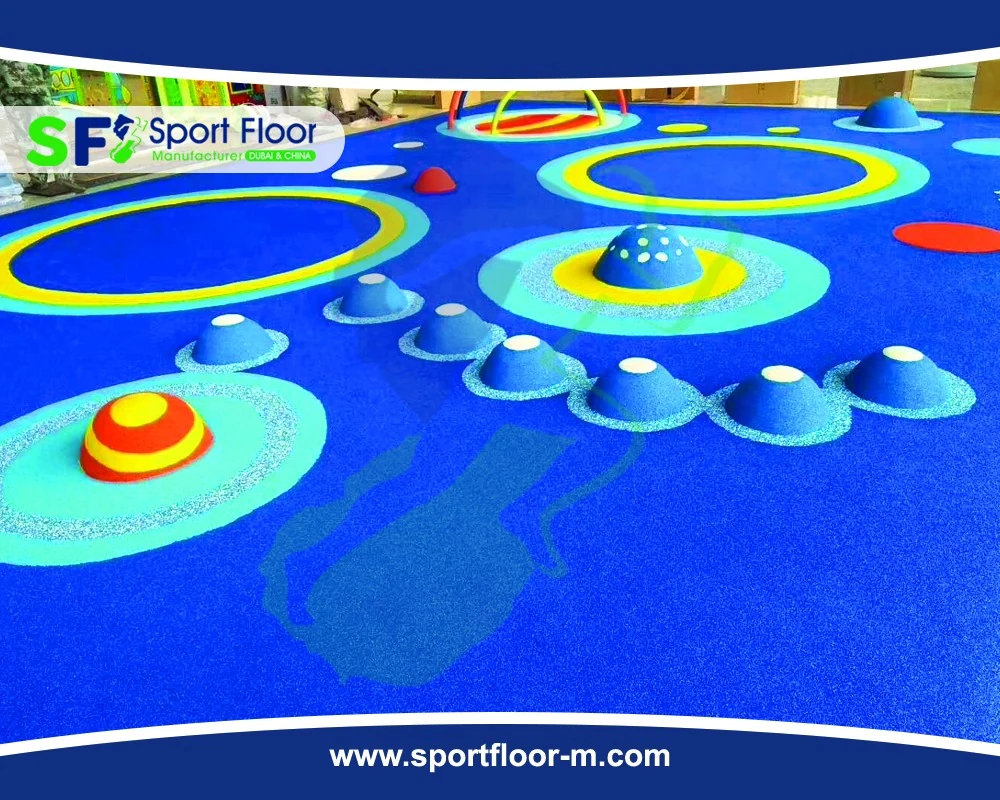
Themed play spaces
Custom graphics, routes, shapes and educational concepts.
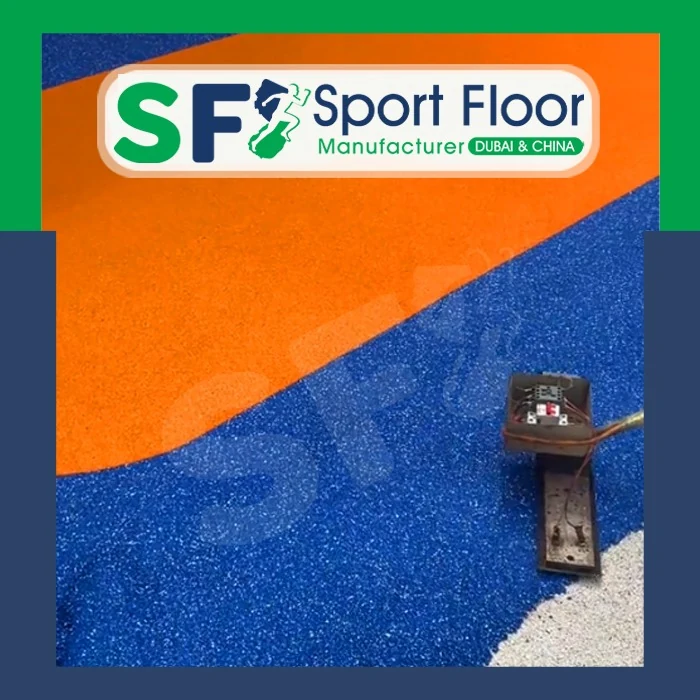
Recreational zones
Activity areas, clubs, public parks and circulation spaces.
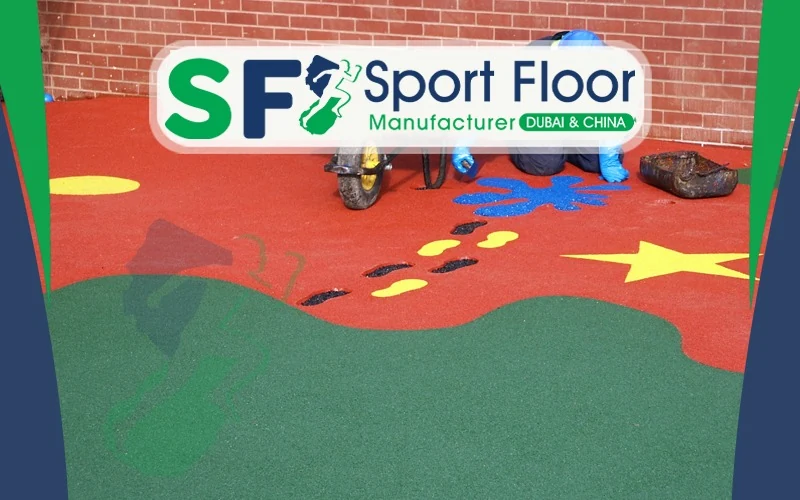
Custom designs
Shapes, logos, borders and visual wayfinding.
Weather, Curing and Long-Term Maintenance
Wet pour installation is sensitive to site conditions. The installer should check product requirements for temperature, humidity, rain risk, substrate moisture and curing protection before work starts.
Weather planning
Do not install when expected conditions conflict with the approved binder and method statement.
Routine cleaning
Remove debris and contamination using methods appropriate for the surface and drainage design.
Periodic inspection
Review edges, high-use zones, equipment interfaces, local damage and drainage points.
How to Request a Poured Rubber Flooring Quotation
The query “poured rubber flooring suppliers” has commercial intent. A useful quotation request should define whether you need raw materials, a complete material package or installation.
- Project location and application
- Total area in square metres
- Substrate type and current condition
- Required performance or playground equipment data
- SBR base thickness and EPDM top-layer thickness, if specified
- EPDM granule size and color split
- Supply only, material package or installation scope
- Packaging, destination and Incoterms
- Required documents, tests and delivery date
Use the correct commercial page
For colored top-layer sourcing, visit EPDM granules supplier.
For bulk and export quantities, visit EPDM granules wholesale.
For price factors, visit EPDM granules price per ton.
For the wider product family, visit rubber flooring systems.
Send Wet Pour RFQWet Pour Granules, Installation and Finished Surface Gallery
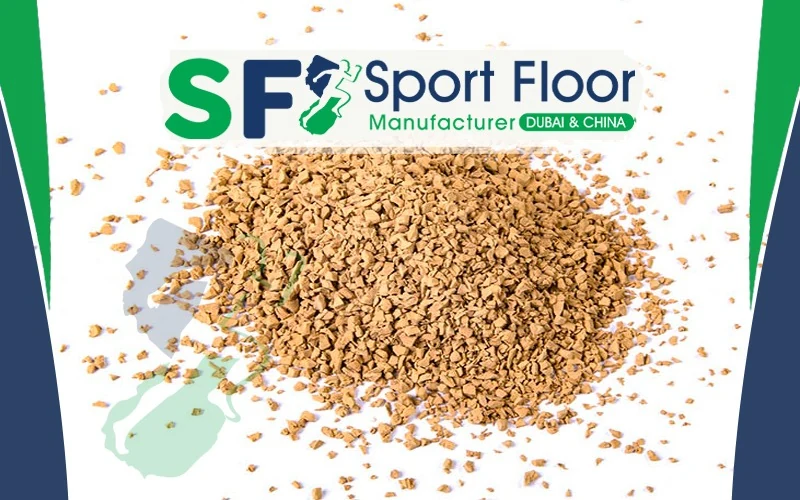
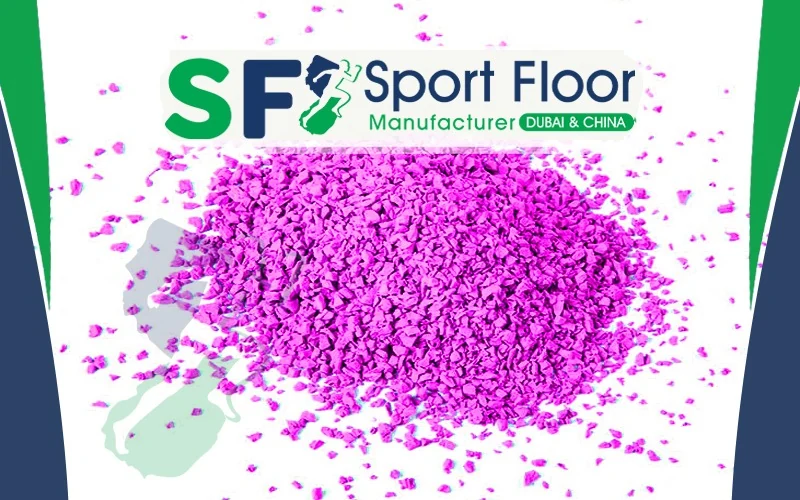
Every supplied image is included. The gallery uses a consistent 1:1 display ratio to show granules, system sections, installation and completed surfaces.


Wet Pour Rubber Flooring FAQ
Direct answers for buyers searching for wet pour rubber granules, EPDM wet pour flooring, poured rubber suppliers and rubber crumb systems.
What is wet pour rubber flooring?
What is the difference between wet pour and poured rubber flooring?
What are EPDM wet pour rubber granules?
What is rubber crumb in wet pour flooring?
Does wet pour flooring always use two layers?
What EPDM size is used for wet pour flooring?
How is wet pour flooring mixed?
Can wet pour flooring be installed over concrete?
How thick should wet pour flooring be?
Does the binder percentage stay the same for every project?
Why do loose granules appear?
Can wet pour flooring include custom colors and graphics?
How do I choose a poured rubber flooring supplier?
How can I request a wet pour quotation?
Plan Your Wet Pour Rubber Flooring System
Send the area, application, substrate, required performance, layer thicknesses, EPDM color and project location. Sport Floor can guide you through EPDM, SBR, PU binder, supplier and export requirements.