












Acrylic Tennis Court Systems for Clubs, Schools and Sports Facilities
Standard and cushioned acrylic tennis court systems for new construction and resurfacing projects. Select the complete build-up according to the concrete or asphalt base, required court pace, playing level, indoor or outdoor exposure, colors, line plan, drainage, maintenance capacity and applicable technical documents.
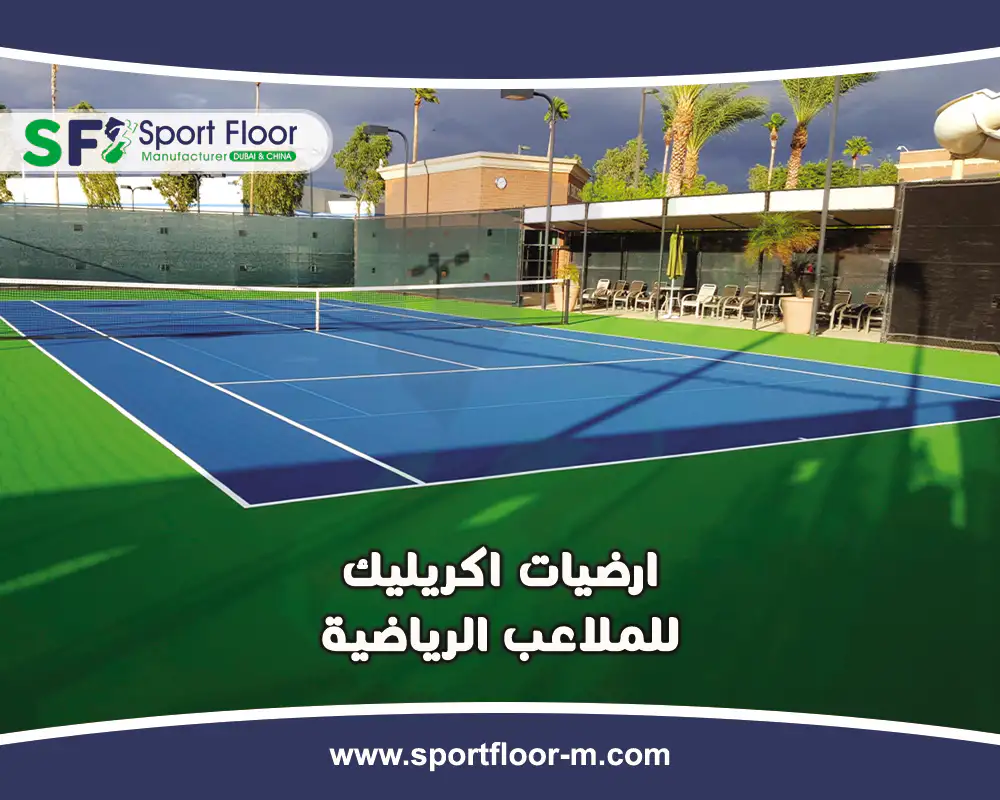
What Is an Acrylic Tennis Court?
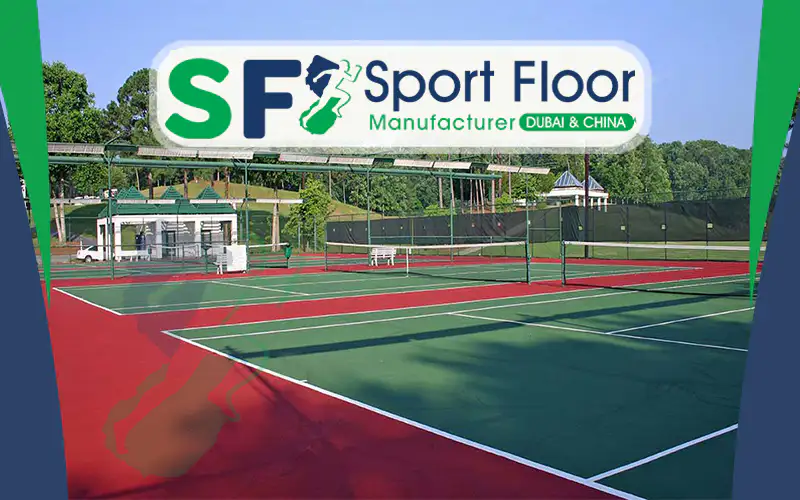
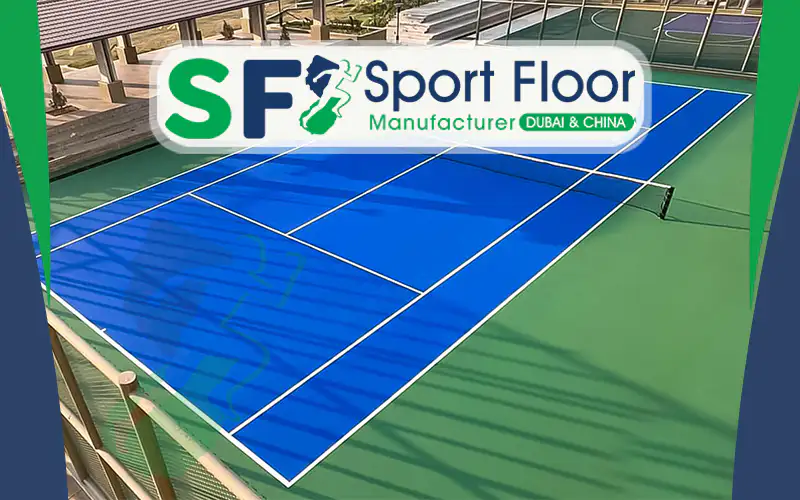
An acrylic tennis court is a hard-court surface system installed over a properly designed and prepared concrete or asphalt base. The upper acrylic construction creates the playing color, surface texture, ball interaction and line markings.
Acrylic tennis surfacing is not one coat of ordinary paint. A complete installed system can include substrate repairs, primer, resurfacing layers, optional cushion layers, textured acrylic coats, finish colors and tennis line paint.
Court quality depends on both the surface materials and the supporting construction. Poor drainage, active cracking, settlement, unsuitable slopes or weak previous coatings can affect the completed court even when the upper acrylic materials are applied correctly.
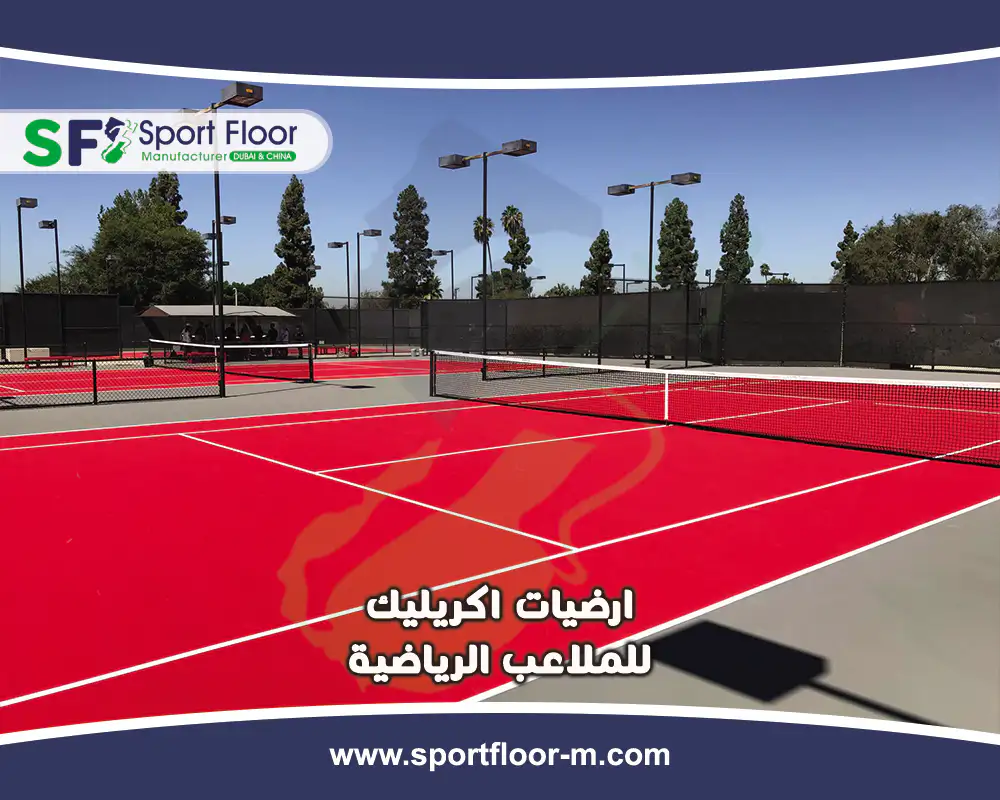
Consistent Construction
Surface uniformity depends on base preparation, layer application, aggregate control and curing.
Project-Selected Pace
Court speed should be considered during system selection and verified where formal classification is required.
Standard or Cushioned
The court can use a firm hard-court build-up or a separately specified cushioned construction.
New or Existing Courts
Acrylic systems may be used for new construction or resurfacing after a full substrate assessment.
Where Acrylic Tennis Courts Are Used
The system should reflect the playing level, expected hours of use, climate, maintenance resources and applicable facility requirements.
Tennis Clubs
New courts and resurfacing programmes for member play, coaching, leagues and club competitions.
Tennis Academies
Multi-court facilities requiring consistent colors, surfaces, lines and maintenance procedures.
Schools and Universities
Durable hard-court systems for education, training and supervised recreational programmes.
Residential Developments
Community tennis courts coordinated with fencing, lighting, access and surrounding landscape.
Hotels and Resorts
Recreational courts planned around guest use, visual design and facility maintenance.
Municipal Facilities
Public courts requiring clear technical scope, drainage, accessibility and maintainable construction.
Private Villas
Single-court projects where available space, orientation, neighbouring properties and lighting need coordination.
Existing Court Renovation
Resurfacing projects involving faded coatings, local wear, weak lines or compatible surface repairs.
Tennis Court Dimensions, Net and Surrounding Space
The playing lines follow the current Rules of Tennis. The overall construction area and run-off space must be selected according to the facility type, playing level and applicable project guidance.
Distance between the two baselines.
Width between the singles sidelines.
Width between the doubles sidelines.
Centre height when the net is correctly installed.
Run-Off Areas
Space beyond baselines and sidelines should suit the playing level, facility guide and surrounding construction.
Court Orientation
Orientation should consider sunlight, prevailing conditions, neighbouring uses and site constraints.
Fencing
Fence height, gates and openings should be coordinated with ball containment, access and safe movement.
Lighting
Pole positions and illumination should avoid unnecessary glare, shadows and interference with play.
Net Posts and Sleeves
Sleeves, footings and post positions should be installed before final surfacing and line marking.
Drainage Edges
Court slopes, perimeter details and outlets should move water away without creating unsafe obstructions.
Standard, Cushioned and Resurfacing Acrylic Tennis Systems
Standard Hard Acrylic
A firm acrylic tennis surface installed without a separate resilient cushioning build-up.
- Prepared concrete or asphalt base.
- Compatible primer where required.
- Resurfacing and texture layers.
- Playing and surround color coats.
- Accurate tennis line markings.
- Project-dependent surface testing.
Suitable for many school, club, residential and community projects requiring a traditional hard-court response.
Cushioned Acrylic Tennis Court
A coordinated acrylic system incorporating specified resilient layers beneath the upper playing surface.
- Prepared and stable supporting base.
- Primer and resurfacing layers.
- Specified cushion construction.
- Textured upper acrylic coats.
- Color finish and tennis lines.
- System-specific application control.
Selected where a softer underfoot response is required. Exact cushioning performance varies by system.
Acrylic Tennis Resurfacing
A renovation system applied after assessing the existing base, coatings, cracks, levels, drainage and adhesion.
- Existing-court condition survey.
- Removal of loose or incompatible material.
- Approved crack and defect treatment.
- Local or general resurfacing.
- New texture and color coats.
- Replacement tennis lines.
Resurfacing improves a suitable existing court but does not stop active structural movement.
Main Layers of an Acrylic Tennis Court
The final build-up depends on the substrate and the selected standard, cushioned or resurfacing system.
Structural Base
Concrete or asphalt providing support, levels, stability and designed court slopes.
Surface Preparation
Cleaning, mechanical preparation and removal of contamination or weak material.
Repairs
Compatible treatment of approved cracks, depressions and local surface defects.
Primer
Substrate-dependent primer used where required by the selected material system.
Acrylic Resurfacer
Preparation layer helping create a uniform receiving surface for later applications.
Cushion Layers
Optional resilient layers included only in an approved cushioned tennis system.
Texture and Color Coats
Upper acrylic layers creating the required surface profile and playing colors.
Tennis Line Paint
Compatible material applied to the approved tennis dimensions and line widths.
Acrylic Tennis Court Base Requirements
The acrylic surface follows the profile and movement of the base. The supporting slab or asphalt construction must therefore be assessed before the coating system is approved.
- Confirm structural stability and support.
- Check court levels and local flatness.
- Identify depressions and water ponding.
- Review cracks, joints and signs of movement.
- Inspect concrete laitance and curing condition.
- Confirm asphalt stability and application readiness.
- Evaluate moisture and previous treatments.
- Check adhesion of existing coatings.
- Coordinate slopes with perimeter drainage.
- Protect the base from contamination before surfacing.
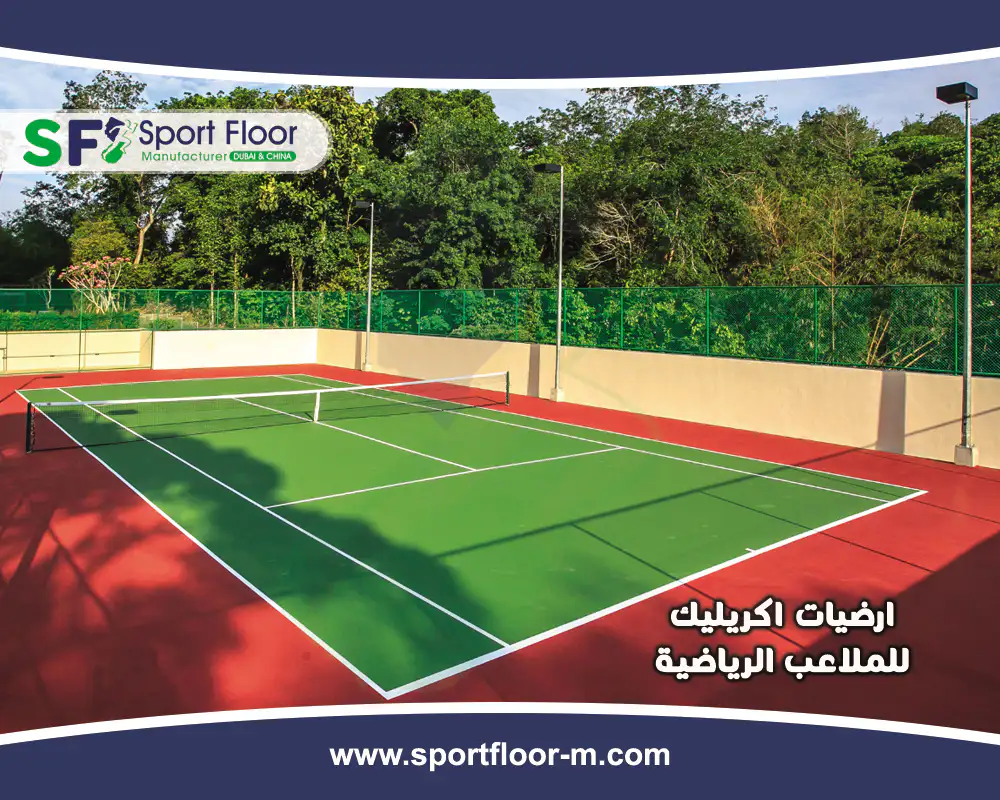
Concrete Base
Review curing, moisture, joints, laitance, contamination, cracks and compatibility with the proposed primer.
Asphalt Base
Confirm stability, age, compaction, levels, local movement and suitability for acrylic application.
Existing Coated Court
Test adhesion and identify loose, contaminated or incompatible areas before adding new materials.
Drainage Slopes
Outdoor water should move from the playing surface toward coordinated outlets without creating unsafe steps.
Perimeter Details
Edges, channels, fence footings and kerbs should not trap water against the court surface.
Weather Readiness
Temperature, humidity, surface moisture, wind and rain forecasts affect application and curing.
Tennis Court Speed Is a Measured Surface Characteristic
Ball response depends on the completed surface texture, materials, aggregate arrangement, application and maintenance—not merely on the word acrylic.
Surface Product Classification
A product may be tested and placed within an ITF Court Pace Rating category.
Completed-Court Recognition
A completed installation may be assessed through the separate ITF Recognition programme.
Project Testing
Required tests, laboratories, sampling and acceptance criteria should be defined before construction.
Acrylic Tennis Court Installation Process
Follow the technical data, approved method statement, application limits and curing requirements for the exact system.
Survey the Site
Confirm dimensions, orientation, levels, drainage, access, fencing, lighting and equipment.
Inspect the Base
Review structural condition, cracks, moisture, contamination, flatness and existing coatings.
Prepare the Surface
Remove loose material, dust, oils, algae and other contaminants using suitable methods.
Complete Repairs
Treat approved local defects and depressions using compatible materials.
Apply Primer
Use the specified primer where required by the base and selected material system.
Apply Resurfacing Layers
Build the approved preparation layers at the specified application rates.
Install Cushion Layers
Apply the specified resilient layers where included in the cushioned system.
Apply Texture Coats
Establish the intended surface texture using the approved material and aggregate arrangement.
Apply Color Coats
Complete the playing and surrounding zones using the approved color schedule.
Set Out Tennis Lines
Measure and mark all boundaries before applying compatible line paint.
Inspect the Court
Review finish, lines, local defects, drainage and completion of the agreed scope.
Cure and Handover
Prevent premature use and complete the required records before opening the court.
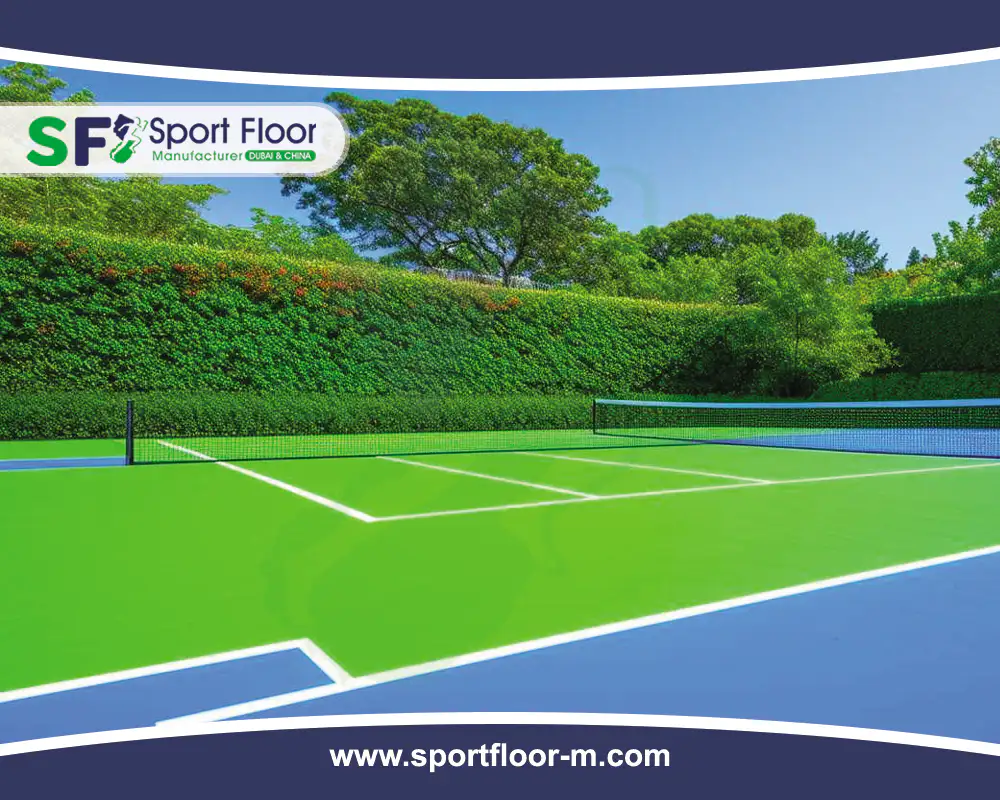
Resurfacing an Existing Acrylic Tennis Court
Resurfacing can restore color, texture and line visibility when the existing structure remains suitable. The old surface must be inspected before the new system is selected.
- Identify faded, polished and worn areas.
- Test adhesion of existing coatings.
- Inspect cracks and signs of movement.
- Check depressions and water ponding.
- Remove loose or contaminated material.
- Confirm compatibility with the new system.
- Treat approved local surface defects.
- Restore texture and color uniformly.
- Replace inaccurate or faded court lines.
- Record unresolved structural limitations.
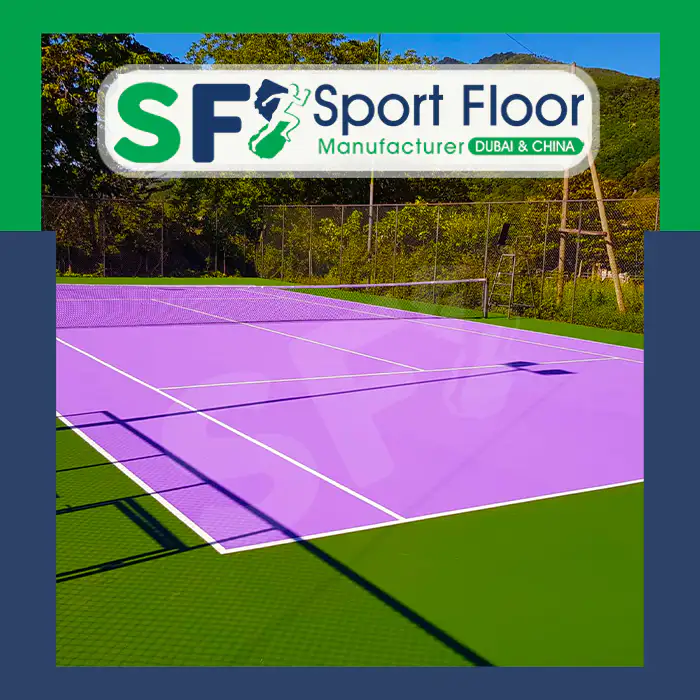
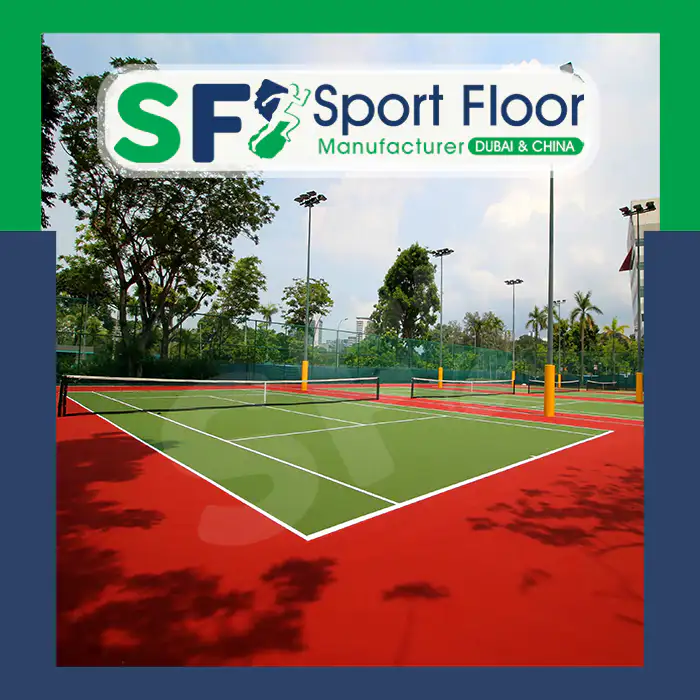
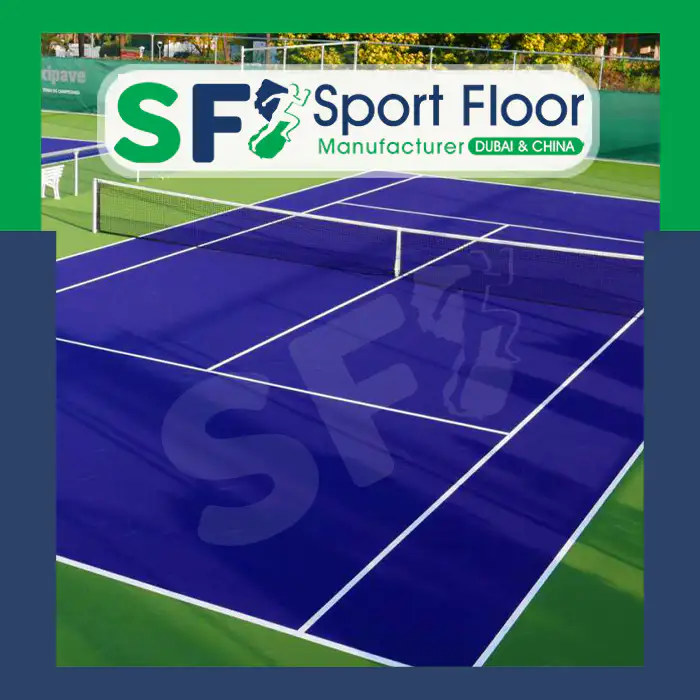
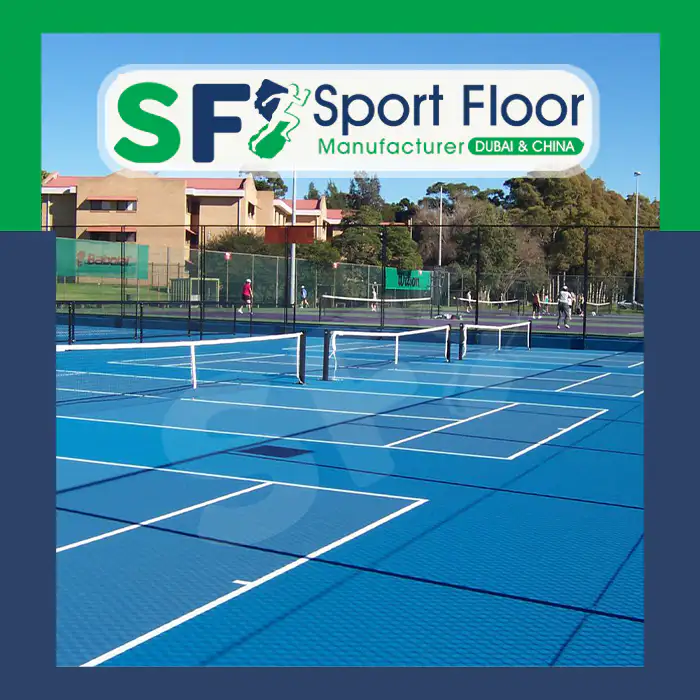
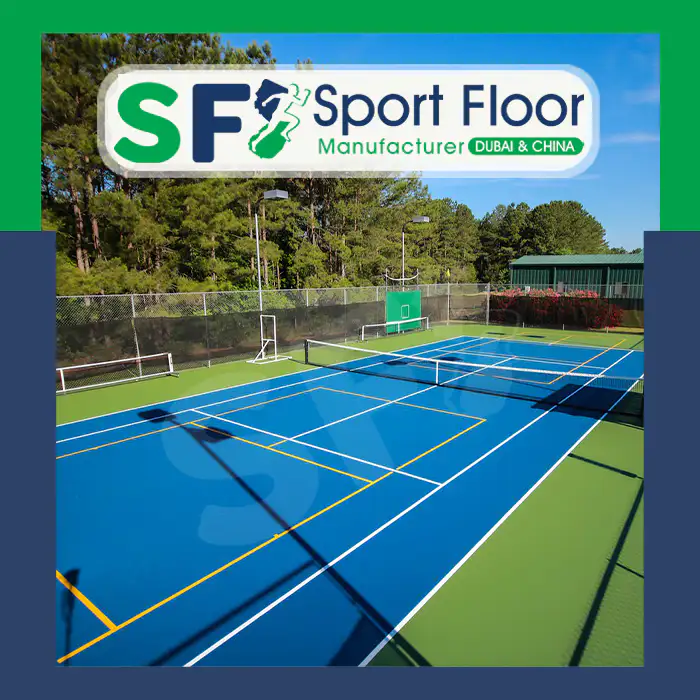
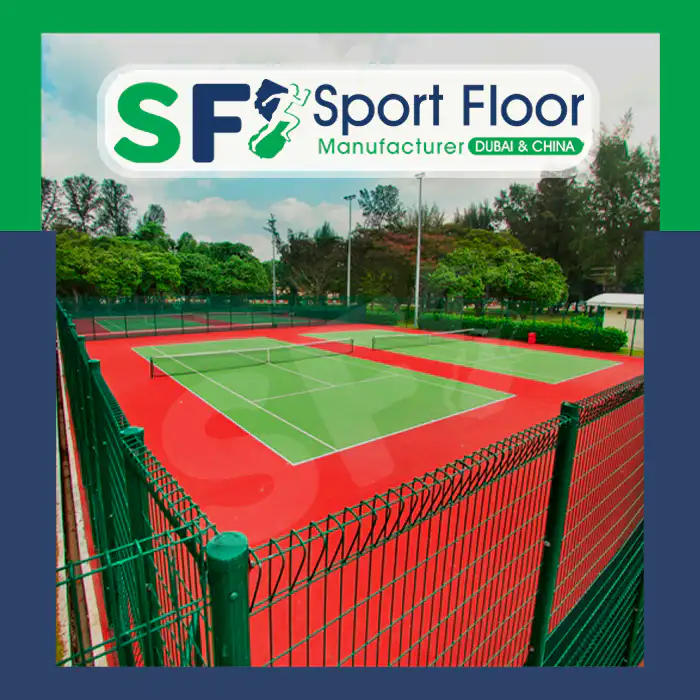
Acrylic Tennis Court Colors and Facility Layouts
All images in this gallery use the same original dimensions and square aspect ratio, so every card appears equal without cropping.
Acrylic Tennis Court Maintenance
Remove Debris
Clear leaves, sand, dust and loose materials before they stain or affect surface texture.
Use Compatible Cleaning
Follow the exact coating guidance and avoid aggressive tools or chemicals that may damage the finish.
Keep Drainage Clear
Inspect perimeter channels, outlets and court edges, particularly after storms or landscaping work.
Inspect Cracks
Record new or recurring cracks and assess their cause before completing cosmetic repairs.
Monitor Surface Wear
Review polished zones, color loss, local peeling, texture changes and areas of intensive foot traffic.
Check Court Lines
Maintain clear, accurate lines and repair local losses with compatible material.
Control Footwear and Equipment
Prevent unsuitable shoes, sharp objects, vehicles and uncontrolled equipment from damaging the court.
Inspect Net Equipment
Check net posts, sleeves, centre strap and anchors without damaging surrounding coatings.
Plan Resurfacing by Condition
Base the decision on adhesion, cracks, texture, pace, appearance and operational requirements—not a fixed number of years.
Acrylic Tennis Court Specifications to Confirm
| Specification | What to Confirm | Why It Matters |
|---|---|---|
| Project Type | New court, resurfacing, renovation or materials-only supply. | Determines the required survey, base and application scope. |
| Playing Level | Recreational, school, training, club or tournament-related use. | Influences dimensions, testing, pace and facility requirements. |
| Number of Courts | Single court or multi-court complex. | Affects quantities, sequencing, consistency and logistics. |
| Overall Area | Playing lines, run-offs, surrounds and associated paths. | Required for material and execution calculations. |
| Base Type | Concrete, asphalt or existing acrylic coating. | Determines preparation, primer and repair requirements. |
| Base Condition | Cracks, unevenness, moisture, peeling, ponding or contamination. | May materially change the renovation or construction scope. |
| System Type | Standard hard acrylic, cushioned acrylic or resurfacing system. | Determines layers, materials, consumption and expected response. |
| Layer Schedule | Identify each repair, primer, resurfacer, cushion, texture and color layer. | Prevents comparison of different or incomplete quotations. |
| Court Pace Requirement | State whether a target or formal classification is required. | Affects product selection and possible testing. |
| Colors | Playing area, surrounds, logos and other court zones. | Required for material quantities and application sequencing. |
| Lines | Tennis only or approved secondary activities. | Controls dimensions, line colors and layout clarity. |
| Equipment | Net posts, sleeves, centre strap, fencing, lighting and seating. | Interfaces should be coordinated before final surfacing. |
| Testing | Product classification, completed-court recognition or project tests. | Tests and acceptance criteria must be defined in advance. |
| Documents | TDS, SDS, method statement, color samples and applicable reports. | Documents must refer to the exact offered system. |
| Commercial Scope | Materials, installation, supervision, equipment and delivery basis. | Ensures that competing quotations include the same responsibilities. |
Information Required for an Acrylic Tennis Court Quote
Number of Courts
State whether the project includes one court or a larger tennis facility.
Dimensions and Drawings
Provide the total area, court layout, surrounding zones and available site dimensions.
New or Existing Court
Confirm new construction, resurfacing or conversion from another compatible surface.
Base Information
Identify concrete, asphalt or existing coating and send clear current photographs.
System Preference
State standard, cushioned or consultant-specified build-up.
Colors and Lines
Provide playing, surround and line colors, including any logos or secondary markings.
Testing and Documents
List required classifications, completed-court tests, data sheets and submittals.
Scope and Destination
State materials only, installation or turnkey scope, plus city, country or port and delivery term.
Tennis Rules, Court Pace and Facility Guidance
Continue Planning the Tennis Facility
Acrylic Tennis Court FAQ
What is an acrylic tennis court?
It is a hard-court surface system installed over a suitable concrete or asphalt base. The complete construction may include repairs, primer, resurfacing, cushion, texture, color and line materials.
What are the official tennis playing-court dimensions?
The playing court is 23.77 metres long. Singles width is 8.23 metres and doubles width is 10.97 metres. Additional surrounding space is required outside the playing lines.
What is the difference between standard and cushioned acrylic?
Standard acrylic is a firm hard-court system without a separate resilient layer. Cushioned acrylic includes specified resilient layers beneath the upper surface.
Does every acrylic tennis court include cushioning?
No. Cushioning is included only when it forms part of the approved system. Many acrylic tennis courts use a standard firm hard-court construction.
Can acrylic tennis surfacing be installed over concrete?
Yes, when the concrete is structurally suitable, properly prepared and compatible with the selected primer and acrylic system.
Can acrylic tennis surfacing be installed over asphalt?
Yes, when the asphalt is stable, sufficiently cured and suitable for the approved acrylic build-up.
Can an existing tennis court be resurfaced?
It may be resurfaced after evaluating adhesion, cracks, levels, drainage, moisture, contamination and compatibility with the proposed materials.
Will acrylic surfacing stop structural cracks?
No. Surface repairs may treat suitable local defects, but acrylic coatings cannot stop active structural movement, settlement or recurring cracking.
How is tennis court speed selected?
Court pace depends on the completed surface construction and texture. A target category should be included in the project specification where pace is important.
Are all acrylic tennis courts ITF-certified?
No. Surface-product classification and completed-court recognition are separate processes. A generic acrylic description is not evidence of ITF approval or recognition.
What is ITF Court Pace Classification?
It classifies a tested surface product into one of five speed categories: slow, medium-slow, medium, medium-fast or fast. Classification does not imply endorsement.
What is ITF court recognition?
It is a separate programme assessing a completed court against defined installation and performance criteria.
Can acrylic tennis courts be installed outdoors?
Yes, when the complete materials, base, drainage and installation process are specified for outdoor exposure.
Can acrylic tennis courts be installed indoors?
Project-dependent systems may be used indoors after reviewing ventilation, substrate moisture, material suitability, glare and facility requirements.
How long does an acrylic tennis court last?
Service life depends on the base, system, usage, climate, drainage, installation and maintenance. There is no universal fixed lifespan.
How often should an acrylic tennis court be resurfaced?
Resurfacing should be based on adhesion, cracks, texture, pace, color, lines and operating requirements rather than one fixed interval.
How is acrylic tennis court pricing calculated?
Pricing depends on court area, base repairs, system type, number of layers, colors, line marking, installation, testing, equipment, destination and delivery scope.
What information is required for a quotation?
Provide the number of courts, dimensions, base type and condition, new or resurfacing scope, standard or cushioned preference, colors, testing, documents, destination and delivery term.