











Acrylic Running Track Surfaces for Schools, Parks and Community Facilities
Acrylic surface systems for recreational running tracks, walking loops, school fitness lanes and compatible resurfacing projects. Select the track according to its actual use, total area, route geometry, concrete or asphalt base, drainage, required surface response, line plan, maintenance capacity and destination.

What Is an Acrylic Running Track Surface?
An acrylic running track is a hard surface coating system applied over a suitable concrete or asphalt base. It may be selected for recreational running, school fitness, walking routes, perimeter loops and compatible renovation projects.
A complete acrylic track system can include substrate repairs, primer, acrylic resurfacing layers, optional resilient components, texture coats, color coats and route or lane markings.
Standard acrylic remains a comparatively firm surface. It should not automatically be described as shock absorbing, flexible or suitable for professional athletics competition.
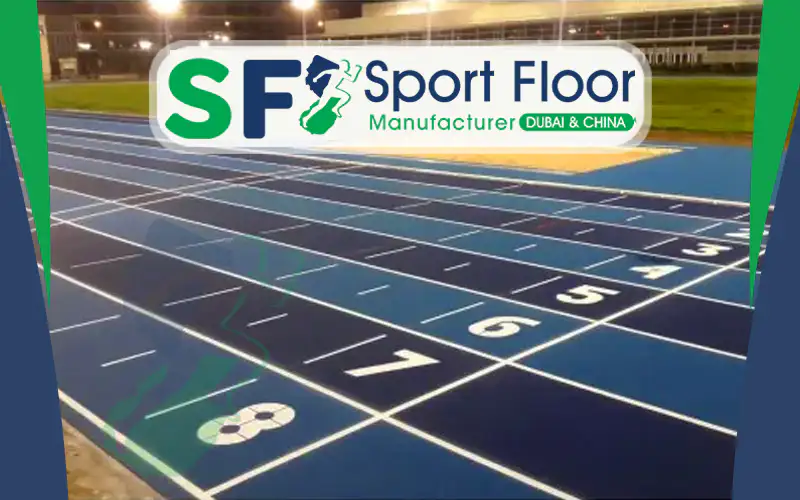
Recreational Use
Suitable for project-dependent school, park and community running or walking routes.
Firm Surface Response
Standard acrylic does not provide the same resilient response as a performance polyurethane athletics system.
Custom Geometry
Recreational loops and lanes can be designed around the available site and user circulation.
New or Existing Bases
Systems may be applied to new or compatible existing surfaces after technical assessment.
Where Acrylic Running and Walking Tracks Are Used
The track should reflect the actual activity, expected user volume, footwear, climate, cleaning procedures and required performance.
Schools
Recreational running loops and straight fitness lanes for physical education and supervised activity.
Universities
Campus jogging routes and training areas where competition certification is not required.
Public Parks
Walking and jogging paths coordinated with landscaping, drainage and public access.
Residential Developments
Perimeter fitness tracks serving residents and community recreation programmes.
Sports Clubs
Warm-up, general fitness and non-certified training routes around sports facilities.
Hotels and Resorts
Recreational running paths planned around guest circulation and surrounding landscape.
Indoor Fitness Loops
Project-dependent indoor walking or jogging lanes after reviewing substrate, ventilation and operational requirements.
Existing Track Renovation
Resurfacing of compatible paths after inspecting adhesion, cracks, drainage and old coatings.
Choose the Track Type Before Selecting the Acrylic System
Continuous Jogging Track
A closed route around a park, school field, residential project or recreation facility.
School or Training Strip
Straight marked lanes for running drills, fitness tests and supervised practice.
Walking and Running Route
A route following the boundary of a sports field, landscaped area or development.
Fitness Facility Track
An indoor route requiring separate review of the base, cleaning, ventilation and user safety.
Reduced Training Track
A project-specific oval that may be shorter than 400 metres and must be described accurately.
Formal Athletics Facility
A specialist facility requiring exact geometry, markings, surface performance and project-dependent certification.
Supporting Training Surface
A separate running or exercise zone supporting another sports facility.
Existing Route Renewal
Renovation after checking the existing system, defects and compatibility with new materials.
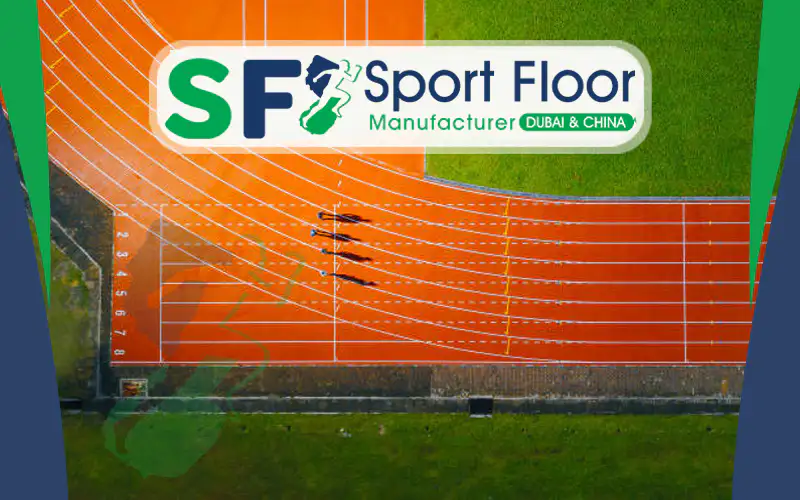
Recreational Acrylic Track vs Certified Athletics Track
A recreational acrylic running route is not automatically a competition athletics track. Formal facilities may require a certified synthetic track product, exact geometric measurement, laboratory or field testing and facility certification.
World Athletics product certification and facility certification are separate scopes. A certificate for one surface product does not automatically certify every installation using that material.
- Confirm the intended competition level.
- Identify whether World Athletics certification is required.
- Select an exact certified surface product where applicable.
- Use a specialist track designer and survey team.
- Follow the approved track and field facilities layout.
- Define required laboratory and completed-track testing.
- Retain product, batch and installation documentation.
- Complete the required facility certification procedure.
Running Track Dimensions Depend on the Project Type
Only formal athletics layouts use the complete competition geometry. Recreational tracks should be sized for the site, user capacity, circulation and required clearances.
Formal standard-track geometry requires specialist setting-out and measurement.
Used in the World Athletics standard-track marking plan.
Reference width shown for standard-track markings.
Depends on the facility level, available space and approved design.
Determined by the site route, user goals and available land.
Selected according to user flow, passing space and accessibility.
Defined according to the school or training programme.
The final route should be surveyed where accurate distance information is promised.
Standard Acrylic, Cushioned Acrylic and Resurfacing Systems
Standard Acrylic Track Surface
A firm acrylic coating system without a separately specified resilient construction.
- Prepared concrete or asphalt base.
- Compatible primer where required.
- Acrylic resurfacing layers.
- Specified texture construction.
- Color finish coats.
- Route, lane or distance markings.
Commonly considered for recreational, school and community projects where competition-track performance is not required.
Cushioned Acrylic Track Surface
An acrylic system containing specified resilient layers beneath the upper texture and color coats.
- Stable supporting substrate.
- Compatible primer and resurfacer.
- Defined cushion-layer products.
- Upper acrylic texture coats.
- Color and marking materials.
- System-specific application procedure.
The exact resilient response must be supported by documentation for the offered system.
Acrylic Track Resurfacing
Renovation of a technically suitable existing route after inspecting the base and previous coating system.
- Existing-surface condition survey.
- Adhesion and compatibility review.
- Removal of loose material.
- Approved local repairs.
- New texture and color coats.
- Replacement route or lane markings.
Resurfacing does not stop active structural movement or correct major base defects.
Acrylic Running Track vs Polyurethane Athletics Track
| Comparison Point | Standard Acrylic Track | Cushioned Acrylic Track | PU Synthetic Athletics Track |
|---|---|---|---|
| Typical Positioning | Recreational, school, park and community running routes. | Recreational projects requiring a documented softer build-up. | Performance athletics, training and project-dependent competition facilities. |
| Surface Response | Firm hard-coating response. | Depends on the exact cushion components and thicknesses. | Resilient synthetic construction defined by the selected system. |
| Base | Suitable prepared concrete or asphalt. | Suitable prepared concrete or asphalt. | Engineered base and complete system-specific construction. |
| Thickness | Product- and layer-dependent coating build-up. | Determined by the exact acrylic cushion system. | Determined by the selected PU track system and specification. |
| Competition Certification | Not automatic and generally not assumed. | Not automatic and must be verified for the exact system. | May be available for exact certified products and compliant completed facilities. |
| Project Complexity | Comparatively straightforward where the base is ready. | Requires additional resilient-layer application control. | Specialist track design, installation, testing and possible certification. |
| Best Selection Basis | Recreational use, budget, base and maintenance expectations. | Documented cushion requirement and system compatibility. | Athletics level, performance specification and certification requirements. |
Main Layers of an Acrylic Running Track
Structural Base
Concrete or asphalt providing support, route levels and designed drainage falls.
Surface Preparation
Removes contamination, dust, weak material and unsuitable previous coatings.
Compatible Repairs
Treats approved depressions, inactive cracks and local surface defects.
Primer
Used where required by the substrate and selected acrylic system.
Acrylic Resurfacer
Helps create a more uniform receiving layer for subsequent coats.
Cushion Layers
Optional resilient materials included only in an approved cushioned system.
Texture and Color Coats
Create the specified profile and final running-route color.
Track Markings
Form lanes, route edges, distance marks and other approved information.
Running Track Base, Slopes and Drainage
Acrylic coatings follow the profile and movement of the supporting base. The track route should therefore be assessed for structural stability, levels, drainage and safe transitions before coating.
- Confirm the concrete or asphalt base type.
- Inspect cracking, joints and evidence of movement.
- Check route levels and cross falls.
- Identify depressions and standing water.
- Review transitions at ramps and access points.
- Check concrete curing, moisture and laitance.
- Confirm asphalt stability and application readiness.
- Test adhesion of existing coatings.
- Coordinate channels, outlets and landscaped edges.
- Prevent root movement beneath perimeter tracks.
- Protect prepared surfaces from dust and traffic.
- Complete kerbs and edge details before finishing.
Concrete Base
Review moisture, joints, surface laitance, contamination, curing and primer compatibility.
Asphalt Base
Confirm stability, compaction, age, levels and compatibility with the proposed coating system.
Existing Coating
Test adhesion and remove loose, weak or incompatible materials before resurfacing.
Outdoor Drainage
Coordinate cross falls, perimeter drainage and outlets to limit standing water.
Edges and Kerbs
Avoid abrupt level changes and details that trap water or create a trip hazard.
Landscape Interfaces
Control soil, irrigation, plant roots, sand and organic debris beside park tracks.
Acrylic Running Track Installation Process
Define the Track Use
Confirm recreational, school, walking, training or formal athletics requirements.
Survey the Route
Measure the alignment, area, widths, levels, curves and obstructions.
Inspect the Base
Review cracks, flatness, moisture, contamination and previous coatings.
Complete Drainage Work
Finish channels, outlets, falls and edge details before coating.
Prepare the Surface
Remove dust, weak material, oils, algae and incompatible coatings.
Repair Approved Defects
Treat suitable local depressions and inactive defects using compatible materials.
Apply Primer
Use the specified primer where required by the substrate and system.
Apply Resurfacing Layers
Build the approved preparation coats at controlled application rates.
Install Cushion Layers
Apply the documented resilient construction where included.
Apply Texture and Color
Complete the approved surface profile and final route colors.
Apply Track Markings
Set out route edges, lanes and distance information accurately.
Inspect and Handover
Review finish, drainage, markings, transitions and maintenance documents.
Resurfacing an Existing Acrylic Running Track
Resurfacing can restore color, texture and markings where the base and existing coatings remain suitable for renovation.
- Inspect worn and polished areas.
- Test adhesion of the existing coating.
- Review cracks and signs of base movement.
- Check depressions and water ponding.
- Inspect route edges and kerb interfaces.
- Remove loose or contaminated material.
- Confirm compatibility with the new system.
- Treat approved local surface defects.
- Restore texture and color consistently.
- Replace faded or inaccurate markings.
- Measure the route again where distances are displayed.
- Record unresolved structural limitations.
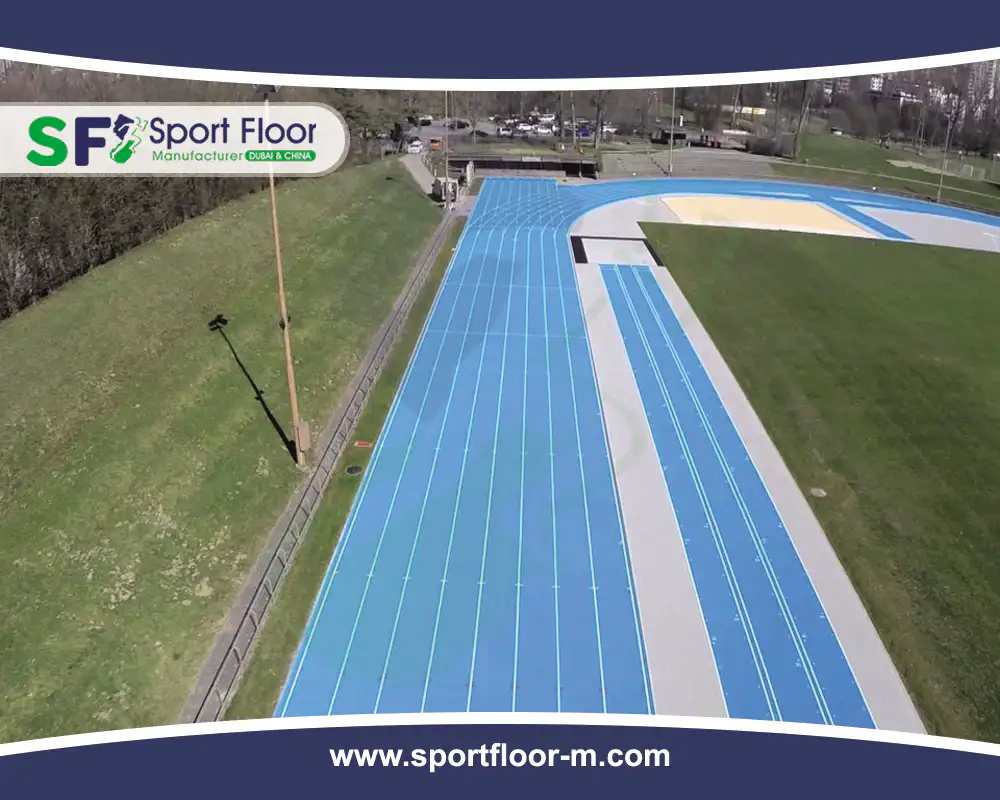
Athletics Track Layout and Color Examples
Every image in this gallery has the same original dimensions and 8:5 ratio. No small image is placed beside a larger image.
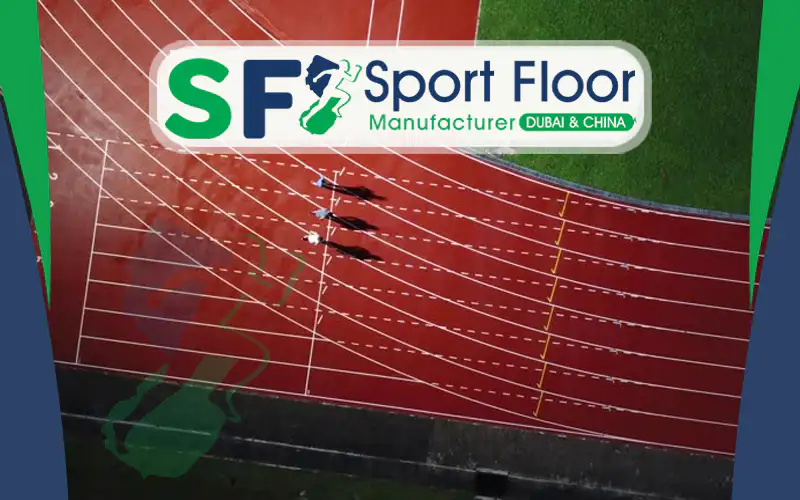
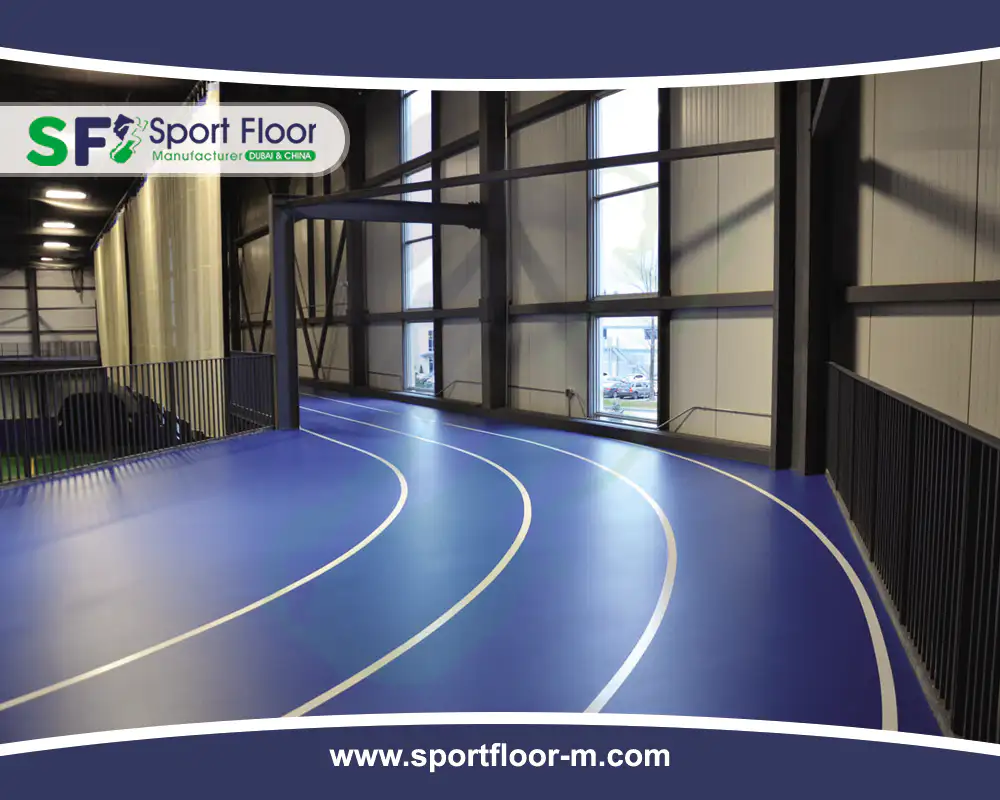
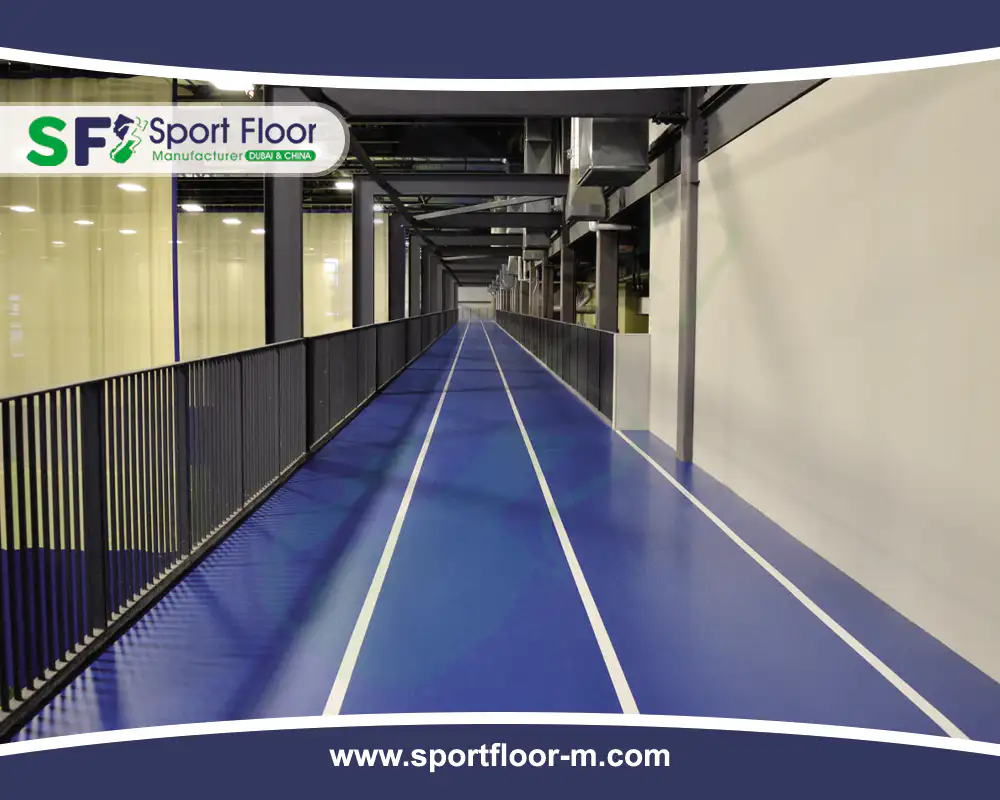
Indoor Recreational Running Track Examples
Acrylic Running Track Maintenance
Remove Loose Debris
Clear leaves, sand, soil, dust and loose material before they affect the surface or drainage.
Use Compatible Cleaning
Follow the coating guidance and avoid aggressive chemicals, abrasive brushes or unsuitable pressure.
Maintain Drainage
Keep channels, outlets and track edges clear, especially after storms or landscaping work.
Monitor Cracks
Record new or recurring cracks and investigate their cause before cosmetic repair.
Inspect High-Wear Zones
Review starts, turns, narrow sections, access points and areas of concentrated use.
Maintain Markings
Repair faded route, lane and distance markings using compatible materials.
Control Vehicle Access
Prevent unauthorised vehicles, sharp equipment and heavy point loads from damaging the surface.
Manage Landscape Edges
Control roots, irrigation water, soil and organic growth beside outdoor routes.
Resurface by Condition
Base resurfacing decisions on adhesion, cracks, texture, color, markings and operational requirements.
Acrylic Running Track Specifications to Confirm
| Specification | What to Confirm | Why It Matters |
|---|---|---|
| Track Purpose | Walking, recreational running, school fitness, training or competition athletics. | Determines whether acrylic is an appropriate system. |
| Track Configuration | Closed loop, straight lanes, perimeter path, reduced oval or standard track. | Controls design, quantities and markings. |
| Route Dimensions | Length, width, radii, number of lanes and total area. | Required for material and setting-out calculations. |
| User Group | Children, students, public users, club athletes or competitors. | Influences layout, safety and surface selection. |
| Base Type | Concrete, asphalt or existing coated surface. | Determines preparation, repair and primer requirements. |
| Base Condition | Cracks, settlement, moisture, peeling, contamination, roots or ponding. | May materially change the construction scope. |
| System Type | Standard acrylic, cushioned acrylic, resurfacing acrylic or PU alternative. | Defines the complete layer construction. |
| Layer Schedule | Repairs, primer, resurfacer, cushion, texture, color and markings. | Prevents comparison of incomplete systems. |
| Surface Performance | State any required traction, resilience, wear or testing criteria. | Generic marketing descriptions are not measurable specifications. |
| Certification Scope | Identify whether product or facility certification is required. | Certification is not automatically included with acrylic. |
| Color Plan | Main track, borders, safety zones and decorative sections. | Required for quantity and application planning. |
| Marking Plan | Route edges, lanes, distances, numbers and event markings. | Controls set-out, colors and line-paint quantities. |
| Drainage | Cross falls, channels, outlets, kerbs and landscape interfaces. | Poor water management can damage usability and the base. |
| Documents | TDS, SDS, system build-up, method statement and applicable test reports. | Documents must refer to the exact offered products. |
| Commercial Scope | Materials, installation, survey, markings, testing and delivery. | Ensures that competing quotations are comparable. |
Information Required for an Acrylic Running Track Quote
State the Track Use
Confirm walking, recreational running, school fitness, training or competition.
Provide the Layout
Send the route drawing, length, width, curves and number of lanes.
Confirm the Total Area
Provide square metres for the complete coated surface.
Describe the Base
Identify concrete, asphalt or existing coating and send current photographs.
State the Base Condition
Identify cracks, settlement, ponding, peeling, contamination and previous repairs.
Select the System
Confirm standard acrylic, cushioned acrylic or comparison with a PU track.
Confirm Colors and Markings
Provide track colors, lane plan, route edges and distance marks.
Define Scope and Destination
State materials, installation, testing, destination and delivery term.
Athletics Track Design, Certification and Export References
Continue Planning the Running Track Project
Acrylic Running Track FAQ
What is an acrylic running track?
It is a hard acrylic surface system applied over a suitable concrete or asphalt base. It is commonly considered for recreational, school, park and community running routes.
Is an acrylic track suitable for professional athletics competition?
Not automatically. Formal competition tracks may require an exact certified synthetic surface, specialist geometry, testing and completed-facility certification.
Are all acrylic tracks World Athletics certified?
No. A generic acrylic description is not proof of product or facility certification.
What is the difference between product and facility certification?
Product certification applies to an identified surfacing product. Facility certification assesses a completed athletics facility against the applicable requirements.
What is the standard athletics-track length?
The standard outdoor oval-track reference is 400 metres. Specialist design and measurement are required to achieve the correct geometry.
What is the standard track-lane width?
The World Athletics standard-track marking plan uses a reference lane width of 1.22 metres.
How wide are standard track markings?
The standard-track marking plan shows a mark width of 0.05 metre.
Does a recreational running loop need to be 400 metres?
No. Recreational routes can use project-specific lengths and widths suited to the available site and intended users.
Can acrylic be installed over concrete?
Yes, when the concrete is stable, properly prepared and compatible with the selected primer and acrylic system.
Can acrylic be installed over asphalt?
Yes, when the asphalt is stable, sufficiently cured and suitable for the proposed coating system.
Does standard acrylic absorb shock?
Standard acrylic is a firm surface and should not automatically be described as shock absorbing. Cushioning requires a separately specified resilient system.
What is a cushioned acrylic running track?
It is an acrylic system containing specified resilient layers below the upper texture and color coats. Performance depends on the exact build-up.
What is the difference between acrylic and PU tracks?
Acrylic is generally a firmer coating option for recreational routes. PU systems provide a separately engineered resilient construction and are more commonly associated with performance athletics tracks.
Can an existing running track be resurfaced?
It may be resurfaced after assessing cracks, adhesion, drainage, base movement, contamination and compatibility with the proposed system.
Will acrylic coating repair structural cracks?
No. Surface materials may treat suitable local defects, but they cannot stop active structural movement or settlement.
Is an acrylic track waterproof?
Do not use the coating as a substitute for drainage or structural waterproofing. Water management depends on the base, slopes, joints, edges and outlets.
Can acrylic running tracks be installed indoors?
Project-dependent indoor routes may be considered after reviewing the substrate, ventilation, fire requirements, barriers, cleaning and user safety.
How long does an acrylic running track last?
Service life depends on the base, system, traffic, climate, drainage, installation and maintenance. There is no universal fixed lifespan.
How often should an acrylic track be resurfaced?
Resurfacing should be based on adhesion, cracking, wear, texture, color and operational requirements rather than one fixed interval.
How is acrylic running-track pricing calculated?
Pricing depends on area, route geometry, base repairs, system build-up, colors, markings, installation, testing, destination and delivery scope.
What information is required for a quotation?
Provide the track use, layout, dimensions, total area, base type and condition, system preference, colors, markings, certification requirements, scope and destination.