
Rubber Tiles vs Rubber Rolls — Gym Flooring Buyer Guide (Decision-First)
This guide helps buyers compare rubber tiles vs rubber rolls based on installation method, maintenance planning, and best-use zones.
Use it to confirm the right spec before requesting an export quote.
fast coverage
easy replacement
use zone
m²
Choose rubber rolls when you need fast coverage and fewer seams for corridors/cardio zones (spec-dependent). Choose rubber tiles when replacement flexibility and defined zones matter (project-dependent). Final choice depends on traffic, drop impact intensity, and subfloor condition.
- Rolls: corridors, cardio areas, fast renovations
- Tiles: free-weight zones, areas needing easy replacement
- Both: commercial gyms (zone-by-zone specification)
Next Steps (Compare → Choose → Quote)
- Rubber Rolls (4–10mm)
- Rubber Tiles (20–50mm)
- Rubber Flooring Hub
Gym Rubber Flooring (2026): Rubber Tiles vs Rubber Rolls (Buyer’s Guide + Quote Checklist)
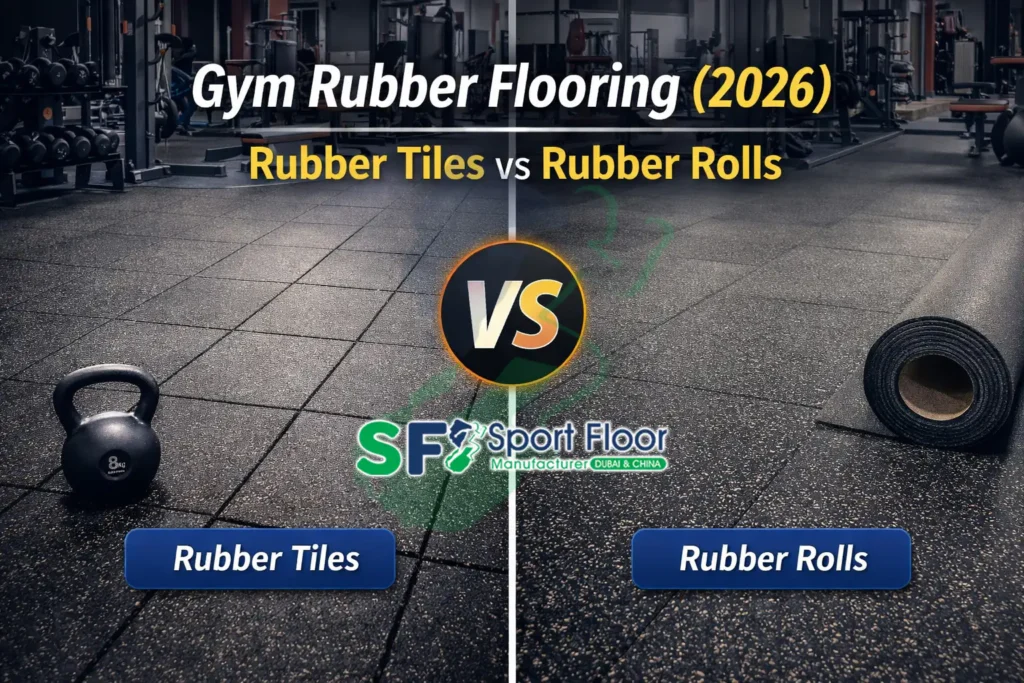
Choosing the right gym rubber flooring is not just about picking “rubber” and buying the cheapest option. The right solution depends on how your gym will be used (free weights, cardio, functional training, group classes), how fast you need installation, and how you plan to maintain the floor long-term.
This guide compares rubber tiles vs rubber rolls in a practical, buyer-focused way—and shows exactly what to send to get an accurate quotation for local supply or export (EXW/FOB/CIF).
Request a quotation here:
contact us
What Is Gym Rubber Flooring? (Quick Answer)
Gym rubber flooring is a durable rubber surface used in fitness facilities to reduce impact and noise, improve grip, and protect the subfloor. The two most common formats are rubber tiles (interlocking or solid) and rubber rolls (rolled rubber sheets). The best choice depends on zone type, thickness, installation method, budget, and site conditions.
Key Takeaways (Fast Decision Summary)
- Rubber tiles are easier to replace in sections and are ideal for zoned designs or phased projects.
- Rubber rolls create fewer seams and often look more “continuous,” ideal for large open areas.
- Free weights areas usually require thicker, more protective flooring (spec depends on usage).
- Cardio and walkways may use thinner options (comfort + stability).
- Your quote depends on thickness, finish, quantity (m²), and delivery scope (local vs EXW/FOB/CIF).
- To get the right offer fast, send your spec via: request a quote
Table of Contents
- Rubber Tiles vs Rubber Rolls: Quick Comparison
- Best Choice by Gym Zone (Free Weights / Cardio / Functional / Walkways)
- Rubber Tiles for Gym: Pros, Cons, and When to Choose
- Rubber Rolls for Gym: Pros, Cons, and When to Choose
- Thickness Guide (Tiles vs Rolls)
- Finishes & Colors (Black / Colored / Speckled)
- Installation Basics (Subfloor, Glue, Seams, Drainage for outdoor)
- Maintenance & Long-Term Performance
- How to Request a Quote (Local + Export EXW/FOB/CIF)
- Proof & Trust (Projects + References)
- FAQ — Gym Rubber Flooring
1) Rubber Tiles vs Rubber Rolls: Quick Comparison
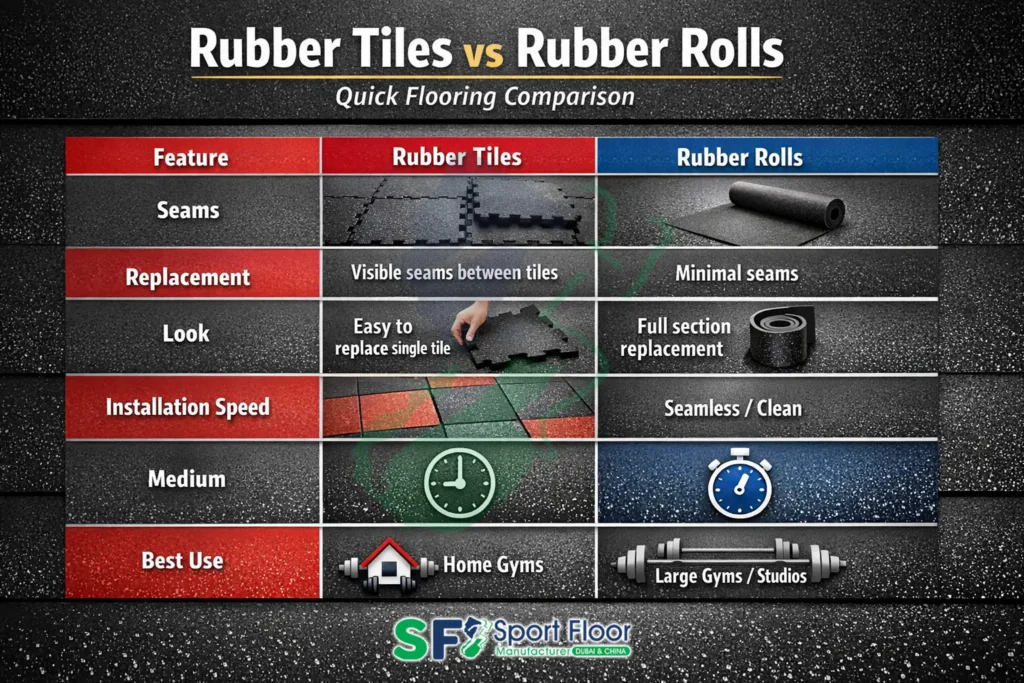
Here’s the simplest way to compare both options before you dive into details:
| Factor | Rubber Tiles | Rubber Rolls |
|---|---|---|
| Look | Modular layout; can be zoned by color | More continuous appearance |
| Seams | More seams (depends on tile size) | Fewer seams across large areas |
| Replacement | Easy to replace damaged tiles | Replacement often affects a larger section |
| Installation speed | Fast with interlocking; depends on base | Fast coverage over large areas; seam work matters |
| Best for | Zoned gyms, heavy-use areas, projects needing easy maintenance | Large open areas, clean look, faster coverage |
| Buying format | Quoted per m² (based on thickness/finish) | Quoted per m² (based on thickness/finish) |
Explore both product categories:
2) Best Choice by Gym Zone (What Fits Your Facility?)
Most gyms are not “one floor.” The highest-performing gym floors are planned by zones.
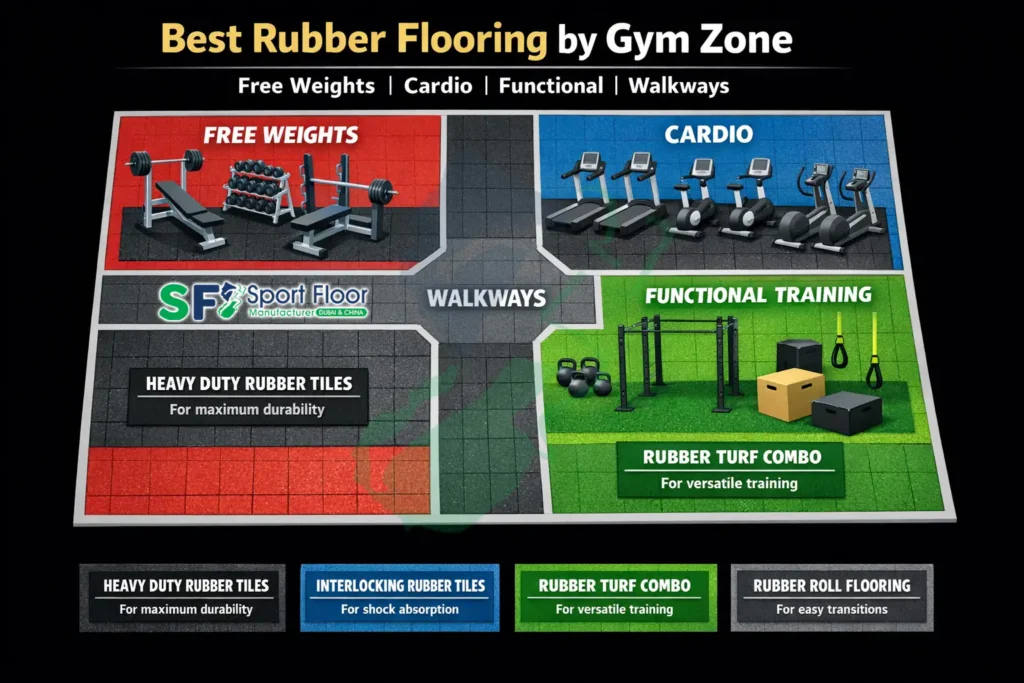
Zone A: Free Weights / Strength Training
Priorities:
- high impact protection
- stability under heavy equipment
- noise/vibration reduction
- long-term resistance to dents and wear
Often suitable: thicker rubber flooring (tiles or rolls depending on layout and maintenance plan).
If you want easier local replacement (e.g., one tile damaged), tiles can be practical. If you want a continuous look, rolls can be practical—provided seam planning is done right.
Zone B: Cardio Area
Priorities:
- comfort underfoot
- stable surface
- easy cleaning
- consistent appearance
Often suitable: rubber rolls or thinner tiles, depending on design and budget.
Zone C: Functional Training / Cross‑Training
Priorities:
- good grip
- durability under dynamic movement
- controlled seams/edges (to avoid lifting)
Either tiles or rolls can work—selection depends on how “continuous” you want the floor and how you plan to maintain it.
Zone D: Walkways / Reception / Circulation
Priorities:
- clean look
- easy maintenance
- consistent visual finish
Rolls often fit well for large continuous walkways, while tiles work well when you want zoned color layouts.
If you need help selecting by zone, send your layout and usage plan:
send your layout
3) Rubber Tiles for Gym: When They’re the Best Choice
Rubber tiles are a strong option when your facility needs modular flexibility.
Why buyers choose rubber gym tiles
- Easy replacement: damaged areas can be swapped tile-by-tile
- Zoning: you can define areas by color/finish
- Phased projects: easier to order and install in stages
- Stable specs: thickness and finish selection are straightforward for procurement
Rubber tiles hub (materials, thickness, finishes)
Key tile options you can specify
Common thickness pages:
Common finishes:
4) Rubber Rolls for Gym: When Rolls Win
Rubber rolls are often chosen when buyers want a more continuous look and fewer seams.
Why buyers choose rolled rubber gym flooring
- Fewer seams than tiles across large areas
- Fast coverage for wide open zones
- Consistent appearance (especially in black)
- Often preferred for cardio + walkways and large functional areas
If you offer roll thickness variants, link them in your page structure (examples from your site):
5) Thickness Guide (Tiles vs Rolls) — How to Think About It
There is no “universal best thickness” for every gym. Thickness should match:
- the zone type (weights vs cardio)
- equipment load and movement
- desired comfort/noise reduction
- budget and maintenance plan
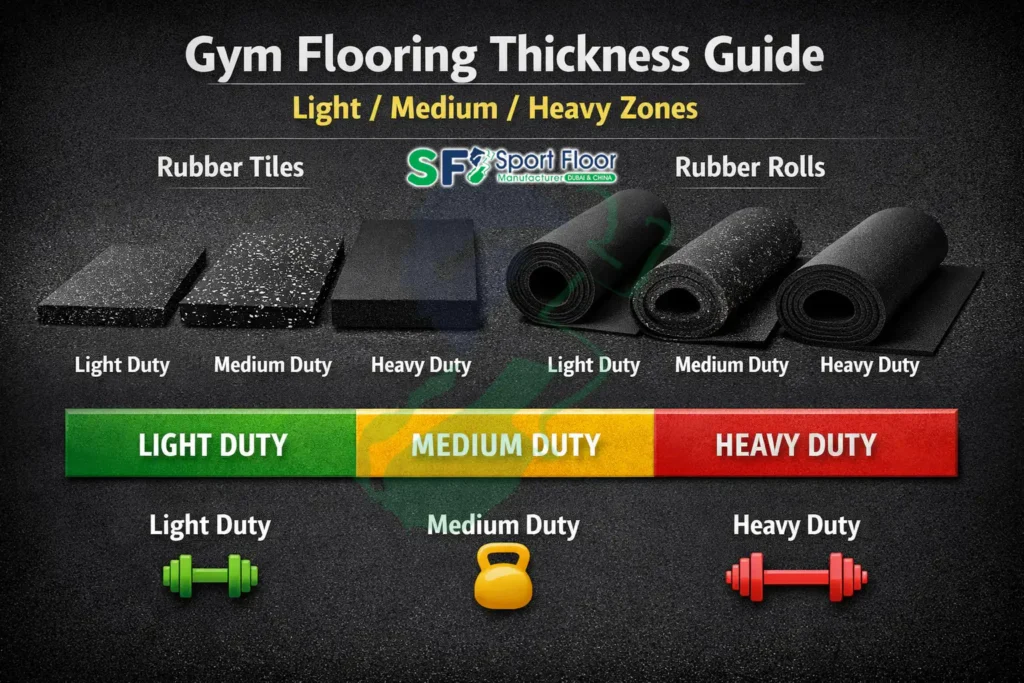
Practical thickness approach (buyer logic)
- Lighter duty / walkways / cardio: often thinner options can fit
- General training: medium thickness options are common
- Heavier impact zones: thicker options are often preferred
For tiles, see the thickness pages (20/30/40/50mm)
For rolls, confirm thickness selection here:
rubber rolls
If you want a recommendation, send your gym zone plan and intended use:
contact us
6) Finishes & Colors (Black / Colored / Speckled)
Even for gyms, color selection affects:
- how easily marks and dust show
- the “premium” look of the facility
- zoning clarity for members
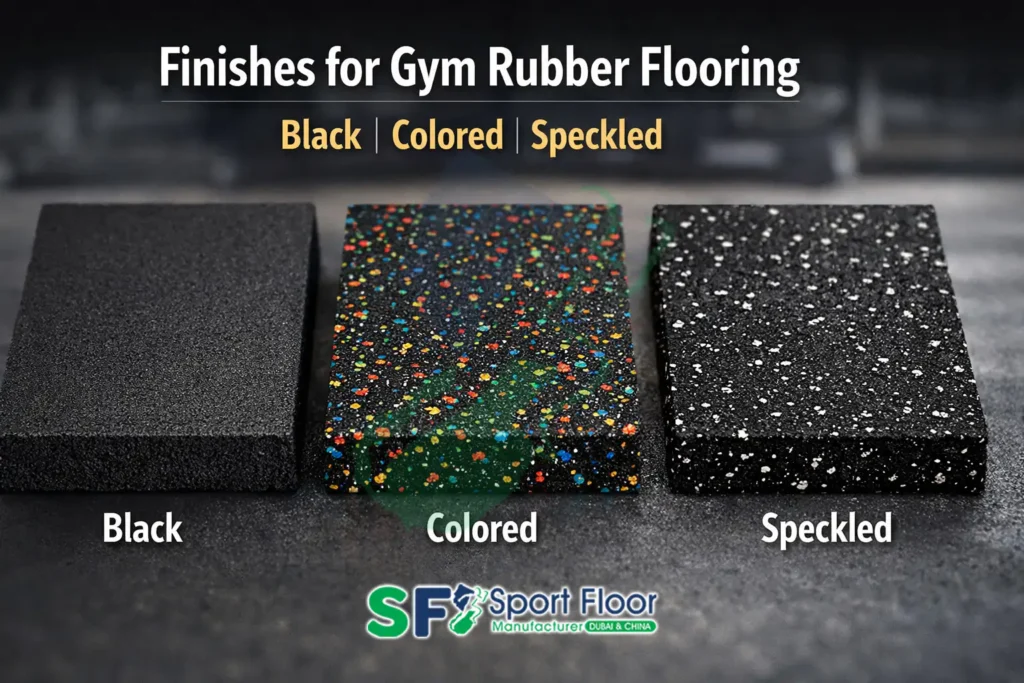
Black (most practical)
Black is often selected for gyms because it looks professional and is easy to maintain.
Colored (branding + zones)
Colored tiles support zone definition and brand identity.
Speckled (premium “granule” appearance)
Speckled tiles deliver a more premium look and can help visually hide minor wear.
7) Installation Basics (What Buyers Should Confirm)
Most gym flooring problems come from the base and installation, not the rubber itself.
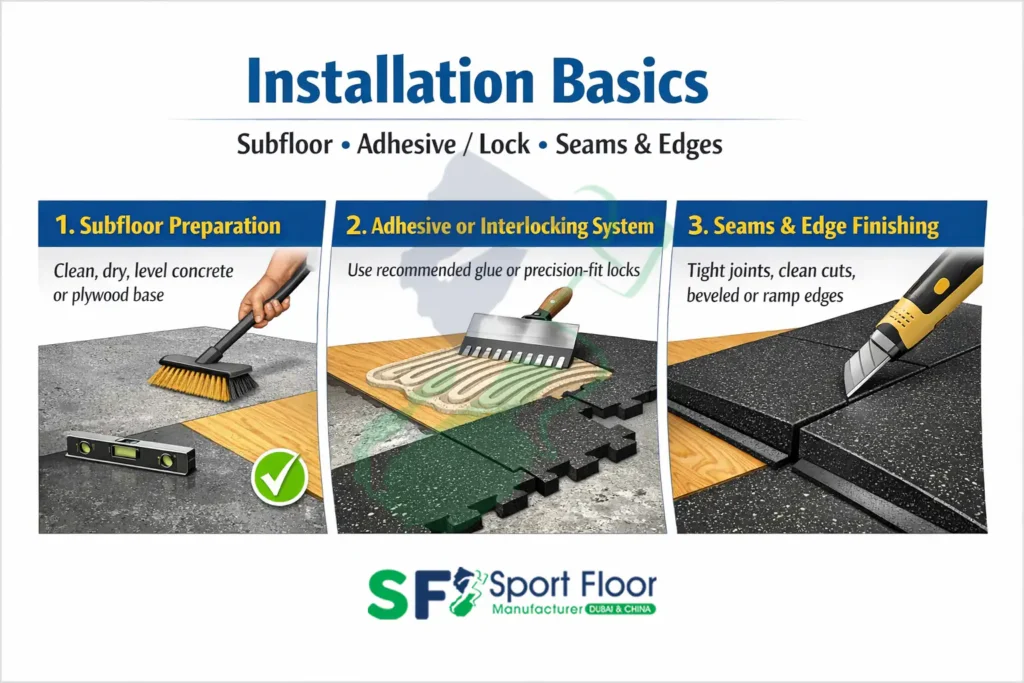
Subfloor matters
Before ordering, confirm:
- base type (concrete / asphalt / other)
- flatness and dryness
- whether the floor needs adhesive installation or can be loose lay/interlocking (project dependent)
Seams and edges
- Rolls: seam planning is critical for a clean professional finish
- Tiles: edge finishing and layout planning keep the floor looking aligned
If you want to avoid mistakes, send site photos and base details before buying:
get an export quotation
8) Maintenance & Long‑Term Performance
A gym floor stays “premium” longer when:
- cleaning is consistent (dust builds up faster in high traffic zones)
- heavy equipment is placed correctly
- phased expansions are planned with consistent finish selection
For phased projects, plan your supply early—especially if mixing colors or speckled finishes.

9) How to Request a Quote (Local + Export EXW/FOB/CIF)
If your goal is fast procurement, don’t ask only “price per m².” Ask for a quote based on your exact spec.
Quick Quote Checklist (copy/paste into your message)
Send:
- Application: gym (zones if possible)
- Product: tiles or rolls (or both)
- Material: SBR or EPDM (if applicable)
- Thickness: (mm)
- Finish: black / colored / speckled
- Quantity: total m² (one shipment or phased)
- Delivery: local city/country or destination port for export
- Target delivery date
Request form: contact us
If you want a deeper breakdown of what affects a quote for tiles, see:
rubber tiles price
10) Proof & Trust (Projects + References)
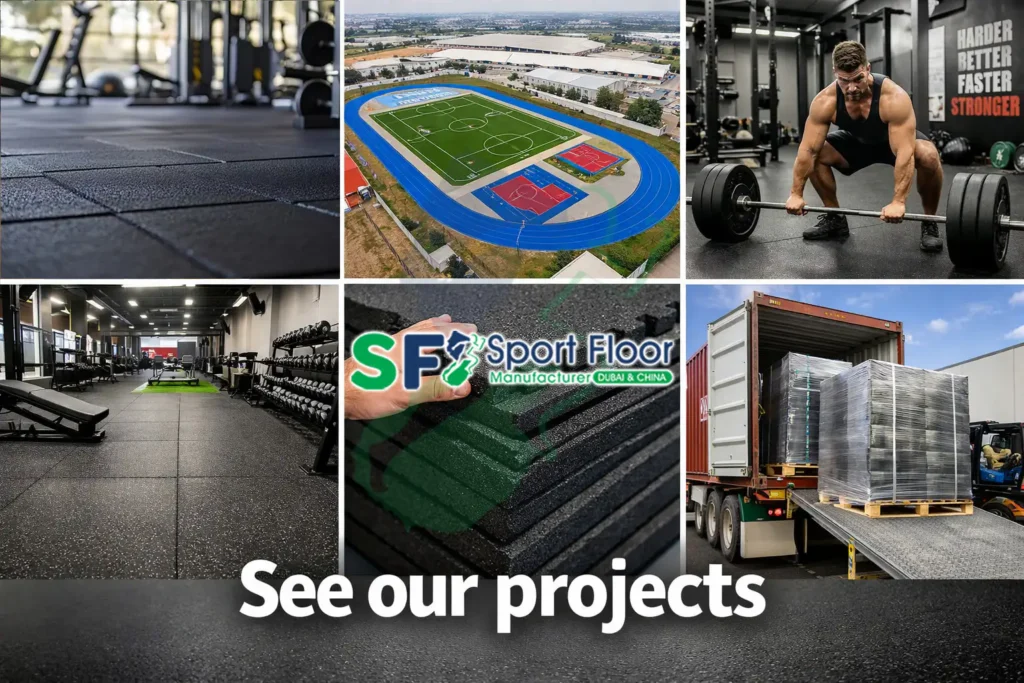
For professional procurement, proof matters. Sport Floor can support buyers with:
- real product photos (close‑up finishes)
- packaging and export preparation photos (where applicable)
- project references and delivered work examples
See our projects
Documentation available upon request
Compliance references (official links):
FAQ — Gym Rubber Flooring
1) Is rubber tile flooring better than rubber rolls for a gym?
It depends on your gym zones and maintenance plan. Tiles are easier to replace in sections and work well for zoning. Rolls provide a more continuous look with fewer seams across large open areas.
2) What thickness should I choose for free weights areas?
Thickness depends on equipment load, training style, and the base floor. Share your layout and intended use and we’ll recommend the suitable range:
send your layout
3) Which is easier to install: rubber tiles or rubber rolls?
Interlocking tiles can be fast for modular installation. Rolls can cover large areas quickly, but seam planning and edge finishing are critical.
4) Can I use colored or speckled finishes in a gym?
Yes. Colored tiles help with zoning and branding, while speckled finishes offer a premium look. For phased projects, plan supply to maintain finish consistency.
5) How do I get an accurate quote for my gym project?
Send product type (tiles/rolls), thickness, finish, m², and destination (local or port for export). Request a quote here
https://sportfloor-m.com/en/contact-us/
Conclusion
The best gym rubber flooring is the one that matches your facility’s real use: zone type, thickness needs, installation plan, and maintenance expectations. If you want the fastest, most accurate quotation for rubber tiles or rubber rolls (local supply or export), send your specification and we’ll confirm availability and supply planning.
Request a quote: contact us