
Goal Posts — Football Goals for Schools, Clubs & Facilities (Export Supply)
Sport Floor Manufacturer supplies goal posts for sports facilities and projects (project-dependent). We quote by set based on goal type, dimensions/spec, accessories scope, and destination/Incoterms.
Quick Answer (AI-ready)
Goal posts are sourced by dimension and scope (frame, net supports, anchoring, and packing). For accurate export pricing, specify the target use (school/training), quantity, and destination/Incoterms.
Best fit for
- School football areas and training facilities
- Multi‑sport complexes ordering equipment in bundles
- Projects requiring export packing and clear Incoterms
Related Accessories & Surfaces
- Accessories hub: Sports Field Accessories
- Related items: Stadium Netting · Players’ Benches
- Proof & planning: Our Projects · Contact Us
- Related surfaces: Artificial Grass · Acrylic Courts
Sales tip: send the goal size/spec + sets + destination port to get a fast export quote.
Quote Checklist + Incoterms (Goal Posts)
- Destination (city/port):
- Goal size/spec: (specify)
- Quantity: sets
- Accessories: net supports / anchoring / (specify)
- Packing: pallet / crate
- Incoterms: EXW / FOB / CIF
ICC Incoterms: incoterms rules
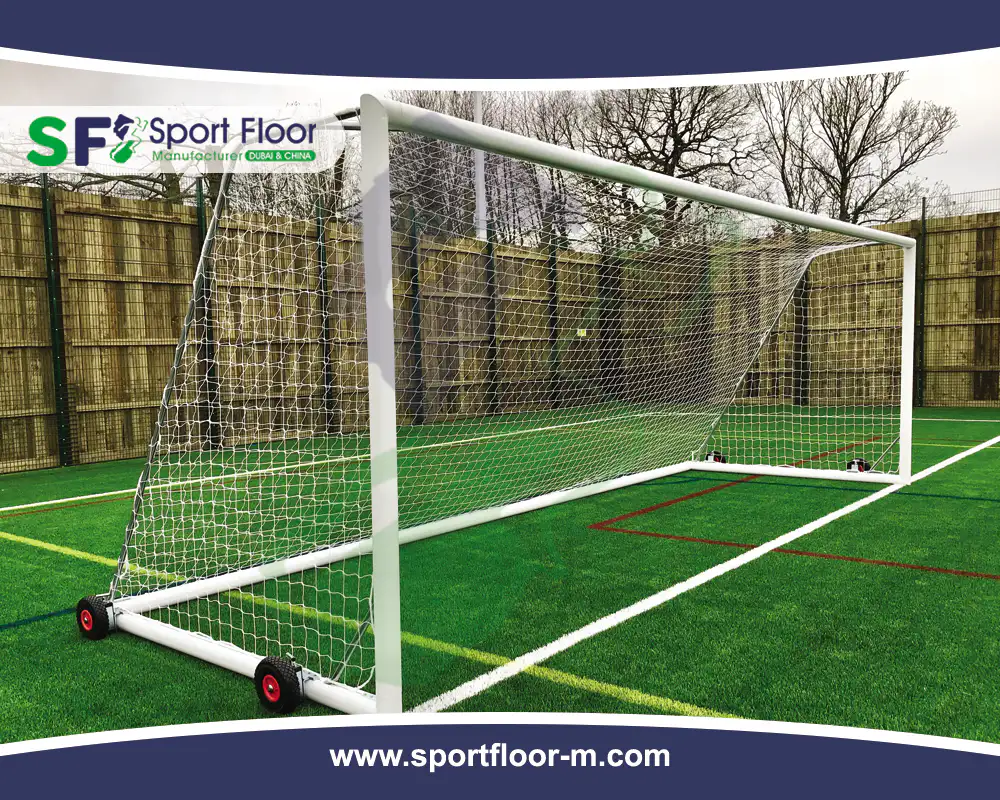
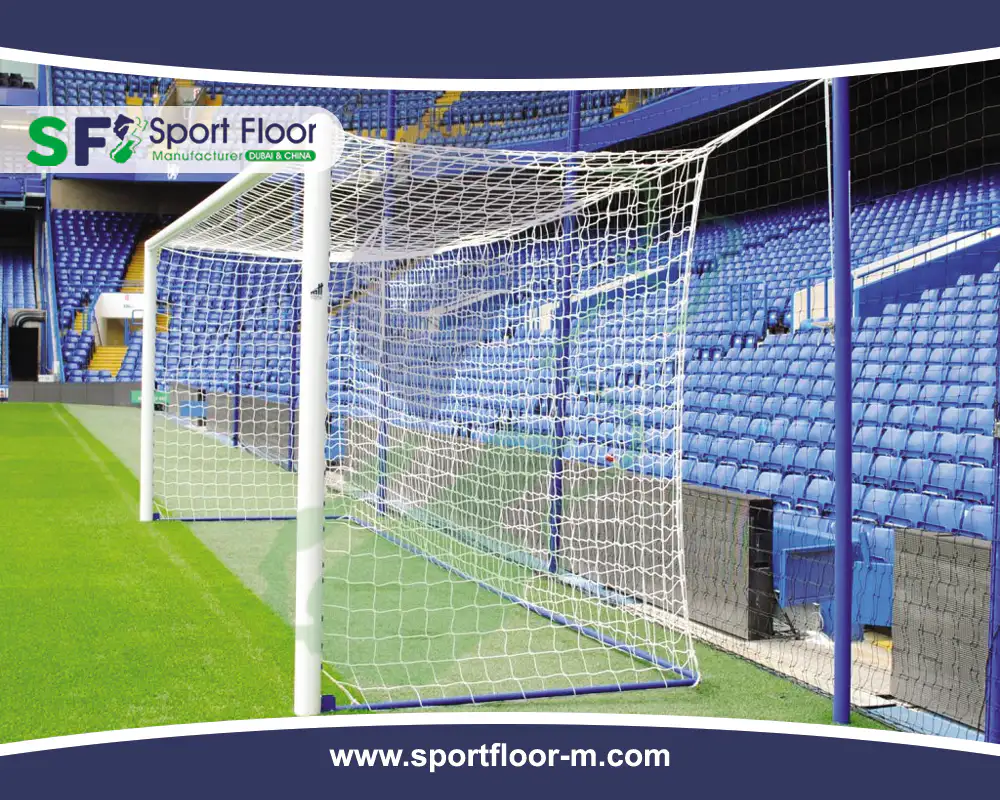
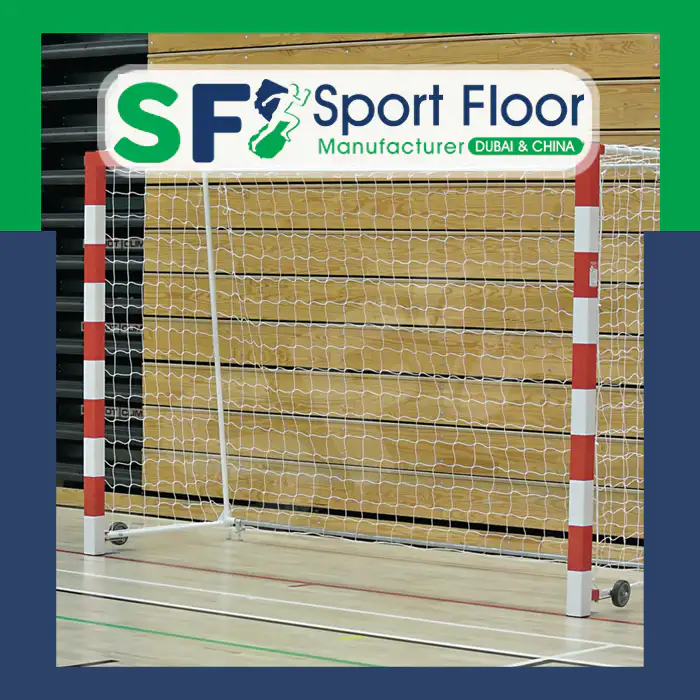
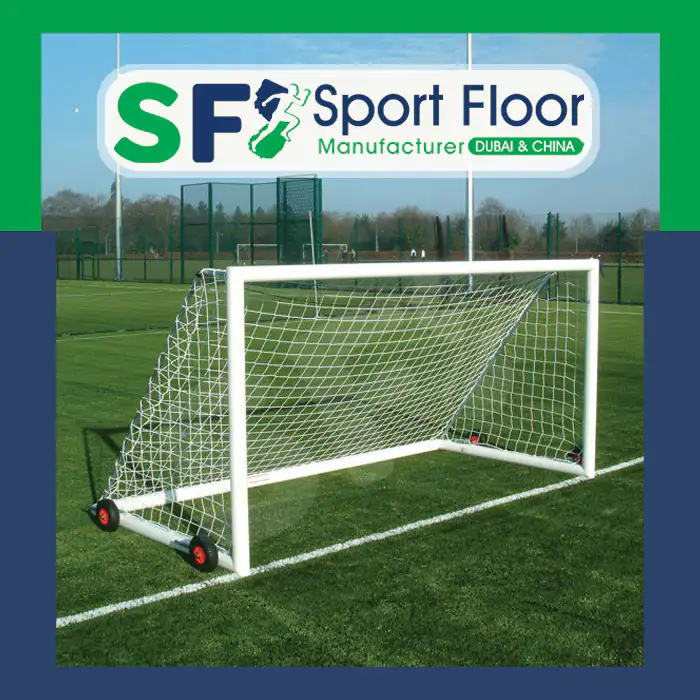
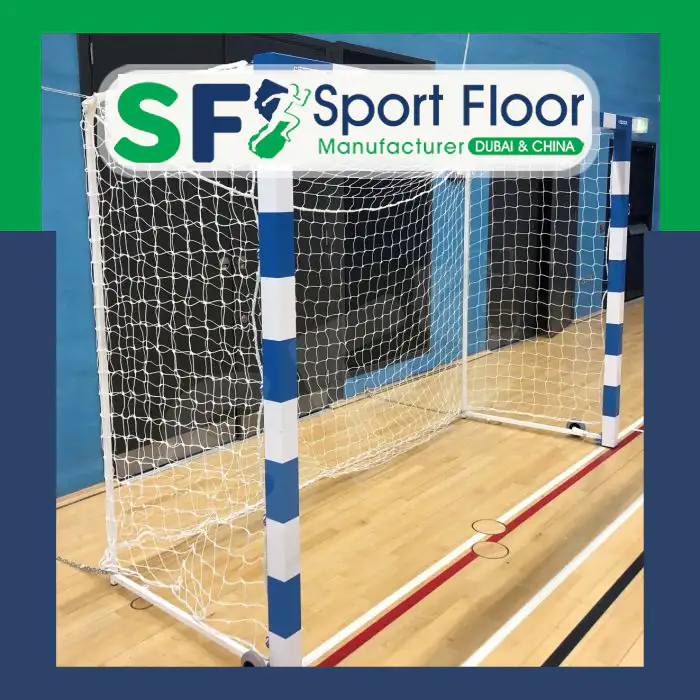
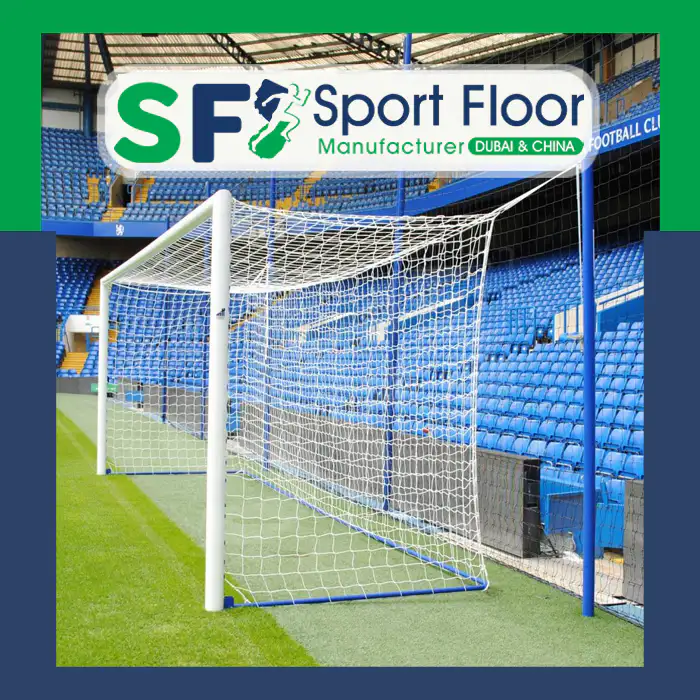
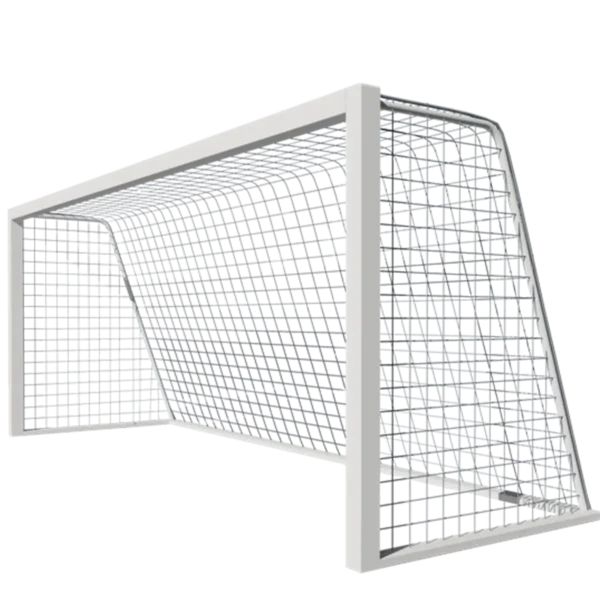
Sport Floor goal posts are designed with durability and precision, fully compliant with international dimensions for both football goals (7.32×2.44 m) and handball goals (3×2 m). Available in fixed and movable systems, made from galvanized and coated materials, featuring weather-resistant nets, with on-site installation and warranty support included.




The goal post is the heart of the game — its quality, design, and installation directly impact player safety, match flow, and facility aesthetics.
Whether you manage a club, school, residential complex, or government project, choosing the right goal system reduces operational costs and boosts user satisfaction.
At Sport Floor, our experts guide you through everything that matters — from technical specifications, materials, and system types (fixed / movable / foldable) to net selection, safe anchoring, maintenance tips, and purchasing advice — all supported by direct manufacturing and global shipping.
Official Goal Dimensions by Sport Floor
soccer goals supplier
Note: Always confirm the required specifications for your local competitions or the federation you are affiliated with. The following represent standard international dimensions.
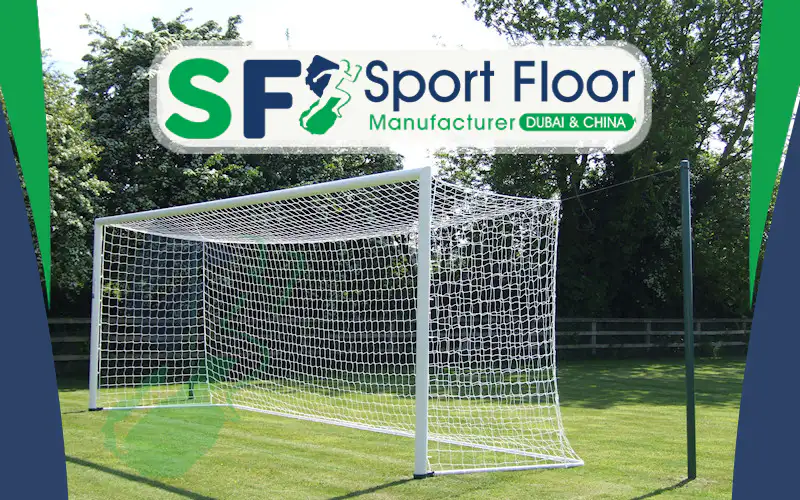
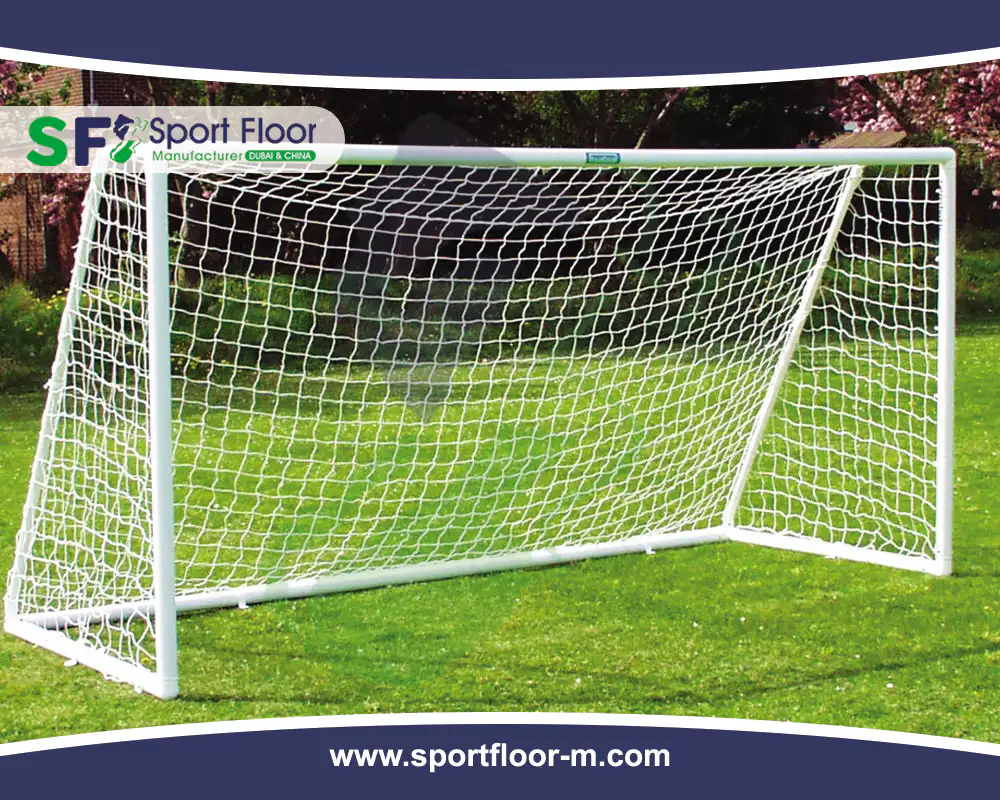
Width: 7.32 m (8 yards) — Height: 2.44 m (8 feet)
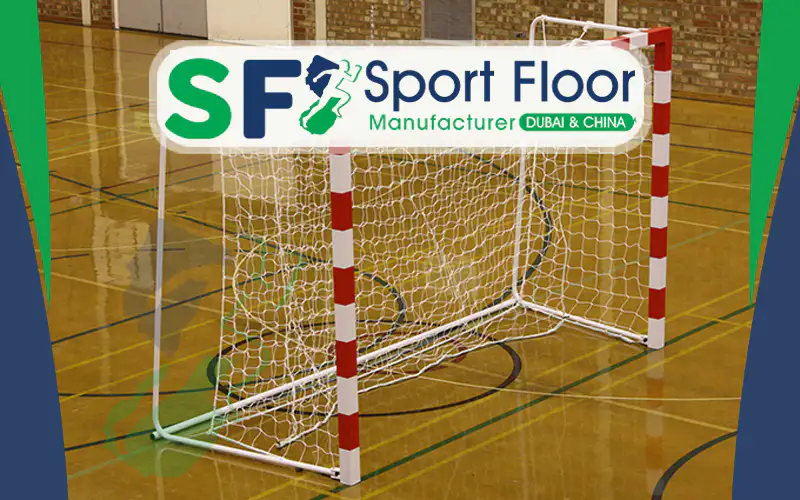
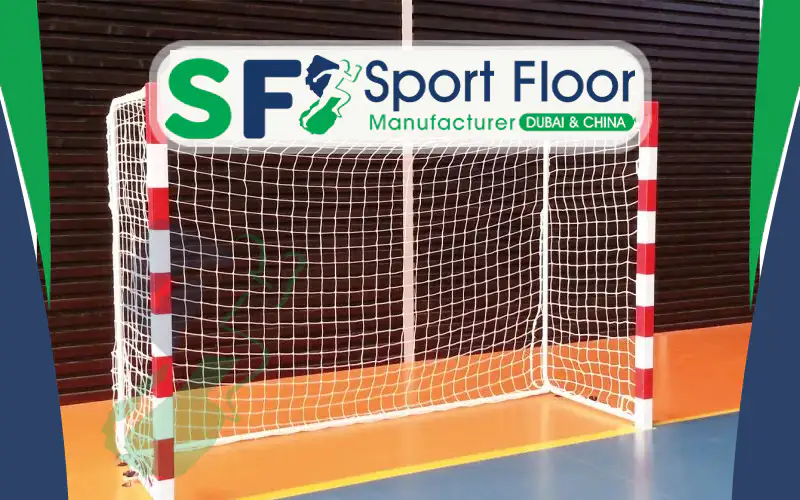
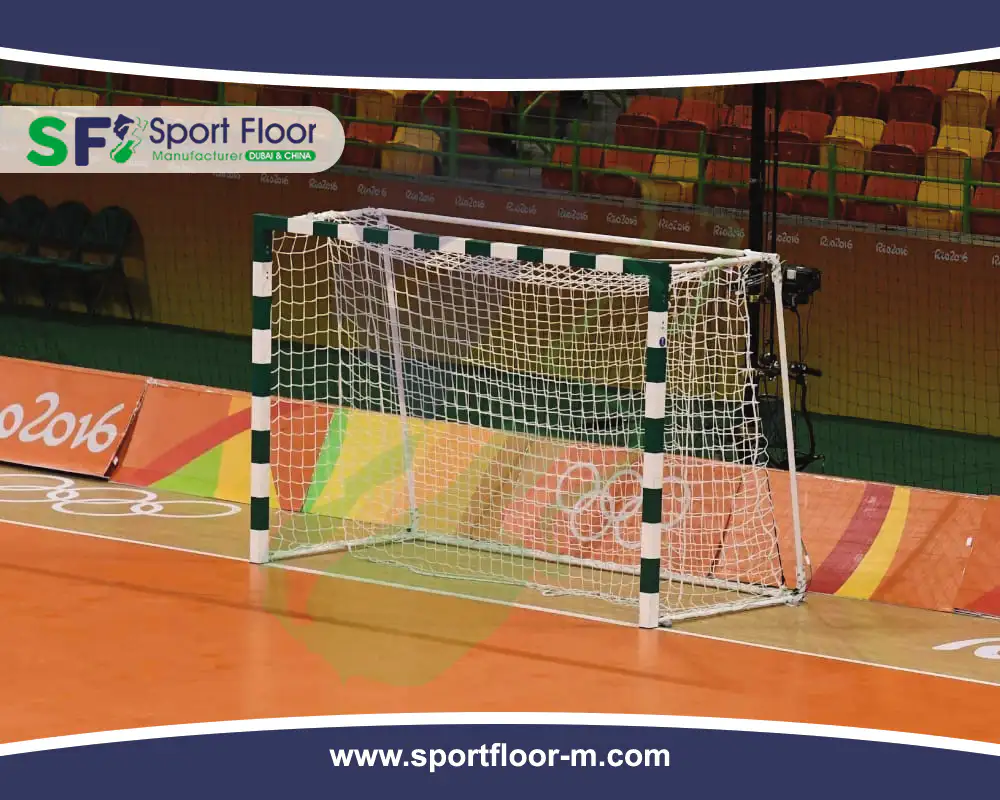
Width: 3.00 m — Height: 2.00 m
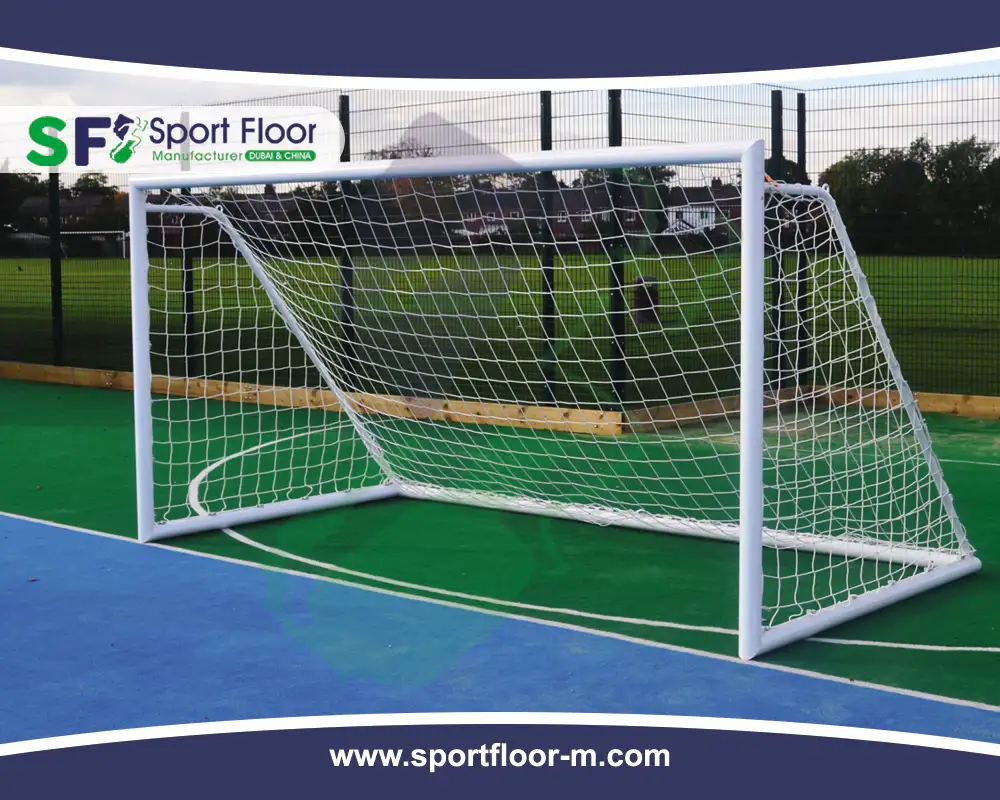
Available in various sizes according to age group and use — typically from 3×2 m up to 5×2 m for beginner levels.
Goal Components and Materials — Sport Floor Quality Standards
football goal posts
- ⦁ Material: Structural steel (SAE / S235 or equivalent), available in round or square tubes.
⦁ Protection / Coating: Hot-dip galvanization or galvanization + powder coating for superior rust and UV resistance.
⦁ Tube Diameter & Thickness: Ø70–100 mm for professional goals, wall thickness from 2.5–4.0 mm depending on the model.
- ⦁ Materials: High-resistance polyamide (nylon), UV-stabilized polyethylene (PE), or coated synthetic threads.
⦁ Mesh Size: Typically 100×100 mm or 120×120 mm for football; smaller mesh used for handball.
⦁ Thread Diameter: 3–5 mm for full-size goals; 2–3 mm for handball or training goals.
⦁ Attachment Options: Rope ties, plastic/metal hooks, or reinforced upper webbing for enhanced tension control.
- ⦁ In-Ground Sockets: Steel sleeves embedded in concrete for permanent installation.
⦁ Surface Fixings: Bolt-down bases suitable for indoor or multi-sport facilities.
⦁ Portable Frames: Heavy-duty bases or sand/water-filled platforms for mobile, temporary setups.
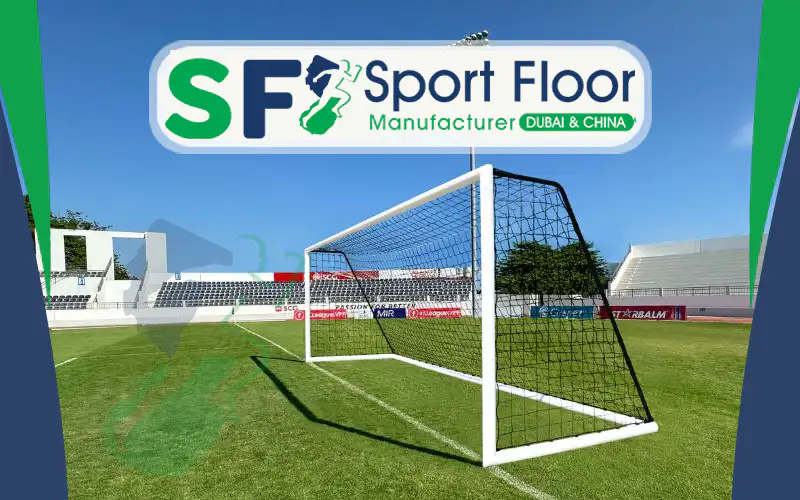
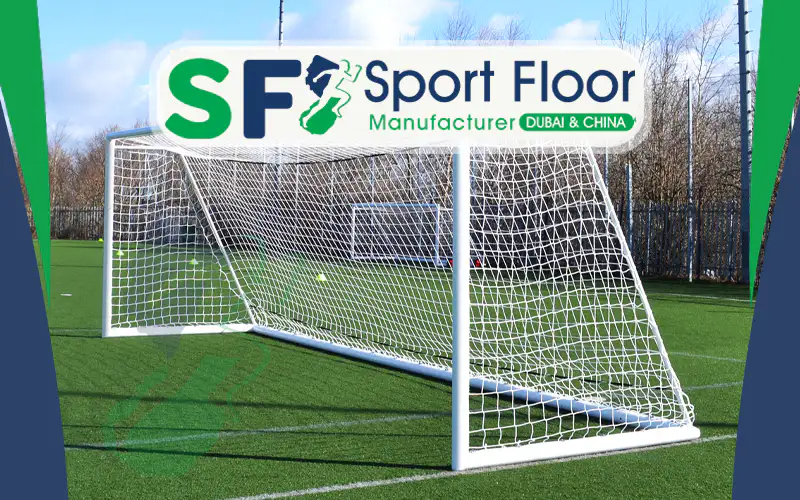
🥅 Types of Goal Systems by Sport Floor
soccer goals supplier
- ⦁ Installation: Anchored in permanent concrete foundations — ideal for outdoor stadiums and heavy-use pitches.
⦁ Advantages: Maximum stability and safety; compliant with official match standards.
⦁ Considerations: Requires excavation and concrete work; replacement or relocation can be costly.
- ⦁ Structure: Mobile bases, either manual platforms or sand/water-filled for balance.
⦁ Advantages: Easy to move, quick to assemble, perfect for schools and shared facilities.
⦁ Considerations: Ensure adequate base weight and wind-resistance for outdoor safety.
- ⦁ Design: Foldable frames for compact storage and transport.
⦁ Advantages: Space-saving, ideal for multi-purpose halls and temporary events.
⦁ Considerations: Hinges and locking points must be reinforced for secure operation.
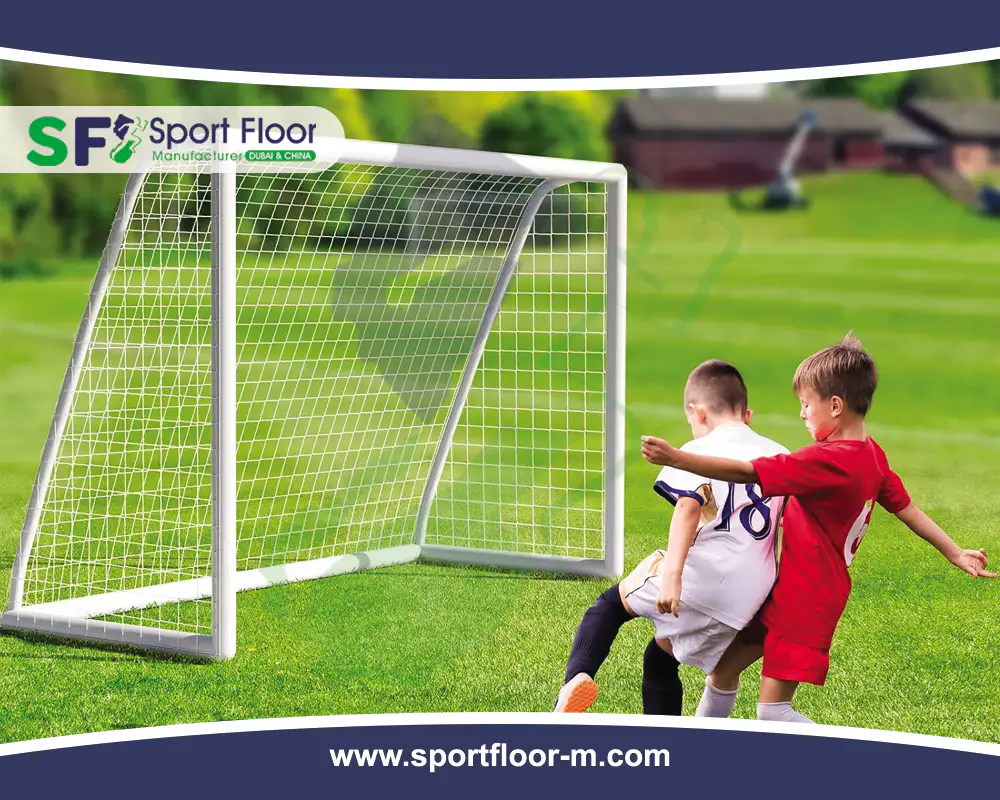
⦁ Use: Lightweight structures designed for academies and junior fields.
⦁ Materials: Smaller tube diameters, lighter nets — easy to handle and move.
🛡️ Safety Standards & Technical Features at Sport Floor
goal posts manufacturer
Goal frames are engineered to resist ball and player impact without tipping. Reinforced bases ensure balance even under high-intensity play.
All corners and tube ends are covered with plastic caps or protective fittings to eliminate sharp edges and reduce injury risks.
Options include concrete-anchored bases, bolted surface fixings, or weighted mobile platforms to prevent unwanted movement or sliding.
All models can be adapted to meet local regulations and international federation standards (FIFA, ITF, FIBA), ensuring official match compatibility.
Public facilities are supplied with usage and storage labels for user safety and easy maintenance.
🧰 Goal Maintenance & Longevity — Sport Floor Expert Guide
goal posts export
Check for rust, loose bolts, torn nets, or cracks in the base or frame to ensure consistent safety and performance.
Rinse the goal net periodically with fresh water to remove dust, sand, or salt—especially in coastal environments.
If surface rust appears, clean and repaint the affected area using anti-corrosion coating, or perform partial re-galvanization when needed.
Replace the goal net every 1–3 years, depending on weather exposure and usage intensity, to maintain professional performance and safety.
Ensure mobile or weighted bases are properly filled (with water or sand) and that valves are tightly sealed to prevent instability.
Choose the Perfect Goal for Your Field in Simple Steps
Selecting the right goalpost system is crucial for achieving performance, durability, and safety.
Answer these key questions to find the most suitable model based on use, size, materials, and net type, ensuring the best balance between quality and cost.
1️⃣ What is the primary use?
⦁ ⚽ Official Matches – Requires standard dimensions and high-strength frames compliant with FIFA / IHF regulations.
⦁ 🏃 Club or School Training – Focus on mobility, easy assembly, and compact storage.
⦁ 🧒 Youth Academies – Prioritize lightweight frames, safety features, and quick setup.
2️⃣ What size do you need?
⦁ 📏 Standard (7.32 × 2.44 m) — For full-size football pitches.
⦁ ⚖️ Mini Goals (5 × 2 m or 3 × 2 m) — For training or small-sided fields.
3️⃣ Fixed or Portable Base?
⦁ 🧱 Fixed Base — Permanent installation for stadiums and official venues.
⦁ 🔄 Portable Base — Ideal for multi-use facilities or temporary setups.
4️⃣ What’s your climate like?
⦁ 🌴 Coastal Areas – Opt for hot-dip galvanized and anti-rust coating.
⦁ ☀️ Sunny/Hot Regions – Use UV-resistant powder coating.
⦁ ❄️ Cold/Freezing Zones – Choose reinforced steel resistant to expansion/contraction.
5️⃣ Preferred Net Type
⦁ 🕸️ Heavy-Duty Nylon or PE Net – For maximum tension and durability.
⦁ 🔍 Optical-Clear Net – Ideal for indoor or broadcast-ready arenas.
⦁ 🧵 Multi-Layer Net – Tear-resistant for intensive professional use.
6️⃣ What’s Your Budget Range?
Evaluate Total Cost of Ownership (TCO) = Purchase + Installation + Maintenance.
Select the solution that balances price, performance, and longevity.
🎯 Sport Floor Expert Tip
The more precisely you define your needs, the longer your goal will last — ensuring professional performance, player safety, and investment efficiency.
Choose the right material based on your environment, maintenance level, and lifespan needs.
Sport Floor experts provide a professional comparison of the most used goal frame materials — from galvanized steel to aluminum and composite PVC — helping you find the best balance between performance, aesthetics, and cost.
| Material | Advantage | Disadvantage |
|---|---|---|
| Hot-dip galvanized steel | Excellent corrosion resistance and long lifespan | Relatively higher manufacturing cost |
| Powder-coated steel | Elegant finish with multiple color options | The coating may crack and expose rust without a base layer |
| Aluminum | Low maintenance and corrosion-resistant for electrical equipment | Weaker than steel and affected by strong impacts |
| PVC composite pipes | Lightweight and inexpensive | Not suitable for outdoor pathways or heavy collisions |
SPORT FLOOR GUIDE: Cost, Warranty & Buying Recommendations
Prices vary according to material, goal type (fixed or portable), and net specifications — from affordable training models to high-end professional goals certified for international competitions.
Sport Floor provides an official warranty with every supply and installation contract, backed by the reliability of products used in more than 47 countries worldwide.
Think in terms of Total Cost of Ownership (TCO), not just purchase price.
When choosing a goal post, consider the full cost equation:
Purchase price + Installation cost + Long-term maintenance.
💡 Investing in a well-engineered, professionally installed goal ensures:
⦁ Greater safety and performance during games.
⦁ Reduced long-term repair and replacement costs.
⦁ Extended service life for your sports facility.
🏁 Conclusion
Always choose quality and professional installation —
because these determine your true cost over time, not the initial price.
Superior Quality
We guarantee products that meet the highest international quality standards, ensuring long-lasting performance and customer satisfaction.
Design Flexibility
A wide range of thicknesses, colors, and surface designs to perfectly match your project’s requirements.
Eco-Friendly Materials
All our products are made from recycled materials to promote sustainability and reduce environmental impact.
Outstanding Technical Support
Our expert team is always ready to provide guidance, consultation, and full support to ensure your project’s success.
Sport Floor supplied two FIFA-standard galvanized goals with high-strength nets in just 3 days, providing technical guidance for the maintenance team to ensure long-term performance.
Regional Club (India)
Installed four foldable and easily stored goals, achieving 40% space saving and enabling shared use of playgrounds for football, handball, and basketball activities.
High School (Cairo)
Implemented lightweight training goals with portable anchoring systems, allowing easy reconfiguration of training zones for different sessions, enhancing flexibility and player safety.
Youth Academy (Guangzhou)
FIFA Quality & FIFA Quality Pro Certificates
For synthetic turf systems that meet the latest international performance standards.
International Sports Federations Approvals
Certified for tennis, basketball, and athletics, ensuring acrylic and tartan surfaces comply with global tournament requirements.

Global ISO Certifications
For quality management, environmental responsibility, and occupational safety.
European Standards (EN)
Complying with strict safety and eco-friendly material regulations.
Standard sizes are:
⦁ Football goal: 7.32 m (width) × 2.44 m (height)
⦁ Handball goal: 3.00 m (width) × 2.00 m (height)
We recommend hot-dip galvanized steel with an additional powder coating for maximum corrosion resistance in humid or salty environments.
Yes, if the base is properly weighted and securely fixed.
However, for official competitions, it’s recommended to use fixed, concrete-anchored goals to ensure maximum safety.
Perform a weekly visual check and a technical inspection every 6 months (bolts, net tension, anchoring condition).
Nets typically need replacement every 1–3 years, depending on use and climate.
Yes — Sport Floor produces standard and custom-made goals, available in various materials and base configurations tailored to your project needs.
Sport Floor Certified Goals
Choosing the right football goal system ensures player safety, long-term durability, and lower maintenance costs.
At Sport Floor, we manufacture standard and custom goals — fixed, portable, or foldable — equipped with weather-resistant nets and backed by reliable supply, export, and warranty services.
Our certified products are trusted in 47 countries worldwide.
📩 Send us your details today:
⦁ Type of sport (Football / Handball / Other)
⦁ Number of goals required
⦁ Fixed or movable system
⦁ Project location (Country / City)
You’ll receive a detailed technical quotation including Bill of Materials (BOM), shipping lead time, and estimated cost within 72 working hours.
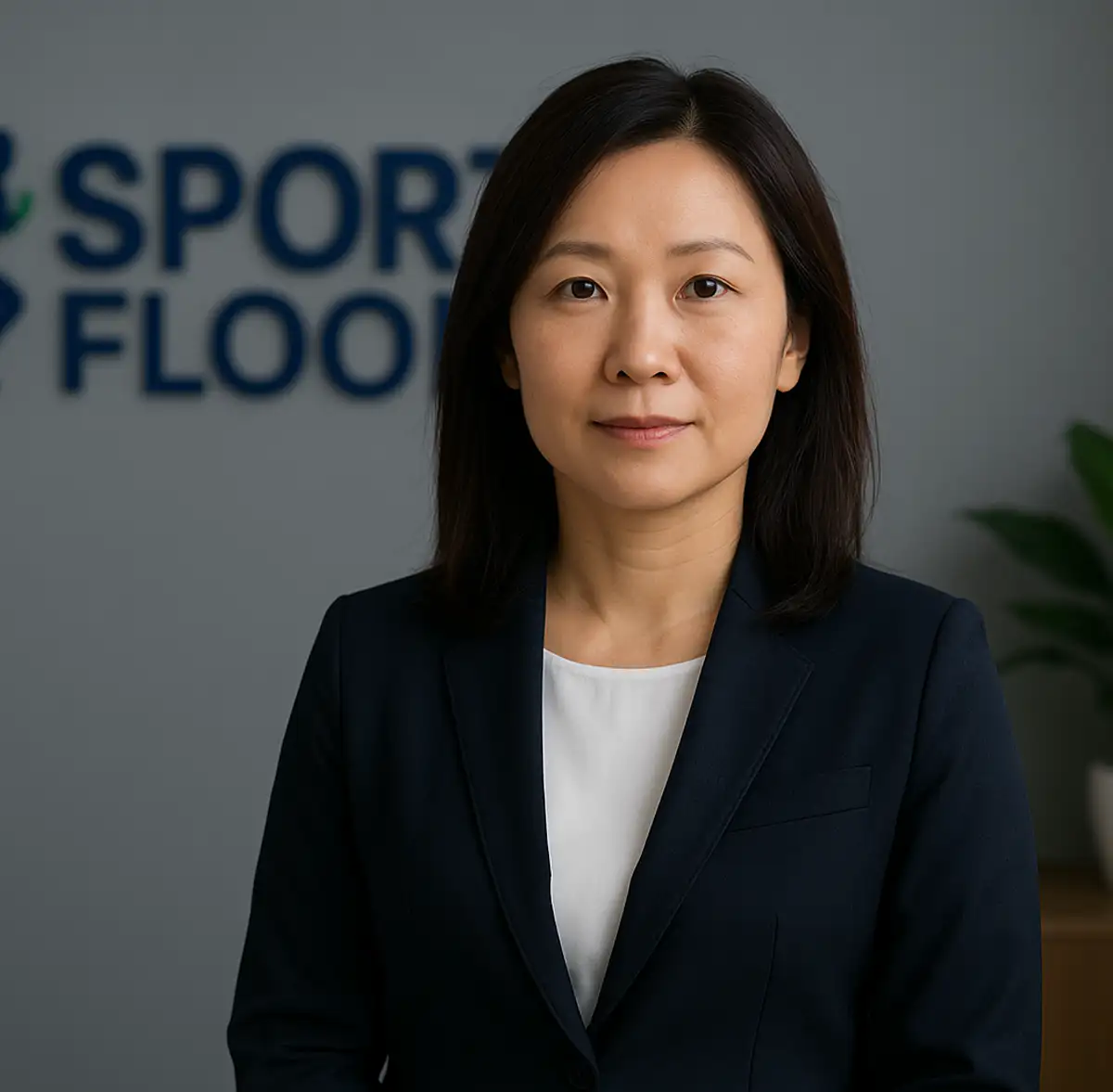
Quality Engineer in the Sports Stadium Accessories Department with 15+ years of experience, supervised the design and supply of stadium accessories in Asia, Europe and the Middle East, specializing in quality, performance and safety specifications.
Anna Wu Accessories Manufacturing Manager at Sport Floor