












Tartan Tennis Court Systems and Polyurethane Tennis Surfaces
Plan a polyurethane tennis court around the official singles and doubles dimensions, player run-off areas, court orientation, supporting base, drainage, net equipment, surface pace and project-specific performance requirements. Request materials-only supply, technical support, supervision or an agreed installed-court scope.
What Is a Tartan Tennis Court?
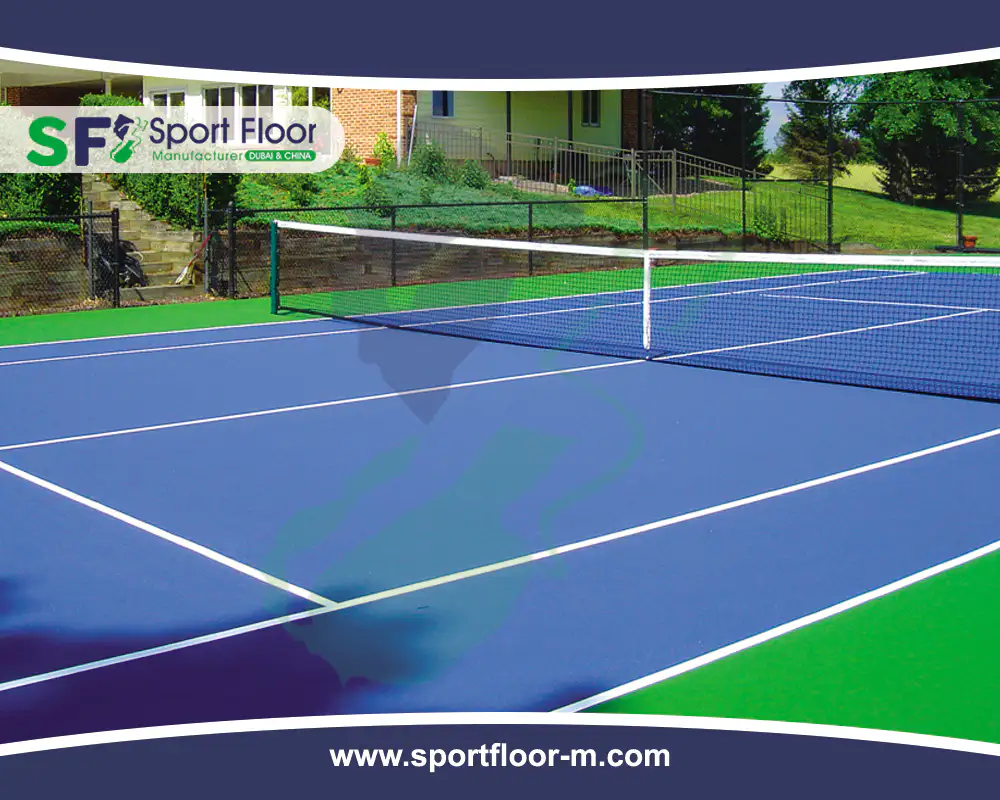
A tartan tennis court is a project-specific synthetic playing surface commonly constructed using polyurethane and compatible resilient materials over a prepared concrete or asphalt base.
The word “tartan” does not define one universal tennis-court system. Different constructions may use dense PU coatings, resilient rubber layers, pore sealers, polyurethane wearing layers or granule-finished surfaces.
The final system should reflect the required court pace, player level, indoor or outdoor environment, supporting base, drainage, maintenance programme and any classification or recognition scope.
Regulation Layout
Singles, doubles, service courts and player run-off areas must be coordinated together.
Defined PU Build-Up
Every primer, resilient layer, wearing layer and line material should be identified.
Court Pace Requirement
The required playing-speed category should be defined before product selection.
Net and Site Coordination
Posts, sockets, centre strap, fencing, orientation and lighting affect the finished facility.
PU Tennis Courts for Clubs, Schools and Community Projects
Training and Member Use
A court planned around membership levels, coaching, bookings and maintenance capability.
Education and Coaching
A facility designed for supervised use, age groups and the school sports programme.
Public and Municipal Use
A project requiring clear operating rules, access control and regular inspection.
Authority-Defined Requirements
A facility requiring confirmation of event regulations, pace, dimensions and recognition scope.
Coaching and Intensive Use
A court selected for repeated sessions, ball-machine use and scheduled player development.
Private Development Facility
A court coordinated with landscaping, neighbours, lighting, fencing and operating hours.
Covered or Enclosed Facility
A court coordinated with clear height, lighting, ventilation and building-floor requirements.
Existing Tennis Court
An upgrade selected after reviewing cracks, drainage, levels, adhesion and the existing surface construction.
Tennis Court Dimensions and Player Run-Off Areas
Final design should follow the current Rules of Tennis, applicable competition regulations, ITF technical guidance and approved project drawings.
Official length between the two baselines.
Width between the outside doubles sidelines.
Width between the singles sidelines.
Distance between the net and each service line.
Approximate result using international backstop and sidestop recommendations.
Approximate result using the recommended reduced recreational clearances.
Technical-booklet recommendation for an enclosed court.
Technical-booklet recommendation at the baseline.
Slow, Medium-Slow, Medium, Medium-Fast and Fast Tennis Surfaces
| ITF Category | Surface-Pace Description | Procurement Requirement |
|---|---|---|
| Category 1 | Slow | Request the exact tested product and current classification listing where this category is required. |
| Category 2 | Medium-Slow | Do not assume the category from the color, granule appearance or coating description. |
| Category 3 | Medium | Confirm the listed product name, construction and validity period. |
| Category 4 | Medium-Fast | Request evidence that the supplied build-up matches the tested product. |
| Category 5 | Fast | Include any completed-court pace testing required by the project. |
Understand the Different ITF Surface and Court Programmes
Classified Surface Product
A named surface product is placed in a pace category using its tested Court Pace Rating.
One-Star Recognition
The completed court is tested for installation quality against the applicable ITF recommendations.
Two-Star Recognition
Adds confirmation that the completed court’s average pace is close to the classified value of the surface product.
Recognised Court
Recognition belongs to the identified venue and tested court, not automatically to every installation by the supplier.
Product Name
The offered commercial name should match the name shown in the supporting classification documentation.
Construction Match
The installed products and layer construction should match the tested system where classification is specified.
Accredited Testing
Court pace and recognition tests should be completed through the applicable ITF testing process.
Claim Control
Use “ITF Classified” or “ITF Recognised” only when supported by the exact current document.
Tennis Court Surface System Options
Every offer should identify the products, individual layer thicknesses, planned consumption, substrate compatibility, surface texture and intended pace requirement.
PU Court Coating System
A project-defined polyurethane surface installed over a technically accepted concrete or asphalt base.
- Substrate-compatible primer.
- Local repair and levelling materials.
- Defined PU wearing construction.
- Approved texture and color.
- Compatible tennis line paint.
Cushioned PU Tennis Court
A system containing one or more identified resilient layers beneath the final tennis playing surface.
- Elastic layer type identified.
- Individual thicknesses stated.
- Sealing or dense PU layer specified.
- Court-pace requirement confirmed.
- Applicable tests defined before supply.
Granule-Based PU Tennis System
A project-dependent construction using compatible rubber granules, PU binder and an approved upper playing surface.
- Granule type and grading defined.
- Binder ratio and consumption confirmed.
- Pore sealing included where required.
- Surface texture linked to pace objectives.
- Indoor or outdoor suitability documented.
Typical Layers in a PU Tennis Court
The sequence below is a procurement framework. The actual system may contain fewer or additional materials depending on the substrate, required resilience and tested surface construction.
Structural Base
Concrete or asphalt providing support, geometry and drainage.
Surface Preparation
Cleaning, grinding and removal of weak or incompatible material.
Repairs and Levelling
Approved treatment of cracks, depressions and local irregularities.
Compatible Primer
Adhesion layer selected for the actual supporting substrate.
Resilient Layer
Rubber, PU, foam or another approved construction where included.
Sealing or Dense Layer
Pore sealer, levelling coat or elastic PU material where required.
Playing Surface
Smooth, textured or granule-finished project-specific upper layer.
Tennis Markings
Compatible paint applied to the approved singles and doubles layout.
Tennis Court Performance Should Be Measured
Court Pace Rating
Defines the speed category using the applicable ITF test process.
Ball Rebound
Review vertical and court-dependent ball behaviour where required.
Surface Friction
State the test method and acceptance criteria rather than using a generic anti-slip claim.
Evenness
Check local bumps and hollows using the specified court-surface method.
Slope and Planarity
Coordinate drainage requirements with the allowed court geometry.
Dimensions
Survey court lines, net position, posts and completed clearances.
Surface Uniformity
Inspect texture, color and response across the complete playing and run-off areas.
Adhesion
Review bond to the substrate or underlying layers where specified.
Visual Condition
Inspect bubbles, cracks, delamination, pinholes and line quality.
Wet Condition
Outdoor projects should define applicable drainage and wet-surface assessment requirements.
Wear
Consider repeated foot movement at baselines and service positions.
Completed-Court Recognition
Include ITF Recognition testing only when required by the project.
Tennis Court Base, Levels and Outdoor Drainage
- Confirm subgrade stability and compaction.
- Construct the approved concrete or asphalt base.
- Survey playing-area and run-off dimensions.
- Review concrete curing and moisture conditions.
- Assess cracks, joints and structural movement.
- Remove oil, dust and incompatible coatings.
- Coordinate court slope with surface permeability.
- Complete channels and perimeter drainage.
- Prevent water entrapment beneath dense PU layers.
- Coordinate fencing, gates and surrounding levels.
- Complete net-post and centre-strap foundations first.
- Issue a formal base-acceptance record.
Net Posts, Net Height, Centre Strap and Court Fixings
- Confirm singles, doubles or combined court use.
- Position doubles net posts outside the doubles sidelines.
- Use singles sticks where required with a doubles net.
- Set the net to 1.07 m at the posts.
- Set the net to 0.914 m at the centre.
- Provide the specified centre strap and ground anchor.
- Coordinate post sockets before synthetic surfacing.
- Use stable, flush socket covers where posts are removable.
- Confirm net tension and complete court coverage.
- Keep post and net hardware free from sharp projections.
- Coordinate fencing gates with maintenance access.
- Inspect net height and alignment before handover.
Court Orientation, Fencing, Lighting and Accessibility
Court Orientation
Review local sun path, prevailing conditions and site constraints before fixing the court axis.
Backstops
Position rear fencing or walls outside the required baseline run-off distance.
Sidestops
Keep fencing and obstructions outside the required side run-off distance.
Lighting
Coordinate illumination, glare control, column positions and the required competition level.
Clear Height
Indoor and covered courts should meet the applicable overhead clearance requirements.
Gate Locations
Keep access gates away from key playing and player-movement zones.
Accessible Routes
Coordinate court access, seating, thresholds and surrounding pathways.
Player and Official Areas
Position benches, umpire chairs and equipment outside the required playing clearances.
Typical Tartan Tennis Court Installation Process
Confirm the Project Brief
Approve court use, level, surface pace and commercial scope.
Review Rules and Layout
Confirm playing dimensions, run-off areas and equipment.
Complete the Site Survey
Review orientation, levels, drainage, access and obstructions.
Construct the Base
Complete the approved concrete, asphalt and drainage works.
Install Equipment Interfaces
Complete post sockets, strap anchor and fencing interfaces.
Accept the Base
Record moisture, levels, cracks, cleanliness and readiness.
Prepare and Repair
Clean, grind and treat agreed local defects.
Apply Primer
Use the specified product and approved application rate.
Install System Layers
Apply the approved resilient, sealing and wearing construction.
Complete the Surface Finish
Apply the approved texture, color zones and final coat.
Set Out Lines and Net
Survey markings and complete the net equipment installation.
Test and Handover
Complete the agreed inspection, testing and documentation scope.
PU Tennis Court Cleaning, Inspection and Resurfacing
Remove Debris
Keep leaves, soil, sand and abrasive particles away from the court.
Use Approved Cleaning
Follow the exact system supplier’s cleaning and chemical guidance.
Maintain Drainage
Keep channels, outlets and perimeter details clear.
Inspect Baselines
Monitor concentrated wear behind and around the baselines.
Inspect Service Areas
Review repeated pivot and serving positions for local wear.
Check Court Lines
Restore markings using compatible paint and accurate setting-out.
Inspect Delamination
Investigate bubbles, lifting or bond loss promptly.
Maintain Net Equipment
Inspect posts, sockets, strap, anchor, net and winding mechanism.
Control Non-Tennis Loads
Restrict vehicles, sharp furniture and incompatible event loads.
Review Surface Pace
Test the court when pace is contractually controlled or appears to have changed materially.
Repair Compatible Materials
Use products matched to the original surface construction.
Resurface by Condition
Base resurfacing decisions on inspection, adhesion and performance.
Information Required for a Tartan Tennis Court Quote
| Required Information | What to Provide | Why It Matters |
|---|---|---|
| Facility Type | Club, school, community, residential, academy or competition. | Establishes dimensions, performance and operating requirements. |
| Number of Courts | Singles, doubles or combined courts and total facility layout. | Determines area, equipment and logistics. |
| Indoor or Outdoor | Building conditions or external climate and exposure. | Influences materials, moisture, drainage and lighting. |
| Total Available Area | Playing court, run-off zones and surrounding dimensions. | Confirms whether the required court level fits. |
| Supporting Base | Concrete, asphalt or existing surface and its condition. | Influences preparation, primer and repair scope. |
| PU System | Consultant-specified construction or requested alternatives. | Establishes products, layers and quantities. |
| Court Pace | Required ITF category or project-specific playing-speed target. | Influences surface-product selection and testing. |
| Classification or Recognition | Product classification, completed-court recognition or neither. | Defines laboratory, documentation and testing requirements. |
| Colors and Markings | Playing area, run-off area, lines, logos and color references. | Required for material and marking quantities. |
| Tennis Equipment | Posts, sockets, net, strap, anchor and accessories. | Clarifies equipment and structural interfaces. |
| Facility Components | Fencing, gates, lighting, benches and umpire equipment. | Prevents omission of major project elements. |
| Destination and Delivery | Country, port, Incoterms® rule, named place and required date. | Defines freight, responsibilities, costs and risk. |
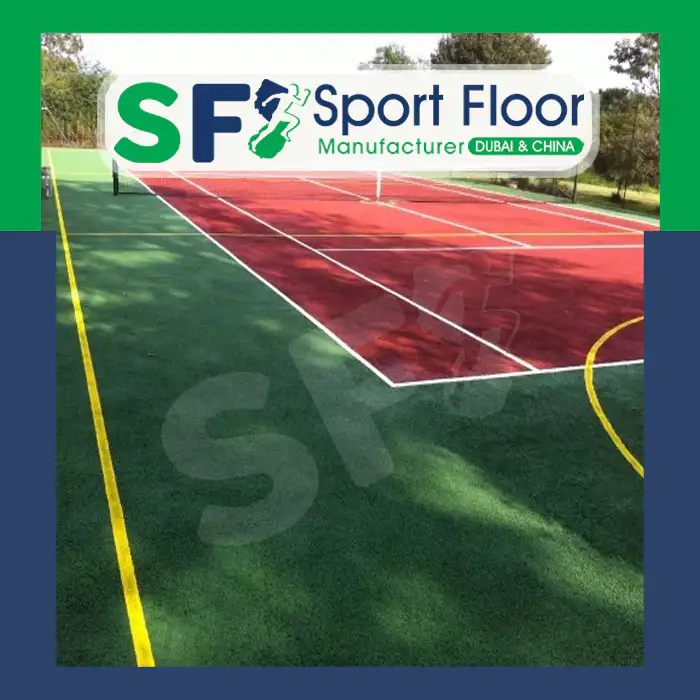
Tennis Court Layout, Color and Net Examples
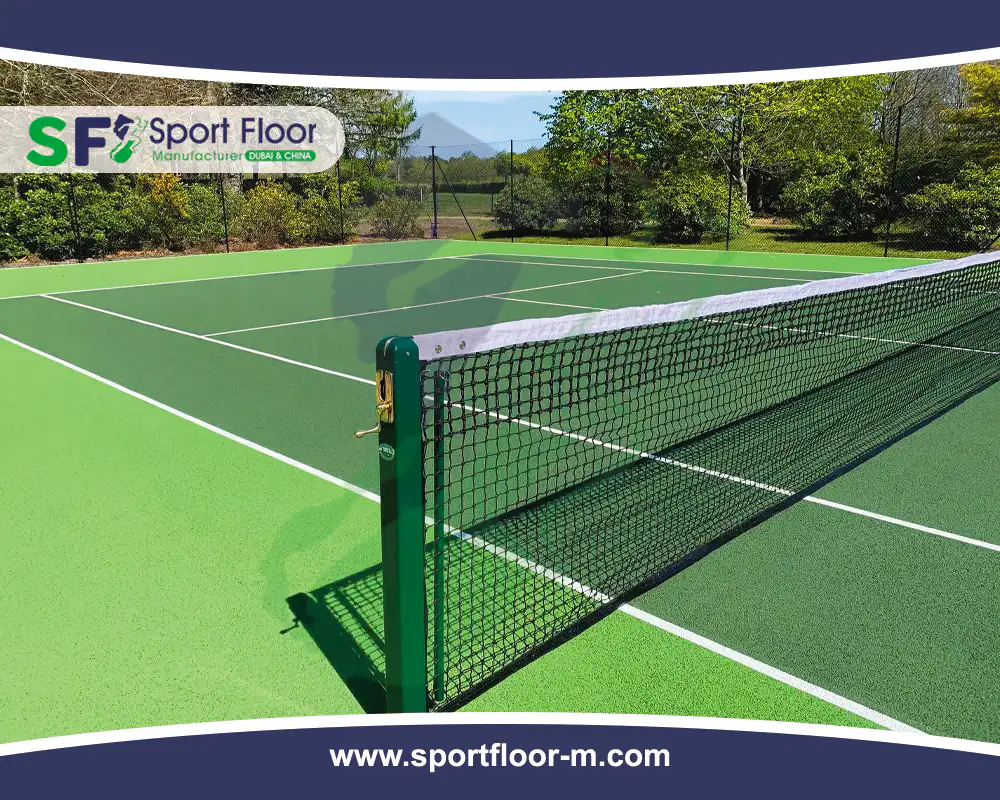
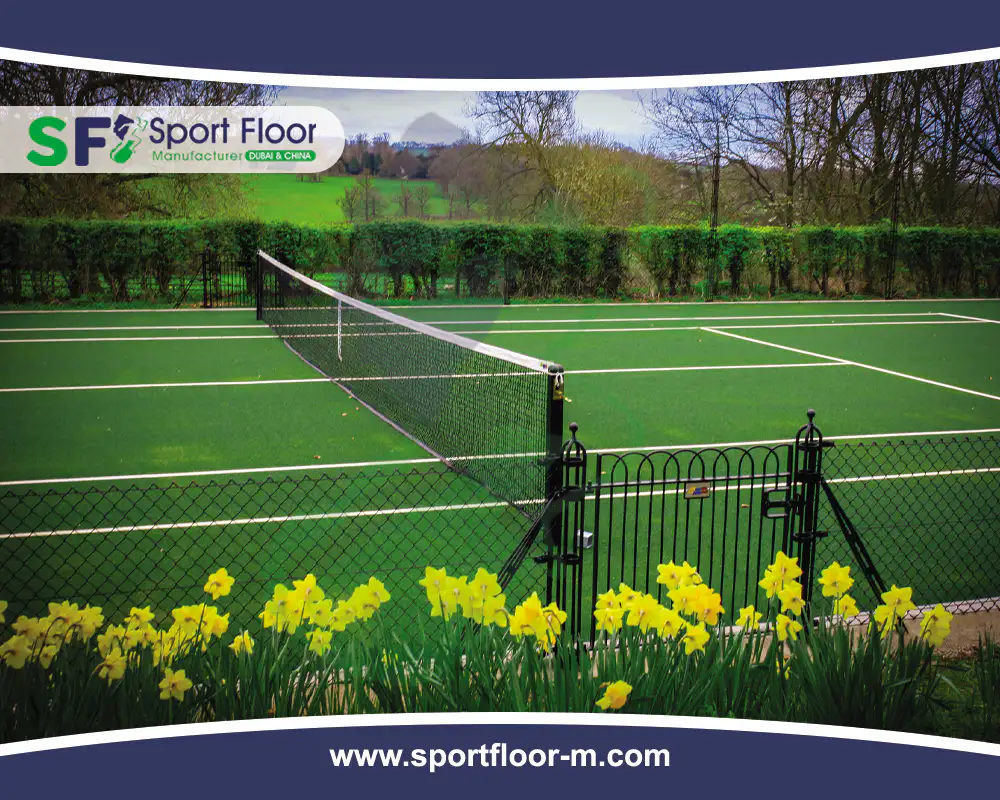
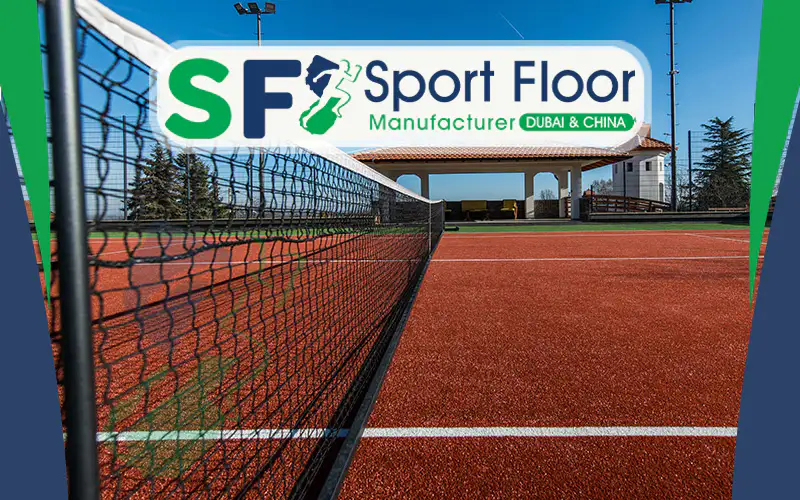
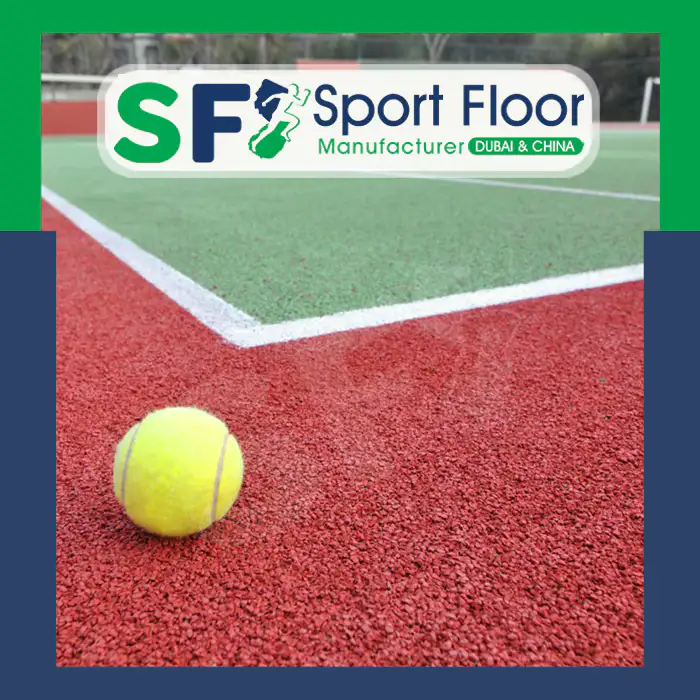
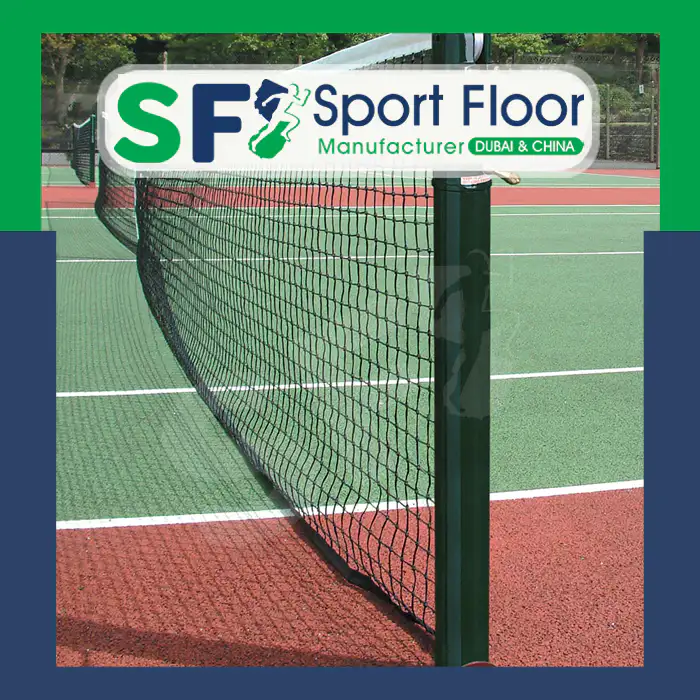
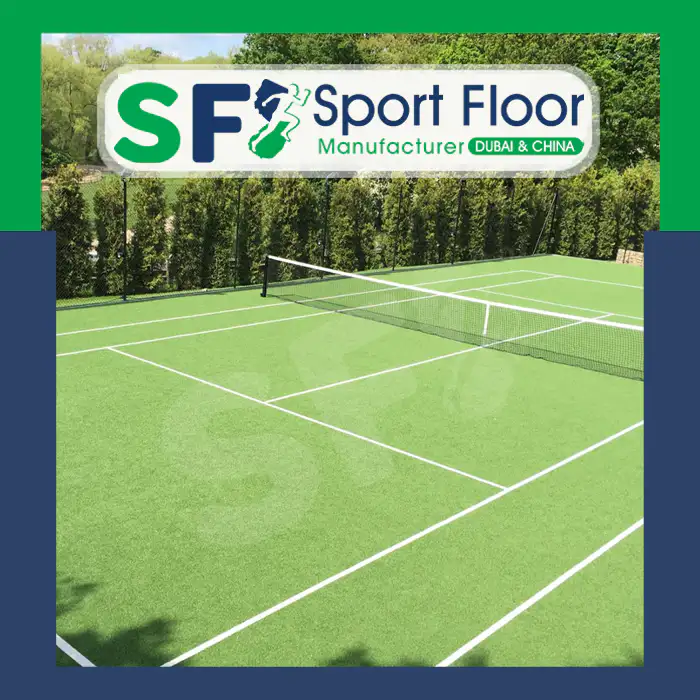
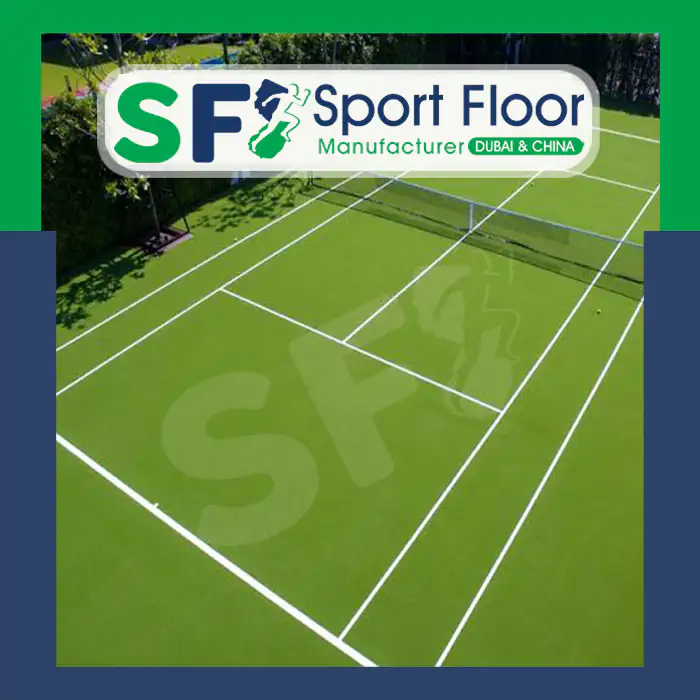
The photographs illustrate tennis court appearance and layouts only. They do not prove the exact system, project location, pace classification or ITF Recognition.
Tennis Surface Texture, Equipment and Court Examples

Tennis Rules, Court Pace, Recognition and Commercial References
Continue to the Required Court or Technical Scope
Tartan Tennis Court FAQ
What is a tartan tennis court?
It is a project-specific synthetic tennis surface commonly constructed using polyurethane and compatible resilient materials over a prepared base.
What are the official tennis court dimensions?
The court is 23.77 metres long, 8.23 metres wide for singles and 10.97 metres wide for doubles.
How much total space is required for a tennis court?
The required space depends on the facility level. International guidance produces an approximate envelope of 36.57 by 18.29 metres, while club and recreational guidance can use reduced clearances.
What is the correct tennis net height?
The net is 1.07 metres high at the posts and 0.914 metres at the centre.
What are the ITF court pace categories?
The five categories are slow, medium-slow, medium, medium-fast and fast.
Does ITF Classified mean ITF approved?
No. ITF Classification identifies the Court Pace Rating category of a named surface product and does not imply general approval or endorsement.
What is ITF One-Star Recognition?
One-Star Recognition evaluates the installation quality of the completed tennis court against the applicable ITF recommendations.
What is ITF Two-Star Recognition?
Two-Star Recognition includes the One-Star requirements and verifies that the completed court pace is sufficiently close to the classified value of the surface product.
Can a PU tennis court be installed outdoors?
A project-specific outdoor PU system may be used when the materials, base, slope, drainage and exposure conditions are suitable.
Can PU tennis flooring be installed indoors?
Indoor systems may be considered after reviewing the base, moisture, clear height, ventilation, lighting and required playing performance.
Does every PU tennis court use SBR and EPDM?
No. Materials depend on the approved system and may use different PU, rubber, foam or resilient constructions.
Are the net and posts included in the surface quote?
Only when the quotation expressly includes posts, sockets, net, strap, anchor, accessories and installation.
Can an existing tennis court be resurfaced?
Resurfacing may be possible after assessing the existing surface, base, cracks, moisture, drainage, levels and adhesion.
How long does a tartan tennis court last?
Service condition depends on the system, supporting base, climate, player use, drainage, installation and maintenance. There is no universal fixed lifespan.
How is tartan tennis court pricing calculated?
Pricing depends on total area, base condition, system layers, pace and testing requirements, markings, equipment, fencing, lighting, installation, destination and delivery term.
Request a Tartan Tennis Court Quotation
Send the facility type, number of courts, available dimensions, indoor or outdoor environment, supporting base, preferred PU system, required court pace, classification or recognition scope, colors, net equipment, fencing, lighting, supply responsibility, destination and Incoterms® rule.